

Body > Engine Cover
Pick your vehicle
The importance and choice of a car engine underbody cover or underbody protection
The purpose of a car's underbody cover, or underbody protection, is to protect the underbody of the car from various external influences, preventing damage that may occur when rocks, mud, snow or other debris flying from the ground come into contact with the bottom of the vehicle. The selection, installation and maintenance of an underbody cover are important for every car owner, as it helps keep the car's engine and other vital components clean and free from damage.
What is the purpose of the engine underbody?
The main purpose of an underbody cover is to protect the vehicle's underbody and engine components. It is usually made of plastic, aluminum, or steel and is installed under the vehicle to protect the engine and its surroundings. Underbody protection helps prevent:
- Physical damage : Strong impacts, such as hitting rocks or other hard objects, can damage the bottom of the engine.
- Corrosion : pools of water, salty roads in winter or just everyday dirt can cause metal to rust. The underbody protection acts as a protective barrier, preventing moisture and dirt from reaching the engine directly.
- Temperature fluctuations : some underbody covers help balance the temperature of the underbody of the car, protecting engine components from overheating.
When is it wise to install or replace a bottom protector?
If your car doesn't have a factory underbody protection, or if it's old and damaged, it's time to consider installing or replacing one. Especially if you live in an area with winters, a lot of road salt, or often drive on gravel roads, having an underbody protection is very important. It's also necessary for cars with lower ground clearance, as they are more prone to the risk of a ground impact.
choosing a bottom protector
There are several factors to consider when choosing a underbody protector to ensure your car is protected and durable. Here are some key considerations:
-
material :
- Plastic : Plastic is light and cheap, but less durable than metal materials. It is well suited for city driving, where the roads are mostly smooth.
- Aluminum : Aluminum is strong and lighter than steel, offering good protection and corrosion resistance. It's a great choice if you're looking for something durable yet lightweight.
- Steel : Steel is the strongest material that offers high protection. It is well suited for vehicles that have to withstand difficult terrain or adverse roads.
-
Fit : It is important to choose a skid plate that is specifically designed for your vehicle. The wrong size or shape can make installation difficult or even harmful.
-
Installation : Some underlay models are easy to install at home, while others require professional installation. The underlay should be installed in a way that does not obstruct air circulation or other important components.
How to maintain the engine underbody?
The bottom protection requires regular maintenance to ensure its maximum protection and longevity:
- Cleaning : Over time, dirt, mud and salt residue accumulate on the bottom protection. Regular cleaning helps prevent rust and other damage.
- Inspection : Check the condition of the underride guard every few months or after heavy driving, such as off-road driving. If you notice cracks, splits or other damage, the guard should be replaced as soon as possible.
- Corrosion protection : If your underbody protection is made of metal, it may be beneficial to use anti-corrosion agents to prevent rust from forming.
summary
Installing an underbody skid plate is an important investment for a car owner, as it protects the underbody of the car from damage, rust and excessive wear. By choosing the right material and installing the protection correctly, you can ensure a longer life for your vehicle and reduce the risk of maintenance costs. You should also not forget to regularly inspect and maintain the underbody skid plate to ensure optimal performance of the car.
Car body parts and body details
 Car bodywork (body parts), structural parts and subframes – important components and their role
The underbody and structural parts of a car form the basis of the vehicle's strength and safety. These parts are responsible for the rigidity of the vehicle's structure, the absorption of impact energy and the durability of the body. The correct condition of the car's supporting and supporting framework is important for ensuring safety, aerodynamics and driving comfort. Car body parts and body parts can be made of various materials: sheet metal (so-called body panels), plastic, metal and other materials.
Car Body and Frame
✅ Passenger cars are constructed with a monocoque or unibody).This means that the car body is structurally a load-bearing structure and there is no separate frame underneath. This is a lighter and easier-to-manufacture solution.
✅ SUVs, trucks, and buses are mostly body-on-frame vehicles. If you remove the cab, all that remains is a drivable chassis with engine.
Clarifications and exceptions:
Not all SUVs are frame-based anymore. Many of today's crossover SUVs (e.g. Toyota RAV4, Honda CR-V, BMW X5) have a unibody design because it is lighter and more fuel efficient. However, true off-road SUVs like the Toyota Land Cruiser, Jeep Wrangler, and Mercedes G-Class have a frame design.
Some passenger cars and sports cars use a semi-frame or specially constructed body. For example, some sports cars and exclusive models (e.g. Lamborghini Aventador, Tesla Cybertruck) may use hybrid solutions where a tubular frame or half-frame is combined with a supporting body.
Buses have different types of construction. Some smaller city buses have a frame body, while most large buses and trucks use a traditional frame construction.
... More...
Car bodywork (body parts), structural parts and subframes – important components and their role
The underbody and structural parts of a car form the basis of the vehicle's strength and safety. These parts are responsible for the rigidity of the vehicle's structure, the absorption of impact energy and the durability of the body. The correct condition of the car's supporting and supporting framework is important for ensuring safety, aerodynamics and driving comfort. Car body parts and body parts can be made of various materials: sheet metal (so-called body panels), plastic, metal and other materials.
Car Body and Frame
✅ Passenger cars are constructed with a monocoque or unibody).This means that the car body is structurally a load-bearing structure and there is no separate frame underneath. This is a lighter and easier-to-manufacture solution.
✅ SUVs, trucks, and buses are mostly body-on-frame vehicles. If you remove the cab, all that remains is a drivable chassis with engine.
Clarifications and exceptions:
Not all SUVs are frame-based anymore. Many of today's crossover SUVs (e.g. Toyota RAV4, Honda CR-V, BMW X5) have a unibody design because it is lighter and more fuel efficient. However, true off-road SUVs like the Toyota Land Cruiser, Jeep Wrangler, and Mercedes G-Class have a frame design.
Some passenger cars and sports cars use a semi-frame or specially constructed body. For example, some sports cars and exclusive models (e.g. Lamborghini Aventador, Tesla Cybertruck) may use hybrid solutions where a tubular frame or half-frame is combined with a supporting body.
Buses have different types of construction. Some smaller city buses have a frame body, while most large buses and trucks use a traditional frame construction.
... More...
Why do wiper blades spoil quickly? Causes and effective solutions with deep cleaning
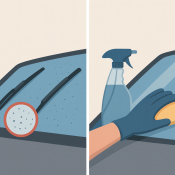 Rapid wear of wiper blades is a problem that can occur even on brand new cars. If new wiper blades start to streak, leave spots on the glass or start to skip after just a few weeks or months, the fault is usually not with the product itself. Most often, the cause is invisible dirt accumulated on the surface of the windshield or the wipers are working at the wrong angle.
Below is an overview of the main causes and solutions.
... More...
Rapid wear of wiper blades is a problem that can occur even on brand new cars. If new wiper blades start to streak, leave spots on the glass or start to skip after just a few weeks or months, the fault is usually not with the product itself. Most often, the cause is invisible dirt accumulated on the surface of the windshield or the wipers are working at the wrong angle.
Below is an overview of the main causes and solutions.
... More...
 The data shown here, especially the complete database of car spare parts, may not be copied. It is strictly prohibited to duplicate the data and database and distribute the same, and/or instruct third parties to engage in such activities, without prior consent from TecAlliance. Any use of content in a manner not expressly authorized constitutes copyright infringement and violators will be prosecuted.