

Body > Gas Springs
Pick your vehicle
Understanding Car Boot or gas Springs: Function, Importance, and Maintenance
Car boot or gas springs, also known as trunk springs or tailgate springs, are essential components in the rear boot or trunk of a vehicle, helping to control the movement of the boot lid or tailgate. These springs ensure that the boot opens and closes smoothly, providing the necessary tension for the lid to stay in position when lifted and preventing it from slamming shut. In this article, we will explore the function, importance, and maintenance of car boot springs.
What Are Car Boot or gas Springs?
Car boot springs are mechanical components typically found in the tailgate or trunk of a vehicle. They are designed to assist with the opening and closing of the boot lid, providing the necessary force to lift and hold the lid in place. These springs are commonly installed on vehicles with large rear openings, including hatchbacks, sedans, SUVs, and vans.
Boot springs work by using tension or compression to assist in lifting the boot lid. They are usually attached to the lid and the vehicle's frame, and they provide the resistance needed to help raise or lower the boot smoothly. These springs may be made from various materials such as steel or high-tension alloys to ensure durability and strength.

How Do Boot or gas Springs Work?
Boot springs function by using either tension or compression to create the necessary force for the boot lid’s movement. There are two primary types of boot springs commonly found in vehicles:
-
Torsion Springs:
Torsion springs are often used in the trunk or tailgate, providing the necessary tension for lifting the boot lid. These springs are wound and work by twisting as the boot opens and closes. When the boot is lifted, the torsion spring twists in the opposite direction, storing energy that helps lift the lid. The spring then unwinds when the boot is closed, providing the force needed to ease the lid back down gently. -
Gas Springs (also known as Lift Supports):
Gas springs, or lift supports, are commonly used in modern vehicles due to their ability to provide smooth and controlled lifting of the boot lid. These springs are filled with compressed gas and have a piston inside that extends or contracts as the boot is opened or closed. As the boot is lifted, the gas inside the spring is compressed, which allows the lid to rise easily. The gas spring provides controlled resistance, ensuring that the boot lid stays open or closes gradually and safely.
Importance of Car Boot gas Springs
-
Ease of Use:
One of the main functions of car boot springs is to make it easier to open and close the boot or tailgate. Without the assistance of springs, the weight of the boot lid could make it difficult to lift, especially for individuals with limited strength. The springs ensure smooth and easy operation of the boot, making it more accessible for loading and unloading items. -
Safety:
Car boot springs also contribute to the safety of the vehicle. For instance, gas springs help control the movement of the boot lid, preventing it from slamming shut abruptly. This reduces the risk of injuries caused by a sudden closing of the boot, particularly when it is loaded with heavy items. Additionally, boot springs help keep the boot lid in a raised position, preventing it from accidentally falling back down. -
Protecting the Boot Mechanism:
By assisting with the opening and closing of the boot, springs reduce the wear and tear on the other components of the boot mechanism, such as hinges and locks. This ensures the longevity of the boot’s functionality, preventing premature failure of parts. -
Aesthetic and Functionality:
Well-functioning boot springs contribute to the overall aesthetic of the vehicle, ensuring the boot opens and closes smoothly without any awkward jerking motions. Properly working springs also enhance the vehicle’s functionality by making the boot more user-friendly.
Common Problems with Boot gas Springs
-
Weak or Worn Springs:
Over time, the tension or force exerted by the boot springs can weaken due to wear and tear. This results in a boot lid that is difficult to open, or one that may not stay open on its own. If you notice that the boot lid is not staying up or that it feels particularly heavy when lifting, it could be a sign that the springs need replacing. -
Broken or Snapped Springs:
A sudden or severe break in the spring can result in a completely non-functional boot lid. A snapped spring can cause the boot to fall suddenly or prevent the boot from opening at all. This is often caused by excessive wear, rust, or mechanical stress. -
Gas Spring Leaks:
In the case of gas springs, a leak can cause a loss of pressure, resulting in poor lifting assistance. If you notice that the boot lid is slower to lift or that it struggles to stay open, it may be an indication that the gas spring is leaking or damaged. -
Misalignment:
If the springs become misaligned or their attachment points become loose, the boot lid may operate incorrectly. This misalignment can result in the lid not opening properly or failing to close securely, causing potential safety hazards.
Maintenance and Replacement of Boot gas Springs
-
Regular Inspection:
To ensure that your boot springs are working efficiently, it's important to conduct regular inspections. Look for signs of wear such as rust, corrosion, or any damage to the springs themselves. Inspect the attachment points for any looseness or wear that could affect the spring’s functionality. -
Lubrication:
Although gas springs generally do not require lubrication, it’s important to keep the hinges and pivot points of the boot lid lubricated to reduce friction and wear on the boot mechanism. Use a suitable lubricant to keep the boot lid functioning smoothly. -
Check for Leaks:
If your vehicle uses gas springs, periodically check for any signs of leakage or loss of pressure. If the boot lid seems to struggle to stay open or close properly, this could indicate a gas spring issue that needs attention. -
Spring Replacement:
If your boot springs are worn out or damaged, it is best to replace them promptly. Replacing the springs is often a straightforward task, but it may require some mechanical knowledge or the help of a professional mechanic. When replacing gas springs, ensure that you use the correct type and size for your vehicle to ensure compatibility and safe operation. -
Avoid Overloading:
To prolong the life of the boot springs, avoid overloading the boot with excessive weight, which can put additional strain on the springs. Always follow the manufacturer’s recommended weight limits for the boot to prevent unnecessary wear on the springs.
Conclusion
Car boot springs are essential components that make the operation of a vehicle’s boot lid smooth, easy, and safe. They assist in lifting and holding the boot lid in place, preventing slamming and reducing the risk of injury. Regular inspection, maintenance, and prompt replacement of damaged springs are key to ensuring the boot remains functional and easy to use. If you notice any signs of wear, difficulty opening or closing the boot, or slow response when lifting the lid, it may be time to replace the springs and restore the boot's functionality. Whether you're using the boot for daily errands or transporting large items, well-maintained boot springs provide the convenience and safety you need.
Car body parts and body details
 Car bodywork (body parts), structural parts and subframes – important components and their role
The underbody and structural parts of a car form the basis of the vehicle's strength and safety. These parts are responsible for the rigidity of the vehicle's structure, the absorption of impact energy and the durability of the body. The correct condition of the car's supporting and supporting framework is important for ensuring safety, aerodynamics and driving comfort. Car body parts and body parts can be made of various materials: sheet metal (so-called body panels), plastic, metal and other materials.
Car Body and Frame
✅ Passenger cars are constructed with a monocoque or unibody).This means that the car body is structurally a load-bearing structure and there is no separate frame underneath. This is a lighter and easier-to-manufacture solution.
✅ SUVs, trucks, and buses are mostly body-on-frame vehicles. If you remove the cab, all that remains is a drivable chassis with engine.
Clarifications and exceptions:
Not all SUVs are frame-based anymore. Many of today's crossover SUVs (e.g. Toyota RAV4, Honda CR-V, BMW X5) have a unibody design because it is lighter and more fuel efficient. However, true off-road SUVs like the Toyota Land Cruiser, Jeep Wrangler, and Mercedes G-Class have a frame design.
Some passenger cars and sports cars use a semi-frame or specially constructed body. For example, some sports cars and exclusive models (e.g. Lamborghini Aventador, Tesla Cybertruck) may use hybrid solutions where a tubular frame or half-frame is combined with a supporting body.
Buses have different types of construction. Some smaller city buses have a frame body, while most large buses and trucks use a traditional frame construction.
... More...
Car bodywork (body parts), structural parts and subframes – important components and their role
The underbody and structural parts of a car form the basis of the vehicle's strength and safety. These parts are responsible for the rigidity of the vehicle's structure, the absorption of impact energy and the durability of the body. The correct condition of the car's supporting and supporting framework is important for ensuring safety, aerodynamics and driving comfort. Car body parts and body parts can be made of various materials: sheet metal (so-called body panels), plastic, metal and other materials.
Car Body and Frame
✅ Passenger cars are constructed with a monocoque or unibody).This means that the car body is structurally a load-bearing structure and there is no separate frame underneath. This is a lighter and easier-to-manufacture solution.
✅ SUVs, trucks, and buses are mostly body-on-frame vehicles. If you remove the cab, all that remains is a drivable chassis with engine.
Clarifications and exceptions:
Not all SUVs are frame-based anymore. Many of today's crossover SUVs (e.g. Toyota RAV4, Honda CR-V, BMW X5) have a unibody design because it is lighter and more fuel efficient. However, true off-road SUVs like the Toyota Land Cruiser, Jeep Wrangler, and Mercedes G-Class have a frame design.
Some passenger cars and sports cars use a semi-frame or specially constructed body. For example, some sports cars and exclusive models (e.g. Lamborghini Aventador, Tesla Cybertruck) may use hybrid solutions where a tubular frame or half-frame is combined with a supporting body.
Buses have different types of construction. Some smaller city buses have a frame body, while most large buses and trucks use a traditional frame construction.
... More...
Why do wiper blades spoil quickly? Causes and effective solutions with deep cleaning
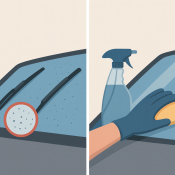 Rapid wear of wiper blades is a problem that can occur even on brand new cars. If new wiper blades start to streak, leave spots on the glass or start to skip after just a few weeks or months, the fault is usually not with the product itself. Most often, the cause is invisible dirt accumulated on the surface of the windshield or the wipers are working at the wrong angle.
Below is an overview of the main causes and solutions.
... More...
Rapid wear of wiper blades is a problem that can occur even on brand new cars. If new wiper blades start to streak, leave spots on the glass or start to skip after just a few weeks or months, the fault is usually not with the product itself. Most often, the cause is invisible dirt accumulated on the surface of the windshield or the wipers are working at the wrong angle.
Below is an overview of the main causes and solutions.
... More...
 The data shown here, especially the complete database of car spare parts, may not be copied. It is strictly prohibited to duplicate the data and database and distribute the same, and/or instruct third parties to engage in such activities, without prior consent from TecAlliance. Any use of content in a manner not expressly authorized constitutes copyright infringement and violators will be prosecuted.