

Transmission > Gaskets / Seals
Pick your vehicle
Transmission seals: symptoms, causes of failure and replacement
A vehicle’s transmission is one of the greatest feats of engineering, designed to withstand extreme loads, friction and heat. The raw power produced by the engine must somehow be converted into the appropriate speed and torque for the wheels, and this task is performed by the transmission – whether it’s a traditional manual, a classic torque converter automatic, a continuously variable transmission (CVT) or a lightning-fast dual-clutch (DSG) system. Inside each transmission are hundreds of moving metal parts: gears, bearings, synchronizers and clutch discs. To prevent this entire complex metal orchestra from wearing away into metal scrap within a few kilometres, it needs constant and generous lubrication with special transmission oil.
But the oil needs to stay right where it belongs – inside the gearbox. At the same time, water, dust and abrasive road grit from the outside environment need to be kept out. This is where gearbox seals come into play. These seemingly simple, often costing just a few euros, rubber, silicone, paper or Teflon parts are the only barrier between your vehicle’s smooth running and a gearbox failure costing thousands of euros. In this extremely comprehensive and technical guide, we dive deep into the world of gearbox seals. We look at all the different types of seals, such as shaft seals and housing gaskets , examine the physical and chemical causes of their wear, analyse the symptoms and advise on which well-known car models are worth keeping an eye on.
anatomy and main types of gearbox seals
A gearbox is not just a sealed box. It is a module that receives rotating shafts from the engine, from which shafts exit to the wheels, where electronic sensors, cooling pipes and mechanical linkages are connected. Each such passage or housing connection requires sealing. We divide gearbox seals into main categories according to their location and function.
1. shaft seal
This is a dynamic seal (or Simmerling) that has to seal a rotating metal shaft. It is probably the hardest working seal in the entire gearbox, as it has to withstand constant friction, shaft vibrations and high temperatures. Shaft seals are located in several locations on the gearbox:
- Input shaft seal: This is located at the front of the transmission, right where the shaft coming from the engine (flywheel or torque converter) enters the transmission. If this seal leaks on a manual transmission, transmission oil will flow directly into the clutch housing. The oily clutch disc will immediately start to slip, which means that not only the cheap seal but also the entire expensive clutch assembly will have to be replaced.
- Output shaft seal: On rear-wheel drive and all-wheel drive vehicles, this is located at the rear (tail) of the transmission where the driveshaft connects to the transmission. This seal is often exposed to dirt and moisture from the road.
- Axle seals/differential seals: Front-wheel drive and many four-wheel drive vehicles have the transmission and differential in one housing (transaxle). The driveshafts that drive the wheels go directly into the sides of the transmission. These "axle seals" are some of the most frequently replaced seals because the up-and-down movement of the driveshafts in the suspension constantly tires them out.
A classic shaft seal consists of a steel outer casing that gives it its shape and holds it firmly in the gearbox housing, and a sealing lip made of a special elastomer (rubber or Teflon). Behind the lip is often a special circular tension spring (garter spring), which holds the rubber lip with the correct and even pressure against the rotating shaft, compensating for wear over time.

2. housing gasket
The gearbox is too complex and large a device to be manufactured in one piece. It usually consists of several solid aluminum or cast iron housing parts – such as the clutch housing (bellhousing), the main gearbox housing and the tail section or differential cover. A housing gasket is used to seal these parts together.
Older cars and classic manual transmissions often used gaskets cut from special thick paper (sealing cardboard) or cork. In today's automotive industry, most manufacturers have switched to special liquid sealants (RTV - room temperature vulcanizing silicone) or anaerobic sealing mastics. These liquid sealants are applied to one side of the housing by robots in the factory, the parts are pressed together with bolts and the sealant hardens in the absence of oxygen or due to the influence of air humidity into an absolutely leak-proof rubber layer. Housing gaskets rarely leak on their own; they usually only leak if the gearbox has received a strong physical impact (for example, a stone against the bottom of the box) or if the box has been disassembled and reassembled incorrectly, with the wrong sealant.

3. oil pan gasket / transmission pan gasket
This is by far the most well-known and most frequently replaced gasket in automatic transmissions. Unlike manual transmissions, where the oil is simply changed via the drain and fill plugs, automatic transmissions have a large oil pan under the car. Removing this pan is necessary to replace the transmission's internal oil filter. Between the oil pan and the transmission housing is an oil pan gasket, which can be made of rubber, rubber-coated aluminum, cork, or a special pressed fiber material. Since the oil pan is located at the lowest point of the car, even a small amount of sweating from there is immediately noticeable in the form of puddles under the car.
4. selector shaft seal
In order for the driver to change gears from the cabin, the gear lever or cable must move inside the gearbox. This is done through a small metal selector shaft that rotates or moves in and out. Around this shaft is a small seal, often just the size of a coin. This is a very common leak point, especially in manual transmissions. Although the leak there is usually small (more sweating than flowing), over time a thick layer of road dust and dirt builds up on the oil.
5. mechatronics, valve block and connector seals (o-rings)
Modern automatic transmissions are full of electronics. The valve body and solenoid group inside the transmission are controlled by the transmission control unit (TCU). Between these two worlds – the transmission’s internal oil sump and the car’s external wiring harness – are special plastic connector sleeves that are sealed with rubber O-rings. The petrification of these O-rings is a massive problem on many car models, causing transmission fluid to leak along the wiring harness and even into other electronic components in the car.
6. cooling pipe seals
Automatic transmissions produce a lot of heat. To remove this heat, the transmission fluid is routed through metal pipes to a radiator at the front of the car. The connections between the cooling pipes and the transmission housing are sealed with small, specific O-rings or copper washers. These seals must withstand very sharp temperature fluctuations and hydraulic pressure.
Internal seals: invisible but vital
Although it is easy to notice a leak in the external seals (oil dripping under the car), there are hundreds of internal seals in automatic transmissions, the failure of which does not create a puddle under the car, but which renders the transmission inoperable. The automatic transmission works on the principle of hydraulic pressure. To engage a gear, the valve block directs oil pressure to special clutch packs. These packs are compressed by large hydraulic pistons, which are sealed with special vulcanized rubber or Teflon rings. When these internal seals become brittle from age or wear out, oil pressure is lost between the seals. The result is that the piston cannot compress the clutch discs with sufficient force - the transmission starts to slip, the engine speed increases, but the car does not accelerate, and the transmission burns out internally in a short time.
Why do gearbox seals break and start leaking?
The wear of gearbox seals is an inevitable physical and chemical process, but certain factors can drastically accelerate it.
thermal wear and elastomer aging
The operating temperature of the transmission oil usually reaches 80 to 100 degrees, but under heavy loads (trailer towing or aggressive driving) it can be much higher. The rubber compound of the seals (often nitrile rubber NBR or fluororubber FPM) must withstand this heat. As a result of the constant heating and cooling cycles, the chemical plasticizers that give the rubber elasticity evaporate. The rubber becomes rock hard and brittle (vitrified). The hard seal can no longer follow the microscopic movements of the shaft and the oil simply starts to flow past the rubber.
black, poor quality or old transmission oil
This is by far the biggest enemy of gearbox seals (and the entire box). There are special additives in gearbox oil that keep the seals soft. If you don't change the oil on time, these additives will be depleted. Even worse, microscopic dust of metal and friction material is released into the oil from the wearing clutch discs and gears. Old oil essentially becomes an abrasive liquid sandpaper. When this "sandpaper" gets between the rotating shaft and the seal lip, it physically eats away at the seal and can even grind a deep groove into the metal shaft itself.
Gearbox ventilation (crankcase ventilation) blockage – a silent killer
When the gearbox is operating, its internal parts and oil heat up, causing the air inside the box to expand. To equalize the pressure with atmospheric pressure, each gearbox has a special breather valve/tube located at the top of the box. Over the years, dirt often accumulates there, which eventually completely blocks the breather hole. What happens? When the box heats up, the expanding air and pressure can no longer escape. Since the metal housing does not give in, the pressure looks for the weakest link to escape. The weakest link is always the shaft seal or the gearbox housing seal . The enormous internal pressure forces the oil out of the seals or, in the worst case, pushes the entire Simmerling out of its seat. Before installing a new seal, you should always check the breather valve for permeability, otherwise the new seal will start to leak on the first ride.
mechanical wear and bearing clearances
The seal is designed to work with a shaft that rotates perfectly centered. If, for example, the half-axle bearings in the differential are worn and the driveshaft starts to "shake" up and down, then no seal in the world can compensate for this eccentric movement. The seal is stretched to an oval shape and oil starts to leak. In this case, replacing the seal is just dealing with the consequences, in fact, the worn bearing in the gearbox needs to be repaired.
Signs and symptoms: how to recognize a leaking transmission gasket?
Transmission leaks are often more insidious than engine oil leaks because they may not give immediate obvious signs (engines have a dipstick to check the level, while most modern automatic transmissions do not). Watch for these symptoms:
- Puddles under your car and their color: If you notice a puddle under your car, its color is critical. Automatic transmission fluid (ATF) is usually a characteristic bright red, cherry, or pinkish color (although newer oils can also be green or blue) and smells sweeter and more chemical than engine oil. Manual transmission fluid (MTF) is usually light yellow to brown and has a very pungent, sulfur-like "rotten egg" odor.
- Oily and sticky gearbox base: The wind blowing while driving carries the leaked oil back along the gearbox housing. If you jack up the car and see that the gearbox base is covered in a thick layer of wet, black dirt, this is a clear sign of a long-term leak - the oil binds road dust to itself.
- The smell of burnt oil: Many cars have exhaust pipes or catalytic converters located directly under the gearbox. If oil drips from the output shaft or housing seal onto the hot muffler, it will burn instantly. You will notice a strong musty smell in the cabin when you stop at a traffic light, which can sometimes even cause smoke to come out from under the bonnet.
- Difficult gear changes and slipping gears: this is a symptom of an advanced leak. If the oil level in the automatic transmission drops too low due to leaking seals, the oil pump can no longer produce pressure in the system. Gears shift with a delay (for example, when you put the car in D, it takes several seconds before the car wants to move), gear changes are jerky or the transmission "slips" - the engine speed increases, but the speed does not increase. In the case of manual transmissions, the lack of oil makes it difficult for the synchronizers to work, which is why gears, especially second and third, engage with a creak or require a lot of physical force.
- Whining noise: When the oil level in the gearbox is critically low due to a leak, the metal gears and bearings no longer receive sufficient lubrication. They start to heat up as they rub metal against metal, creating a very characteristic whining noise that gets louder as the speed increases. This noise means that irreversible mechanical damage is occurring to the gearbox.
most common car models and their specific gearbox seal problems
Different car manufacturers use gearboxes from different subcontractors. Over the years, clear "standard problems" have developed among car mechanics, which concern specific seals on certain models.
bmw, audi and jaguar (zf 6hp and 8hp automatic gearboxes)
ZF (Zahnradfabrik Friedrichshafen) makes the world's best automatic transmissions, used in a huge number of BMW, Audi, Jaguar and Land Rover models. Although mechanically bombproof, they have certain sealing problems. The 6HP series has the infamous mechatronics connector sealing sleeve . This is a small plastic tube with two O-rings from which the transmission wiring harness comes out. This seal almost always starts to leak at around 150,000 km, dripping oil onto the muffler. Another specific detail on these boxes is the "glass seal" or adapter seal (bridge seal) . This is a rubber part located between the valve block and the box body. When this internal seal hardens and cracks, the oil pressure between the valve block and the clutch packages is lost. The result is sharp shocks when changing gears and the box goes into emergency mode. Also, the oil pan gasket of a ZF gearbox is often integrated with the plastic oil pan and oil filter itself, which means that in the event of a leak, the entire expensive plastic pan must always be replaced.
Volkswagen, Skoda, Seat (VAG Group) – DSG gearboxes
The legendary dual-clutch gearboxes of the VAG group (such as the 6-speed DQ250 or the 7-speed DQ200) are technically complex. In the case of the DQ200 (dry clutch) gearboxes in particular, the mechatronics unit is separated from the mechanical part of the gearbox. The mechatronics has its own very high-pressure (up to 60 bar) hydraulic system and a special green oil. Its mechatronics unit is covered by a black aluminum cover, between which the housing gasket tends to leak under pressure and due to corrosion. The drive shaft seals (half-axle seals) of VAG gearboxes are also relatively difficult to replace, leaving puddles between the front wheels of the car.
Toyota and Lexus (Aisin automatics)
Aisin-made transmissions, used by Toyota and Lexus, are known as some of the most foolproof devices in the world. But physics applies to them too. The most common leak point is the output shaft seal on rear-wheel drive Lexus and Toyota Land Cruisers, as well as the drive shaft seals on front-wheel drive models. Because the transmission oil temperatures are well managed, their oil pan seals tend to last a very long time without leaking.
Ford and Volvo (powershift and Aisin gearboxes)
Older Volvo models (like the V70, XC90) that used the Aisin AW55-50 and TF-80SC gearboxes often had problems with the input shaft seal (torque converter seal) . The gearbox is located between the engine and gearbox. When it starts to leak, red oil drips right from the engine and gearbox joint, requiring the entire gearbox to be removed to access the seal. However, the Powershift DSG gearboxes used by Ford (and some Volvos) are notorious for internal seal leaks, where oil gets onto the clutch disc, quickly rendering the gearbox unusable.
Do "stop leak" additives really work on gearboxes?
There are plenty of chemical additives on store shelves that promise to stop transmission oil leaks cheaply and quickly (so-called transmission stop leak ). Is it worth investing 15 euros to save hundreds of euros on repairs?
These chemical fluids contain strong solvents and plasticizers. Their purpose is to penetrate old, hardened and shrunken rubber seals and cause them to swell and soften chemically. Reality: They can only help in the short term if the leak is minimal sweating and is caused exclusively by the seal becoming slightly brittle (not by mechanical wear). But this is putting a band-aid on an open fracture. Chemistry cannot restore a torn seal lip or repair a worn metal shaft. In the case of an automatic transmission, the use of such additives is extremely risky - the swelling agents affect all hundreds of internal seals and valves. They can swell the valve block o-rings, causing the loss of gears and the total destruction of the box. The best solution is always to physically replace the faulty part.
gasket replacement process and best practices
Replacing transmission seals varies from "a simple one-hour job" to "a complete disassembly of several days," depending on the location of the seal.
- Replacing axle seals: a relatively straightforward job. The car is lifted, the wheel is removed, the drive shaft is levered out of the gearbox (which requires some of the gearbox oil to drain out). The old seal is pulled out with a special puller and the new one is carefully pressed in, perfectly straight. It is important not to scratch the aluminium housing or the shaft surface, as the slightest scratch will immediately cause a new leak.
- Oil pan gasket replacement: on automatics, this is done together with the oil change. The crankcase is removed, carefully cleaned of metal debris and old gasket material. A critical mistake that is made: a large amount of liquid sealant (RTV) is applied under and over the new rubber gasket. This should not be done unless the factory instructions require it. The rubber gasket is designed to seal on clean metal. The sealant makes the surface slippery and when tightening the bolts, the rubber gasket is pressed out of the seat or cracks. The bolts must always be tightened in a crosswise pattern and with the strictly small torque required by the manufacturer (often only 10-12 Nm).
- Replacing the input and output shaft seals: Replacing the input shaft seal requires removing the entire gearbox from under the car, which is extremely labor-intensive (often 6-8 hours of work). For the output shaft, the cardan shaft and often the flywheel flange must be removed, which requires special locking tools.
High-quality spare parts brands: who to trust?
Considering that, for example, replacing an input shaft seal can cost 300-500 euros in labor, while the seal itself costs 15 euros, it is absolutely forbidden to skimp on the quality of the spare part. By buying a "no-name" seal from an unknown manufacturer, you can be sure that you will have to pay this massive labor fee again in a few months.
In the world of gearbox and engine seals, there are some undisputed leaders who produce parts directly for car factory conveyors (OEM quality):
- elring: a german company that is almost synonymous with seals on european cars. their range includes perfectly fitting seals manufactured with the latest technology (including ptfe teflon).
- Corteco (Freudenberg Group): Inventor of the original radial shaft seal (Simmerling). Corteco is a direct factory supplier of internal and external seals for many automatic transmissions. Top quality.
- Victor Reinz (Dana): Another absolute giant whose products are highly regarded by mechanics all over the world.
- ZF and OEM spare parts: For specific automatic transmission parts (such as valve block seals, mechatronics sleeves), it is always safest to buy an original kit from the transmission manufacturer itself (e.g. ZF), which guarantees the appropriate material composition and dimensions.
Preventive maintenance: how to extend the life of gearbox seals?
Maximizing the life of your seals doesn't require magic, just consistency and regular maintenance:
- Change your transmission oil regularly! Even if the manufacturer claims that the box is "filled for life", lifetime is usually defined as 150,000 km. Change the oil (including flushing) in an automatic transmission every 60,000 - 80,000 km and in a manual transmission every 80,000 - 100,000 km. Clean oil, with fresh additives, keeps the rubber seals soft and flexible and prevents abrasive metal chips from wearing them down.
- Have the breather valve checked by service: Ask your mechanic specifically to clean the breather valve on top of the box. This 5-minute job will often save you from completely blowing out the seals due to overpressure.
- Clean the outside of the gearbox: If you drive a lot on muddy and gravel roads, have the gearbox and driveshaft area under the car pressure washed during your spring car wash. Dried mud builds up and the sand acts like sandpaper on the seal lips.
- Have the driveshafts checked for play: When changing wheels or during maintenance, have the mechanic shake the driveshafts by hand. If there is a large physical play at the end entering the box, the bearings must be repaired first, otherwise the seals will often leak.
summary
Transmission seals – from the massive housing gasket to the delicate and precise shaft seal – do a huge job of keeping your car’s complex powertrain safely lubricated. Their materials science and technology are impressive, but they don’t last forever. By being observant and noticing puddles under your car, smelling burnt oil or noticing changes in gearshift smoothness, you can react before a small leak turns into a mechanical disaster costing thousands of euros. By choosing top-quality replacement parts and ensuring your transmission gets regular oil changes, you’ll give your vehicle hundreds of thousands of miles of worry-free, smooth driving.
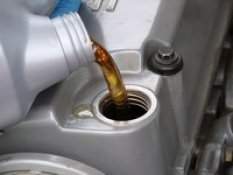

Powertrain and what is a differential and where is it located on the car?
 Car Differential, Driveshaft, and Gearbox: Overview and Working Principles
... More...
Car Differential, Driveshaft, and Gearbox: Overview and Working Principles
... More...
Why do wiper blades spoil quickly? Causes and effective solutions with deep cleaning
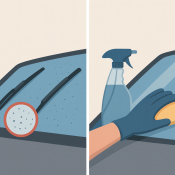 Rapid wear of wiper blades is a problem that can occur even on brand new cars. If new wiper blades start to streak, leave spots on the glass or start to skip after just a few weeks or months, the fault is usually not with the product itself. Most often, the cause is invisible dirt accumulated on the surface of the windshield or the wipers are working at the wrong angle.
Below is an overview of the main causes and solutions.
... More...
Rapid wear of wiper blades is a problem that can occur even on brand new cars. If new wiper blades start to streak, leave spots on the glass or start to skip after just a few weeks or months, the fault is usually not with the product itself. Most often, the cause is invisible dirt accumulated on the surface of the windshield or the wipers are working at the wrong angle.
Below is an overview of the main causes and solutions.
... More...
 The data shown here, especially the complete database of car spare parts, may not be copied. It is strictly prohibited to duplicate the data and database and distribute the same, and/or instruct third parties to engage in such activities, without prior consent from TecAlliance. Any use of content in a manner not expressly authorized constitutes copyright infringement and violators will be prosecuted.