

Lighting > Headlight Cleaning
Pick your vehicle
Car headlight cleaning systems: a complete guide to technology, maintenance and common mistakes
As darkness falls and the weather worsens in the fall and winter, visibility becomes the most critical safety factor for every driver. We can have the most modern and safest vehicle with sophisticated driver assistance systems and powerful brakes, but if we can’t see the road, obstacles or pedestrians early enough, these systems lose their primary advantage. The headlights of a car undoubtedly play the biggest role in ensuring visibility. But even the most powerful xenon or LED headlights are useless if their lenses are covered in a thick layer of dirt, road salt and grime. This is where an often underestimated but vital system comes into play – the car’s headlight cleaning system.
In this extremely comprehensive guide, we will dissect the anatomy, operating principles and maintenance of car headlight cleaning systems. We will take an in-depth look at the role of the windshield washer pump (washer pump), how washer jets work, what are the most common faults in car models and which spare parts manufacturers to contact if the system needs repair. This article is designed for the knowledgeable car owner who wants to understand the technical nuances of their vehicle and ensure maximum safety in all weather conditions.
Why is cleaning car headlights so critical?
Many car owners may consider headlight washers to be just a convenience feature, but in reality they are a strict safety requirement, especially for more powerful light sources. To understand this, we need to look at the physics of light.

When the glass of a car's headlight (which is almost exclusively made of polycarbonate plastic these days) is covered by dirt, salt water or mud flying up from the road, two very dangerous things happen to the light layer. First, the light output drops drastically. Studies have shown that even a relatively thin layer of dried road salt can reduce the light output of headlights by up to 80 percent. This means that instead of a hundred meters, you can only see the road for twenty meters, which at highway speeds leaves no time to react.
Secondly, and even more dangerously, there is light scattering . Dirt particles on the headlight glass act like thousands of tiny prisms, refracting light rays in the wrong directions. This is particularly critical for xenon (hid) and led headlights, which produce very intense light. The scattered light dazzles oncoming drivers, creating potentially life-threatening situations in traffic. This is why, according to international safety regulations, automatic headlight cleaning systems are mandatory by law for gas discharge lamps (xenons) with more than 2,000 lumens.
It is also important to note that unlike old halogen bulbs, which produced a huge amount of infrared heat and melted snow and ice off the headlight glass itself, modern LED headlights are "cold" when viewed from the windshield. The heat they produce is directed to the back of the headlight using radiators. So if snow or icy slush sticks to the LED headlight, it will not melt away, which is why a properly functioning high-pressure washer system is essential.
Anatomy and working principle of the headlight washer system
The headlight washer system on modern vehicles is a separate high-pressure system that is significantly different from the standard windshield washer system, although they may share the same fluid tank. Let's take a closer look at the main components.
windshield washer pump (washer pump) for headlights
Every headlight washer system is powered by a special electric motor. The headlight washer pump (washer pump) is significantly larger, more powerful and more productive than the one that sprays water onto the windshield. Since mechanical brushes are no longer used to clean headlights today (like on old Scandinavian cars), the cleaning work must be done purely by the kinetic energy of the water. This means that the pump must be able to force the fluid through the hoses with tremendous pressure to literally "cut" the dirt off the headlight glass.
These pumps are usually located at the very bottom of the washer fluid tank, as they require a free flow. The headlight washer pump is usually only activated when the car's headlights are on, and usually after every fifth or tenth windshield wash, to avoid excessive fluid waste. Many cars also have a built-in safety mechanism in the system - if the washer fluid level in the tank drops below a certain level, the headlight washer pump is switched off, saving the last bit of fluid for cleaning the windshield, which has a higher priority.
wash water nozzles and telescopic cylinders
The water is directed from the pump through thick hoses to the front of the car, where the washer jets are located. The jets are precision instruments designed to spray water at a specific angle and in a wide fan pattern, covering the entire surface of the car evenly. There are two main types of jets:
- Fixed washer jets: These are permanently mounted on the car's front bumper (bar) in front of the headlights. They are simple in design, reliable and contain no moving parts, but they slightly detract from the car's aerodynamics and visual design.
- Telescopic washers (hidden nozzles): this is the most common solution today. The washer nozzles are hidden inside the bumper behind small painted plastic covers. When the washer pump (washer pump) builds up pressure in the system, hydraulic pressure (without any electric motor inside the washer) pushes the telescopic cylinder out of the rod. When the cylinder has reached its end position, the valve opens and the washer nozzles shoot a jet of water at the fire. When the pump stops and the pressure is lost, a strong return spring pulls the cylinder back into the bumper and closes the cover.
hoses, fittings and check valves
Because the system is under high pressure, the hoses must be reinforced and the fittings must be securely locked. One very important, but often overlooked, detail is the check valve. This is a small mechanism between the hoses that allows water to flow in only one direction – towards the nozzles. Its purpose is to keep the hoses constantly full of liquid. If there were no check valve, the liquid would flow back into the tank by gravity and it would take several seconds for the water to reach the lights when the washer was started. This delay would reduce cleaning efficiency and wear out the pump.
most common car models and typical headlight washer malfunctions
Although the headlight washer system is simple in principle, its components operate in extreme conditions: cold, ice, road salt, vibration and high hydraulic pressure. Different car models have developed their own specific "childhood diseases" and typical faults over the years, which experienced mechanics and car owners know about.
BMW 3 Series and 5 Series (E90, E60, F30, F10)
BMWs are known for their sophisticated engineering, but their hidden headlight washer systems are often a source of trouble in harsh winter conditions. The most common type of fault on BMWs is leaking telescopic cylinders. Over the years and constant freeze-thaw cycles, the internal o-ring seals in the telescopic cylinders wear out. The result is a situation where washer fluid simply drips out from under the car's bumper, emptying the entire tank in a matter of days.
Another common and quite expensive problem occurs at highway speeds in the winter. When the front of the car is slightly icy and the headlight washers are activated, the hydraulics push the telescope out, but the return spring cannot pull it back because of the ice. The nozzle is left protruding, and strong highway winds can simply rip off the painted plastic cover (or even the entire nozzle).
Volkswagen Group vehicles (VW Passat, Golf, Škoda Octavia, Audi A4 and A6)
Telescopic washers are also widely used on VAG vehicles. One of the biggest weaknesses of these brands is the windshield washer pump (washer pump) itself. In the fall, when car owners forget to change the summer washer fluid to the winter one in time, the fluid in the tank and pipes freezes. If the driver now tries to activate the headlight washer, the pump cannot push water into the frozen system. Since the electric motor is working under high load, the pump simply burns out. Fortunately, VAG pumps are relatively cheap and easy to replace.
On Audi models, especially older A6s, the non-return valves also tend to get clogged or stuck. If the valve sticks in the closed position, water will not reach the nozzles even when the pump is running at full capacity. This often results in the hose breaking at the connection point.
Volvo SUVs (XC60 and XC90)
Volvos are built to withstand even the harshest northern climates. Their windshield washer systems are exceptionally powerful – often using very thick hoses and high-pressure pumps to clean large windshield surfaces. However, this high power has led to a peculiar common fault. If the washer jets are blocked by ice or external dirt in winter, the windshield washer pump (washer pump) creates such enormous pressure in the system that the hoses simply fly off the fittings. Volvo owners often have to remove the bars to reattach the hoses and secure them with additional clamps.
toyota (rav4, avensis, land cruiser) and lexus
Japanese car manufacturers, led by Toyota, use very reliable systems. Many older SUVs still use fixed (bar-mounted) nozzles, which are practically unbreakable, since there is no moving telescopic mechanism. But Toyota is not free from problems either. Their typical fault is more related to the clogging of the washer jets. The openings of Toyota nozzles are designed to produce a very fine mist of water. If a car owner uses cheap washer jets or even tap water in the summer, the system will become covered in scale and algae, which will irreversibly clog the fine washer jets. The nozzles are very difficult to clean with a needle without disturbing the angle of the water jet, which is why they often have to be replaced.
mercedes-benz (c-class, e-class w211, w212)
Mercedes models often have problems with the washer cover valves, which are located in the strut. They are operated by tiny springs that are exposed to road salt and corrosion. The springs rust out and even if the telescope goes back in, an unsightly hole remains gaping in the strut. Mercedes also have washer fluid heating systems where the fluid tank runs through the engine coolant pipe. If this coil leaks inside the tank, the engine coolant mixes with the windshield washer fluid, creating a thick foamy mass that damages both the windshield washer pump and the washer jets.
What to do if the headlight washers don't work? Step-by-step diagnostics
If you find that your car's headlights are no longer clear, you don't always have to rush to the mechanic. Many faults are simple and can be diagnosed yourself. Here's a logical sequence of how to look for the fault:
- Check the rules and prerequisites: as mentioned before, headlight washers do not always work. Make sure the car's ignition is on, the engine is running, and the headlights are manually turned on (not just in the daytime running lights or "auto" position). On some cars, you may need to hold the windshield washer lever down for a longer period of time (2-3 seconds) before the headlight washers will activate.
- Is there enough fluid in the tank? It sounds obvious, but the headlight washers will turn off long before the tank is completely empty. Make sure the tank is full to the brim.
- Listen to the pump: ask a friend to press the washer lever (with the lights on) and stand at the front of the car. Do you hear a loud buzzing sound coming from the front wheel well or behind the handlebars?
- If you don't hear anything: the first thing to do is check the fuse box for the headlight washer fuses and relays. These are usually located under the hood or behind the glove box. If the fuse is good, the windshield washer pump (washer pump) itself has probably burned out.
- If the pump hums but no water comes out: this indicates a physical obstruction in the system.
- Is there a leak somewhere? Look under the car. If water is flowing out from under the bar, the hose has come loose or the telescopic cylinder has broken.
- Is the system frozen? If the outside temperature is below freezing, drive the car into a warm underground parking lot or a warm garage for a few hours. This often solves the problem.
- Clogged washer jets: Remove dirt from the jets with a soft brush. If the jet is out of place, you can try carefully blowing air through it with a compressor.
- The washer sticks out: if the telescope does not go back, you can gently help it with your hand. Clean the telescope stem with a special silicone oil so that it moves without obstacles. Do not use oils such as WD-40, as they can swell and damage the rubber seals!
How to maintain the washing system to avoid costly repairs?
Preventive maintenance is many times cheaper than buying and installing new spare parts, especially considering that replacing telescopic wipers requires removing the entire front bumper on most car models.
The most important rule: always use a high-quality windshield washer fluid . Avoid using plain tap water in the summer. Tap water contains minerals that will deposit on the pump and hoses in the warm engine compartment, creating scale that will eventually block the narrow washer jets. Always use distilled water with a summer concentrate or a ready-mixed high-quality summer fluid that also contains insect-removing detergents. These detergents also help lubricate the internal seals of the telescopic cylinders.
When winter arrives, change the fluid early. Don't wait until the first minus degrees. With the autumn rains, pour in the winter fluid. And what is very important – after pouring the winter fluid into the tank , be sure to spray water repeatedly on both the windshield and the headlights! If you don't do this, the previous summer fluid will still remain in the long headlight washer hoses and nozzles, which will break your expensive system with the first night frost.
Keep the front of your car physically clean. If you drive in a winter storm and park with the nose of your car covered in a thick layer of snow, wipe the snow off the washer covers. If that snow freezes there and the washer wants to come out on the next drive, the system has to fight the ice, which will break the mechanical parts.
best-known spare parts brands: who to trust?
If, despite good maintenance, a component fails, it is time to buy new parts. There are several brands in the automotive industry that produce original equipment (OEM) parts for car manufacturers and sell these same parts on the aftermarket under their own names. When choosing components for washing systems, it is worth giving preference to well-known names, because a poor-quality pump or a leaking cylinder means that you will soon have to do the rod removal work again.
- VDO (Continental): The undisputed leader in the production of electronic components and pumps. The original pumps for many German cars are manufactured by VDO. Their washer pump (washer pump) ensures pressure according to factory specifications and is exceptionally long-lasting.
- Hella: Another German automotive giant. Hella specializes in automotive lighting and everything related to it. The washer jets and telescopic cylinders they produce offer first-class quality and precision.
- febi bilstein and meyle: both brands offer a wide range of spare parts at a very reasonable price-quality ratio. Their product range includes pumps, hoses, fittings and check valves.
- Bosch and Valeo: Although better known for windshield wipers and other electrical systems, they also offer reliable washer pumps for many car models.
- Magneti Marelli: an excellent choice especially for owners of Italian and French car brands, offering quality close to the original.
The cheapest and most unknown "no-name" brands should be avoided, especially for telescopic cylinders. Cheap plastic and poor quality rubber seals often mean that a new washer will start leaking in the first harsh winter.
summary
Your car's headlight cleaning system is much more than just a convenient addition – it's a technically complex, high-pressure hydraulic system whose primary job is to save your life and the lives of other road users. If you have xenon or LED headlights, a black headlight lens is as dangerous as a broken brake, because your reaction time is directly dependent on how far you can see the road.
By getting to know the components of the system, understanding the role of the powerful washer fluid pump (washer fluid pump) and how the delicate washer fluid nozzles work, you as a car owner will be able to better maintain and service the system. Always use the right and high-quality washer fluid in the right season, perform logical diagnostics when problems arise, and prefer reliable spare parts brands. This way you will ensure that your car does what it is supposed to do – show you the way safely through the darkest and muddiest night.

Why do wiper blades spoil quickly? Causes and effective solutions with deep cleaning
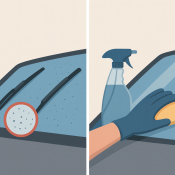 Rapid wear of wiper blades is a problem that can occur even on brand new cars. If new wiper blades start to streak, leave spots on the glass or start to skip after just a few weeks or months, the fault is usually not with the product itself. Most often, the cause is invisible dirt accumulated on the surface of the windshield or the wipers are working at the wrong angle.
Below is an overview of the main causes and solutions.
... More...
Rapid wear of wiper blades is a problem that can occur even on brand new cars. If new wiper blades start to streak, leave spots on the glass or start to skip after just a few weeks or months, the fault is usually not with the product itself. Most often, the cause is invisible dirt accumulated on the surface of the windshield or the wipers are working at the wrong angle.
Below is an overview of the main causes and solutions.
... More...

 The data shown here, especially the complete database of car spare parts, may not be copied. It is strictly prohibited to duplicate the data and database and distribute the same, and/or instruct third parties to engage in such activities, without prior consent from TecAlliance. Any use of content in a manner not expressly authorized constitutes copyright infringement and violators will be prosecuted.