

Wheel Suspension > Struts/Rods
Pick your vehicle
Understanding the Car Control Arm: A Vital Component for Vehicle Stability and Safety
When it comes to car suspension systems, one crucial component that often goes unnoticed is the control arm. Although not as well-known as other suspension components like shocks or springs, the control arm plays an essential role in ensuring vehicle safety, ride quality, and handling performance. In this article, we will explore what a control arm is, its function, types, and how to identify when it needs replacement.
What is a Control Arm?
The control arm, also known as an A-arm or wishbone, is part of a car's suspension system. It serves as a link between the vehicle's frame or chassis and the wheel hub, allowing for controlled movement of the wheels while keeping them properly aligned with the body of the car. Control arms work in conjunction with other suspension components, like the ball joints, bushings, and shock absorbers, to ensure that the vehicle can absorb road irregularities and maintain a smooth ride.
Function of the Control Arm
The primary function of the control arm is to allow the wheels to move up and down in response to bumps and dips in the road while maintaining the correct alignment. This helps the car maintain proper handling, stability, and comfort for the occupants.
Here are some specific functions of the control arm:
-
Supporting the wheel hub: The control arm connects the wheel assembly to the car’s frame or subframe. It allows the wheel to move vertically in response to road conditions while preventing lateral or horizontal movement.
-
Allowing up and down motion: The control arm helps the suspension system absorb the shock from bumps and potholes by allowing the wheel to move up and down without affecting the car’s body.
-
Maintaining alignment: The control arm helps keep the wheels properly aligned, preventing issues such as uneven tire wear and poor handling.
-
Providing control and stability: By maintaining the proper position of the wheel relative to the vehicle, the control arm helps ensure that the car remains stable, especially during cornering and high-speed maneuvers.
Types of Control Arms
There are typically two types of control arms used in most vehicles: upper control arms and lower control arms.
-
Upper Control Arm:
- Positioned above the wheel, the upper control arm helps control the vertical and horizontal movement of the wheel.
- It is more commonly used in older or rear-wheel-drive vehicles, as modern front-wheel-drive cars typically use a lower control arm to handle most of the suspension tasks.
-
Lower Control Arm:
- The lower control arm is more common and is located beneath the wheel.
- It typically bears more weight and is the primary control arm in most modern vehicles, especially front-wheel-drive ones.
Both upper and lower control arms are crucial for the vehicle’s suspension system to function effectively. Some vehicles, particularly those with complex suspension systems, might have both upper and lower control arms on each wheel for additional support and control.
Signs of a Bad Control Arm
A worn or damaged control arm can lead to serious suspension problems, affecting the safety and performance of your car. Here are some common signs that your control arm may need to be replaced:
-
Clunking or Knocking Noises:
- A worn-out control arm or its associated bushings may produce clunking or knocking sounds, especially when going over bumps or turning the wheel. This noise is caused by the loose or damaged components.
-
Poor Handling:
- If the control arm is faulty, it can lead to poor handling, such as the car pulling to one side or feeling unstable when cornering.
-
Uneven Tire Wear:
- A damaged control arm can cause misalignment in the suspension system, leading to uneven tire wear. This can further affect vehicle performance and safety.
-
Vibration or Shaking:
- If the control arm or bushings are worn out, you may feel excessive vibration or shaking through the steering wheel, especially at higher speeds.
-
Abnormal Wheel Alignment:
- If the control arm is malfunctioning, the wheel alignment can be compromised, leading to issues such as the steering wheel pulling to one side or difficulty in keeping the vehicle centered on the road.
Replacing the Control Arm
Control arm replacement is not a simple DIY task. Given the complexity of the suspension system and the need for precise alignment, it’s advisable to have a professional mechanic perform the replacement. Here’s a brief overview of what the process involves:
-
Inspection: The mechanic will first inspect the control arm, along with other suspension components, to determine if the control arm is indeed the source of the issue.
-
Removal: The faulty control arm is disconnected from the vehicle’s frame or subframe, which may require removing other components like the wheel, tire, or shocks.
-
Installation of the New Control Arm: Once the old control arm is removed, the new one is installed and properly secured with bolts and fasteners.
-
Alignment: After installation, the vehicle’s wheel alignment is checked and adjusted to ensure the wheels are aligned correctly and the suspension is functioning as intended.
Conclusion
The control arm is a crucial part of your vehicle's suspension system that helps maintain stability, handling, and overall ride quality. While it's not always in the spotlight, a properly functioning control arm is essential for a smooth and safe driving experience. If you notice any signs of wear or damage, it’s important to address the issue promptly to avoid further damage to your car and ensure your safety on the road. Regular maintenance and inspections will keep your control arms and suspension system in top condition for years to come.

How to replace the control arm on your car yourself?
 The control arm is an important part of a car's suspension system, connecting the wheel to the car's frame and helping to maintain stability, handling, and ride comfort. If the control arm starts to wear out or become damaged, it can cause the car to lose control and uneven tire wear. Replacing the control arm is not the easiest job, but it can be done at home if you have the necessary tools and a little technical knowledge.
What do you need?
... More...
The control arm is an important part of a car's suspension system, connecting the wheel to the car's frame and helping to maintain stability, handling, and ride comfort. If the control arm starts to wear out or become damaged, it can cause the car to lose control and uneven tire wear. Replacing the control arm is not the easiest job, but it can be done at home if you have the necessary tools and a little technical knowledge.
What do you need?
... More...
Why do wiper blades spoil quickly? Causes and effective solutions with deep cleaning
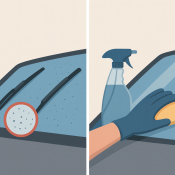 Rapid wear of wiper blades is a problem that can occur even on brand new cars. If new wiper blades start to streak, leave spots on the glass or start to skip after just a few weeks or months, the fault is usually not with the product itself. Most often, the cause is invisible dirt accumulated on the surface of the windshield or the wipers are working at the wrong angle.
Below is an overview of the main causes and solutions.
... More...
Rapid wear of wiper blades is a problem that can occur even on brand new cars. If new wiper blades start to streak, leave spots on the glass or start to skip after just a few weeks or months, the fault is usually not with the product itself. Most often, the cause is invisible dirt accumulated on the surface of the windshield or the wipers are working at the wrong angle.
Below is an overview of the main causes and solutions.
... More...
 The data shown here, especially the complete database of car spare parts, may not be copied. It is strictly prohibited to duplicate the data and database and distribute the same, and/or instruct third parties to engage in such activities, without prior consent from TecAlliance. Any use of content in a manner not expressly authorized constitutes copyright infringement and violators will be prosecuted.