

Car Sealants: Types, Purpose, and When Can RTV Silicone Sealant Be Used?
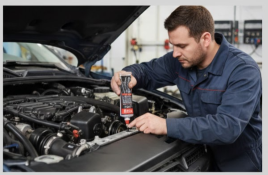
Car engines and transmissions are made up of thousands of parts that operate under constant pressure, heat and vibration. To keep critical fluids (oil, coolant, fuel) in the system and dirt out, various types of seals are used. The question often arises whether a worn seal can be replaced with a simple **RTV (room temperature vulcanizing) silicone sealant**.
main types of car seals
Automotive seals are broadly divided into three categories based on their function and material:
- solid seals (gaskets):
- Description: Cut to a specific shape and made of cork, paper, rubber (e.g. NBR, FKM) or multi-layer steel (MLS).
- Applications: valve covers, oil pans, intake and exhaust manifolds, water pumps, cylinder head gaskets.
- Purpose: to seal gaps between metal-to-metal surfaces where the surfaces are relatively smooth.
- dynamic seals (seals):
- Description: O-rings or lip seals made of rubber or PTFE (Teflon) designed to seal moving parts (shafts).
- Applications: crankshaft front and rear seals, camshaft seals, valve stem seals.
- purpose: to keep the fluid inside while allowing the shaft to rotate.
- liquid seals (sealants/rtv):
- Description: A sealant that is pumped or applied in liquid form and then vulcanizes (hardens) at room temperature to form a custom rubber cushion.
- Applications: in areas where a preformed seal is not available, or in critical corners/joints to support a solid seal.
What can be replaced with RTV silicone and what can't?
✅ RTV is suitable for:
- Sealing Groove Filling: Some automakers (especially Japanese manufacturers) prefer to use liquid sealant on oil pans, transmission housings, and other covers where a pre-formed gasket is not available. RTV fills irregular gaps better.
- Reinforcing joints: When replacing the valve cover gasket, **rtv is essential** at the sharp 90° corners of the camshaft measuring surface, on the timing cover, or at the inlet manifold connection points where a solid gasket may not reach.
- Replacing an old solid gasket (only in some cases): In lower pressure joints, such as thermostat housings or some older water pumps, RTV can temporarily replace a paper gasket.
❌ RTV is not suitable for:
- Dynamic Seal Replacement: RTV **can never** be used to replace crankshaft, camshaft or valve stem seals. RTV cannot withstand the friction of rotating parts and will wear out quickly, causing catastrophic leakage.
- High pressure and heat joints: RTV should not be used to replace cylinder head gaskets or exhaust manifold gaskets. These applications require resistance to extreme heat, chemical stability and strong sealing forces that RTV cannot provide.
- Excessive use: Excessive use of RTV can cause liquid silicone to enter the oil circuit, which in turn clogs the oil channels and oil pump, damaging the engine.
RTV silicone selection and use
There are several types of RTV silicones and choosing the right one is crucial:
- Red/Orange RTV: Typically designed for high temperature areas such as exhaust manifold tips or turbocharged engines. Can withstand higher temperatures.
- Grey/Black RTV: Universal and oil resistant. Suitable for oil pans, gearbox housings and valve cover corners. Many car manufacturers (OEM) prefer grey RTV.
- Blue RTV: General purpose. Often has lower temperature tolerance and is better suited for older engines.
Usage rule: always use RTV **sparingly** and **only on necessary joints**. Apply a thin, even coat, removing all old oil and gasket from sealing surfaces to prevent recurrence of leaks.
 The data shown here, especially the complete database of car spare parts, may not be copied. It is strictly prohibited to duplicate the data and database and distribute the same, and/or instruct third parties to engage in such activities, without prior consent from TecAlliance. Any use of content in a manner not expressly authorized constitutes copyright infringement and violators will be prosecuted.