

fuel filters in gasoline and diesel engines – working principle, differences
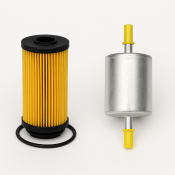
The fuel filter is an important part of any car's fuel system, whether it's a petrol or diesel engine . Its job is to remove dirt, rust particles, water particles and other contaminants from the fuel before it reaches the engine. Cleaner fuel ensures smoother operation, better performance, less wear and longer engine life .
In this article, we will look at how fuel filters work, what are the differences between gasoline and diesel engine filters, and we will also give examples from well-known car brands such as Audi, BMW, Mercedes-Benz, Volkswagen, Toyota, Volvo, Ford, Škoda, and Honda .
why is a fuel filter needed?
Fuel often contains:
dust and dirt,
rust particles from the tank,
micro debris from the pipeline,
water from condensation.
If these particles reach the fuel pump or injectors, they can become clogged, worn out or damaged . This is why the filter plays a critical role in modern engines – especially diesel engines , where the pressure is very high.
fuel filter construction and operating principle
Although the shape and location of the filters may vary by brand, the principle of operation is the same:
fuel enters the filter.
A filter element (usually paper, multi-layer fabric or synthetic material) traps dirt.
Diesel filters also remove water , for which they often have a water separation bag and, on some brands, a sensor.
The cleaned fuel moves on to the pump and injectors.
fuel filter on a gasoline engine
characteristics:
usually of simpler construction than diesel filters.
are often located near the tank, in the piping or on the pump (in modern cars inside the tank – “fuel filter module”).
designed to remove dirt and small particles.
Examples of well-known car brands:
Volkswagen Golf, Toyota Avensis, Ford Focus, Honda Civic – filters are usually located in the fuel tank in the pump module.
BMW and Mercedes-Benz gasoline engines often use integrated filters that are replaced less frequently.
replacement interval:
usually 60,000 – 120,000 km depending on the brand.
fuel filter on a diesel engine
A diesel filter is significantly more complex because in a diesel system, high-pressure pumps and injectors are sensitive to even microscopic particles .
features:
dirt filtration
separation of water from fuel
some models have a heating element to prevent waxing in cold weather
water drain valve or water level sensor (e.g. Audi, Mercedes, Volvo)
Examples of well-known car brands:
Audi A4, Volkswagen Passat, Škoda Octavia TDI – the filter has a water sensor and heating.
BMW 320d, X5 – use elements with a very fine filtration level.
Mercedes-Benz CDI engines – heated metal housing filters.
Toyota Land Cruiser, Hilux – filters have a hand pump (primer) and a separate water separation canister.
replacement interval:
usually 20,000 – 40,000 km , in some cases 60,000 km.
It is recommended to change more frequently in the Estonian climate and when using lower quality diesel fuel.
main differences between gasoline and diesel filters
| characteristic | gasoline filter | diesel filter |
|---|---|---|
| filtration accuracy | average | very high (up to 2–5 microns) |
| removes water | usually not | yes, necessary |
| location | often inside the tank | in the engine compartment or filter block |
| exchange rate | less often | more frequent |
| construction | easier | more complex, heated, with sensors |
The high-pressure system of diesel engines requires extremely clean fuel , which is why their filters are much more sensitive.
fuel filter faults and symptoms
1. power loss
A black filter restricts fuel flow – especially noticeable when accelerating.
2. uneven engine operation
the engine may misfire, sputter, or even stall.
3. Difficult to start
especially on diesel engines (water accumulation in the filter).
4. high fuel consumption
because the engine is not working optimally.
5. check engine light
On many newer cars, the fuel pressure sensor indicates a pressure problem.
When should I replace the fuel filter?
Follow the car manufacturer's maintenance schedule (BMW, Audi and Mercedes recommend specific intervals).
Change the filter more often if you use cheaper or lower-quality fuel.
It is recommended to change the filter on a diesel engine before winter to prevent the formation of paraffin crystals.
summary
The fuel filter is a small but critical component that directly affects a car's engine, fuel economy, and reliability.
Whether it's a Volkswagen, Audi, BMW, Toyota, Volvo, Mercedes or Škoda model - the condition of the filters determines the health of the fuel system.
on a gasoline engine, the filter removes dirt,
in a diesel engine, in addition to water and paraffin.
regular filter change:
extends engine life,
prevents expensive repairs,
ensures better performance and economy.
 The data shown here, especially the complete database of car spare parts, may not be copied. It is strictly prohibited to duplicate the data and database and distribute the same, and/or instruct third parties to engage in such activities, without prior consent from TecAlliance. Any use of content in a manner not expressly authorized constitutes copyright infringement and violators will be prosecuted.