

How to choose a disc cutter?
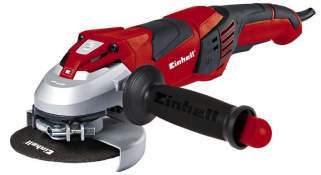
Are you having a hard time deciding which disc cutter you need for the task at hand? We’ve put together this guide to help you choose which disc cutter to buy. A disc cutter is also called an angle grinder, and some people also use the word relaks.
A disc cutter is the ultimate tool for those who are serious about grinding, cutting, or polishing.
Depending on the head you have installed, you can cut, polish, and sand a huge range of materials with a relaks. Common projects you might use a disc cutter for include cutting metal rods, bolts, and sheet metal, cutting stone and ceramic tiles, or removing paint and rust from metals. A disc cutter can be used for everything from sharpening tools to polishing a car – with the right abrasive head, the possibilities are basically endless. The most common disc cutter accessories are abrasive grinding wheels, cutting wheels, grinding stones, polishing pads, sanding discs and wire brushes.
Disc cutters come in many different sizes, but the most common sizes are 115 mm (4 ½”) and 230 mm (9”). Depending on the task you want to complete, you can purchase different discs/heads/wheels – just make sure they are the right size for your disc cutter!
Power
Cutters with larger blades require more power. Expressed in watts or W.
The larger the blade, the more power it requires, so if you’re looking for a 228mm head blade, keep an eye out for a tool with a higher power rating. A larger tool means you can cover a larger area quickly, so if you’re mainly going to be cutting out mortar or working with sheet materials and tiles, this is a great option.
A smaller 115mm angle grinder means a more versatile power tool. You’ll achieve greater precision with a smaller blade, so if you’re looking to shape, sharpen tiles or cut and sand more complex stone and metalwork projects, we recommend a 115mm blade. These smaller tools tend to be lighter and a little easier to use, regardless of your experience level.
Spindle Lock
The spindle lock mechanism allows for extremely quick removal and replacement of accessories by preventing the wheel spindle from rotating. However, the system has a metal nut that is designed to prevent the system from locking up while the tool is in operation.
Auxiliary Handle
Sometimes simply called a side handle, this useful feature can usually be mounted on the left or right side of the tool for left- and right-handed users.
Fixed vs. Variable Speed Angle Grinders
What are the two main types of angle grinders – fixed and variable speed – what’s the difference?
Fixed Speed Angle Grinder
First, there’s the fixed speed angle grinder, which means it only runs at one speed. A decent angle grinder will typically run at 5,000 to 10,000 rpm, which is perfectly fine. But the issue here, of course, is that each material and each attachment requires a specific speed.
Therefore, a fixed speed angle grinder, regardless of the speed it’s fixed at, is only ideal for a few specific tasks. For example, an angle grinder with a speed of 7,000 rpm is good for grinding and cutting hard metals, but it won’t work well for grinding soft metals and wood, which require a much lower speed, 2,000 or 3,000 rpm.
The big plus, however, is that fixed-speed angle grinders are usually very affordable. So, if you only have one or two jobs that you need to do regularly, choose a fixed-speed model that suits your needs. There’s no point in paying extra for a variable-speed angle grinder if you don’t actually use the different speeds.
Variable-speed angle grinder
A variable-speed disc grinder is one where you can adjust the speed of rotation. Of course, they are much more expensive than a fixed-speed one, but they are also much more versatile. The ability to adjust the speed means that you can use one angle grinder with virtually any attachment and for any task.
So, if you want an angle grinder for a variety of tasks, a variable-speed model is the one you want to use.
What is the best grinding speed?
Let's look at some examples of what speed is best for your angle grinder for different jobs and materials.
- For cutting and sanding wood with a 4-inch blade, the speed should be between 2850 and 4800 rpm. If you are using a 7-inch blade, the speed should be between 1600 and 2650 rpm.
- For cutting plastic and rubber with a 4-inch blade, the speed should be between 1900 and 3500 rpm. If you are using a 7-inch blade, the speed should be between 1050 and 1900 rpm.
- For cutting acrylics with a 4-inch blade, the speed should be between 955 and 1500 rpm. If you are using a 7-inch blade, the speed should be between 530 and 850 rpm.
- For cutting stone, brick, ceramic and glass with a 4-inch blade, the speed should be between 1500 and 1900 rpm. If you are using a 7-inch disc, the speed should be between 850 and 1600 rpm.
- When cutting hardened steel with a 4-inch blade, the speed should be between 1500 and 2900 rpm. When using a 7-inch blade, the speed should be between 850 and 1600 rpm.
- When cutting stainless steel and tool steel with a 4-inch blade, the speed should be between 3500 and 6000 rpm. When using a 7-inch blade, the speed should be between 1900 and 3200 rpm.
- When cutting cast iron and stainless steel with a 4-inch blade, the speed should be between 4800 and 8000 rpm. When using a 7-inch blade, the speed should be between 1900 and 3200 rpm.
 The data shown here, especially the complete database of car spare parts, may not be copied. It is strictly prohibited to duplicate the data and database and distribute the same, and/or instruct third parties to engage in such activities, without prior consent from TecAlliance. Any use of content in a manner not expressly authorized constitutes copyright infringement and violators will be prosecuted.