

How to choose the right winch for the car?
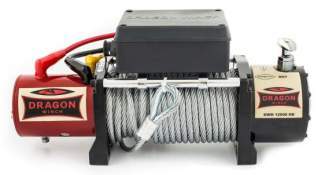
The best way to choose a winch is to first calculate the maximum load your vehicle will put on the winch so that you can choose a winch with an adequate pull rating. Then determine which type of winch line is right for your needs.
Choosing the right rated winch
1. Determine your Gross Vehicle Weight (GVW) – This can be done by filling up a full tank of your car with all your driving gear and heading to any public certified CAT scale.2. Now multiply the gross vehicle weight by 1.5 - this will give you an approximate minimum winch capacity required. And we recommended to choose a winch with a load capacity (rated pulling force) of 1.5-2 times the gross weight GVW.
Example:
If the gross quantity is 2200kg.Multiplying by 1.5, we get 3300kg. This is the minimum power winch you will want to consider purchasing. And 2x GVW would be 4400kg.
Therefore, we would consider each winch's pulling power of 3300-4400kg to be sufficient
*Please note that winches are usually rated for their MAX load pull, which is when the winch line is fully extended and only one coiled layer of line remains around the winch drum. Each additional layer of rope wound around the drum loses about 10% of the load capacity. So for a 3628kg winch with two layers of rope wound on the drum it will effectively pull 3628kg, with three layers of rope it will effectively pull 2900kg and so on.
Synthetic vs Steel Rope?
The winch cable is one of the most important parts of your 4x4 winch as it carries the full load of your vehicle while the winch is operating.Due to its importance, the debate between synthetic and steel ropes has been quite contentious since the advent of synthetic ropes in the 1990s - with strong arguments for and against each option - making it difficult to decide which rope to choose.
But the decision ultimately comes down to your personal winching needs, usage and budget – so here are the main pros and cons of each type to help you decide:
Steel wire rope - is the traditional industry standard made of braided aircraft grade steel wire rope
Pluses:
Cheaper
Very durable - perfect for mud, sand and rocky terrain
Requires less maintenance
UV radiation does not affect
Minuses:
Heavy
Can break, creating weak spots
It can rust and form sharp slags when exposed to wear and moisture
Stores more kinetic energy, which makes it significantly more dangerous to break while riding
The field cannot be repaired if it breaks
Synthetic "rope" winch line - usually made from a very special high tech threaded polyethylene similar to marine rope
Pluses:
Lightweight
Higher breaking strength
Stores less kinetic energy, making it less dangerous to break during recovery
Does not bend and is easier to wind on the winch drum
In the event of a break, it is possible to patch and repair in the field
It floats – handy for recovering vehicles in water crossings or mud
Minuses:
More expensive
Less wear resistant
More susceptible to UV degradation, chemicals such as your vehicle's gasoline or oil, and heat
Requires frequent maintenance and cleaning
Can retain water, making the winch drum susceptible to freezing
Brakes
Most off-road electric winches have some form of dynamic braking. Dynamic braking means that the brake is automatic and often only works in one direction. You will come across a couple of different types of brakes, especially planetary gear.Internal brakes are where the brake is located inside the drum. Since brakes generate heat, an internal brake can cause more heat in the drum. This is not a problem with steel rope, but installing a synthetic winch rope on an internal brake winch can cause the rope to break or melt on the drum. Some synthetic rope manufacturers claim to have heat shields or bushings, but they are also made of synthetic material.
External brakes detect the dynamic brake outside the drum and generate less heat. Winches with external brakes are becoming more popular as synthetic winch ropes become more common.
Line (rope) winding speed
Literally how fast it can drag - sometimes. But often it's not quite like that?
The speed it can roll is greater than the speed under load. Deceptive marketing techniques can make a winch appear faster than it actually is. When reading the specs, check the speeds under load vs.
Faster may not be better - but it sure is nice! Fast winches can sometimes get away from you. Fast winches often have a longer operating time*. Slow time is fine for most people.
*Break-in is the term for the winch continuing to wind after the finger is removed from the button. This is the natural state of things due to their design. Some winches last longer than others.
Transmission
Like your 4x4 transmission, a winch transmission uses a gear to vary the output speed in relation to the engine speed. Gear ratios range from about 150:1 to 300:1, which gives the winch pulling power. Just like the gears on your axle, higher gear ratios give you more power, but at the expense of speed. A good winch design matches the power and gear ratio of the electric motor to achieve a desirable compromise between speed and pulling force.There are usually two types of transmissions in winches. A less common type for off-road pulling is the worm-like. This is a fairly simple design, very similar to a mechanical speedometer drive on the tailshaft of the transfer case. A gear on the shaft meshes with gears cut on the outside of the gear. The advantage is the simplicity of the design. It is a very strong design and offers self-braking. They usually have a slower winding speed and the shaft-mounted gear makes it a bit difficult to attach to a winch. It's also a less efficient design, meaning more electric motor power is needed to pull the same rope.
The most common type is the planetary variant. They use a planetary transmission, similar to an automatic transmission. The planetary gears rotate around the sun gear and the gear is pressed into the housing with its teeth pointing inwards. This is a much more efficient design than the worm-like one; it is better suited for ease of installation on a winch; and it engages easily. Planetary gearboxes offer virtually zero self-braking and require a brake to slow and stop the drum when the engine is off.
The third gear is the pinion, which is the most efficient. They use a small and large gear with straight cut teeth that engage directly. They offer very fast line speeds and the highest efficiency of the three transmission types. They also have very little self-braking. Packing is a bit of a challenge as the gears make the winch quite tall.
Changes in technology have made it possible to have planetary gears of very high speed and strength, and their advantage of being compact on a winch has made them very popular in the 4x4 market. A worm type gearbox is often seen on flatbed tow trucks.
You can find the winches offered in our online store here.
 The data shown here, especially the complete database of car spare parts, may not be copied. It is strictly prohibited to duplicate the data and database and distribute the same, and/or instruct third parties to engage in such activities, without prior consent from TecAlliance. Any use of content in a manner not expressly authorized constitutes copyright infringement and violators will be prosecuted.