

car clutch pressure plate and its replacement: a comprehensive and technical guide
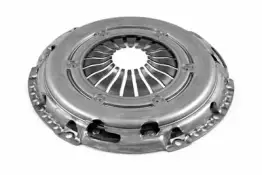
Driving a vehicle with a manual transmission offers a direct connection between man and machine. This mechanical symphony, where the engine's power is smoothly transferred to the drive wheels, is only possible thanks to one of the most critical and hardest-working components in a car - the clutch system. Although the clutch disc is often mentioned in the context of clutch wear, the real "muscle" and power source of the system is a component called the clutch pressure plate or clutch cover. Without a flawlessly functioning clutch pressure plate, it is not possible to transmit engine torque to the transmission, and the car simply becomes a stationary metal box.
In this highly detailed and technically oriented article, we will dissect the anatomy of a car’s clutch pressure plate on a microscopic level. We will examine what materials and parts it is made of, what physical forces are present there, and how to tell when this vital component is about to end its service life. We will pay enormous attention to different car models and their specific clutch pressure plate faults. We will also go through the complex process of replacing a clutch pressure plate step by step, talk about the dangers of installing self-adjusting (SAC) clutches, and provide an overview of the absolute top manufacturers in the world in the aftermarket.

1. What is the clutch pressure plate and what is its anatomy?
The clutch pressure plate is a massive and heavy metal component that is bolted directly to the flywheel of the car engine. Inside it, a clutch disc coated with friction material rotates freely, the center of which is connected to the main input shaft of the gearbox by splines. The clutch pressure plate's sole and most important function is to press the clutch disc against the flywheel with enormous force (when the clutch pedal is up), locking these three components into one rotating mass. When the driver presses the clutch pedal, the clutch pressure plate removes this clamping force, allowing the clutch disc to rotate freely and enabling gears to be changed.
In order to withstand engine torque of hundreds of Newton-meters and enormous frictional heat, a high-quality clutch pressure plate consists of several critical elements:
- Steel stamped housing (cover): This is the outer shell that covers the entire mechanism and is bolted to the flywheel. It must be extremely rigid so as not to deform under the compressive force of thousands of kilograms.
- Diaphragm spring: This is the heart of the clutch pressure plate. Visually, it resembles a plate with slots cut into the center (the "fingers" of the spring). It is made of special hardened spring steel. When the pedal is released, this spring acts as a lever that presses the internal friction ring against the flywheel. When the pedal is pressed, the release bearing pushes the center of the fingers, which causes the outer edge of the spring to rise and release the pressure.
- Pressure plate / friction ring: A heavy ring, usually made of cast iron, that directly contacts the friction material of the clutch disc. Cast iron is chosen for its excellent heat capacity and friction properties. It is this friction ring that must absorb the tremendous heat generated during clutch engagement, which can reach hundreds of degrees.
- Tangential leaf springs: Small but vital leaf springs that connect the cast iron friction ring to the steel housing. Their function is to pull the friction ring away from the clutch disc when the diaphragm spring pressure is released, ensuring quick and clean clutch disengagement. They also transfer engine torque from the housing to the friction ring.
2. Symptoms: How to recognize clutch pressure plate wear or failure?
Diagnosing a clutch system failure requires a good deal of experience. Clutch pressure plate failures are often confused with a worn clutch disc or a faulty gearbox. Here are the clearest warning signs that specifically indicate clutch pressure plate fatigue or physical breakage.
Unnaturally heavy clutch pedal ("rock-hard pedal")
This is the most classic symptom of clutch pressure plate wear. If your car's clutch pedal requires more and more physical force to press (it feels like you're pushing your foot against a rock), the problem is not the clutch hydraulics or the cable, but the diaphragm spring in the clutch cover. As the clutch disc wears, it becomes thinner. As a result, the pressure plate's friction ring has to move closer to the flywheel, which in turn changes the geometry and angle of the diaphragm spring. The "fingers" of the spring rise up towards the release bearing. Compressing a spring at such an angle requires many times more force than with a new clutch. A heavy clutch tires the foot, overloads the hydraulic cylinders, and breaks mechanical clutch cables.
Clutch slip
If you press the accelerator suddenly while driving on the highway, and the engine speed increases rapidly (the tachometer needle flies up) but the car's speed does not increase proportionally, then the clutch is slipping. Although the cause is often simply a worn-out clutch disc, the clutch pressure plate can also be the culprit. If the diaphragm spring has lost its elasticity due to overheating (slipping the clutch), it can no longer provide sufficient clamping force. Even if the clutch disc is new, it will start to slip under high torque if the pressure plate is weak.
Tremors and jerking when starting (clutch judder)
If your car shakes and jerks abnormally when starting off in first gear or when reversing, the clutch pressure plate's friction ring may be warped or unevenly worn. Severe overheating (such as when towing a heavy trailer or getting stuck in mud) can cause blue hot spots and even microcracks to form on the cast iron surface. The pressure plate loses its ideal flatness and no longer engages the clutch disc evenly, but instead "grabs and releases" hundreds of times per second, creating strong vibrations that are transmitted throughout the car's body.
Rattles, clanks and difficult gear shifting
If you hear a metallic clank or rattle when you press the clutch pedal, the diaphragm spring fingers in the clutch pressure plate may be broken, or the tangential springs may have snapped. If even one diaphragm finger is broken, the release bearing will no longer press down the spring evenly. The pressure plate will rise askew and not fully release the clutch disc. The result is that engine rotation is still transmitted gently to the transmission, which makes it extremely difficult to engage first and reverse gears, often accompanied by a rattle from the transmission synchronizers.
3. Most common car models and their typical clutch pressure plate faults
Although the working principle of the clutch pressure plate is the same in all cars with a manual transmission, different car manufacturers, engine powers, and engineering design choices have created specific bottlenecks and typical defects that are seen in car repair shops on a daily basis.
Volkswagen, Audi, Škoda and Seat (VAG Group)
VAG Group diesel models (such as the Passat B6/B7, Golf MK5/MK6, Audi A4, and Škoda Octavia 1.9 TDI and 2.0 TDI) are hugely popular, but they have very specific clutch problems, mainly related to the dual-mass flywheel (DMF) and high engine torque.
- Clutch vibration and SAC problems: These models almost exclusively use self-adjusting clutch (SAC) pressure plates. Since the 2.0 TDI produces a lot of torque, the load on the pressure plate is high. It often happens that when the dual-mass flywheel starts to fatigue and vibrate excessively, this vibration "tricks" the SAC mechanism in the clutch cover. The inner tension ring jumps into the wrong position, making the pedal engagement point uncertain and causing severe clutch slippage even when the disc itself is still thick.
- Diaphragm spring wear: On older 1.9 TDI engines, the release bearings tend to wear deep grooves directly into the diaphragm spring fingers on the clutch pressure plate. Eventually, the release bearing simply breaks through the fingers and the clutch pedal drops to the floor.
BMW (E46, E90, E60, F30)
BMW manual transmissions are generally very durable, but the controllability and longevity of their clutch system depend largely on a small factory solution called the clutch delay valve (CDV).
- Clutch pressure plate overheating caused by CDV: The CDV is a small hydraulic limiter that slows down the flow of brake fluid when the clutch pedal is released. It is installed by the factory to prevent inexperienced drivers from releasing the clutch too abruptly and breaking the drivetrain. However, with more aggressive driving styles (such as rapid acceleration), this means that the clutch slips for a fraction of a second after each gear change. This constant slip generates an incredible amount of heat that turns the cast iron friction ring of the BMW clutch pressure plate blue, deforms it, and destroys the clamping force long before the friction disc itself wears out.
- Stiff pedal on E46 and E90 models: BMW also uses SAC pressure plates. Aggressive city driving causes the SAC mechanism to tighten prematurely, which often makes the BMW clutch pedal feel rock hard. This is why many owners remove the CDV valve and install aftermarket reinforced clutch kits.
Subaru (Impreza WRX, Forester, Outback, Legacy)
Subaru's Symmetrical All-Wheel Drive offers phenomenal traction, but it means that all of the engine's torque is always directed to the road surface, without the wheels spinning. This makes the clutch pressure plate the weakest link in the system.
- Tangential spring breakage and pressure plate failure: Especially in turbo models (WRX, Forester XT) and boxer diesels, the clutch pressure plate is under enormous mechanical stress. During sudden launches, the wheels cannot slip, so the clutch takes all the impact. It is very common for the tangential springs of the clutch pressure plate to tear in half, after which the clutch refuses to disengage completely. Subaru original pressure plates also do not tolerate engine tuning (chip tuning) well – the mechanical clamping force is only sufficient for factory power; on tuned cars, the pressure plate starts to slip immediately.
Peugeot, Citroën and Renault (French cars)
In the case of manual transmissions in French cars (such as the Peugeot 307, 308, Citroën C4, Renault Megane, and Clio), engineers have often chosen soft clutch pressure plate springs for comfort, which leads to its own series of problems.
- Rapid fatigue of the diaphragm spring and breakage of cables: Smaller petrol and diesel engines often use clutch pressure plates whose diaphragm spring loses its elasticity very quickly (already at 100,000 km). The pedal becomes heavy. Since many of these models use a mechanical clutch cable, the stiff clutch pressure plate begins to break the clutch cables and the plastic pedal frame under the dashboard. The root of the whole problem is not actually the broken cable, but the tired clutch pressure plate in the gearbox.
Honda and Toyota
Japanese car manufacturers are known for their reliability, and their clutch systems (produced by Aisin and Exedy) often represent the industry standard.
- Long life, but signs of wear on the release bearing: Clutch pressure plates for Toyota Corolla, Avensis, or Honda Civic often last 200,000 - 300,000 kilometers. The most common fault with them is that the friction disc is finally worn down to the rivets, but the pressure plate itself is visually intact. However, a whistling release bearing is often a problem with Japanese cars. A worn release bearing makes deep cuts in the diaphragm fingers of the clutch pressure plate, which is why the entire clutch assembly has to be replaced anyway.
4. SAC (Self-Adjusting Clutch) – an engineering masterpiece or a mechanic's nightmare?
If you are planning to replace the clutch pressure plate on a modern car (especially BMW, VAG Group, Mercedes, Volvo), you will most likely come across the term SAC. The self-adjusting clutch, originally developed by the German manufacturer LuK, was born from the need to keep the clutch pedal pressure the same throughout the clutch's life.
In a classic clutch pressure plate, the angle of the diaphragm spring changes as the disc wears, making the pedal heavy. The SAC clutch pressure plate, however, has a stepped wedge-shaped plastic or metal adjustment ring and tiny springs inside it, separating the friction ring and the housing. When the clutch disc wears thinner and the diaphragm spring travel increases, the SAC system mechanism senses this change. The adjustment ring automatically rotates one step in a fraction of a second, compensating for the wear. The result is that the spring angle returns to its original position, and the pedal is just as soft even when the clutch disc is almost completely worn out.
Where is the danger? (Why do many DIY mechanics ruin the new SAC pressure plate?)
The SAC clutch pressure plate is delivered from the factory in a pre-tensioned state. If you start to install a new SAC clutch pressure plate on the flywheel and simply tighten the bolts in a circle (as was done with older classic cars), you will compress the diaphragm spring unevenly. The SAC mechanism will get "tricked" and think that the clutch disc is extremely worn, and the adjustment ring will immediately jump into the end position. This will happen with a loud click.
Result? You just ruined a new clutch pressure plate that cost hundreds of euros. The clutch will never disengage properly after installation, the gears will not engage, or the clutch will slip immediately. The SAC clutch pressure plate should only be installed using a special SAC installation tool (SAC tool). This tool rests on the center of the flywheel, centrally and evenly compresses the entire diaphragm spring at once, releasing the tension on the pressure plate mounting bolts, after which the bolts can be securely tightened without activating the adjustment mechanism.
5. Step-by-step guide: How is the clutch pressure plate replaced?
Replacing the clutch pressure plate (and the entire clutch assembly) is one of the most labor-intensive and physically demanding jobs in car repair. In front-wheel-drive cars, it practically requires removing half of the front axle and the car's lower frame (subframe) to make room to remove the transmission.
Step 1: Preparation and Safety
The car is lifted onto a professional car lift. The front wheels are removed. In the engine compartment, the battery, battery tray, air filter housing, air ducts, and often the starter are removed to gain access to the upper gearbox mounting bolts. The gearshift cables or linkage and the hydraulic clutch pipe are also disconnected, causing some of the brake fluid to flow out.
Step 2: Removing the driveshafts and gearbox
On a front-wheel-drive car, the driveshafts (half-axles) must be removed from the wheel hubs and gearbox. This often requires loosening the ball joints and steering knuckles. The engine is supported from below with a special engine mount or suspended from above by a chain, as the gearbox mounts are removed. The bolts connecting the gearbox to the engine block are then removed. The heavy (30-60 kg) gearbox is carefully lowered from under the car using a transmission jack, exposing the clutch pressure plate on the engine side.
Step 3: Removing and inspecting the old clutch pressure plate
Before unscrewing the bolts, it is important to note the position of the clutch pressure plate in relation to the flywheel (unless the flywheel is being replaced), although most new pressure plates are already independently balanced at the factory. The clutch pressure plate mounting bolts (usually 6 pcs.) are unscrewed gradually and diagonally (in a star pattern) to prevent the old pressure plate from bending under tension. The pressure plate and the clutch disc underneath are removed.
Visual inspection: This is a critical point. The friction surface of the old clutch pressure plate must be carefully examined. If the plate is deeply grooved, full of blue spots caused by heat, or has hairline microcracks, this is a sign of serious overheating. The diaphragm spring fingers are also checked - if they are unevenly worn, this indicates a bent release bearing or a faulty fork.
Step 4: Flywheel inspection and preparation
The clutch pressure plate rests on the flywheel. If the car has a standard single-mass flywheel, its surface must be lightly roughened with sandpaper to remove clutch dust and the glazed layer. If the car has a dual-mass flywheel (DMF), its free play and axial play must be checked with a special tool. If the flywheel is at the end of its life (rattles and shakes excessively), it must also be replaced. Installing a new clutch pressure plate on a dying flywheel guarantees the rapid destruction of the new clutch. The splines of the gearbox input shaft are thoroughly cleaned.
Step 5: Installing the new clutch disc and clutch pressure plate
A very small amount of special high-load and heat-resistant spline grease (such as Sachs or LuK original grease) is applied to the splines of the cleaned gearbox input shaft. Under no circumstances should ordinary copper grease be used, as it binds clutch dust, hardens, and causes the clutch disc to stick to the shaft! Excess grease must be wiped off the shaft; otherwise, it will fling off due to centrifugal force and damage the friction disc.
The clutch disc is placed against the flywheel, observing the correct orientation (often marked "Gearbox side"). A special centering tool (clutch alignment tool) is inserted into the center of the disc, which keeps the disc absolutely centered. Without centering the disc, it is not possible to push the gearbox shaft into the engine later.
Now the new clutch pressure plate is placed over the centering tool onto the flywheel locating pins. (If it is the aforementioned SAC pressure plate, the SAC tool is now installed, and the diaphragm spring is pressed down first). New fastening bolts, often pre-coated with thread sealant, are inserted. The bolts must be tightened in a star pattern, in stages, and strictly with a torque wrench to the force specified by the manufacturer (usually in the range of 22-25 Nm). Incorrect tightening torque or tightening in a circle permanently deforms the clutch cover housing, which leads to clutch slipping and jerking.
Step 6: Replacing the release bearing and reinstalling the gearbox
Inside the gearbox, the release bearing (and its guide sleeve if worn) is always replaced. If it is a hydraulic release bearing (Concentric Slave Cylinder - CSC) that is mounted inside the gearbox, it is replaced as a whole assembly. The gearbox is then carefully lifted back onto the engine block, making sure that the input shaft slides smoothly into the clutch disc splines without forcibly closing the gap between the engine and gearbox with bolts (this would bend the clutch disc). The system is reassembled in reverse order, new gearbox oil is poured in, and the clutch hydraulics are bled to remove any air bubbles.
6. Why does the entire clutch assembly (clutch pressure plate, disc, and release bearing) always have to be replaced?
Optimizing the repair bill is tempting for many. If the clutch slips, it seems logical to replace only the worn clutch disc and leave the old clutch pressure plate and bearing because "they still work visually". This is one of the most expensive miscalculations in car repair, popularly known by the expression "the miser pays twice".
As we saw in the previous chapters, removing and reinstalling a transmission is an extremely labor-intensive process, and the labor hours cost many times more than the parts themselves. If you leave the old clutch pressure plate in, you are putting a new, thicker clutch disc against a friction surface that has been heat-cycled for hundreds of thousands of kilometers, whose surface has worn unevenly (often becoming cone-shaped), and whose diaphragm spring has lost its elasticity. The new clutch disc will not engage the old pressure plate completely, and the clutch will start to jerk or slip again after a few thousand kilometers.
The same goes for the release bearing. The old release bearing has made millions of revolutions. If it falls apart after a month or the hydraulic bearing starts to leak (brake fluid flows directly onto the new clutch pressure plate, damaging the friction material), all this huge teardown work will have to be paid for again. Standard practice is absolute: always replace the complete clutch kit, and very often, the dual-mass flywheel as well.
7. The most well-known and reliable spare parts brands for clutch pressure plates
Since the clutch pressure plate has to withstand enormous physical forces, it is not worth experimenting with cheap and unknown copies of Asian origin on the aftermarket. The metal hardness of a cheap clutch pressure plate may not be sufficient, the diaphragm spring will tire quickly, the cover will deform in the heat, and driving the car will become a nightmare. Always choose from brands that produce original equipment (OEM):
- LuK (Schaeffler Group): A German automotive giant, inventor of the dual-mass flywheel (DMF) and the self-adjusting clutch pressure plate (SAC). For VAG Group, BMW, Ford, and many other cars, the factory-fitted clutch is made by LuK. Their clutch kits (LuK RepSet) offer uncompromising factory quality and a soft pedal feel.
- Sachs (ZF Friedrichshafen AG): Another German giant that shares the OEM market with LuK. Sachs clutch pressure plates are often known for their slightly sportier and stronger character. They also produce Sachs Performance series clutch pressure plates for heavy-duty and tuned cars, which can handle significantly higher torque without slipping.
- Valeo: A French manufacturer of components that are standard on Peugeot, Citroën, and Renault vehicles, but also produces OEM parts for Korean and Japanese cars. Valeo is known for its Four-Piece Kit (4P Kit) solutions, which allow the replacement of a problematic dual-mass flywheel with a strong single-mass flywheel, paired with a specially designed clutch disc and pressure plate to dampen the resulting vibrations.
- Aisin and Exedy: If you own a Japanese car (Toyota, Honda, Nissan, Subaru), these two brands are the absolute factory standard. Exedy is world-famous for its extremely durable original and racing clutches (Daikin Clutch). Their clutch pressure plate tolerances are micrometric.
- Blue Print (bilsteingroup): A good alternative if you are looking for parts specifically for Asian vehicles. They offer a wide range of clutch kits, often including re-branded Aisin or Exedy products at very competitive prices.
Summary and recommendations for a long life
The clutch pressure plate is the heart of a manual transmission car's durability and driving comfort. Pedal stiffness, vague engagement points, vibrations, and rattling gears are all messages the clutch pressure plate sends to the driver about its fatigue. Knowing how difficult and laborious replacing this part is, and how much precision it requires from the mechanic (especially when using SAC tools and torque wrenches), it is clear why a clutch repair is one of the largest investments in a car's life cycle.
In order to maximize the life of your new LuK, Sachs, or Valeo clutch pressure plate, there is a lot that the car owner can do themselves. How to extend the life of the clutch? Do not hold the clutch pedal down for a long time while waiting at traffic lights - this overloads both the release bearing and the diaphragm spring of the clutch pressure plate, tiring the metal unnecessarily. When starting off, try to synchronize the accelerator pedal and clutch so that the clutch slippage time is as short as possible. Avoid unnecessary "playing with the clutch" on slopes to hold the car in place; use the handbrake for this. In harsh weather conditions, such as when stuck in deep snow or mud, do not try to desperately rock the car out with long slippages - this is the fastest way to heat the friction ring of the new clutch pressure plate to blue and permanently damage it.
With the right driving techniques and high-quality spare parts, a well-installed clutch pressure plate will serve you for hundreds of thousands of kilometers without any worries, providing the same precise and smooth feel with every gear shift as when the car rolled out of the factory.
 The data shown here, especially the complete database of car spare parts, may not be copied. It is strictly prohibited to duplicate the data and database and distribute the same, and/or instruct third parties to engage in such activities, without prior consent from TecAlliance. Any use of content in a manner not expressly authorized constitutes copyright infringement and violators will be prosecuted.