

Clutch replacement and price: a comprehensive technical guide
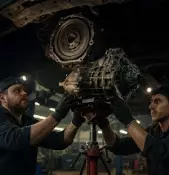
Clutch replacement and price: a comprehensive technical guide for the car owner
Owning a vehicle with a manual transmission offers a direct driving experience and complete control over the engine’s torque. But with this freedom comes the need to maintain and replace one of the most critical and wear-prone components of a car – the clutch system. Clutch replacement and its cost are topics that sooner or later come to the agenda of every owner of a car with a manual transmission. It is not an easy or cheap maintenance, but rather one of the largest repair investments in the life cycle of a car, requiring both a significant spare parts budget and hours of work from a qualified mechanic.
In this extremely detailed and comprehensive guide, we will dissect the anatomy of the clutch system, explain the logic behind the price of a clutch replacement, and look at the factors that make this job expensive. We will analyze the most common car models and their specific clutch faults, explore the nature of the dual-mass flywheel, and provide an overview of the world's absolute top manufacturers on the aftermarket. Finally, we will share tips on how to maximize the life of your new clutch with the right driving techniques.
1. Anatomy of the clutch system: What does the clutch assembly consist of?
To understand why clutch replacement is expensive and why parts wear out, you first need to look inside the system. A car's clutch is not a single part, but a precision mechanical assembly located between the engine and the transmission. Its main function is to smoothly transfer the engine's rotational energy to the transmission and, if necessary (for shifting or stopping), to interrupt this transmission. A standard clutch kit consists of several critical parts:
- Flywheel: Although technically a part of the engine, the flywheel is the direct partner of the clutch. It is a large, heavy metal disc bolted to the engine's crankshaft. It stores kinetic energy and smooths out the engine's stroke. Modern cars mostly use a dual-mass flywheel (DMF), which we'll talk about in more detail below.
- Friction disc: This is a disc covered with friction material (similar to brake pads) that is located between the flywheel and the clutch basket. It is connected to the gearbox input shaft in the middle with splines. The clutch disc is the main wearing part of the system, which wears a little thinner with each installation.
- Clutch basket or pressure plate: a heavy metal component attached to the flywheel. It contains a strong diaphragm spring. When the clutch pedal is released, the clutch basket presses the clutch disc against the flywheel with enormous force, locking them into one rotating mass.
- Release bearing: This is the bearing that moves against the diaphragm spring in the clutch basket when the clutch pedal is depressed. Applying pressure to it flexes the spring and releases the clutch disc, interrupting the drive. On newer cars, the release bearing is often integrated with the hydraulic slave cylinder (CSC - concentric slave cylinder).

2. Symptoms: How to recognize that the clutch needs immediate replacement?
Clutch wear is usually a long and gradual process. Drivers tend to subconsciously get used to a worn clutch, changing their footwork until the system finally gives up completely. Here are the most obvious symptoms that indicate the imminent end of the clutch:
clutch slip
This is the most common sign of wear. When you are driving on the highway (for example, in 4th or 5th gear) and you press the accelerator pedal sharply to pass, the engine speed increases rapidly, but the car's speed does not increase proportionally. The tachometer needle flies up, but the drive is weak. This means that the friction material of the clutch disc has worn so thin that the clutch basket can no longer press it against the flywheel with sufficient force and the disc slips around under heavy load. Driving a car like this will burn the clutch basket and flywheel blue in a short time, making them permanently unusable.
rock-hard clutch pedal
If pressing the clutch pedal requires more and more physical force (it feels like you are pressing your foot against a rock), this is a sign that the diaphragm spring in the clutch basket is getting tired. As the disc wears, the pressure plate has to move closer to the flywheel, which changes the geometry and angle of the spring. The spring fingers rise up and compressing the spring at such an angle requires many times more force. A heavy pedal overloads the car's hydraulic cylinders and breaks the mechanical clutch cables.
tremors and jerking when starting (clutch judder)
If your car shakes and jerks abnormally when starting off in first gear or when reversing, the clutch pressure plate may be warped due to overheating or the clutch disc relief springs may have broken. The heat will cause blue spots to form on the cast iron pressure plate. The surface is no longer flat and instead of engaging, the clutch will "stick and release" hundreds of times per second, creating a strong vibration that is transmitted throughout the car.
clanking, rattling and difficult gear shifting
If you hear a rattling noise at idle that disappears when you press the clutch pedal, it is a worn release bearing or a tired dual-mass flywheel. If gears (especially first and reverse) are difficult to engage and accompanied by a rattling noise, the clutch is no longer fully disengaged. The engine rotation is still transmitted to the gearbox input shaft, making it impossible for the synchronizers to operate.
3. Clutch replacement price: what does the total cost consist of?
Clutch replacement is one of the few repairs where the cost of labor and parts can be almost equal, or the labor can even be more expensive than cheaper parts. The price cannot be determined unambiguously, as it depends drastically on the make, model, engine layout and drivetrain of the car.
labor costs
To access the clutch, the gearbox must be removed. On front-wheel drive cars with a transverse engine, this is often an extremely labor-intensive process. The mechanic must disconnect the driveshafts, remove the starter, the front muffler, the gearshift cables, part of the front axle, and often the entire subframe of the car to create space to lower the gearbox. This job takes an average of 4 to 8 hours for an experienced mechanic.
On rear-wheel drive cars (like many BMWs and Mercedes) with a longitudinally mounted engine, removing the gearbox is usually quicker and easier as it is located directly under the car in front of the driveshaft tunnel. On all-wheel drive (AWD) cars, the transfer case and driveshafts often need to be removed as well, which adds several hours to the work.
spare parts cost and kit selection
This is where the biggest mistake is often made. For optimization purposes, people only want to replace the worn clutch disc. This is false economy, or "the miser pays twice". Because the work is so extensive and expensive, standard practice is to always replace the entire clutch assembly (disc, basket and release bearing).
- Classic 3-piece kit: For older and lower-powered cars (often petrol) with a single-mass flywheel, the price of spare parts is very affordable. The kits cost a fraction of the price of diesel cars.
- Dual mass flywheel kits (dmf): this is where the real price shock of a clutch replacement lies. High torque diesel engines (and also modern turbocharged petrol engines) use a dual mass flywheel to kill vibrations. It is a complex mechanical component, full of springs and cushions, with a lifespan similar to that of a clutch disc (around 150,000 - 250,000 km). If you replace the clutch kit but leave the old and wobbly dual mass flywheel in, the old flywheel will destroy the new clutch with its vibrations within a few thousand km. This is why the flywheel is always replaced as well. A complete 4-piece kit (flywheel, disc, basket, bearing) adds a significant amount to the bill, which makes replacing a clutch in a modern car an investment in the hundreds or thousands.
- Hydraulic slave cylinder (CSC): If the car has a release bearing built into the clutch slave cylinder, it is located inside the gearbox. It is always replaced with a new one. If the old CSC starts to leak after a few months, the brake fluid will flow directly onto the new clutch disc and the entire previous large investment is ruined – the clutch will start to slip and the gearbox will have to be removed again.
4. most common car models and typical clutch faults
Every car manufacturer has its own technological approach and, as a result, specific weaknesses that sooner or later show up in the clutch system.
volkswagen, audi, škoda and seat (vag group)
VAG Group diesel vehicles, especially popular models such as the Volkswagen Passat (B6/B7), VW Golf (MK5/MK6), Škoda Octavia and Audi A4 (with 1.9 TDI and 2.0 TDI engines) , are widespread. Their biggest common fault and most expensive part is the dual-mass flywheel (DMF). Over the years, the internal springs of the flywheel break and a large amount of play occurs. The car starts to make a loud noise (metallic clatter) when idling and the entire body vibrates.
Another specific problem with VAG models is the use of a SAC (self-adjusting) clutch basket. If the flywheel is worn and vibrates, it often defeats the self-adjusting mechanism of the clutch basket. The tension ring will jump into the wrong position and the clutch will start to slip, even though the disc itself may still be thick enough.
BMW
Models like the BMW 3 Series (E46, E90, F30) and 5 Series (E39, E60, F10) are generally known for their strong manual transmissions. However, they have a factory-installed part called the CDV (Clutch Delay Valve). This valve is located in the clutch hydraulic line and slows down the movement of fluid when the pedal is released. This is done so that inexperienced drivers cannot release the clutch too suddenly. The result is that the clutch slips briefly when accelerating with each gear change. This creates a lot of extra heat. The pressure plate in the BMW clutch basket turns blue from the heat, deforms and loses its compressive force. Many BMW owners have the CDV valve removed to extend the life of the clutch and make gear changes more precise. The BMW clutch pedal also becomes very hard when worn.
subaru
Subaru models like the Impreza WRX, Forester, Outback and Legacy are equipped with excellent symmetrical all-wheel drive. This ensures grip in all weather conditions, but means that the wheels do not slip when starting off. The entire impact and load of the engine torque lands directly on the clutch. Subaru clutch baskets do a very hard job. It is common for the tangential springs in the clutch basket to break (the springs are literally torn in half), after which the clutch will no longer disengage at all. In the case of Subaru, clutch replacement is a more frequent maintenance than usual, especially if the car is towing a trailer or driving on difficult terrain. In the case of diesel Subarus (boxer diesels), early dual-mass flywheels are known for their short lifespan.
Ford and Volvo
Models such as the Ford Focus, Mondeo, Volvo V50, S40 and V70 (which often share the same platforms and engines) suffer from hydraulic release bearing (CSC) leaks very frequently. It often happens that the clutch disc and basket are still in perfect condition, but the plastic release bearing seal gives way. Brake fluid (used by the clutch hydraulics) leaks directly onto the clutch basket and disc. The friction material absorbs the fluid and the clutch starts to slip hopelessly. The pedal can sink to the floor and you can't engage gears. Here too, a cheap bearing failure means replacing the entire expensive clutch assembly.
Honda and Toyota
Japanese cars, such as Toyota Corolla, Avensis, Honda Civic and CR-V , have a very good reputation in the market for their durability. Their factory clutches (mostly AISIN and EXEDY products) can last 250,000 - 300,000 kilometers in the hands of a calm driver. In their case, clutch replacement is often necessary simply due to normal wear of the disc (wear to the rivets). However, the release bearing on these cars tends to dry out over the years and start to whine or rustle (the sound disappears when you gently press the pedal). The rustling bearing eventually wears out the spring fingers of the clutch basket, so unusual sounds should not be ignored.
French manufacturers (Peugeot, Citroën, Renault)
Smaller French cars, such as the Peugeot 206, 307, Citroën Berlingo or C4 , used mechanical clutch cables (instead of hydraulics) for a long time. The diaphragm spring in the clutch basket tires out relatively quickly on these cars and becomes stiff. The pedal is heavy and this puts too much strain on the clutch cable, which eventually breaks. Although the car owner often simply replaces the cable, the new cable breaks again after a few months, because the real problem lies in the extremely stiff clutch basket inside the gearbox.
5. Self-adjusting clutch (SAC) and the dangers of installing it
A technology called SAC (self-adjusting clutch) adds nuance to the clutch prices of more expensive and newer cars (especially German manufacturers).
In a conventional clutch, the pedal becomes heavy as the disc wears and the engagement point moves up. However, a fine wedge mechanism and springs are built into the sac clutch basket. When the clutch disc wears, the system senses this and the adjustment ring automatically turns forward by one tooth. This restores the original pedal feel – the pedal remains soft from the first kilometer of the car until the clutch dies.
Why is this important when changing a clutch?
The new sac clutch basket is pre-tensioned when it comes from the factory. When a mechanic or DIYer tries to bolt the new sac basket to the flywheel with a ring gear (as was done in the old days with the Lada and Golf II), he compresses the diaphragm spring unevenly. The sac mechanism "freaks out" and thinks that the disc is completely worn out in an instant. The inner tension ring jumps into its final position with a loud click.
The result? The brand new and expensive clutch basket is permanently damaged. The clutch does not start to disengage after assembly or slips immediately. Only a special sac tool may be used to install the sac clutch, which presses the entire clutch basket spring centrally against the flywheel, taking the tension off the mounting bolts, only then can the bolts be securely fixed.

6. the most well-known and reliable spare parts brands
Since the cost of replacing a clutch is so high, it is essential to choose parts that will last for the next hundred thousand kilometers. The automotive market is dominated by original equipment manufacturers (OEM), whose quality will not disappoint.
- LUK (Schaeffler Group): German parts giant, inventor of both the dual mass flywheel (DMF) and the self-adjusting clutch basket (SAC). LUK manufactures factory clutches for countless VAG Group, BMW and Ford models. Their LUK Repset kits (which include flywheel, disc, basket and bearing) provide ideal, factory-quality ride comfort. It is the first choice of many mechanics.
- Sachs (ZF Friedrichshafen AG): Another legendary German brand. Sachs clutches are known for their durability and a slightly more specific, sometimes heavier pedal feel. In addition to the standard parts, they produce the Sachs Performance series, which is designed for tuned engines. This series uses stronger baskets and ceramic discs to withstand the enormous torque that a standard clutch would not be able to handle.
- Valeo: French manufacturer, the first choice for Peugeot, Citroën and Renault cars, as well as many Korean vehicles. Valeo is innovative, offering, among other things , 4-piece kit (4P) conversion kits. These kits allow you to replace a problematic dual-mass flywheel with a strong single-mass flywheel, using a clutch disc with special strong springs to absorb vibrations. This is a long-term and affordable solution for older diesel cars.
- Exedy and Aisin: the absolute backbone of the Japanese automotive industry. If you have a Toyota, Honda, Subaru or Nissan, there is a very high chance that the factory clutch comes from one of these manufacturers. Exedy (Daikin Clutch) is particularly known for its racing components and unbreakable quality. Their tolerances and material use ensure a lifespan that often exceeds that of their European competitors.
- Blue Print (BilsteinGroup): A good alternative if you are looking for parts for Asian cars in particular. Blue Print packages often contain original Aisin or Exedy products, offering top quality at a very reasonable price.
7. How to extend the life of your car's clutch?
The most expensive clutch kit can be destroyed in just a few months if the driver's driving habits are incorrect. The high cost of replacing the clutch can be postponed by following a few golden rules in everyday driving:
- Do not use the clutch pedal as a footrest: even if it seems to you that your foot is only resting on the pedal, it is actually applying gentle pressure to the release bearing and diaphragm spring. This causes the release bearing to rotate unnecessarily and the clutch disc can start to slip unnoticed, heating up and wearing out at a tremendous rate. Your left foot must be firmly on the floor or on a special footrest while driving.
- Gear out at traffic lights: While waiting at a red light, shift the transmission into neutral and release the clutch pedal. Holding the pedal down for minutes will tire the clutch basket springs and wear out the release bearing.
- Using the handbrake on slopes: Do not hold the car on a slope by "playing with the clutch" (half-clutch). This is the fastest way to heat the clutch pressure plate to blue. Use the handbrake assist or, on modern cars, the hill hold function to help you get started.
- Short and smooth sliding: When starting off, try to time the release of the accelerator and clutch so that the moment of sliding (drag time) is as short as possible. The longer the engine rotates at high revs with the clutch half-disengaged, the more friction material is lost. When towing and manoeuvring heavy trailers, you must be especially careful, preferring low revs.
summary
The car's clutch system is a complex, heavily loaded mechanical assembly, the replacement of which is an inevitable part of the life of a car with a manual transmission. The cost of replacing a clutch does not consist of just one friction disc, but often requires the replacement of a dual-mass flywheel, a release bearing and a clutch basket, which cost hundreds of euros. Add to that the labor-intensive removal of the gearbox, and it is understandable why this repair requires thorough budgeting.
By knowing the specifics of your car – whether it’s aggressive BMW hydraulics, Subaru all-wheel drive loads or VAG Group flywheel rattle – you can diagnose problems early. Clutch slippage, a heavy pedal or a rattle should not be ignored, as it can lead to more expensive damage to your car’s gearbox. By choosing complete kits from recognised and reliable spare parts manufacturers (such as Luk, Sachs or Valeo) and entrusting the installation to specialists with the right tools (especially for SAC clutches), you will restore your car’s factory-worthy driving comfort and smooth gear shifting for years to come. However, smart driving techniques guarantee that your new clutch kit will last the rest of your car’s life.
 The data shown here, especially the complete database of car spare parts, may not be copied. It is strictly prohibited to duplicate the data and database and distribute the same, and/or instruct third parties to engage in such activities, without prior consent from TecAlliance. Any use of content in a manner not expressly authorized constitutes copyright infringement and violators will be prosecuted.