

A comprehensive overview of the construction and parts of a car turbo
 The car turbocharger is an essential component of modern internal combustion engines, enhancing engine performance and fuel efficiency. The purpose of this technological device is to pressurize the air entering the engine, thereby increasing the efficiency of the combustion process. In this article, we will examine the key components of a turbocharger and their functions.

1. Exhaust gas intake from the engine
2. Exhaust gases outflow
3. Air intake
4. Air outlet (into the engine)
5. Turbine housing
6. Impeller
1. Intake Air Control Valve
The intake air control valve regulates the amount of air entering the engine. The purpose of this valve is to ensure an optimal air supply into the turbocharger to maximize the efficiency of the pressurization process. The valve works in coordination with other turbo system components to maintain smooth airflow and stable performance.

2. Pressure Converter
The pressure converter transforms vacuum and overpressure signals to control the actuator and other turbocharger components. This precise component regulates engine boost pressure, contributing to improved efficiency and performance.

3. Coolant Control Valve
The coolant control valve manages the engine cooling system and regulates coolant flow to cool the turbocharger’s overheated components. Its purpose is to ensure the turbocharger remains within safe temperature limits, reducing the risk of overheating and extending the turbocharger's lifespan.

4. Intercooler

The intercooler is a critical component designed to cool the compressed air from the turbocharger before it enters the engine. Cooler air is denser, meaning more air and fuel can be supplied to the engine, increasing torque and power output.

5. Turbocharger Core
The turbocharger core is the heart of the turbo system. It includes the turbine wheel, the compressor wheel, and the connecting shaft. Proper functioning of the core is crucial, as it facilitates the movement of air and exhaust gases within the turbo system.

6. Compressor Housing
The compressor housing is the part of the turbocharger that directs airflow toward the compressor wheel. It channels the compressed air from the compressor wheel to the engine. Its shape and design play a crucial role in airflow efficiency.

7. Electronic Actuator
The electronic actuator is one of the most advanced components of a modern turbocharger. It controls and regulates various turbocharger parts, such as the wastegate valve, depending on engine load and requirements. This precise component enhances turbocharger responsiveness and efficiency.

8. Turbine Housing

The turbine housing directs exhaust gases from the engine towards the turbine wheel. These gases spin the turbine wheel, which in turn drives the compressor wheel. The design of the turbine housing directly influences the turbocharger’s performance and efficiency.

Automotive turbocharger cross-section diagram:
-
1. Cool air outlet
2. Compressor wheel
3. Shaft
4. Compressor housing
5. Bearing housing
6. Air intake
7. Turbine housing
8. Exhaust gas inlet to turbine
9. Turbine wheel
10. Exhaust gas outlet from turbine
TURBO SYSTEM AND COMPONENTS:

1. Compressor air intake
2. Compressed air movement
3. Cooling radiator
4. Intake valve
5. Exhaust valve
6. Turbine intake
7. Air exiting the turbine
Common turbo problems across different car brands
-
Volkswagen / Audi – well known for soot-related issues and turbo failures associated with the EGR system.
-
BMW – oil leaks and turbo failures related to high boost pressure are relatively common.
-
Ford EcoBoost – earlier models experienced turbo damage caused by overheating.
These examples do not mean that all vehicles of the same brand are defective, but statistically certain recurring patterns can be observed.

Figure. Cross-section of an automotive turbocharger.
How to prevent turbocharger failures?
The service life of a car’s turbocharger can be significantly extended by following a few simple rules:
-
change the engine oil on time
-
use high-quality filters
-
allow the engine to warm up before applying load
-
after a long drive, let the engine idle for about one minute
These steps help to significantly reduce the risk of common, model-specific turbocharger failures in passenger vehicles.
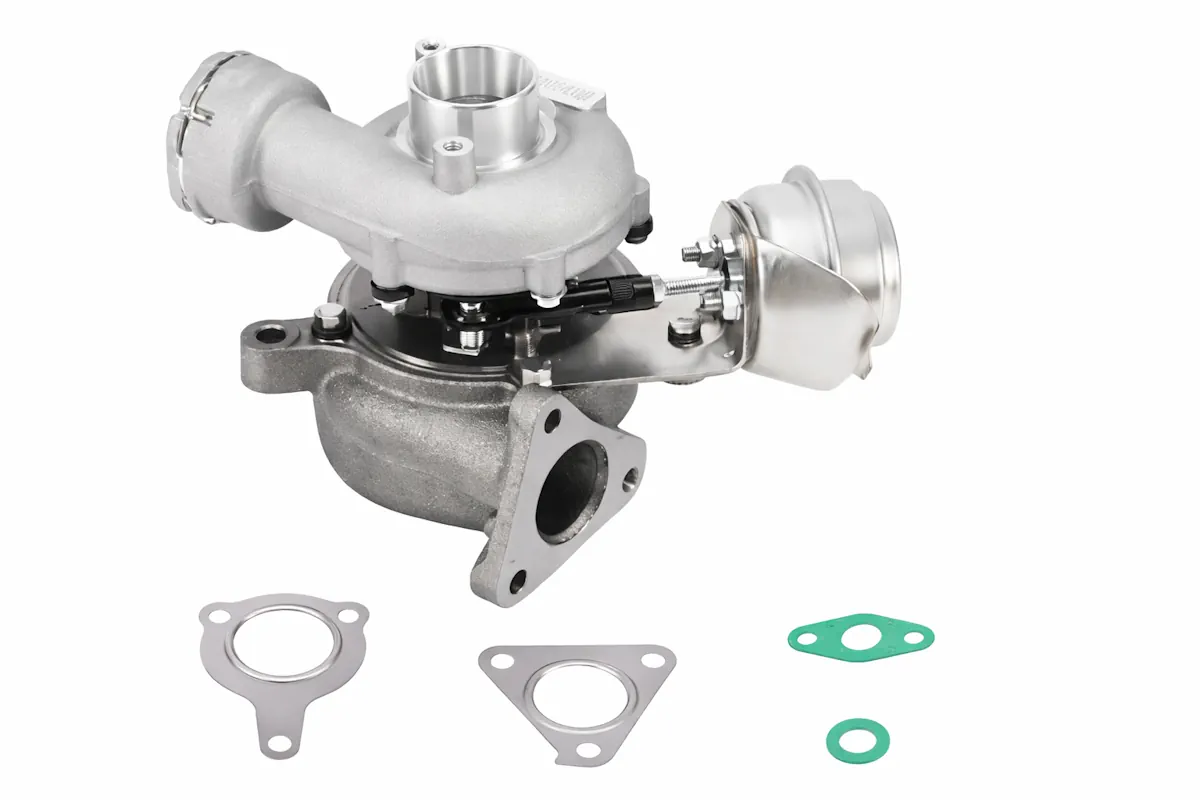
Figure. Automotive turbocharger with required gaskets (installation kit).
FAQ – Frequently Asked Questions
Does a turbo failure always occur suddenly?
In most cases, a turbocharger gives warning signs such as whistling noises, smoke, or loss of power before complete failure.
How long does a turbocharger usually last?
With proper maintenance, a turbocharger can last 200,000 km or more.
Is turbo repair always necessary?
Not always. In some cases, replacing a sensor, hose, or valve is sufficient.
Is a gasoline turbo more reliable than a diesel turbo?
Both have their own issues, but diesel engines tend to suffer more from soot-related failures.
Does driving style affect turbo lifespan?
Yes. Aggressive driving and accelerating with a cold engine significantly shorten turbo life.
Can a turbo failure damage the engine?
Yes. A failed turbo can release metal particles into the engine, potentially causing serious damage.

Figure. Automotive turbocharger integrated with the exhaust manifold.
Summary
A car turbocharger is a complex and highly efficient mechanical system in which each component plays a vital role in improving engine performance. From the intake valve and boost control system to the turbine housing and intercooler, every part contributes to the overall efficiency of the turbocharger. Regular maintenance and the use of high-quality components ensure long service life and reliable operation of the turbo system.
Here you can purchase model-specific turbo parts for your vehicle.
 The data shown here, especially the complete database of car spare parts, may not be copied. It is strictly prohibited to duplicate the data and database and distribute the same, and/or instruct third parties to engage in such activities, without prior consent from TecAlliance. Any use of content in a manner not expressly authorized constitutes copyright infringement and violators will be prosecuted.