

Car Control Arm Bushing: Importance, Types and Maintenance

Car Control Arm Bushings: Importance, Types, and Maintenance
Car control arm bushings are critical components in a vehicle’s suspension system. These small but highly significant parts ensure vehicle stability, handling, and comfort while absorbing vibrations and reducing noise.
What Are Control Arm Bushings?
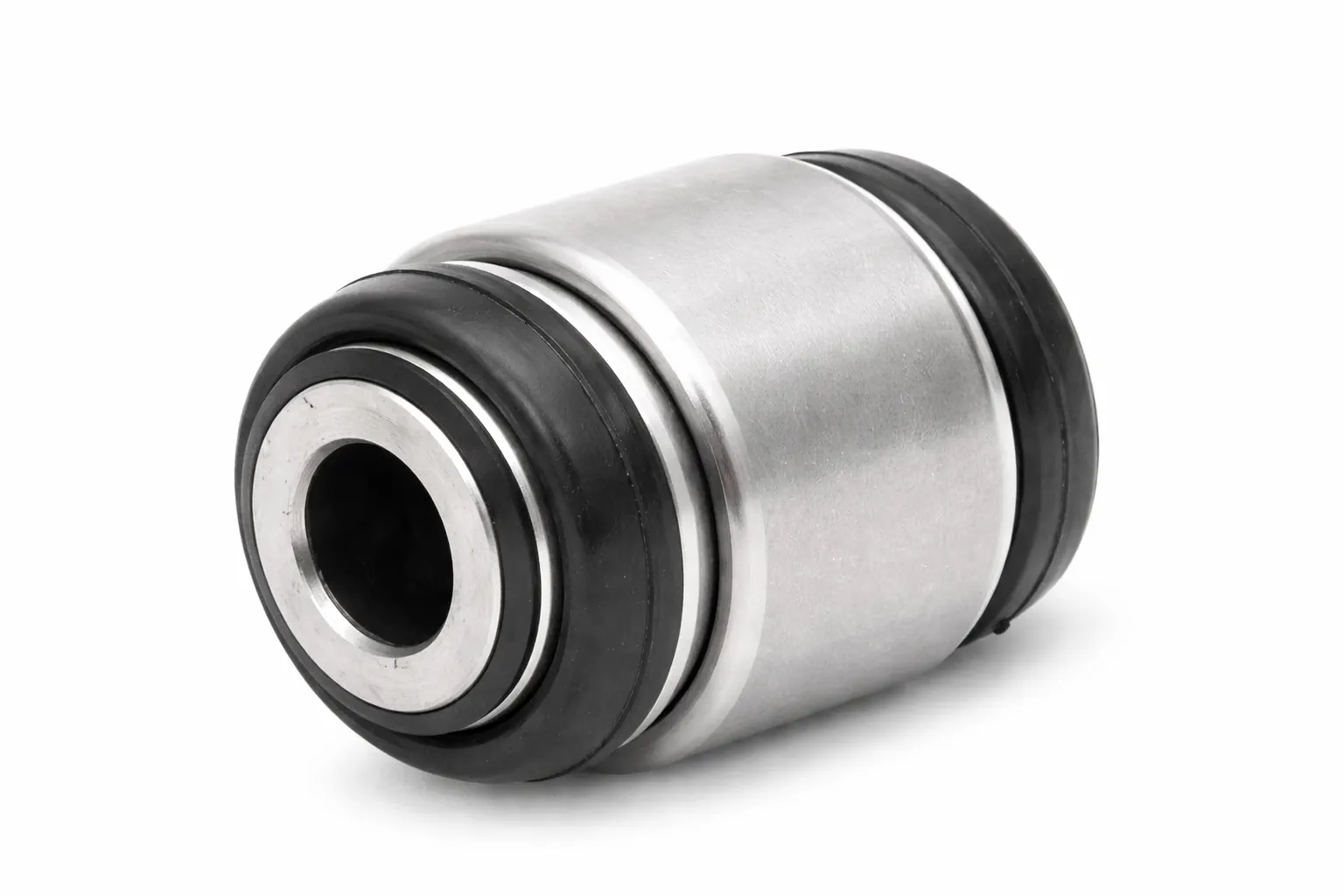
Control arm bushings are made of elastomers (typically rubber or polyurethane) and are positioned between the control arm and the vehicle’s chassis mounts. They act as dampeners, reducing direct contact between metal components and thereby minimizing wear and vibrations.
Functions of Control Arm Bushings
-
Improved Handling: Bushings allow controlled movement of the control arm, helping to maintain proper wheel geometry.
- Vibration Dampening: The elastomeric material absorbs minor vibrations from the suspension system, reducing their impact on the passenger cabin.
- Reduced Wear and Tear: Bushings prevent direct metal-to-metal contact, prolonging the lifespan of the control arm and mounting points.
Types of Bushings
-
Rubber Bushings:
- Made from natural or synthetic rubber.
- Suitable for everyday driving.
- Offer excellent vibration dampening and comfort but wear out faster than other materials.
-
Polyurethane Bushings:
- Made from durable polyurethane.
- More resistant to wear and deformation.
- Ideal for sporty driving but may offer less comfort.
-
Metal Bushings:
- Less common and primarily used in custom applications.
- Higher hardness and durability but lack vibration dampening.
Signs of Worn Bushings
Worn bushings can significantly impact vehicle handling and comfort. Pay attention to the following signs:
- Clunking or knocking sounds while driving.
- Reduced suspension performance.
- Loss of handling, especially in corners.
- Uneven tire wear.

Image: New on the left and old worn control arm bushing on the right
Bushing Maintenance and Replacement
Worn bushings should be replaced immediately to prevent further damage to the vehicle’s suspension system. Bushings are often replaced together with the control arm, but in some cases, they can be replaced separately.
- Inspection: Professional mechanics use visual inspection and road tests to check bushings.
- Replacement: Special tools are required to remove and install bushings correctly to ensure proper fitment.
- Wheel Alignment: After replacing bushings, a wheel alignment is recommended.
Control Arm Bushings: Small Parts That Define Ride Comfort and Safety
A car’s suspension is a complex system that must withstand enormous loads, absorb road irregularities, and ensure precise wheel control. One of the most critical — yet often overlooked — components of this system is the control arm bushings. These rubber-and-metal parts are the silent heroes that connect moving suspension components to the car’s body. When they “wear out,” the entire behavior of the vehicle changes.
In this article, we’ll dive deep into the world of bushings. We’ll explore why they wear out, the most common symptoms, and take a closer look at typical issues found in popular car models. Should you choose OEM-style rubber or stiffer polyurethane? Which manufacturers can you trust? We’ll cover all of that below.
What Is a Control Arm Bushing and Why Does It Fail?
A classic control arm bushing is a so-called "silent block" type component. It usually consists of two metal sleeves (an inner and an outer one) with a layer of rubber vulcanized between them. The rubber acts as an isolator — it absorbs vibrations and noise that would otherwise travel directly from the wheels into the car body, improving ride comfort. At the same time, the bushing must allow the control arm to move along a precisely defined path.
The main enemies of bushings are:
- Age and oxidation: Rubber ages, becomes brittle, and cracks (similar to old tires).
- Road chemicals and salt: These accelerate corrosion and rubber degradation.
- Oil leaks: Engine oil or power steering fluid dripping onto the bushings softens the rubber and destroys its structure.
- Poor road conditions: Repeated impacts stretch the rubber beyond its elastic limit, causing tears.
Failure Symptoms: How to Tell Your Bushings Are Worn
Before we get into specific car models, it’s important to recognize the general signs that indicate a suspension inspection is needed:
Knocking and clunking: The most common symptom. Especially noticeable on cobblestones or when driving over bumps. This usually means the rubber has failed and metal is contacting metal.
“Floating” handling: The car no longer tracks straight and requires constant steering correction. It may feel like the rear wants to step out in corners.
Uneven tire wear: A soft or worn bushing allows dynamic changes in camber or toe, causing excessive wear on the inner or outer tire edges.
Vibration under braking: Often blamed on warped brake discs, but the real culprit can be a large, soft rear control arm bushing that allows the wheel to shift back and forth during braking.
Squeaking noises: Dry, aged rubber can produce loud squeaks, especially in cold weather when driving over speed bumps.

Image: Car control arm, highlighted in red.
Model-Specific Control Arm Bushing Issues
Different car manufacturers use different suspension designs (MacPherson, multi-link suspension, etc.). Here is an overview of models where bushings require extra attention from owners.
1. BMW (3 Series E46/E90, 5 Series E39/E60) – Hydraulic Bushings
BMW is known for its precise handling, but that comes at the cost of a complex suspension. One of the biggest weak points in Bavarian cars is the front tension strut bushings.
Typical issue: BMW often uses hydraulic bushings (Hydrolager) instead of traditional rubber ones. These are filled with glycol-based fluid to damp vibrations more effectively. Unfortunately, their lifespan is limited (often 60,000–100,000 km). When cracks form, the fluid leaks out, the bushing loses its damping properties, and the result is strong steering wheel vibration during braking (typically from 80–100 km/h).
Solution: Replace with high-quality aftermarket parts. Many prefer Meyle-HD products, where the hydraulic design is replaced with solid rubber — slightly stiffer, but far more durable and leak-proof.
2. Volkswagen Group (VW Passat B6/B7, Golf, Audi A4/A6)
VAG cars are among the most common on our roads. Two main problem areas stand out.
Rear front control arm bushings (console bushings): On platforms used by the Golf, Škoda Octavia, and Seat Leon, the rear front control arm bushing is pressed into an aluminum bracket. These are designed soft with large voids for comfort. On rough roads, the voids tear quickly, causing clunking and wheel movement during acceleration and braking. A popular upgrade is replacing them with solid rubber bushings from the Audi S3 or TT.
Audi multi-link suspension: Audi A4 and A6 models use four control arms per wheel at the front. The upper arm bushings wear quickly due to constant torsional stress. Since replacement is labor-intensive (the long bolt often seizes), it’s wise to replace the entire set at once.
3. Volvo (V70, S60, S80 – P2 and P3 platforms)
Volvos are heavy cars, which puts significant stress on bushings.
Typical issue: Front control arm bushings are a primary wear item. OEM bushings often have large cutouts inside a metal shell. These eventually crack, and the inner section separates from the outer shell. Symptoms include vague handling and clunking during acceleration.
Rear suspension: On P2 platform Volvos (until 2007), large rear trailing arm bushings are a common issue. Replacement requires a special tool to press the bushing out in place; otherwise, the entire rear subframe must be removed.
4. Ford (Focus, Mondeo) – “Butterfly” Bushings
Ford is known for excellent handling in its front-wheel-drive cars, thanks to the complex Control Blade multi-link suspension.
Typical issue: Large rear trailing arm bushings, nicknamed “butterflies” due to their shape. These bushings are large, heavily loaded, and complex in design. When they fail, the rear of the car becomes unstable and tire wear increases dramatically. Replacement is labor-intensive, as bolts often rust into the bushing sleeve and must be cut out.
5. Honda and Japanese Cars (Civic, CR-V, Accord)
Japanese cars generally have very durable suspension components, but they still have their Achilles’ heel.
Typical issue: Large rear trailing arm bushings on models like the Honda Civic and CR-V. These are massive rubber components that develop deep cracks with age. Because of their size, cracking significantly reduces stiffness, causing the rear suspension to feel “floaty.” This is a very common inspection remark. Fortunately, high-quality aftermarket parts are widely available for Japanese cars.
Spare Parts Selection: Brands and Quality
When it comes to control arm bushings, one rule applies: a cheap bushing is the most expensive bushing. Labor costs for replacement are the same (or even higher), but a cheap part may last three times less.
Premium Class (OEM Quality)
These manufacturers often supply parts directly to car factory assembly lines. Choosing them is the safest investment.
- Lemförder (ZF Group): Absolute top tier, especially for German cars. Often the same product sold at dealerships — just without the car logo.
- TRW: A very common manufacturer of brake and suspension components, known for high quality.
- Meyle-HD: “Upgraded” spare parts engineered in Germany. As mentioned earlier, they often replace weak hydraulic bushings or plastic parts with stronger rubber and metal. Typically comes with a 4-year warranty.
- Febi Bilstein: Good balance between price and quality; often repackages parts from OEM suppliers.
Mid-Range and Budget Options
- Sidem: A Belgian manufacturer specializing exclusively in suspension components. Very wide range, including rare models.
- Moog: A popular American brand offering solid quality.
- Delphi: Widely available, mid-range pricing and durability.
Polyurethane – Is It Worth It? (Powerflex, Strongflex)
Many car enthusiasts replace rubber bushings with polyurethane (PU) ones. What’s the advantage? Polyurethane is more resistant to oil, salt, and aging. It is stiffer, which improves handling precision and steering feel.
Downside: The added stiffness means more vibration and road noise transmitted into the cabin. For street cars, “purple” or “red” (softer) compounds are usually recommended, while “black” and “yellow” are intended for track use. It comes down to preference — if you want comfort, stick with rubber; if you want precision and longevity, choose polyurethane.
Important Installation Tip
Finally, one of the most critical nuances — often overlooked even by experienced mechanics — and a common reason why a new bushing fails after just 1,000 km.
Tighten Bushings Under Load!
When replacing a control arm or bushing, never fully tighten the bolts while the car is on a lift with the wheels hanging freely. In this position, the control arm is outside its natural working angle. If you tighten the bolt (locking the bushing core) and then lower the car, the bushing is immediately twisted under tension. The first pothole can tear the rubber apart.
Correct method: Final tightening should only be done when the car’s weight is on the wheels (or the suspension is compressed into its working position). This keeps the bushing neutral and ensures long service life.
Take care of your suspension, choose quality parts, and enjoy a quiet and safe ride!
Summary
Control arm bushings are a crucial part of the suspension system, ensuring ride comfort and safety. Regular maintenance and timely replacement help maintain vehicle stability and extend its lifespan.
Here you can find a wide selection of tools for control arm bushings.
Buy control arm bushings for your car here!
 The data shown here, especially the complete database of car spare parts, may not be copied. It is strictly prohibited to duplicate the data and database and distribute the same, and/or instruct third parties to engage in such activities, without prior consent from TecAlliance. Any use of content in a manner not expressly authorized constitutes copyright infringement and violators will be prosecuted.