

Difference between car brake master cylinder and car wheel brake cylinder
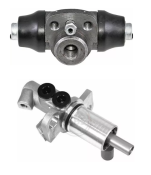

- Location: The master cylinder is located near the brake pedal, usually on the driver’s side of the engine compartment.
- Function: The brake master cylinder is responsible for converting the force you apply to the brake pedal into hydraulic pressure. This pressure is then transmitted through brake lines to the wheel cylinders at each of the car's wheels.
- Working: When you press the brake pedal, the master cylinder pushes brake fluid through the hydraulic brake lines to the wheel cylinders. This hydraulic pressure causes the brake pads or shoes to clamp down on the brake discs or drums, slowing or stopping the vehicle.
- Key Role: The master cylinder is the primary component in generating the hydraulic pressure that operates the brakes at each wheel.
- Components: It consists of a piston, spring, fluid reservoir, and seals. Some master cylinders may have multiple circuits, one for the front wheels and another for the rear wheels, improving safety by providing redundancy (if one circuit fails, the other still works).
2. Car Wheel Brake Cylinder
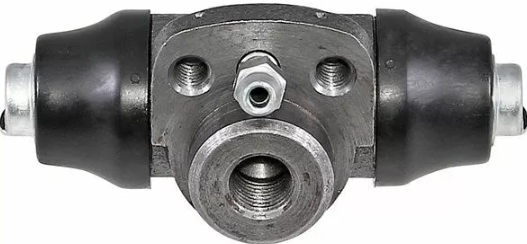
- Location: The wheel brake cylinder (also called a wheel cylinder in drum brake systems) is located at each wheel, either in the brake drum or near the brake disc, depending on the braking system type.
- Function: The wheel brake cylinder receives the hydraulic pressure from the master cylinder via brake lines and then activates the braking mechanism at the wheel (either drum or disc).
- Working: In drum brakes, the wheel cylinder pushes the brake shoes outward to make contact with the brake drum, creating friction that slows the vehicle. In disc brakes, the hydraulic pressure pushes the brake pads against the brake rotor to create stopping power.
- Key Role: The wheel brake cylinder is responsible for using the hydraulic pressure provided by the master cylinder to apply force at the individual wheels, creating the braking action.
- Components: A wheel cylinder typically consists of one or two pistons, seals, and a hydraulic connection to the brake lines. In disc brake systems, the "brake calipers" serve a similar function to the wheel cylinder.
Key Differences:
| Feature | Brake Master Cylinder | Wheel Brake Cylinder |
|---|---|---|
| Location | Near the brake pedal, in the engine compartment | At each wheel, within the brake drum or brake caliper |
| Function | Converts mechanical force from the brake pedal into hydraulic pressure | Applies hydraulic pressure to the brake pads or shoes |
| Role in the Brake System | Primary source of hydraulic pressure for the entire brake system | Secondary device that applies braking force at the wheels |
| Working Principle | Moves brake fluid to the wheel cylinders, creating hydraulic pressure | Receives hydraulic pressure to activate the brake mechanism at each wheel |
| Type of Brake System | Used in all hydraulic braking systems (disc and drum) | Used in drum brake systems (wheel cylinders) or disc brake systems (calipers) |
Summary:
- The master cylinder generates hydraulic pressure when you press the brake pedal, sending fluid to the brake cylinders.
- The wheel brake cylinder (or brake caliper in disc brakes) uses the hydraulic pressure to apply the brakes at each wheel, either by pushing brake shoes in drum systems or brake pads in disc systems.
Both parts are crucial for a functioning braking system, but they perform different roles in transferring and applying the force needed to stop the car.
 The data shown here, especially the complete database of car spare parts, may not be copied. It is strictly prohibited to duplicate the data and database and distribute the same, and/or instruct third parties to engage in such activities, without prior consent from TecAlliance. Any use of content in a manner not expressly authorized constitutes copyright infringement and violators will be prosecuted.