

Car heating and ventilation system: key parts and their functions
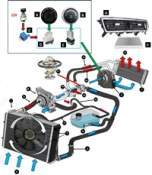
Car Heating and Ventilation System: Key Components and Their Functions
The car heating and ventilation system ensures a comfortable temperature and quality airflow inside the cabin. This complex system consists of multiple critical components working together to provide a pleasant driving experience. Below, we take a closer look at the main parts and their importance.

A: Cabin Blower Speed Control Knob (Fixed Speed) (Cabin blower speed control knob with fixed speed)
B: Cabin Blower Speed Control Knob (Variable Speed) (Cabin blower speed control knob with variable speed)
The cabin blower speed control knob allows the driver to adjust the airflow strength inside the cabin. This knob modifies the intensity of the electric current, which in turn affects the fan speed. A properly functioning control knob ensures that you can always choose the appropriate speed level, regardless of weather conditions.
C: Cabin Blower Relay (Relay, interior blower)
The cabin blower relay acts as an electrical switch that controls power to the fan. When selecting different fan speeds or turning the system off completely, the relay activates the corresponding electrical circuits. A faulty relay may cause uncontrollable fan operation or a complete shutdown, so it is crucial to replace it when necessary.
D: Cabin Blower Resistor (Regulator or Resistor, interior blower)
Depending on the factory-installed ventilation system, different components control the blower operation. If the car has a fixed-speed fan control knob (like in point A), then a resistor (blower resistor) manages the fan speed. If the car has a variable-speed fan control knob, a control unit (point E) is responsible for fan regulation. The blower resistor adjusts the voltage supplied to the fan motor, allowing the blower to operate at different speeds. When the driver sets the ventilation to a lower speed, the resistor reduces the voltage to the fan motor. If set to a higher speed, the resistor lowers resistance, allowing a higher current flow through the motor. A faulty resistor can cause: - The blower to operate only at one speed - The blower to stop working completely Regular replacement ensures proper heating and ventilation operation.
E: Cabin Blower Control Unit (Control Unit, heating/ventilation blower)
If the car has a variable-speed fan control system, a control unit (instead of a resistor) regulates its operation. The control unit is the "brain" of the heating and ventilation system, collecting data and sending instructions to different components. It monitors temperature, humidity, and fan speed to maintain a stable temperature and optimal airflow. A malfunctioning control unit may cause: - Irregular heating performance - Blower operation issues - Complete system failure
F: Cabin Air Filter (Cabin air filter)
The cabin air filter is an essential component that ensures clean, dust-free air inside the vehicle. Over time, the filter clogs, reducing airflow and increasing the fan motor's workload. Regular filter replacement improves: - Air quality - Ventilation efficiency - Passenger comfort
G: Dashboard Air Nozzle or Center Console Vents (Dashboard Air Nozzle or centre console)
Dashboard air nozzles and center console vents direct airflow throughout the cabin. These ensure proper air distribution to both front and rear passengers. If ventilation nozzles are blocked or damaged, airflow may become: - Insufficient - Uneven, affecting system performance
H: Blend Actuator (Blend Actuator)
The blend actuator is an electromechanical component that controls airflow direction and mixing, ensuring the desired temperature output. The actuator moves flaps that determine how much air flows through the heating or cooling system. A faulty blend actuator may cause: - Airflow restriction - Inability to direct warm air where needed
Key Heating and Ventilation System Components
- 1. Interior Heat Exchanger (Heater Core)
- 2. Cabin Blower (Fan)
- 3. Lower Radiator Hose (Lower radiator hose)
- 4. Coolant Expansion Tank (Coolant expansion tank)
- 5. Radiator Cooling Fan (Radiator cooling fan)
- 6. Airflow System (Air flow)
- 7. Radiator (Radiator)
- 8. Upper Radiator Hose (Upper radiator hose)
- 9. Water Pump (Water pump)
- 10. Thermostat Housing (Thermostat housing)
- 11. Thermostat (Thermostat)
- 12. Hose to Heater Core
- 13. Warm Air Flow (Warm air)
- 14. Heater Return Hose (Heater return hose)
- 15. Steam Hose (Steam hose)
- 16. Coolant Flow from Engine (Coolant from Engine)
- 17. Radiator Bleed Hose (Radiator bleed hose)
Summary
The car heating and ventilation system consists of multiple essential components, including the blower control knob, relay, control unit, air filter, and ventilation nozzles. All of these work together to ensure a comfortable driving experience in all weather conditions. Regular maintenance and timely replacement of faulty components help keep the system running efficiently and maintain an optimal cabin temperature.
 The data shown here, especially the complete database of car spare parts, may not be copied. It is strictly prohibited to duplicate the data and database and distribute the same, and/or instruct third parties to engage in such activities, without prior consent from TecAlliance. Any use of content in a manner not expressly authorized constitutes copyright infringement and violators will be prosecuted.