

Information about painting and colors
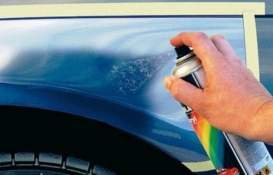 General information and frequently asked questions about painting and spray paints. The article contains information about Motip-Duplicolor products, information about products from other brands may differ from the information provided here depending on the specifics of the product.
How different are the properties of the paints?
All paints (acrylic, nitro, synthetic resin-based, water-based paint) can be overpainted with synthetic paint.
Synthetic resin-based paint can only be overpainted with synthetic resin paint. Acrylic paint and / or nitro-combined paint cannot be overpainted with synthetic resin paint. Due to incompatibility reasons, this would "lift" the paint.
How do acrylic, nitro and synthetic resin paints differ? Which paint is right for me?
Acrylic and nitro-combined paints are distinguished primarily by their faster drying times and harder surfaces. Therefore, such paints are mainly used in the automotive industry.
Synthetic resin paint (= alkyd resin) is easier to use for "inexperienced painters" because the paint dries more slowly and therefore there are no visible transitions when you start spraying again. This is an advantage especially when spraying larger surfaces (e.g. table tops, wardrobe fronts).
How do you get the perfect paint layer on polystyrene?
Paints, including spray paints, generally contain solvents that attack polystyrene and cause its particles to separate. One exception here is water-based paints (DUPLI-COLOR AQUA). These can be applied to polystyrene without hesitation.
The DUPLI-COLOR series includes a special range of colors called "Deco Matt". These colors contain a special solvent that does not attack the polystyrene surface.
When using the special DUPLI-COLOR polystyrene primer, the polystyrene object can then be coated with any solvent-based paint. Important note: the primer must completely cover the entire polystyrene surface to separate it from the subsequent paint layer.
What should be considered when coating hard plastic with paint?
Synthetics are sensitive to solvents and react strongly to temperature fluctuations (flexibility). They also have a very smooth surface to which the paint does not adhere. Therefore, pre-treatment with a plastic primer is absolutely necessary. This primer forms a bridge between the plastic substrate and the subsequent paint layer that can be covered with paint.
What is important to note in the drying time information?
Drying time information is available in the technical data sheet for the respective product on this website. Drying times always depend on the ambient temperature and humidity and the thickness of the paint layer.
Dust dry -> The paint layer has dried so that dust particles can no longer encapsulate the paint.
Touch dry -> The paint has not yet fully hardened and become elastic; it can still be touched.
Workable -> The paint can be sanded and coated.
Thoroughly dry / hardened -> The paint has reached its maximum final hardness.
What weather conditions are suitable for painting with aerosol paint?
Of course, in dry weather and / or in a dry environment protected from the wind. The can should be at room temperature. Optimal results are achieved at an ambient temperature of + 15 ° to 25 ° C. The humidity should not exceed 60 percent; otherwise the drying period would be significantly extended.
How much zinc is in zinc spray paint?
The proportion of zinc dust in the dry paint film is over 90 percent.
Can zinc spray paint be painted over directly or is a primer needed first?
A primer, e.g. metal primer or universal primer, must always be sprayed onto the surface before applying zinc paint.
How do color deviations occur between the color code given by the vehicle manufacturer and the spray paint?
Our car paints are simulated and classified according to the specifications of the car manufacturers to the best of our knowledge and belief. However, deviations from the color of your vehicle may occur for the following reasons:
During the production of cars, there may be color tolerances at different car manufacturers' production sites.
Different years of construction can also cause slight color differences.
Older vehicles have been exposed to the elements for some time (sun, rain, hail and storms) and as a result, the original paintwork has often lost its gloss and intensity.
Are there color deviations from the original color in older vehicles?
Yes, this must be taken into account. UV radiation affects the gloss and intensity of the paint. The older the vehicle, the greater the color deviation can be.
Why does polyester resin often not dry properly?
This is not a reason for complaint, because it is designed that way. The adhesive surface forms a connecting bridge for the subsequent application of the filler layer. If this adhesive surface is not desired, it can be rinsed off with nitro thinner.
How temperature-resistant is the paint / filler?
As a rule, acrylic, nitro and synthetic resin paints are temperature-resistant up to 80 ° C.
In addition, we have developed products for special areas of application that can be subjected to even higher temperatures. For example, heat-resistant spray paint (300-690 ° C depending on the color shade.
Fillers (120 ° C). These values relate to the completely dried and hardened state of the respective material.
Why do many products have an anti-spray ring?
The red anti-spray ring was developed to prevent accidental spraying (e.g. by children or through vandalism on the sales shelf).
This small red ring is located under the tamper-proof cap and under the spray head. When the spray head is removed, the ring can be very easily lifted up and removed with a sharp object, e.g. a screwdriver. Do not use force when doing this, as this can damage the can and the contents may leak. Important: The anti-spray ring can then be reinserted.
Is AQUA spray paint weatherproof?
The new generation of Aqua spray paints can also be used for painting objects outdoors. A prerequisite for weatherproofing is the complete curing of the paint, which is achieved after five days.
How and with which products can chrome parts be coated?
In principle, coating chrome parts is difficult. If you still want to coat chrome parts, you must first clean and sand them, as with other coating processes. Then prime with a universal primer or aluminum protective primer. Once the primer is dry, you can basically paint it over with any acrylic, nitro or synthetic resin paint. Since this is mostly a matter of vehicle parts, it is recommended to use acrylic or nitro combination paints. The adhesion, even to polished chrome parts, is not comparable to that of conventional metal substrates.
Chrome effect / silver Silver Chrome: what is the difference between the two products?
Chrome effect paint quality is not weatherproof and abrasion-resistant. Therefore, this product should only be used for decorative purposes. Chrome effect (including gold and copper effect) cannot be re-coated with varnish to maintain the shine! If the shine has faded, there is only one thing to do: re-coat with a new coat of paint!
With Silver Chrome Silver Chrome Paint (Product ID: 1011), MOTIP DUPLI has succeeded in developing a high-gloss paint aerosol for the first time, which gives a chrome-like appearance and is resistant to weather and abrasion!
What is spray mist and how can its effects be reduced?
At warmer temperatures, but also when the distance to the object to be coated is too great, the paint dries while still in the air and does not even reach the coating layer. This paint deposit on the surface is called spray mist. Therefore, follow the instructions for spraying distance given in the product's instructions for use.
Always spray in a place protected from the wind to prevent spray mist particles from settling on the surface while it is still damp. The size of the spray mist that is created depends on the amount of paint, ventilation conditions (wind conditions) and the type of application. Inside the room, spray mist can spread to a radius of 10 meters. Therefore, we definitely recommend placing protective covers carefully and abundantly in the surrounding area.
Can spray paints be used inside the apartment?
If you do not want to spray large areas, the answer is in principle yes. However, you must ensure adequate ventilation. Please follow the instructions. In addition, you must properly cover the surrounding area to protect it from the spray mist.
Are spray paints conductive (electrically weldable)?
Zinc spray and aluminum spray are conductive. Our protective primer sprays are also electrically weldable at the appropriate layer thickness. The electric current penetrates the paint layer, thus neutralizing the insulating effect.
Are spray paints petrol-resistant?
Acrylic paints are relatively resistant to petrol spills. A slight swelling may occur, but this disappears after approx. 24 hours. In this case, you should not wipe off the petrol, but wait 24 hours for the petrol to escape from the paint layer. If this is observed, the two-layer clear coat surface can be considered petrol-resistant.
The synthetic resin and water-based properties are not petrol-resistant, as is Zapon Cristal Spray.
The best petrol resistance is provided by ColorMatic 2-Component Quality Varnish 2K (Product ID: 618860).
Which clear coat is the right one to use?
• All paints (acrylic, nitro, synthetic resin based) can be recoated with synthetic resin paints.
• Synthetic resin paints can only be recoated with synthetic resin paints. Acrylic paint and/or nitro combination paint cannot be applied over synthetic resin paint. Due to the different drying times, this would lead to the paint "rising".
• Car repair paint (acrylic, nitro combination) is best recoated with a 2-layer clear coat; it has the highest petrol resistance of the single-component clear coats.
• Effect paints, such as 3D effect Product ID: 458496, diamond effect, light-up paint id 458697, metallic, should be recoated with a clear coat to protect the effect pigments. When painting a motor vehicle and/or its parts that run on petrol, it is best to apply the clear coat in two layers.For decorative purposes, we recommend Zapon varnish, which has the highest gloss properties.
• Granite effect paint: After drying (approximately 24 hours), the granite structure must be sealed and re-coated with DUPLI-COLOR Granit Clear Coat varnish or another DUPLI-COLOR colorless varnish for protection (especially when painting objects used outdoors).
• Bronze, gold / chrome / copper: These effect colours cannot be protected with a clear varnish, as the varnish would destroy the effect.
• 2K Clear Coat (e.g. ColorMatic 2-Component Quality Varnish 2K Product ID: 618860) is mainly used in professional environments. It is particularly resistant to petrol and weather.
Special metal substrates (stainless steel, zinc, non-ferrous metals) - which spray paints can I use?
• Stainless steel surfaces can be coated after sanding with fine abrasive paper and thorough degreasing. The same applies to galvanized surfaces. For better adhesion of stainless steel surfaces, it is recommended to use a protective primer.
• For zinc, aluminum protective primer Product ID: 458570 should be used. It is best to apply paint to hot-dip galvanized surfaces without sanding the substrate, of course, before degreasing. Fresh, undecayed hot-dip galvanized surfaces are difficult to coat. After sanding and degreasing, aluminum protective primer and topcoat can be used. However, adhesion is always worse than on a different substrate.
• Non-ferrous metals can be protected against corrosion by re-coating with Zapon Crystal Spray varnish. Use the same technique as for stainless steel. Water-based clear varnish should not be applied to non-ferrous metals as it may cause discoloration.
Why is the paint not adhering properly to the surface?
Maybe the substrate was not completely clean, dry and free of grease (silicone-free)? If necessary, use a degreaser or silicone remover before coating.
For problematic substrates, use special primers; e.g. plastic primer for coated plastics or polystyrene primer for polystyrene.
The paint is flowing. How to prevent this?
Spray in crosswise layers (horizontally and vertically). Start spraying away from the edges of the object. Keep the spray head firmly pressed down throughout the entire movement. Move the spray can evenly and slowly back and forth and perform the rotational movement away from the edges of the object. This will allow you to best dose the spray jet and avoid excess paint getting on the surface, resulting in "tears" or "running paint".
The spray head should not be too close to the object. Instructions for the spraying distance can be found on the product label; as a rule, the distance should be between 15 - 25 cm.
The optimal processing temperature is between 15 ° C and 25 ° C (room temperature). The spray bottle, the object to be sprayed and the surrounding environment should all be at this temperature.
Do not try to achieve a smooth, even surface with the first spray application. It is better to spray several thin coats than to try to apply the paint in one thick coat.
My applied paint layer looks like the surface of an orange. How can I avoid this?
If the spray distance is too great, the paint will dry as it travels through the air towards the object. This spray mist can initially settle on your painted object as a matte finish. If you now apply another coat, small bumps will form - the so-called "orange peel".
Why does the paint peel?
There should always be more pigments in the base coat than in the subsequent coating. Primers are highly pigmented; clear varnishes do not contain any pigments. The optimal structure is therefore as follows: primer, paint layer, colorless varnish layer. Incompatibility can also occur when using paints from different manufacturers. Therefore, always use products from the same manufacturer for the same object.
Paint cannot adhere to smooth plastic surfaces. To prevent peeling, the object must always be pre-treated with a plastic primer. For best results, also use a plastic cleaner beforehand.
Why do wrinkles appear on the surface I painted (the paint "rises")?
Synthetic resin paint can only be recoated with synthetic resin paint. The solvents in synthetic resin evaporate slowly, while those in faster-drying acrylic paints evaporate quickly. If you now apply a fast-drying acrylic paint on top of a slow-drying synthetic resin paint, the solvents in the acrylic paint will start to dissolve the layer underneath. Because the surface of the quick-drying acrylic paint dries faster than the synthetic resin underneath, which has begun to dissolve, the paint lifts and forms unwanted wrinkles.
When recoating synthetic resin-based paint with synthetic resin paint, please note that this must be done either within two hours of applying the primer or after a waiting period of 24 hours. If this is not observed, the same "lifting" effect will occur.
I don't like the result of the painting. Can I remove the paint again? It is best to remove the paint again immediately after coating with either nitro solvent or acetone.
AQUA spray paint can be washed off within 20 minutes with water and a surfactant-based cleaner.
What is the difference between 1K (one-component) and 2K (two-component) products?
One-component products do not require additional hardener.
Before using the hardener, two-component products are mixed in the ratio indicated on the label and must then be used up within the specified time. Almost all presto putty products are two-component products.
In the field of paint technology, we have developed a special production process under the ColorMatic brand. The hardener is integrated into the can and, thanks to a special cutting technology, it is activated inside the can when it is first used. Even after the hardener has been activated, the contents can no longer be used after the expiration date indicated on the label. Two-component paints are distinguished by a particularly high resistance to gasoline and scratches.
I didn't use all the paint in the can. Can I keep it and use it again later?
Spray paints are self-contained painting systems. This prevents the paint from drying out and we can guarantee a shelf life of ten years. However, practice has shown that spray paints can still work perfectly after 15-20 years! Of course, proper storage is important.
In most MOTIP DUPLI sprayers, the self-cleaning spray tips ensure that the sprayers are clean. However, if you want to make sure that the sprayer does not clog after use, simply turn the can upside down and press the spray head for 2-3 seconds. This will only spray the aerosol and clean the valve of any active ingredients (paint residue).
How to dispose of MOTIP DUPLI products correctly?
Product packaging (aerosol cans, putties, etc.) whose contents have been completely used up can be disposed of as household waste. Please bring the remaining paint cans to a special waste disposal site. Please follow the instructions of DSD (Green Dot) waste handlers.
How should I store MOTIP DUPLI products?
Storage should be in unopened packaging in a dry room (maximum 60% humidity) at a temperature of 10-25 ° C. Aqua spray paints must be protected from frost. The products must be protected from light and direct sunlight. Caution: aerosols must never be exposed to temperatures exceeding 50 ° C and must be kept away from sources of ignition.
What precautions should I take when spraying?
The required safety precautions vary from product to product. Please follow the information on the product labels.
In general, aerosols should be protected from light and direct sunlight and should never be stored above 50°C. Never spray on an open flame or incandescent material.
Aerosol cans should never be opened forcefully or burned, even when empty.
Always ensure adequate ventilation. When using spray paint, explosive mixtures may form when in contact with air.
Keep products out of the reach of children.
 The data shown here, especially the complete database of car spare parts, may not be copied. It is strictly prohibited to duplicate the data and database and distribute the same, and/or instruct third parties to engage in such activities, without prior consent from TecAlliance. Any use of content in a manner not expressly authorized constitutes copyright infringement and violators will be prosecuted.