

ABS sensor (ABS wheel speed sensor) – what is it and why does a car need it?
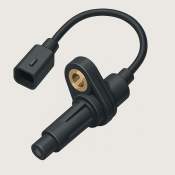 An ABS sensor (or wheel speed sensor ) is a part of the safety system that measures the rotational speed of each wheel .
This information goes to the ABS brain, which keeps the wheels from locking up when braking and helps the car avoid skidding.
simply put:
The ABS sensor tells the car how fast each wheel is spinning so that the car knows when to intervene when braking.
It is used by all car brands – Audi, VW, Volvo, BMW, Mercedes, Toyota, Škoda, etc.
How does the ABS sensor work?
The ABS sensor reads wheel movement from a toothed ring or magnetic disk.
When the wheel rotates, a signal is generated in the sensor, which the ABS brain converts into speed.
The ABS system uses this information:
-
to prevent the wheels from locking,
-
to stabilize the car on the road,
-
to control the esp , asr , 4x4 system ,
-
to ensure short and safe braking distances.

ABS sensor types
-
inductive sensor (passive)
-
uses the proximity of the gear to create a signal.
-
common on older Audi, VW, Volvo models.
-
-
Hall effect sensor (active)
-
reads the magnetic ring signal.
-
used on almost all newer cars.
-
newer sensors are more accurate and work even at very low speeds.
common abs sensor problems
ABS sensors work close to the wheel and get a lot of dirt, salt and moisture.
most common faults:
-
sensor dirty or disturbed by metal debris,
-
cable broken or connector oxidized,
-
gear ring rusty or broken,
-
The ABS light in the dashboard is on ,
-
the car loses traction control and stability control ,
-
The speedometer does not work (on some models).
examples:
-
VW Golf and Audi A4: problems with sensor cables.
-
Volvo V70: Rusty gear rings cause false signal.
-
Škoda Octavia: typical connector problems.
signs that the abs sensor may be faulty
-
the abs or esp/asr warning light comes on.
-
ABS stops working when braking.
-
the car slides more easily.
-
Power distribution errors may occur in four-wheel drive (4x4).
-
stability control error codes are triggered.
-
The speedometer may stop on some models.
How to maintain an ABS sensor?
-
Keep the wheel arches and brake system clean (mud, salt, metal shavings).
-
Visually inspect the cables and connectors .
-
Do not use the pressure washer too close to the sensor or connector.
-
replace the sensor if the signal disappears or the code returns.
The ABS sensor is usually not repaired , but a new one is installed.
When should the ABS sensor be replaced?
usually when:
-
the abs light is on constantly,
-
the signal is unstable or absent,
-
the gear ring is damaged,
-
car diagnostics show a specific wheel position as an error.
The new ABS sensor restores the car's safe braking, stability and traction control .
short summary
-
The ABS sensor measures the speed of the wheels.
-
Without it, ABS, ESP, ASR, and many 4x4 systems will not function.
-
most common errors: cables, dirt, interrupted signal, rusty ring.
-
The replacement is quick and restores the safety of the car.
- All car brands use ABS sensors with the same operating principle (Audi, VW, Volvo, BMW, etc.).
 The data shown here, especially the complete database of car spare parts, may not be copied. It is strictly prohibited to duplicate the data and database and distribute the same, and/or instruct third parties to engage in such activities, without prior consent from TecAlliance. Any use of content in a manner not expressly authorized constitutes copyright infringement and violators will be prosecuted.