

Timing belt and its replacement
timing belt and its replacement
car timing belt change.
what is a timing belt and when should it be replaced?
timing belt, or engine belt, is an important part of your vehicle's engine. In this article, we'll discuss what a timing belt (Figure 1) is, what it does, what to do if it breaks, and when it should be replaced.
 |
| (Figure 1) |
how many different belts your car has depends on the make and model of your car. it may have only one long serpentine belt or two or three accessory drive belts. this is in addition to the timing belt if your car is equipped with one.
the three most common types of drive belts are: serpentine belt, V-belt and toothed belt.
the serpentine belt winds through your engine and transfers power to several major components, including the alternator, air conditioning system, and power steering
to the pump. the car may also have a separate alternator belt, power steering belt and water pump belt.
what is a timing belt?
the timing belt keeps the important components of your car's engine (camshaft and crankshaft) in sync. the reason why the timing belt is so important is that any slight misalignment of these components can be disastrous for your car's engine.
the camshaft in your engine lets fuel and air in and out of the engine, while the crankshaft moves the pistons up and down simultaneously. it is important that they work together in perfect harmony. the cam belt ensures that the two are always aligned. it is vital that the car's timing belt is replaced at the interval recommended by the manufacturer.
what is the difference between a timing belt and a motor chain?
some vehicles have a chain or engine chain instead of a belt (Figure 2).
 |
| (Figure 2) |
timing belts are made of rubber composite materials, while motor chains are made of steel not dissimilar to that of a bicycle. motor chains generally last longer due to their strength and lubrication.
if you are not sure whether your vehicle has a timing belt or a timing chain, refer to your vehicle's manual.
when to change the timing belt?
timing belts are always replaced depending on the interval, be it mileage, age, or both, as determined by the vehicle manufacturer. these timings may also change if the manufacturer updates the intervals based on technical recalls. the lifetime of the timing belt is generally 60,000-100,000 kilometers.
How do I know if my timing belt needs replacing?
sometimes the timing belt may need to be replaced sooner than expected. there are some signs to look out for:
engine noise
listen for any strange noises coming from the engine. when the timing belt starts to break, there is a grinding noise from the engine area. if you hear this sound, turn off the engine and have it checked by a specialist as soon as possible.
 |
| (Fig. 3) worn timing belt |
the car won't start
there are a few reasons why your car might not start, but one of them could be a timing belt problem.
why did my car's timing belt break?
There are a few reasons why a timing belt breaks, but a common reason is failure to replace it at the recommended interval. another reason could be the entry of foreign bodies (eg a broken alternator belt). if the auxiliary belt weakens, the fibers can get caught under the cam belt, causing the belt to jump or fall off.
Your car's timing belt will naturally wear out over time. for peace of mind, to be sure your timing belt is in good condition, always have it checked at your annual car service to identify and correct any problems.
what to do if the timing belt breaks?
it's a good idea to have your car serviced regularly so that any potential problem with the timing belt can be quickly identified and prevented from becoming a more serious problem. even a small problem with the timing belt can be disastrous for your car's engine, so it's important to check it regularly.
what should be changed along with changing the timing belt?
as already mentioned, all components have the same mileage and wear. therefore, all synchronous drive components should always be replaced at the same time. the timing belt drives the water pump, both systems work together, and if one fails, the risk of serious engine damage is greater.
the tensioner and rollers should also be replaced. when replacing the timing belt, it is strongly recommended to have other related parts replaced as well. other related parts such as pulleys, drive belt, tensioner pulley and water pump are most likely worn out and need to be replaced.
timing belt and timing belt kits with water pump and other parts are sold separately in our online store.

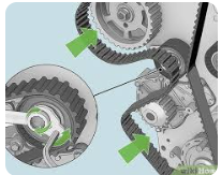
figure 4 timing belt assembly with water pump and rollers
we offer special timing belt replacement tool kits in our online store.

You can find timing belt replacement kits here.
 The data shown here, especially the complete database of car spare parts, may not be copied. It is strictly prohibited to duplicate the data and database and distribute the same, and/or instruct third parties to engage in such activities, without prior consent from TecAlliance. Any use of content in a manner not expressly authorized constitutes copyright infringement and violators will be prosecuted.