

Car water pump replacement: comprehensive guide and replacement cost
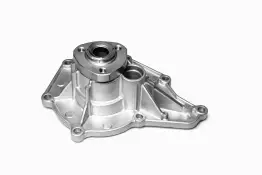
A car engine is a complex machine that operates under extreme conditions. The combustion process generates a huge amount of heat that must be removed from the engine to prevent it from overheating and destroying it. This is where the cooling system and its central component – the water pump – come into play. The water pump is like the heart of the engine for the coolant, constantly circulating it and ensuring optimal operating temperature. In this comprehensive article, we will cover everything a car owner should know about replacing a water pump: its function, symptoms of failure, the replacement process, the tools needed, the best spare part brands, common faults in common car models and, of course, the cost of replacing a water pump .

What is a water pump and how does it work?
The water pump (often called the coolant pump) is the heart of the heat exchange system. Its main function is to keep the coolant (antifreeze) moving continuously through the channels in the engine block and cylinder head. The fluid absorbs heat from around the engine's combustion chambers and transports it to the radiator, where it is cooled by the outside air and then recirculated.
A typical water pump is a centrifugal pump, which consists of the following main components:
- Housing: usually made of cast metal (aluminum or cast iron) or increasingly plastic/composite material in modern cars. It attaches to the engine block.
- Pulley: Located on the outside of the pump and connected to a timing belt, V-belt (fan belt) or chain drive. The rotation of the engine is transmitted to the pulley via the belt, causing the pump to operate.
- Shaft: connects the pulley to the impeller, extending through the pump housing.
- Bearing: Holds the shaft in the correct position and allows it to rotate freely. The bearing is one of the most critical and wear-prone parts of the pump.
- Gasket (main seal): prevents coolant from leaking from inside the pump down the shaft. This is the second main wear item.
- Impeller: Located inside the pump in the housing cavity. It is a wheel with blades that, when rotated, creates centrifugal force, drawing in liquid and forcing it out into the motor's cooling channels. Impellers can be made of metal (aluminum, cast iron) or plastic/composite.
When the engine starts, the water pump starts working immediately. The coolant circulation is continuous, but its speed depends on the engine speed – the faster the engine rotates, the faster the water pump pumps. To regulate the operating temperature, the system also has a thermostat, which directs the liquid to the radiator only when the engine has reached the optimum temperature.
Why and how do water pumps break?
The water pump is a consumable part with a limited lifespan. Although many pumps last a long time, it is common for them to break. The main reasons are as follows:
- Bearing wear: This is the most common cause of failure. The constant rotation and the tension exerted by the belt put a strain on the bearing. Over time, the bearing will develop play, which will cause noise (squeaking or squeaking). If the play becomes too large, it can also damage the shaft seal, causing a leak, or in the worst case, the pump will completely seize up.
- Shaft seal leakage: The seal is in constant contact with the hot coolant and the rotating shaft. It ages, cracks or deforms, losing its sealing ability. The leak may be small at first (only visible as a trickle on the pump housing), but increases over time.
- Corrosion and sediment: If the wrong coolant is used in the cooling system or if it is not changed regularly, corrosion and sediment can form. This damages the internal surfaces of the pump, impeller and seal. The sediment can also clog the so-called "weep hole" in the pump housing, which is designed to release a small amount of fluid if a seal starts to leak, giving the car owner an early warning.
- Mechanical damage: A drive belt that is too tight or loose can place uneven load on the pump bearing, accelerating its wear. A defective belt tensioner or other auxiliary equipment can also affect the life of the pump.
- Impeller damage: Plastic or composite impellers can become brittle and break over time. Metal impellers can corrode or wear out (cavitation), which reduces pump efficiency.
- Cavitation: This is a phenomenon where rapid pressure changes cause vapor bubbles to form in a fluid, which, when they burst on the impeller blades, create micro-shocks, eroding the metal surface. This is often caused by the wrong coolant or air in the system.
symptoms of a broken water pump
A broken water pump often shows itself through a number of symptoms. The car owner should be alert to the following signs:
1. coolant leak at the front of the engine
The most obvious sign. If you notice a puddle under the car on the front of the engine (or side, depending on the engine layout), which is usually colored (green, red, yellow) and has a sweet smell, there is a good chance that you have a coolant leak. Water pumps are equipped with a weep hole located behind the pulley. If the shaft seal starts to leak, fluid will drip out of it. You may also see traces of dried fluid or crystals on or around the pump housing.
2. engine overheating
If the water pump is unable to circulate the coolant sufficiently, the engine temperature will rise rapidly. Watch the temperature gauge on the dashboard. If the gauge rises into the red zone or the overheating warning light comes on, stop the vehicle immediately and allow the engine to cool. Continuing to drive with an overheated engine can cause the cylinder head gasket to break, the cylinder head to warp, or even the engine to fail completely.
3. Unusual sound from the engine
A worn water pump bearing will often make a characteristic noise. It can be a howling, grinding, or even rattling sound coming from the front of the engine. The volume and pitch of the sound can change depending on the engine speed. If you hear this sound, check to see if it is coming from the water pump area.
4. The coolant level is constantly dropping
If you have to add coolant frequently but there is no visible major leak, it could be a small leak from the water pump weep hole, which will evaporate instantly on a hot engine. Check the area around the pump more thoroughly.
5. steam or smoke from the engine compartment
A serious leak or complete pump failure can cause coolant to leak onto a hot engine, creating steam. If you see steam rising from the engine compartment, it is a sign of a serious problem that requires immediate attention.
Water pump replacement price: what to expect?
The cost of replacing a water pump is one of the most common questions asked by car owners. The price depends on several factors and can vary significantly.
Factors affecting the price:
- Car make and model: spare parts and labor are more expensive for luxury cars and vehicles with more complex engines.
- Engine type: Some engines have an easily accessible water pump, while others require the removal of many other components. Replacing a timing belt-driven pump is more expensive because it also requires replacing the timing belt assembly.
- Part type: Original equipment (OE/OEM) parts are more expensive than aftermarket parts. The quality and price of aftermarket parts also vary.
- complexity of the job: replacing an electric water pump may require special diagnostic equipment and therefore be more expensive.
- Location and type of workshop: dealerships are usually more expensive than sole proprietorships or independent workshops. Prices can also vary by region.
- additional work: it is often recommended to replace the drive belt (V-ribbed belt or timing belt kit), thermostat and coolant together with the pump, which increases the total cost.
approximate prices (spare part + labor):
- small car (pump with V-belt): €150 - €250
- mid-range car (pump with V-belt): €200 - €350
- mid-range car (timing belt pump, complete set): €350 - €600
- luxury car / SUV: €400 - €1000+
- electric water pump (e.g. BMW): €300 - €800+ (spare part only)
To get the most accurate exchange price, it is recommended to get quotes from several different workshops, noting the exact details of your car.
Water pump replacement process: step by step
tools and supplies needed
- Jack and stands: for safely lifting the car.
- wheel wrench.
- Socket and open-end wrench set: various sizes for removing pump bolts, pulleys and other components.
- chucks for axle nuts and other large bolts (if necessary).
- Timing belt tensioner release tool: Depending on the car model, this can be a simple socket or a special tool.
- special tools for holding pulleys (if necessary): to prevent the pulley from rotating when tightening the bolts.
- Torque wrench: for tightening bolts to the torque specified by the manufacturer.
- Gasket removal tool: for cleaning out old gasket residue.
- knife or scraper to clean the sealing surfaces.
- brake or parts cleaner.
- cloths and cleaning products.
- }
- new water pump: with a new gasket (often included).
- new drive belt (V-ribbed belt or timing belt kit): recommended to be replaced together with the pump.
- new coolant (antifreeze): choose the correct type according to the car manufacturer's requirements.
- lubricants (if necessary).
- }
- container for collecting coolant.
step by step exchange process
This is a generalized guide based on a water pump driven by an external drive belt (V-ribbed belt). Replacing a timing belt driven pump is considerably more complicated and requires correct engine timing adjustment.
Step 1: Preparation and Safety
- Park the car on a flat surface and use the parking brake.
- Allow the engine to cool completely! Never open the cooling system when the engine is hot! Hot coolant is under pressure and can cause serious burns.
- disconnect the negative battery terminal (recommended for safety reasons).
- Jack up the car and support it firmly on jack stands.
- Remove the protective covers from the front of the engine (depending on the model).
step 2: draining the coolant
- Place a container to collect coolant under the radiator drain valve or lower hose.
- open the drain cock or disconnect the lower hose and let the fluid drain completely. Also open the radiator cap to allow the fluid to drain faster.
- NB! Coolant is toxic and harmful to the environment. Collect it and take it to an appropriate waste disposal facility.
Step 3: Removing the drive belt and accessories
- Mark the direction of the drive belt (if you plan to put the same belt back on, although this is not recommended).
- Release the timing belt tensioner using a suitable tool.
- Remove the drive belt from the pulleys.
- Depending on the engine layout, it may be necessary to remove or move aside other accessories, such as the alternator, power steering pump, or air conditioning compressor, to access the water pump.
Step 4: Removing the old water pump
- Depending on the model, it may also be necessary to remove the pump pulley if it is not integrated with the pump.
- Unscrew the water pump mounting bolts. Mark the locations of the bolts as they may be of different lengths.
- Remove the water pump from the engine block. Be prepared for a little coolant to leak out of the pump.
- remove the old gasket.
Step 5: Cleaning the sealing surfaces
- Clean the gasket surface of the engine block thoroughly to remove any old gasket residue, corrosion, and sludge. Use a scraper or gasket removal tool to do this. Be careful not to scratch the aluminum gasket surface. Scratches can cause a leak.
- For final cleaning, use brake or parts cleaner and a clean cloth.
- Check the cleaned surface for flatness.
Step 6: Installing the new water pump
- Before installing the new pump, make sure that it is identical to the old pump (dimensions, mounting holes, pulley).
- Place a new gasket on the new water pump. Some gaskets do not require sealant, while others require a thin layer of special RTV silicone. Check the pump manufacturer's instructions.
- Carefully place the water pump on the engine block.
- Tighten the mounting bolts by hand, making sure that the bolt is in the correct position.
- Tighten the bolts with a torque wrench to the manufacturer's specified torque, following a diagonal or circular tightening sequence. Incorrect tightening may cause leakage or rupture of the pump housing.
- Install the pulley (if it was removed).
Step 7: Installing the drive belt and accessories
- Reinstall any removed or set aside auxiliary equipment (generator, pumps, etc.).
- Install a new timing belt (V-ribbed belt) . Make sure the belt is positioned correctly on all pulleys and moves on the tensioner and rollers according to the diagram.
- Release the tensioner to release the belt tension. Check the belt tension.
Step 8: Filling and bleeding the cooling system
- Reconnect the removed hoses and close the radiator drain valve.
- Pour new coolant into the radiator or expansion tank that meets the car manufacturer's specifications . Pour slowly to avoid air bubbles.
- Some cars have special vent valves. Open them while pouring the fluid until the fluid starts to flow out.
- Pour in fluid until the level reaches the "max" mark on the expansion tank.
Step 9: Starting the engine and final check
- reconnect the negative battery terminal.
- Start the engine and let it idle.
- Monitor the engine temperature gauge and check for leaks in the water pump area or hose connections.
- Let the engine run until it reaches operating temperature and the thermostat opens. This may take some time.
- Monitor the coolant level in the expansion tank. If the level drops, add fluid. NB! Do not open the expansion tank cap when the engine is hot! Let the engine cool down a bit or open the cap very carefully using a thick towel.
- Once the engine has reached operating temperature and the thermostat has opened, turn on the car's interior heating to the "max" position. If warm air is blowing into the interior, this is a sign that the coolant is circulating correctly.
- Turn off the engine and let it cool completely.
- Check the coolant level in the expansion tank again. If necessary, add fluid until the level is at the "max" mark.
- Install the engine protection covers (if removed).
most common car models and their typical faults
Although the principle of the water pump is the same, its lifespan and typical faults vary between car models. Here are some examples of the most common models:
- Volkswagen Golf / Passat (e.g. 1.9 TDI and newer): These are very common models where the water pump is usually driven by a timing belt. This means that the water pump must always be replaced together with the timing belt kit. The wear parts of the water pump are the bearing and the seal. If the pump is not replaced, it can cause the timing belt to break and the engine to be destroyed if it jams. On newer engines, the water pump is integrated into the engine block and its replacement is more complicated. The replacement price is higher because of the timing belt.
- Audi A4 / A6: Similar to VW, many engines have a timing belt driven pump. A common fault is bearing wear and leakage. On quattro models the engine bay may be narrower, making the replacement more difficult. More complex multi-link suspension systems may require additional work to access the front of the engine. The replacement cost is higher due to the timing belt.
- Toyota Corolla / Avensis: Known for their reliability, water pumps are still consumable parts. Most modern models have a V-belt drive, which makes replacement easier. The most common fault is a leaking seal. The plastic impellers on newer models are more durable, but not forever. Replacement is usually cheaper.
- Ford Focus / Mondeo: common models where the water pump is driven by a V-belt or timing belt. The replacement process is standard. Typical faults are seal leakage and bearing noise. On some models, the thermostat may be located close to the water pump housing, which requires additional attention.
- BMW 3 Series / 5 Series: These models often use more sophisticated water pumps, sometimes electric water pumps. Electric pumps are more susceptible to electronic failures. A typical failure is an electronic control module failure, which leads to the pump not working and the engine overheating. Mechanical pumps have normal bearing wear. Replacing an electric pump also requires the use of a diagnostic tool to bleed the system. The cost of replacement is significantly higher, especially for an electric pump.
- Skoda Octavia / Superb: the transmission largely overlaps with VW and Audi, replacement is a routine job. Typical faults are similar to Volkswagen models, especially with timing belt driven pumps.
- Renault Clio / Megane: French cars sometimes have a unique internal water pump design (for example, with an integrated housing or thermostat), which requires attention when choosing the right spare part. A typical fault is a gasket leak.
- Mercedes-Benz C-Class / E-Class: Mercedes-Benz uses high-quality components, but water pumps are still consumables. Typical faults are seal leaks and bearing noise. On some engines, the pump may be integrated into the engine block and is more complicated to replace. The replacement cost is usually higher.
best known water pump brands
When choosing a water pump, don't look for the cheapest price. High-quality materials and accurate measurements are crucial. Well-known and reliable brands often offer kits that also include the necessary gasket. Here are some names you can trust:
Original equipment manufacturers (OE/OEM) and top brands
- Hepu: A German company known for its high-quality and durable water pumps. Their pumps meet OE requirements and are highly regarded.
- Saleri: an Italian company that is also a major supplier of original parts to many car manufacturers. They offer high-quality pumps.
- gmb: a japanese company known for its reliable water pumps. their pumps are of oe quality and widely used.
- dolz: a spanish company specialized in the production of water pumps and timing belt kits. they offer high quality kits.
- Pierburg: a well-known German company that produces not only mechanical but also electric water pumps. Their pumps are of excellent quality.
- Airtex: an American company that manufactures a wide range of water pumps.
high-quality aftermarket brands
- SKF: A well-known bearing manufacturer that also offers high-quality water pump kits and timing belt kits.
- febi bilstein: a well-known german packager, mint offers a wide range of spare parts. their water pumps are usually of decent quality.
- Metelli: an Italian company that offers a wide range of aftermarket parts, including water pumps.
- ruville: Another well-known German packager, mint offers decent kits.
summary
Replacing a car's water pump is a critical maintenance task that helps prevent engine overheating and expensive repairs. The water pump is the heart of the cooling system and replacing it on time is a real savings. Preventive maintenance is always cheaper than repairing a broken machine. Regular checks are easy – monitor the coolant level, temperature gauge and listen to the engine. If you detect a leak or hear an unusual sound, react immediately. A high-quality spare part from top brands such as Hepu, Saleri, GMB or SKF ensures long-term reliability. Replacing it yourself is possible, but requires the right tools and skills, so seriously consider contacting a professional workshop. Remember that preventive maintenance is always cheaper than repairing a broken machine, and the price of replacing a water pump is small compared to the cost of a new engine.
 The data shown here, especially the complete database of car spare parts, may not be copied. It is strictly prohibited to duplicate the data and database and distribute the same, and/or instruct third parties to engage in such activities, without prior consent from TecAlliance. Any use of content in a manner not expressly authorized constitutes copyright infringement and violators will be prosecuted.