

What is a car rocker panel?
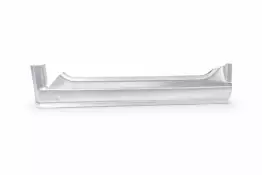
Car rocker panel: the hidden backbone of a vehicle and extending its lifespan
Every vehicle body is made up of hundreds of parts, but few are as critical as the rocker panel . Visually, it’s just a narrow strip of metal that runs from the front wheel to the rear wheel under the doors. Functionally, it’s one of the most important structural elements of a modern unibody vehicle. It holds the car together, protects the occupants in the event of a side impact, and provides support when the vehicle is lifted. Unfortunately, rockers are also one of the most vulnerable parts of the car body, constantly exposed to water, salt, rocks, and dirt from the road.

In this highly in-depth and technical article, we'll dissect the anatomy of car side panels, explore why they rust, review common faults specific to popular car models, and provide a step-by-step guide to their repair and maintenance. We'll also talk about reputable parts brands to make choosing a new panel easier.
1. What is a sidecar and why is it so important?
Historically, cars were built on a separate frame (body-on-frame construction). The frame carried all the weight and the body was bolted to it. Today (with the exception of heavy SUVs and pickup trucks), passenger cars use a load-bearing body. This means that the vehicle does not have a separate frame, but the entire body structure, welded together from sheet metal, forms the load-bearing element.
The side panels are the lower longitudinal members of this load-bearing body. They are not simply covers bent from a single sheet of sheet metal. A true side panel usually consists of three or more layers:
- outer sill: the cosmetic and aerodynamic outer layer that we see when standing next to the car (or covered with a plastic extension). It absorbs the first impacts from stones.
- Inner reinforcement: a thicker, stronger steel profile located behind the outer sheet metal. It is the real "muscle" of the side box, preventing the car from breaking in half in the middle and distributing the energy of a side impact along the body.
- inner sill: the part that connects to the car's floor pan and the interior carpet.
The bottom joint of these three layers forms a strong pinch weld. This pinch weld is where you need to place a jack to change a wheel on most cars. If the side box is weak, the jack will simply sink through the body into the car interior.
2. The biggest enemy of side boxes: corrosion or rust
Steel is strong, but nature always wants to turn it back into iron oxide, or rust. The side boxes are located at the lowest point of the car, making them an ideal target for corrosion. How exactly does this process work?
chemical and physical attack
The front tires act like a sandblaster, throwing abrasive sand, gravel, and ice at the front end of the side box as you drive. This wear and tear eventually removes the factory paint and stone protection (mastic). The exposed steel is exposed to water and oxygen. The situation is made catastrophic by the salt (sodium chloride or calcium chloride) sprinkled on the winter roads, which acts as an electrolyte, accelerating the rusting process a hundredfold.
rusting from the inside out
Even more insidious is the situation where the side box rusts from the inside out. Side boxes are not hermetically sealed. They have small drainage holes at the bottom so that condensation and water running down the inside of the doors (between the window seals) can drain out. Over the years, these holes can become clogged with dust, dirt, leaves and even rust particles. The result is a situation where water splashes inside the side box while driving. In constant humidity, the steel begins to rot from the inside. By the time the owner notices the first small "rust bubble" on the paint, the stain has actually already been completely destroyed from the inside and needs to be cut out.
3. most common car models and typical defects in their side boxes
Every car manufacturer has its strengths and weaknesses. Over the years, certain models have emerged whose engineering solutions, material choices or design have made them particularly susceptible to side panel corrosion. Here is a comprehensive overview of the most common models and their typical faults.
Mazda 6 (first and second generation, 2002-2012) and Mazda 3
Mazda is a car with excellent driving dynamics, but the early 2000s models have become legendary for their disastrous rust resistance. The main problem with these cars was the lack of a factory zinc layer or an extremely thin layer, combined with the use of poor sealant at the joints of the rear wheel arches and side panels.
- Typical fault: the rear end of the side box (between the rear door and the wheel arch) rots away completely. Often the rust is so aggressive that it extends to the edges of the wheel arch and even to the lower edges of the rear doors. In the case of Mazda, replacing the side boxes is more the rule than the exception if the car is over 10 years old.
BMW 3 Series (E36, E46, E90) and 5 Series (E39)
Symbols of German engineering, which unfortunately are not immune to rust. The e36 and e46 generations are particularly vulnerable.
- Typical error (jacking points): BMW uses special plastic blocks (jack pads) under the side boxes, which the jack rests on. Over the years, moisture and sand accumulate around and behind these blocks. Since the block is firmly fixed in the sheet metal, the metal around it rots away unnoticed. The result is a classic E46 problem: when the car is lifted, there is a rattling sound and the plastic lifting block with the jack sinks through the side box towards the interior. The repair requires welding thick metal to restore the internal structure.
- Typical mistake (plastic extensions): many BMWs (especially with the M package) have their side boxes covered with long plastic extensions. This plastic protects the metal from stones, but also acts as a huge dirt collector. A permanently wet compost forms between the extension and the metal, which destroys the box along its entire length. The car looks beautiful from the outside, but when you remove the plastic, you are faced with a scene where instead of metal there is only rust dust.
volkswagen golf (mk3, mk4, mk5, mk6) and jetta/bora
The rust resistance of Volkswagen Group cars has fluctuated over time. The MK3 was a notorious rotter, the MK4 had very good zinc coating (the side panels lasted a long time if they weren't damaged), but the MK5 and MK6 generations developed very specific design flaws.
- Typical error (ice and door corner): A major problem with the Golf V and VI and Jettas of the same era is a design error that starts at the front wheel well. In winter, a large piece of ice accumulates behind the front wheel, between the fender and the beginning of the side box. If you now open the first door, the lower front corner of the door catches behind this piece of ice, bending the corner of the door and pushing the paint and stone protection off the first end of the side box. The bare metal immediately starts to rust and the box begins to deteriorate behind the first fender.
ford focus (mk1, mk2) and mondeo (mk3)
Ford models from the late 1990s and early 2000s suffered from very serious corrosion problems, similar to Mazda.
- Typical fault: side boxes rust heavily from the inside. Often the crumbling starts from the bottom roller of the box. The roller swells up (flakes) due to rust and a brown bead forms along the entire length of the box. In the case of Focus, it is very common for a small hammer to simply tap the rear end of the box during a technical inspection.
Subaru Forester and Outback
Known for their durable all-wheel drive, Subarus are often used in difficult conditions – on gravel roads, in mud and snow. This leaves its mark.
- Typical mistake: like bmw, subaru often hides its side boxes behind massive plastic covers (especially on outback models). because subarus are driven a lot on gravel, fine dust flies behind the plastic, turning into a wet layer of mud when mixed with water. another danger with subarus is that side box rust often spreads to the structures of the rear shock absorber, which is already life-threatening structural damage.
mercedes-benz w210 (e-class) and w203 (c-class)
Mercedes-Benz cars produced between 1995 and 2005 (the so-called "eye-catching" models) fell victim to cost-cutting measures and the early introduction of water-based paints. The paint quality of these cars was below par during that period.
- Typical fault: the side boxes are completely rotting, especially under the rubber door seals and around the lifting points. Often the rust has progressed so far that there is no longer any healthy material to weld the new sheet metal to which to attach the new box – the car's bottom sheet metal and even the lower edges of the doors are also rotting.
Honda Civic and Accord (late 1990s and 2000s)
For Hondas, the area of concern is the rear where the side panel meets the rear wheel arch (quarter panel lips).
- Typical mistake: Honda used rubber seals on the edges of the rear wing arches, which were supposed to protect the edge of the wing. In reality, these rubbers kept moisture and salt under them, which led to rust. This rust creeps along the wheel arch directly to the rear end of the side box. It is also common for Accords to have rusting on the base of the fuel door, which moves down to the box.
4. Diagnostics: How to recognize a faulty side box?
Rust is often invisible until it's too late. Here are the steps every car owner or used car buyer should take to assess the condition of their side panels.
- Visual inspection: look for bubbling paint. If the paint is in the rubber, there is already moisture and rust underneath. Also look for brown rust streaks flowing from under the plastic extensions or the bottom roller of the box.
- Physical testing: The best tool is a thin-tipped metal object (such as a medium flat-blade screwdriver). Tap gently but firmly along the entire length of the side box. Healthy steel will make a clear, high-pitched "clink" sound. If you hear a dull, soft "thump-thump" sound or the screwdriver sinks through the crusty layer into the tin, the box is destroyed.
- Checking the jacking points: look under the car at the roller. If the roller (pinch weld) is bent into a loose shape, stratified, or if the jacking blocks (BMW, Mercedes) are loose, the internal structure has given way due to corrosion.
- Peeking behind the plastic: If your car has wide plastic covers, try peeking between the plastic and the body (from underneath) with your fingers or a flashlight. If a large amount of brown rust flakes fall out, you're in for an expensive repair.
5. Side box repair: from patch to major replacement
Side box repair is a daily job for welders and tinsmiths. It is a dusty, hot and precise process. The repair method depends entirely on the extent of the damage.
wrong repair: glass filler and "sales tuning"
It is extremely important to emphasize what not to do. The side box is a structural detail. Unfortunately, so-called "cosmetic" repairs are often made, especially on cheap cars for sale. The rust hole is filled with macroflex (construction foam), newspapers and fiberglass putty. It is sanded smooth, a thick layer of structural stone protection (mastic) is applied and painted over. To the naked eye, the car looks as if it is new. However, in the event of an accident, such a side box collapses like a paper bag, offering no protection to the passengers. In addition, the putty collects moisture and accelerates the destruction of the remaining metal. During technical inspection, such "repairs" are often punched through with a hammer and the car is declared dangerous to traffic.
partial replacement or patching
If the rust is localized – for example, there is a hole only behind the front wheel, but the remaining 1.5 meters of the box are thick and intact – a partial replacement can be done.
- The rotten part is cut out widely with an angle grinder (relaka) until clean and thick metal is reached.
- Internal structures (if damaged) are cleaned and treated with a chemical rust inhibitor (e.g. phosphoric acid-based agents) and zinc primer.
- A precise replacement piece is formed from new repair sheet metal (or even 1-1.2mm steel sheet) and welded into place point by point using mig/mag welding.
- The weld is ground flat and covered with a special body sealant (seam sealer), which prevents moisture from penetrating the micropores of the weld.
full rocker panel replacement
If the box is soft along its entire length, the only safe and sustainable solution is to completely remove the old box and install a new B-part (repair plate). This is a large job.
- Preparation: The doors and often the front wings are removed to provide access. The carpet is lifted from the cabin, as the immense heat from the welding can easily ignite the carpet (fire safety is critical in bodywork).
- Removal: The old side box is attached at the factory with spot welds. To remove them, a special spot weld drill is used, which cuts through the top layer, leaving the bottom layer (where the new box will be attached) intact. The box is then cut lengthwise.
- Interior restoration: Once the outer casing is removed, the internal reinforcement is exposed. Very often this also needs to be restored using strong (at least 1.5mm) steel, otherwise the new sheet metal will have nowhere to rest. The entire interior is primed with a weld-through zinc primer.
- Installing the new box: The new spare part is fitted into place (often requiring some cutting and adjustment, as B-parts are always produced with a margin) and secured with locking pliers. It is then welded in place, imitating factory spot welds or by making a continuous seam along the top edge of the box.
- Finishing: The welds are sanded. This is followed by an epoxy primer (which provides absolute waterproofing), caulk, sanding, application of stone protection (to create a textured layer on the underside of the box) and finally body paint and varnish.
6. the most well-known and trusted spare parts brands
When ordering a new side box, you are entering the world of aftermarket body materials. It is rare to buy original body panels from a car dealership, as their price is astronomical. Fortunately, there are several very high-quality manufacturers whose panels are preferred by professional body shops.
- Klokkerholm: arguably the most well-known name in the world of body repair sheet metal. This is a Danish company that has been in business for decades. Their side boxes are usually made of very good thick steel (often also galvanized) and their geometric fit (fit) is one of the best on the B-parts market. When it comes to Klokkerholm, it is usually the first choice of the sheet metal worker.
- van wezel: belgian packer and manufacturer that also offers a very wide range of body materials. their quality is high and stable. they often sell the same pre-cut sheets as other big brands, but their quality control is reliable.
- blic: a very popular brand that offers a wide range of affordable body parts. their sheet metal range covers almost all car models sold in europe and asia. the fit can sometimes require a bit more hammer and pliers from the sheet metal worker than with klokkerholm, but the price-quality ratio is spot on.
- polcar: a huge polish wholesaler and manufacturer that supplies the whole of europe. polcar's strength is its huge stock selection. they often offer parts of different quality levels (near original vs. economy), giving the buyer the opportunity to choose according to their budget.
- Diederichs: a German brand known for its very extensive spare parts catalogue. It offers high-quality side boxes at reasonable prices, especially for German-made vehicles (VW, BMW, Mercedes).
7. Prevention and maintenance: how to extend the life of side boxes?
The best repair is the one that remains undone. It is entirely possible to multiply the life of your side boxes by a little attention to your car, especially in salty winter conditions.
corrosion protection (krown, dinitrol, etc.)
The most effective weapon against rust is professional corrosion protection, which should be done when the car is relatively new, but it also helps slow down the process on older cars. During the process, an oil- or wax-based substance (cavity wax) is sprayed into the side cases using special long hoses. These substances are highly creeping – they penetrate between the rollers, displace moisture and oxygen from there and stop the development of rust inside.
cleaning drain holes
There are small slots at the bottom of the side boxes (near the roller). Take a thin wire or an old toothbrush and regularly check, especially in the fall after the leaves fall and in the spring, that these holes are clean. If the water can drain freely and air can circulate inside the box, the stain will stay dry.
undercarriage and mudguards
In winter, wash your car regularly, preferably at a car wash that also offers a pressure washer. This will remove any salt that has stuck to the side panels. It is also highly recommended to install mudflaps behind the front wheels. Although they may not be visually appealing to everyone, they catch 90% of the hail that flies under the front wheels, which would otherwise strip the front part of the side panel.
stone protection renewal
If you notice that the rubber stone chip protection layer on the bottom edge of the side box has come off in pieces, exposing the factory primer, don't wait for rust to form. Clean the area with a rough sponge, apply a new layer of stone chip protector sold in an aerosol can, and dab on paint that matches the car's color code. This quick and inexpensive prevention will save you hundreds of euros in the future.
8. side boxes and technical inspection
During a vehicle's technical inspection, great attention is paid to the side panels, and for good reason. A weakened side panel is a direct threat to road safety.
The inspector has the right and obligation to check the extent of corrosion by tapping with a special small hammer. If the hammer penetrates the metal, it is recorded as a "dangerous defect" and the car loses the right to participate in traffic. Body parts must not have sharp tears or holes that could injure pedestrians.
The aforementioned "macroflex and tape" repairs are also strictly prohibited and are easily visible during inspection. The only accepted repair method is to replace the metal by welding. If you are planning to buy an older used car whose inspection is about to end and whose side panels show thick "putty mountains" or even holes covered with aluminum tape and painted black, immediately consider that in order to obtain a new inspection, you will have to have a major body repair done.
summary
Your car’s side panels are not just a design element; they are the foundation of your vehicle’s structural integrity and your own safety. For popular models like the Mazda 6, BMW E46 or VW Golf, wear and tear on your side panels is inevitable, a result of our climate and the salt we sprinkle on our roads. However, by knowing how rust forms, what symptoms to look for and how to properly maintain them – for example, by keeping the drain holes clean and using replacement parts from trusted brands (such as Klokkerholm or Van Wezel) in case of damage – you can significantly extend the life of your car and drive safely. If repairs are unavoidable, entrust the work to professionals who will replace the tired metal with welding, because saving money on your car’s safety is never justified.
 The data shown here, especially the complete database of car spare parts, may not be copied. It is strictly prohibited to duplicate the data and database and distribute the same, and/or instruct third parties to engage in such activities, without prior consent from TecAlliance. Any use of content in a manner not expressly authorized constitutes copyright infringement and violators will be prosecuted.