

Car wheel bearing removal tools and removal tutorial
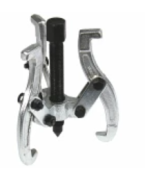
As a car owner, it is inevitable that at some point you will have problems with your car's wheel bearings. These small but vital components are responsible for keeping your car's wheels turning smoothly and efficiently, and any damage or wear can have a major impact on your driving experience. In such cases, it is important to have the right tools for removing and replacing wheel bearings. In this article, we'll discuss the various car wheel bearing removal tools, their uses, and how to choose the best one for your specific needs.
TYPES OF CAR WHEEL BEARING REMOVAL TOOLS
There are many types of car wheel bearing removal tools available in the market today. Each type has its own specific function and purpose, and knowing the differences between them will help you make an informed decision when selecting the right tool for your needs.
1. PULLERS
Wheel bearing pullers are the most commonly used tools for removing wheel bearings.
 They come in different shapes and sizes, but all have the same general function of removing the bearing from the hub. Most pullers consist of a large central screw that presses against the bearing while it is pulled by the jaws or arm.
HOW TO USE THE PULLERS:
Clean around the bearing and hub to ensure a smooth process.
Adjust the puller by loosening the bolts on the levers and adjusting them to match the bearing.
Place the puller arms around the bearing, making sure they are secure and correctly aligned.
Tighten the center screw until the bearing pops out of the hub.
Note: It is recommended to use a hydraulic press to press the bearing out of the hub before using the puller. This reduces stress and makes the process easier.
2. SLIDE HAMMER
A slide hammer is another popular tool for removing wheel bearings. It consists of a long weighted shaft with a hook or claw at the end. The weight of the hammer provides the necessary force to pull the bearing out of the hub.

HOW TO USE THE SLIDE HAMMER:
Remove the wheel and brake assembly from the vehicle.
Place the hook or claw on the bearing.
Strike the sliding weight of the hammer with firm pressure towards the bearing until it pops out.
3. CAR WHEEL BEARING SEPARATOR
The bearing spacer is a set of two metal plates that are placed on either side of the bearing and are bolted together. This tool works by applying pressure to the inner ring of the bearing, forcing it to separate from the outer ring.

HOW TO USE THE BEARING SEPARATOR:
Place one spacer plate behind the bearing and the other in front of it.
Tighten the separator bolts until the plates press against the bearing.
Use a wrench or impact wrench to release the bearing from the hub.
CHOOSING THE RIGHT WHEEL BEARING REMOVAL TOOL
Choosing the right tool for removing car wheel bearings depends on various factors, such as the type of bearing, the make and model of the vehicle, and your level of expertise. Here are some key considerations when choosing the right tool for the job:
1. TYPE OF BEARING
The first step in choosing the right tool is to determine the type of bearing you want to remove. There are two main types of wheel bearings - tapered roller bearings (image 1) and ball bearings (image 2). Tapered roller bearings require pull tools, while ball bearings can be removed with a variety of tools such as pullers and hammers.
 |
 |
| picture 1 tapered roller bearing | picture 2 ball bearing |
You can find various universal bearings here.
2. VEHICLE MAKE AND MODEL
Different vehicles may have different sized bearings that require different tools to remove. It's important to check your vehicle's specifications and choose a tool that fits the specific bearing size.
3. SKILL LEVEL
Some tools, such as pullers and hammers, require some skill to use properly. If you are new to DIY auto repair, it is recommended that you use simpler tools such as bearing pullers that are easier to use.

Wheel bearing replacement using a puller.
Special considerations when replacing wheel bearings on popular car models
Each car manufacturer has its own engineering solutions, which can make wheel bearing replacement either very straightforward or a real headache. Below are some of the most common pitfalls our customers have encountered:
1. VAG Group (Volkswagen, Audi, Škoda, SEAT) – GEN2 bearing
Many newer models (e.g. Golf 5/6/7, Passat, Audi A3, Škoda Octavia) use so-called GEN2 wheel bearings.
- Special feature: The bearing and hub are a single unit, but there is no central bore for pressing and no mounting bolts. The bearing is retained in the housing by a special retaining (circlip) ring.
- Common mistake: Trying to press the new bearing in by pushing on the center of the hub. This is strictly forbidden! Doing so destroys the internal structure of the bearing before the car even hits the road.
- Solution: A special GEN2 bearing installation kit is required. It grips the outer race of the bearing (using claw-shaped half-moons) and presses the bearing into the housing without loading the hub.
Volkswagen wheel bearing pullers can be found here.
2. BMW (E39, E46, E60, E90, etc.) – Rear bearings and drive shafts
Replacing rear wheel bearings on BMWs is notorious due to seized drive shafts.
- Special feature: Over time, the steel drive shaft corrodes chemically into the aluminum or steel hub.
- Common mistake: Hammering the end of the drive shaft until the threads are mushroomed, damaging them—while the shaft still doesn’t move.
- Solution: Use a hydraulic drive shaft pusher or a heavy-duty screw-type puller that mounts to the wheel bolt holes. Before starting, soak the joint thoroughly with a high-quality penetrating oil. To remove the bearing itself from the steering knuckle, a large slide hammer is often required.
BMW wheel bearing pullers can be found here.
3. French cars (Peugeot, Citroën, Renault) – Bearing integrated into the brake disc
On many French cars (and some Opels), the rear wheel bearing is integrated into the brake disc.
- Special feature: You don’t just replace the bearing—you often replace the entire brake disc together with the bearing.
- Common mistake: Trying to press the old bearing out of the disc, which is time-consuming and often impractical, especially since the disc itself is usually worn as well.
- Important: Pay close attention to the tightening torque. Rear hub nuts on French cars often require very specific (and high) torque values. Over-tightening will quickly overheat and damage the bearing.
4. Ford (Focus, Mondeo) and Volvo – Similar to VAG GEN2
Like the VAG Group, many Ford and Volvo models (which share platforms) also use compact wheel bearings.
- Special feature: When replacing the front bearing, special care must be taken with the ABS sensor’s magnetic ring.
- Risk: If the wrong pressing tool is used or pressure is applied in the wrong place, the magnetic ABS ring on the back of the bearing can be damaged. The result is an illuminated ABS warning light on the dashboard, even though the bearing itself is quiet and mechanically sound.
- Recommendation: Before pressing, always make sure which side the magnetic ring is on (you can test it with a paper clip—it will stick to the magnet) and install the bearing in the correct orientation.
5. Japanese SUVs and pickup trucks (Toyota Hilux / Land Cruiser, Mitsubishi L200)
- Special feature: Rear axle bearings are often pressed onto the drive shaft and held in place by a shrink ring or retaining collar.
- Required tools: A standard screw-type puller will not be sufficient here. A hydraulic press and a long bearing support or “guillotine” are required to press the bearing off the long axle shaft. To install the new locking ring, it often needs to be heated beforehand.
Wheel Bearing Lubrication – Should You Use Grease, and Which One?
This is a common question: “Do I need to add grease to a new wheel bearing?”
The answer depends entirely on the type of bearing. Doing the wrong thing can destroy a new bearing within just a few kilometers.
1. Sealed (Hub) bearings – Do not touch!
Most modern passenger cars (approximately 1995 and newer) use sealed bearing units, also known as hub bearings.
- How to identify them: The bearing has rubber or metal seals on both sides.
- Rule: These bearings are factory-filled with grease and sealed for “lifetime” use. Under no circumstances should the seal be removed to “add extra grease just in case.” Prying off the seal destroys its tightness, allows water to enter, and the bearing will fail prematurely.
2. Open tapered roller bearings – Lubrication is mandatory
These are found on older vehicles (e.g. classic Mercedes-Benz and BMW models), many SUVs, and almost all trailers.
- How to identify them: The bearing consists of two separate parts: an outer race (cup) and an inner race with rollers. When new, they are often lightly oiled but not packed with grease.
- Rule: These bearings must be properly “packed” with grease before installation. Simply coating the surface is not enough—the grease must be pressed firmly into the rollers and cage until it is forced out on the opposite side.
Which grease should you choose?
Wheel bearings operate under high speeds and high temperatures (especially during braking). Ordinary “general-purpose” or chassis grease is not suitable here, as it becomes fluid when hot and can leak out.
-
Lithium complex greases: The most common and reliable choice. They offer good resistance to heat and moisture. Typically blue or red in color.
-
High-temperature greases (High Temp): Essential if the vehicle is used on a racetrack or for towing heavy trailers in mountainous conditions.
- Avoid: Do not use graphite grease or standard universal grease unless it is specifically labeled as Wheel Bearing Grease.
 Image: Greasing a car wheel bearing. You can find greases here.
Dangerous mistake: Over-greasing
For older-style bearings, the rule is clear: the hub cavity must not be packed 100% full of grease. The bearing needs space for thermal expansion. A good rule of thumb is to fill about 50–60% of the space between the hub and the bearing. If too much grease is used, excessive friction is created, the bearing overheats, and the grease can “boil out,” damaging seals and brake discs.
You can buy wheel bearing grease for your car here.
If you want to replace a wheel bearing yourself, you can find wheel bearing removal tools here or here.
You can find the correct wheel bearing for your car here.
 The data shown here, especially the complete database of car spare parts, may not be copied. It is strictly prohibited to duplicate the data and database and distribute the same, and/or instruct third parties to engage in such activities, without prior consent from TecAlliance. Any use of content in a manner not expressly authorized constitutes copyright infringement and violators will be prosecuted.