

Joints > Ball Joint
Pick your vehicle
A guide to hinges: everything you need to know
Ball joints are important parts of a car's suspension system, ensuring the vehicle's smooth and controlled movement. They connect the control arm to the steering knuckle, allowing the wheels to move and maintaining stability. In this guide, we'll cover the function of ball joints, types, symptoms of failure, and maintenance tips.

What is a hinge?
The pivot is a spherical joint that connects the wishbone to the steering knuckle. It acts as a pivot point between the suspension and the wheels, allowing both vertical movement and limited lateral movement. This flexibility is essential for smooth steering and a comfortable ride.

types of hinges
load-bearing hinge : carries the weight of the vehicle and is usually located in the lower control arm.
control pivot: does not carry the weight of the vehicle, but supports wheel movement and steering, often located in the upper control arm.
Closed vs. lubricated hinges: Closed hinges are maintenance-free and filled with grease at the factory, so they cannot be re-lubricated later. Lubricated hinges require periodic lubrication, which extends their service life and prevents premature wear.

failure symptoms
Over time, hinges wear out due to constant movement and dirt from the road surface. Typical signs of wear include:
- rattling or knocking sounds from the front axle
- uneven tire wear , which indicates incorrect wheel alignment
- vibration in the steering wheel , especially with increasing speed
- poor steering or difficulty maintaining straight-line driving
- wobbly wheels , which can cause dangerous driving conditions
How to check the wear of the hinges?
The following methods can be used to check the condition of the hinges:
- Visual inspection : look for torn rubber seals, leaks, or severe rust.
- Jack and lever testing : Raise the car and use a lever to check for excessive movement.
- Shake test : move the wheel from side to side and up and down to detect excessive play.
hinge replacement and maintenance
When the hinges are worn, their timely replacement is essential to ensure driving safety and performance. Here are the important points:
- When to replace? Typically, the joints should be checked every 50,000 km, but replacement depends on driving conditions and the type of vehicle.
- DIY replacement vs. professional replacement: Although experienced or skilled hobbyists can replace hinges at home, it is recommended to have the work done by a professional workshop to ensure accurate installation and safety.
- Choosing the right hinge : Use quality aftermarket or OEM parts to ensure durability and fit.
- Preventative maintenance : If your hinges are greaseable, grease them regularly to extend their life and prevent breakdowns.
summary
The ball joint is a small but very important part of your car's suspension system. Regular inspection, proper maintenance, and timely replacement will help prevent accidents and costly repairs. If you notice signs of wear, fix the problem immediately to ensure a safe and smooth ride.
You can find additional car maintenance instructions and tips on our blog!

Car chassis construction and parts
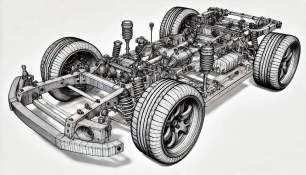 The chassis of a car is an important system of a vehicle that connects the wheels and the body, allowing safe and stable movement. It consists of various mechanisms and components that ensure the vehicle's handling, comfort and roadholding. In this article, we will provide an overview of the chassis structure and introduce in more detail important components such as wishbones, steering arm, pendulum arm, track rod, steering knuckle, hinges, bridge beam and steering rods.
... More...
The chassis of a car is an important system of a vehicle that connects the wheels and the body, allowing safe and stable movement. It consists of various mechanisms and components that ensure the vehicle's handling, comfort and roadholding. In this article, we will provide an overview of the chassis structure and introduce in more detail important components such as wishbones, steering arm, pendulum arm, track rod, steering knuckle, hinges, bridge beam and steering rods.
... More...
Car chassis and undercarriage
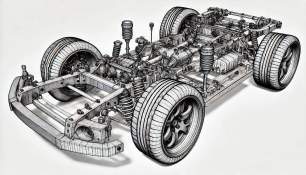 The undercarriage of a car, or car chassis and undercarriage, consists of several key components that play a role in the car's movement, appearance, and safety. It is an additional system that connects the car body to the wheels and allows the vehicle to be used and steered. The following is an overview of the main details of the undercarriage of a car.
1. Suspension system
The suspension system connects the wheels of a car to the body or frame and ensures a comfortable and stable ride. Its function is to absorb shocks and vibrations that occur on rough roads. The main elements of the suspension are:
Shock absorbers: Absorb the movement of the springs and keep the tires against the road.
Springs (coil springs or leaf springs): Hold the weight of the car and provide a smoother ride.
Control arms: Connect the wheels to the chassis and allow vertical movement.
Coupling Rod: Reduce body roll when cornering.
Bushes: Soft connections that hold parts in place and absorb vibrations.
... More...
The undercarriage of a car, or car chassis and undercarriage, consists of several key components that play a role in the car's movement, appearance, and safety. It is an additional system that connects the car body to the wheels and allows the vehicle to be used and steered. The following is an overview of the main details of the undercarriage of a car.
1. Suspension system
The suspension system connects the wheels of a car to the body or frame and ensures a comfortable and stable ride. Its function is to absorb shocks and vibrations that occur on rough roads. The main elements of the suspension are:
Shock absorbers: Absorb the movement of the springs and keep the tires against the road.
Springs (coil springs or leaf springs): Hold the weight of the car and provide a smoother ride.
Control arms: Connect the wheels to the chassis and allow vertical movement.
Coupling Rod: Reduce body roll when cornering.
Bushes: Soft connections that hold parts in place and absorb vibrations.
... More...

 The data shown here, especially the complete database of car spare parts, may not be copied. It is strictly prohibited to duplicate the data and database and distribute the same, and/or instruct third parties to engage in such activities, without prior consent from TecAlliance. Any use of content in a manner not expressly authorized constitutes copyright infringement and violators will be prosecuted.