

Air Conditioning > Condenser
Pick your vehicle
Car AC Condenser: Function, Importance, and Maintenance
The air conditioning (AC) system in a car is one of the key components that ensures comfort during hot weather by cooling down the cabin. One of the crucial components of the AC system is the AC condenser. It plays a central role in transforming refrigerant gas into a liquid, enabling the system to cool the air effectively. In this article, we’ll explore the purpose of the AC condenser, how it works, why it’s important, common problems, and how to maintain it.

What is an AC Condenser?
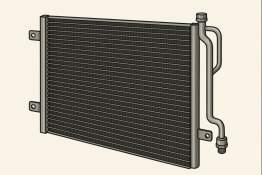
The AC condenser is a heat exchanger that is responsible for converting the refrigerant gas from the compressor into a high-pressure liquid. It is typically located at the front of the vehicle, near the radiator, and looks like a smaller version of the radiator itself. Like a radiator, the condenser has fins and tubes that allow airflow to pass through, which helps cool the refrigerant as it moves through the system.
How Does the AC Condenser Work?
The process of how the AC condenser operates is part of the larger refrigeration cycle that the air conditioning system uses. Here’s a step-by-step breakdown:
-
Hot Refrigerant from the Compressor: After the air conditioning system’s compressor pressurizes the refrigerant, it is pushed through a high-pressure line into the condenser. At this point, the refrigerant is hot and in gas form due to the high pressure created by the compressor.
-
Cooling and Condensation: As the hot refrigerant gas enters the condenser, it travels through a series of tubes. Surrounding the tubes are metal fins that help dissipate heat. The airflow from outside the vehicle (driven by the car's movement or the radiator fan) cools down the refrigerant gas. As the refrigerant loses heat, it begins to condense and turns from a gas into a high-pressure liquid.
-
Transferring the Liquid to the Evaporator: Once the refrigerant has condensed into a high-pressure liquid, it moves on to the next stage of the cycle: the evaporator. The liquid refrigerant flows into the evaporator, where it expands and absorbs heat from the air inside the cabin, cooling the air before it’s blown into the cabin.
Importance of the AC Condenser
The AC condenser is critical for the efficient functioning of the entire air conditioning system. Here are a few reasons why it’s so important:
-
Cooling the Refrigerant: The primary role of the condenser is to cool the refrigerant gas coming from the compressor. If the condenser fails, the refrigerant will not be able to condense properly, and the AC system will not function effectively, resulting in no cool air in the cabin.
-
Improving AC Efficiency: The condenser helps maintain the overall efficiency of the air conditioning system. By reducing the temperature of the refrigerant, it ensures that the evaporator can absorb as much heat as possible, which leads to a more effective cooling performance.
-
Maintaining Comfort: A properly functioning condenser is essential for keeping the car’s cabin cool. Without it, the AC system cannot remove heat from the cabin, making the vehicle uncomfortable during hot weather.
Common Problems with the AC Condenser
Like any other component in a car's AC system, the condenser can develop issues over time. Some of the most common problems include:
-
Leaks in the Condenser: A condenser can develop leaks due to physical damage (e.g., from road debris) or corrosion. If a leak occurs, refrigerant can escape, reducing the system’s ability to cool the air. A loss of refrigerant will lead to poor or no cooling performance from the AC system.
-
Clogged Condenser: The condenser’s fins can get clogged with dirt, leaves, and other debris. This can obstruct airflow, reducing the condenser's ability to release heat. As a result, the refrigerant won’t cool down as effectively, and the AC system won’t work properly.
-
Physical Damage: The condenser is located at the front of the vehicle, which makes it vulnerable to damage from rocks, insects, or other debris on the road. Physical damage can cause leaks or reduced efficiency in heat dissipation, affecting the overall AC performance.
-
Corrosion: Over time, exposure to moisture, road salt, and other environmental factors can cause the condenser to corrode. This corrosion can lead to leaks or internal blockages, which will compromise the cooling process.
-
Low Refrigerant Levels: While low refrigerant levels are often caused by leaks, they can also occur due to improper system charging or wear and tear. If the refrigerant levels are too low, the condenser will not be able to operate effectively, leading to poor AC performance.
Symptoms of a Faulty AC Condenser
A malfunctioning AC condenser can cause several noticeable symptoms that indicate the need for repairs or replacement. Some common symptoms include:
-
Warm Air Blowing from Vents: If the condenser is damaged or not working properly, the refrigerant may not cool effectively, resulting in warm or hot air blowing through the AC vents instead of cool air.
-
Poor Cooling Performance: Even if the air coming from the vents is somewhat cool, it may not be as cold as it should be, indicating that the condenser isn’t efficiently cooling the refrigerant.
-
Visible Leaks: If you notice oil stains or signs of refrigerant leaks around the condenser, it’s a sign that there might be a hole or crack in the condenser.
-
Hissing or Whistling Sounds: Unusual sounds coming from the AC system may indicate a refrigerant leak or a blocked condenser. A hissing sound can be a sign of refrigerant escaping from the system.
-
Check Engine or AC Warning Lights: If there’s an issue with the condenser or the AC system, the vehicle’s diagnostic system may trigger a warning light, alerting you to the problem.
How to Maintain and Repair the AC Condenser
Maintaining the AC condenser is essential to ensure your air conditioning system works efficiently for years. Here are some tips for proper maintenance and repair:
-
Regular Cleaning: Periodically check the area around the condenser for dirt, debris, and leaves. Cleaning the condenser can improve airflow and efficiency. Use compressed air or a soft brush to remove any obstructions.
-
Inspect for Leaks: Regularly check the condenser for signs of leaks or damage. If you suspect a leak, it’s crucial to have it repaired promptly to avoid refrigerant loss.
-
Protect the Condenser from Debris: If possible, install a protective grille or shield in front of the condenser to prevent debris from damaging it. This is especially important if you frequently drive on gravel roads or in areas with heavy vegetation.
-
Get Professional Maintenance: Have your vehicle’s air conditioning system inspected and serviced by a professional mechanic regularly. They can check for issues with the condenser and other components of the AC system.
-
Replace When Necessary: If the condenser is severely damaged or corroded, it may need to be replaced. This is a job that typically requires a professional, as it involves handling refrigerant and ensuring that the system is properly charged after installation.
Conclusion
The AC condenser is a vital component of your car’s air conditioning system. It plays a crucial role in cooling the refrigerant and ensuring that your vehicle’s cabin remains comfortable on hot days. A damaged or malfunctioning condenser can result in poor cooling performance, and in some cases, complete failure of the AC system. Regular maintenance, including cleaning, inspection for leaks, and prompt repair of any issues, will help ensure that the AC condenser continues to operate efficiently and provide cool, comfortable air for your ride.
Types of car air conditioning oil and how to add oil
 As a car owner, you need to regularly change the air conditioning compressor oil to keep your car air conditioning system in good condition and to cool the interior temperature. An AC system can work well and last a long time on a car, of course it needs maintenance and oil changes regularly so that the components working in it do not wear out or get damaged.
... More...
As a car owner, you need to regularly change the air conditioning compressor oil to keep your car air conditioning system in good condition and to cool the interior temperature. An AC system can work well and last a long time on a car, of course it needs maintenance and oil changes regularly so that the components working in it do not wear out or get damaged.
... More...

Car Air Conditioning Compressor: Working Principle, Maintenance
 What is a car air conditioning compressor?
The car air conditioning compressor is the heart of the vehicle's climate system, ensuring the flow of cooled air into the cabin. Its main function is to compress the refrigerant and direct it to the condenser, where it cools and turns into a liquid, allowing chilled air to reach the interior.
... More...
What is a car air conditioning compressor?
The car air conditioning compressor is the heart of the vehicle's climate system, ensuring the flow of cooled air into the cabin. Its main function is to compress the refrigerant and direct it to the condenser, where it cools and turns into a liquid, allowing chilled air to reach the interior.
... More...
Car Air Conditioning: Working Principle, Important Parts and Maintenance
 What is a Car Air Conditioning System?
The car air conditioning system (Car Air Conditioner) is a system that ensures a comfortable temperature inside the vehicle by removing excess heat and humidity. The air conditioning system operates in a closed circuit, using a special refrigerant (Freon) to maintain the cooling cycle.
How Does a Car Air Conditioning System Work?
The air conditioning system works on the principle of heat transfer, where heat is removed from the vehicle's interior and released into the external environment. The main stages of this process are:
Compression of the refrigerant: The air conditioning compressor increases the pressure and temperature of the refrigerant.
Heat dissipation: The condenser removes the heat from the high-pressure gas, converting it into a liquid.
Expansion of the refrigerant: The expansion valve lowers the pressure of the liquid refrigerant, cooling it.
Heat absorption: The evaporator absorbs heat from the cabin, turning the liquid refrigerant back into gas.
The cycle continues: The compressor pulls back the heat-absorbed refrigerant, and the process repeats.
Car Air Conditioning / A/C System Diagram
1. A/C Condenser Fan
... More...
What is a Car Air Conditioning System?
The car air conditioning system (Car Air Conditioner) is a system that ensures a comfortable temperature inside the vehicle by removing excess heat and humidity. The air conditioning system operates in a closed circuit, using a special refrigerant (Freon) to maintain the cooling cycle.
How Does a Car Air Conditioning System Work?
The air conditioning system works on the principle of heat transfer, where heat is removed from the vehicle's interior and released into the external environment. The main stages of this process are:
Compression of the refrigerant: The air conditioning compressor increases the pressure and temperature of the refrigerant.
Heat dissipation: The condenser removes the heat from the high-pressure gas, converting it into a liquid.
Expansion of the refrigerant: The expansion valve lowers the pressure of the liquid refrigerant, cooling it.
Heat absorption: The evaporator absorbs heat from the cabin, turning the liquid refrigerant back into gas.
The cycle continues: The compressor pulls back the heat-absorbed refrigerant, and the process repeats.
Car Air Conditioning / A/C System Diagram
1. A/C Condenser Fan
... More...
Why do wiper blades spoil quickly? Causes and effective solutions with deep cleaning
 Rapid wear of wiper blades is a problem that can occur even on brand new cars. If new wiper blades start to streak, leave spots on the glass or start to skip after just a few weeks or months, the fault is usually not with the product itself. Most often, the cause is invisible dirt accumulated on the surface of the windshield or the wipers are working at the wrong angle.
Below is an overview of the main causes and solutions.
... More...
Rapid wear of wiper blades is a problem that can occur even on brand new cars. If new wiper blades start to streak, leave spots on the glass or start to skip after just a few weeks or months, the fault is usually not with the product itself. Most often, the cause is invisible dirt accumulated on the surface of the windshield or the wipers are working at the wrong angle.
Below is an overview of the main causes and solutions.
... More...
Air conditioning compressor oils: differences, selection and use
 types of car climate oils
1. pag oils (polyalkylene glycol)
The most common type of car air conditioning oil for R134a and R1234yf refrigerants.
Why is pag oil used?
mixes very well with refrigerant
ensures smooth operation of the compressor
suitable for most modern vehicles
The main viscosity classes of pag oils:
page 46 – for smaller compressors, new cars
pag 100 – for standard compressors
pag 150 – for larger systems (trucks, buses)
pros:
optimal compatibility with R134a and R1234yf systems
good lubricity
disadvantages:
hygroscopic (draws moisture from the air)
2. store oils (polyol ester)
The store's oils are also synthetic and are particularly suitable for electric compressors and hybrid cars , where electrical insulation is required.
What is store oil used for?
in r134a and r1234yf systems
in vehicles where the compressor is electrically controlled
in compressors that require special dielectric oil
Common store viscosity grades:
shop 32
shop 46
shop 68
shop 100
3. PAO oils (polyalphaolefin) – versatile and moisture resistant
PAO oils are synthetic oils that are non -hygroscopic, meaning they do not absorb moisture. This makes them useful in difficult conditions.
Why choose pao oil?
suitable for both r134a and r1234yf refrigerants
can be used when unsure of what pag viscosity is needed
better moisture resistance
Common escape classes:
escape 68
escape universal
Universal PAO is popular in repair shops because it is suitable for many systems and is stable.
4. mineral oils (mo / mineral oil)
mainly used in older systems with R12 refrigerant .
Where are mineral oils used?
classic cars
old air conditioning systems that operate with R12 or its substitutes
... More...
types of car climate oils
1. pag oils (polyalkylene glycol)
The most common type of car air conditioning oil for R134a and R1234yf refrigerants.
Why is pag oil used?
mixes very well with refrigerant
ensures smooth operation of the compressor
suitable for most modern vehicles
The main viscosity classes of pag oils:
page 46 – for smaller compressors, new cars
pag 100 – for standard compressors
pag 150 – for larger systems (trucks, buses)
pros:
optimal compatibility with R134a and R1234yf systems
good lubricity
disadvantages:
hygroscopic (draws moisture from the air)
2. store oils (polyol ester)
The store's oils are also synthetic and are particularly suitable for electric compressors and hybrid cars , where electrical insulation is required.
What is store oil used for?
in r134a and r1234yf systems
in vehicles where the compressor is electrically controlled
in compressors that require special dielectric oil
Common store viscosity grades:
shop 32
shop 46
shop 68
shop 100
3. PAO oils (polyalphaolefin) – versatile and moisture resistant
PAO oils are synthetic oils that are non -hygroscopic, meaning they do not absorb moisture. This makes them useful in difficult conditions.
Why choose pao oil?
suitable for both r134a and r1234yf refrigerants
can be used when unsure of what pag viscosity is needed
better moisture resistance
Common escape classes:
escape 68
escape universal
Universal PAO is popular in repair shops because it is suitable for many systems and is stable.
4. mineral oils (mo / mineral oil)
mainly used in older systems with R12 refrigerant .
Where are mineral oils used?
classic cars
old air conditioning systems that operate with R12 or its substitutes
... More...
 The data shown here, especially the complete database of car spare parts, may not be copied. It is strictly prohibited to duplicate the data and database and distribute the same, and/or instruct third parties to engage in such activities, without prior consent from TecAlliance. Any use of content in a manner not expressly authorized constitutes copyright infringement and violators will be prosecuted.