

Steering > Hydraulic Oil fluid reservoir
Pick your vehicle
car power steering oil tank – everything you need to know
What is a power steering oil tank?
The power steering fluid reservoir is an important part of a car's power steering system, storing and distributing power steering fluid. This reservoir helps ensure that there is always enough oil in the system to ensure smooth and trouble-free steering. Power steering fluid prevents excessive friction and heat build-up, which can damage the power steering pump and other components.
Why is the power steering oil tank important?
- ensures smooth operation of the steering system – sufficient fluid level helps prevent the steering wheel from becoming heavy.
- prevents the system from overheating – proper lubrication reduces friction and prevents excessive heating.
- reduces system wear – helps prevent premature failure of the pump and hoses.
- allows for easy oil checking and topping up – most tanks are transparent or equipped with gauges to monitor the oil level.
Where is the power steering oil tank located?
On most cars, the power steering fluid reservoir is located in the engine compartment , usually near the engine. It is easy to access to check and add fluid if necessary. The reservoir is often marked with a power steering symbol on the cap or the text "power steering fluid" .
How to check the power steering oil level?
Checking the power steering oil level is a simple process:
- Stand on a level surface and make sure the engine has cooled down.
- Find the power steering fluid reservoir – it usually has a transparent housing or gauge marks.
- Check the level – see if the oil level is between the min and max marks.
- If the level is low , add the manufacturer's recommended oil, avoiding overfilling.
When should the power steering oil tank be checked and filled?
It is recommended to check the power steering fluid every 10,000–20,000 km or at least once a year . If you notice the following, the system may need to be inspected:
- turning the steering wheel is harder than usual.
- You hear whistling or whistling sounds when you turn the steering wheel.
- The oil has turned dark or is foaming , which may indicate contamination or a leak.
How to clean the power steering oil tank?
If there is dirt or old oil in the system, it may be necessary to clean the tank and the entire system:
- Remove old oil – use an oil change pump or let the system drain.
- Flush the system – some manufacturers recommend special cleaning fluids.
- Fill the tank with new oil – use only the manufacturer's recommended power steering fluid.
- Bleed the system – turn the steering wheel fully left and right to remove air bubbles.
When should the power steering oil tank be replaced?
Although the tank itself is rarely problematic, it may need to be replaced if:
- it is cracked or leaking .
- hoses or connections are damaged and oil is leaking out.
- The oil level is constantly dropping , indicating possible problems.
summary
The power steering fluid reservoir is an important component that ensures smooth and trouble-free operation of the steering system. Regular inspection, use of the correct oil, and maintenance of the system will extend the life of your car and improve handling. If you notice a low oil level or leaks, the problem should be addressed quickly to prevent major damage.
If you need high-quality power steering fluid or spare parts, browse our wide selection and find the best solution for your vehicle!
Car chassis construction and parts
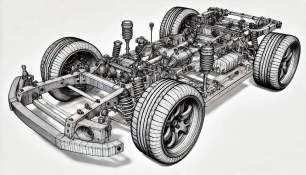 The chassis of a car is an important system of a vehicle that connects the wheels and the body, allowing safe and stable movement. It consists of various mechanisms and components that ensure the vehicle's handling, comfort and roadholding. In this article, we will provide an overview of the chassis structure and introduce in more detail important components such as wishbones, steering arm, pendulum arm, track rod, steering knuckle, hinges, bridge beam and steering rods.
... More...
The chassis of a car is an important system of a vehicle that connects the wheels and the body, allowing safe and stable movement. It consists of various mechanisms and components that ensure the vehicle's handling, comfort and roadholding. In this article, we will provide an overview of the chassis structure and introduce in more detail important components such as wishbones, steering arm, pendulum arm, track rod, steering knuckle, hinges, bridge beam and steering rods.
... More...
Car chassis and undercarriage
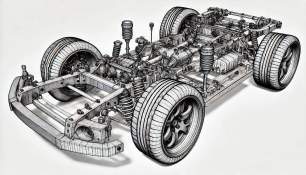 The undercarriage of a car, or car chassis and undercarriage, consists of several key components that play a role in the car's movement, appearance, and safety. It is an additional system that connects the car body to the wheels and allows the vehicle to be used and steered. The following is an overview of the main details of the undercarriage of a car.
1. Suspension system
The suspension system connects the wheels of a car to the body or frame and ensures a comfortable and stable ride. Its function is to absorb shocks and vibrations that occur on rough roads. The main elements of the suspension are:
Shock absorbers: Absorb the movement of the springs and keep the tires against the road.
Springs (coil springs or leaf springs): Hold the weight of the car and provide a smoother ride.
Control arms: Connect the wheels to the chassis and allow vertical movement.
Coupling Rod: Reduce body roll when cornering.
Bushes: Soft connections that hold parts in place and absorb vibrations.
... More...
The undercarriage of a car, or car chassis and undercarriage, consists of several key components that play a role in the car's movement, appearance, and safety. It is an additional system that connects the car body to the wheels and allows the vehicle to be used and steered. The following is an overview of the main details of the undercarriage of a car.
1. Suspension system
The suspension system connects the wheels of a car to the body or frame and ensures a comfortable and stable ride. Its function is to absorb shocks and vibrations that occur on rough roads. The main elements of the suspension are:
Shock absorbers: Absorb the movement of the springs and keep the tires against the road.
Springs (coil springs or leaf springs): Hold the weight of the car and provide a smoother ride.
Control arms: Connect the wheels to the chassis and allow vertical movement.
Coupling Rod: Reduce body roll when cornering.
Bushes: Soft connections that hold parts in place and absorb vibrations.
... More...

Why do wiper blades spoil quickly? Causes and effective solutions with deep cleaning
 Rapid wear of wiper blades is a problem that can occur even on brand new cars. If new wiper blades start to streak, leave spots on the glass or start to skip after just a few weeks or months, the fault is usually not with the product itself. Most often, the cause is invisible dirt accumulated on the surface of the windshield or the wipers are working at the wrong angle.
Below is an overview of the main causes and solutions.
... More...
Rapid wear of wiper blades is a problem that can occur even on brand new cars. If new wiper blades start to streak, leave spots on the glass or start to skip after just a few weeks or months, the fault is usually not with the product itself. Most often, the cause is invisible dirt accumulated on the surface of the windshield or the wipers are working at the wrong angle.
Below is an overview of the main causes and solutions.
... More...
 The data shown here, especially the complete database of car spare parts, may not be copied. It is strictly prohibited to duplicate the data and database and distribute the same, and/or instruct third parties to engage in such activities, without prior consent from TecAlliance. Any use of content in a manner not expressly authorized constitutes copyright infringement and violators will be prosecuted.