

Steering > Joints / Tie rods (inner , outer)
Pick your vehicle
Outer Tie Rods: Essential Components for Vehicle Steering and Control
Outer tie rods are critical components in a vehicle’s steering system, playing a pivotal role in ensuring precise control over the direction of the vehicle. Despite being relatively small parts in the grand scheme of an automobile’s intricate mechanisms, outer tie rods are essential for safe and smooth driving. Understanding their function, potential issues, and maintenance needs can help vehicle owners ensure their cars operate at optimal levels.
What Are Outer Tie Rods?
Tie rods are a key part of the steering linkage, connecting the steering rack to the wheels of a vehicle. The steering rack or steering box, controlled by the driver through the steering wheel, sends movement through the tie rods, which then move the wheels. The steering system can be divided into two main parts: the inner tie rods and the outer tie rods.
- Inner Tie Rods: These connect to the steering rack or steering box.
- Outer Tie Rods: These connect the inner tie rods to the steering knuckles or wheel assemblies.
In simpler terms, the outer tie rods act as the final connection that translates the steering wheel’s movements into actual turning of the wheels. This vital link ensures the vehicle follows the driver’s input as intended.
How Do Outer Tie Rods Work?
The steering system works through a combination of inner and outer tie rods, which are designed to facilitate smooth wheel movement. When a driver turns the steering wheel, the steering rack (or box) moves, causing the inner tie rods to shift. These inner tie rods are connected to the outer tie rods, which then push or pull on the steering knuckles to turn the wheels.
The outer tie rod is composed of a rod, a ball joint, and an adjustment sleeve. The ball joint allows for flexibility and movement, enabling the wheels to pivot at different angles. The adjustment sleeve ensures that the tie rod’s length can be altered for alignment purposes, making it a critical part of the vehicle's steering geometry.
Why Are Outer Tie Rods Important?
Outer tie rods have an important role in maintaining vehicle stability and handling. They contribute to several key functions:
- Steering Precision: Outer tie rods ensure that the steering wheel's movements are accurately reflected in the direction of the wheels. This contributes to smooth, predictable handling when turning the vehicle.
- Wheel Alignment: Proper functioning outer tie rods help keep the wheels aligned correctly. Misalignment can cause uneven tire wear, poor handling, and, in severe cases, loss of control over the vehicle.
- Safety: If outer tie rods fail, the driver may experience difficulty controlling the vehicle, potentially leading to dangerous driving conditions. They ensure that all steering components work together seamlessly to maintain safe operation of the vehicle.
Signs of Outer Tie Rod Wear or Damage
While outer tie rods are built to last, they are still susceptible to wear and tear over time, especially with constant exposure to road conditions, dirt, and vibrations. A few common signs that outer tie rods may need attention include:
- Steering Play: If there is excessive play or a loose feeling in the steering wheel, this could indicate that the outer tie rods are worn out and need replacement.
- Uneven Tire Wear: Worn outer tie rods can cause wheel misalignment, leading to uneven or rapid tire wear. If your tires are wearing unevenly, particularly on the inner or outer edges, it could be a sign of tie rod failure.
- Clunking Noises: A common symptom of faulty outer tie rods is a clunking noise, especially when turning or driving over bumps. This noise is caused by loose parts or worn ball joints within the tie rod.
- Pulling to One Side: If the vehicle pulls to one side or the steering feels off-center, it may be due to a misalignment caused by damaged outer tie rods.
- Vibrating Steering Wheel: A vibrating or shaking steering wheel, particularly at higher speeds, can indicate that the outer tie rods or other steering components are worn or damaged.
Causes of Outer Tie Rod Wear
There are several factors that can contribute to the wear and tear of outer tie rods, including:
- Poor Road Conditions: Constant driving over rough, bumpy, or pothole-riddled roads can increase wear on the outer tie rods.
- Normal Aging: Over time, the ball joints and other components in the outer tie rods can degrade due to constant use, eventually leading to failure.
- Lack of Lubrication: Tie rods rely on proper lubrication to function smoothly. If they become insufficiently lubricated, they may wear out more quickly.
- Improper Alignment: If the vehicle’s alignment is off, it can cause undue stress on the tie rods, leading to premature wear.
Replacing Outer Tie Rods
If any of the symptoms of a bad outer tie rod are present, it's important to address the issue as soon as possible. Replacing the outer tie rod is typically a job for a mechanic, as it involves steering system components that need to be aligned properly for safe operation.
The replacement process involves removing the old outer tie rod, adjusting the new one to the proper length (based on alignment settings), and installing it with the correct torque. Afterward, a professional will likely perform a wheel alignment to ensure that the vehicle's wheels are properly aligned for optimal handling.
Maintenance and Prevention
To prolong the life of your outer tie rods and keep your vehicle’s steering system in good working condition:
- Regular Inspections: Have your vehicle’s steering system checked regularly by a professional, particularly if you notice any unusual behavior.
- Avoid Potholes and Rough Roads: Whenever possible, avoid driving over large potholes or extremely rough roads, which can accelerate wear on the tie rods.
- Routine Alignment: Ensure that your vehicle is properly aligned. Misalignment not only affects tire wear but also puts unnecessary stress on your tie rods and other suspension components.
Conclusion
Outer tie rods are an essential part of your vehicle's steering system, helping to ensure safe, precise, and responsive handling. Regular maintenance and prompt replacement when needed are key to maintaining a safe driving experience. If you experience any symptoms of a worn or damaged outer tie rod, it’s crucial to have it inspected and replaced as soon as possible to prevent further issues and to keep your vehicle performing at its best.
Changing tie rod end - how to perform this work
 How do you know when to change the tie rod end?
... More...
How do you know when to change the tie rod end?
... More...
Car chassis construction and parts
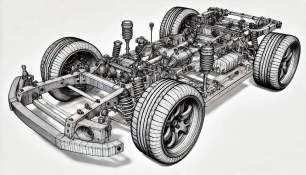 The chassis of a car is an important system of a vehicle that connects the wheels and the body, allowing safe and stable movement. It consists of various mechanisms and components that ensure the vehicle's handling, comfort and roadholding. In this article, we will provide an overview of the chassis structure and introduce in more detail important components such as wishbones, steering arm, pendulum arm, track rod, steering knuckle, hinges, bridge beam and steering rods.
... More...
The chassis of a car is an important system of a vehicle that connects the wheels and the body, allowing safe and stable movement. It consists of various mechanisms and components that ensure the vehicle's handling, comfort and roadholding. In this article, we will provide an overview of the chassis structure and introduce in more detail important components such as wishbones, steering arm, pendulum arm, track rod, steering knuckle, hinges, bridge beam and steering rods.
... More...
Car chassis and undercarriage
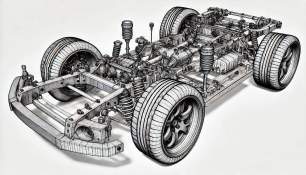 The undercarriage of a car, or car chassis and undercarriage, consists of several key components that play a role in the car's movement, appearance, and safety. It is an additional system that connects the car body to the wheels and allows the vehicle to be used and steered. The following is an overview of the main details of the undercarriage of a car.
1. Suspension system
The suspension system connects the wheels of a car to the body or frame and ensures a comfortable and stable ride. Its function is to absorb shocks and vibrations that occur on rough roads. The main elements of the suspension are:
Shock absorbers: Absorb the movement of the springs and keep the tires against the road.
Springs (coil springs or leaf springs): Hold the weight of the car and provide a smoother ride.
Control arms: Connect the wheels to the chassis and allow vertical movement.
Coupling Rod: Reduce body roll when cornering.
Bushes: Soft connections that hold parts in place and absorb vibrations.
... More...
The undercarriage of a car, or car chassis and undercarriage, consists of several key components that play a role in the car's movement, appearance, and safety. It is an additional system that connects the car body to the wheels and allows the vehicle to be used and steered. The following is an overview of the main details of the undercarriage of a car.
1. Suspension system
The suspension system connects the wheels of a car to the body or frame and ensures a comfortable and stable ride. Its function is to absorb shocks and vibrations that occur on rough roads. The main elements of the suspension are:
Shock absorbers: Absorb the movement of the springs and keep the tires against the road.
Springs (coil springs or leaf springs): Hold the weight of the car and provide a smoother ride.
Control arms: Connect the wheels to the chassis and allow vertical movement.
Coupling Rod: Reduce body roll when cornering.
Bushes: Soft connections that hold parts in place and absorb vibrations.
... More...
Why do wiper blades spoil quickly? Causes and effective solutions with deep cleaning
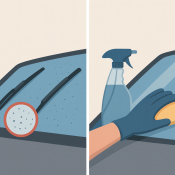 Rapid wear of wiper blades is a problem that can occur even on brand new cars. If new wiper blades start to streak, leave spots on the glass or start to skip after just a few weeks or months, the fault is usually not with the product itself. Most often, the cause is invisible dirt accumulated on the surface of the windshield or the wipers are working at the wrong angle.
Below is an overview of the main causes and solutions.
... More...
Rapid wear of wiper blades is a problem that can occur even on brand new cars. If new wiper blades start to streak, leave spots on the glass or start to skip after just a few weeks or months, the fault is usually not with the product itself. Most often, the cause is invisible dirt accumulated on the surface of the windshield or the wipers are working at the wrong angle.
Below is an overview of the main causes and solutions.
... More...
 The data shown here, especially the complete database of car spare parts, may not be copied. It is strictly prohibited to duplicate the data and database and distribute the same, and/or instruct third parties to engage in such activities, without prior consent from TecAlliance. Any use of content in a manner not expressly authorized constitutes copyright infringement and violators will be prosecuted.