

Exhaust System > Lambda Sensor
Pick your vehicle
car lambda sensor – a complete guide to the importance and working principle of this sensor
introduction
The lambda sensor, also known as the lambda probe and oxygen sensor, is an important component in a car's exhaust system, whose task is to measure the oxygen content in the exhaust gases. The data from this sensor helps the engine control unit adjust the fuel mixture to an optimal level, ensuring better fuel economy, lower emissions and better engine performance. In this article, we will look at how the lambda sensor works, what are its fault symptoms and how to maintain it.
What is a lambda sensor and how does it work?
The lambda sensor is located in the exhaust system and measures the balance of the air and fuel mixture. If the mixture is too rich (too much fuel) or too lean (too much air), the sensor sends a signal to the engine control unit, which adjusts the fuel injection and improves combustion efficiency.
lambda sensor types
- Narrow band lambda sensor (zirconium dioxide) – common in most vehicles, measures only rich or lean mixture.
- wideband lambda sensor – offers more accurate measurement and is used in more modern engines to provide better fuel economy and emission control.
- titanium dioxide sensor – a less commonly used variant that has a different voltage output compared to zirconium dioxide.

signs and symptoms of malfunction
If the lambda sensor is not working properly, it can cause a number of problems with engine performance and fuel consumption. Typical symptoms include:
- increased fuel consumption – in the event of faults, the engine cannot optimally regulate the fuel mixture, which leads to higher fuel consumption.
- Unstable idling and engine jerking – if the sensor is not providing correct data, the engine may run irregularly.
- Check engine light – A defective lambda sensor can cause an error code that activates the check engine light.
- increased exhaust gas levels – poor fuel mixture control causes higher emissions of harmful substances.
How to check and maintain a lambda sensor?
- Diagnostic check – use an OBD2 diagnostic device to read fault codes and identify potential problems.
- Visual inspection – check the wires and connectors for corrosion and damage.
- Cleaning or replacement – in some cases, the sensor can be cleaned, but it is usually recommended to replace the defective sensor with a new one.
- Regular maintenance – the lambda sensor should be checked every 50,000–100,000 km, depending on the manufacturer's recommendations.
Advantages of a lambda sensor
- improves fuel efficiency by helping to optimize the fuel mixture and engine performance.
- reduces emissions , helping to keep the environment cleaner.
- extends the life of the catalyst by reducing the harmful effects of excess fuel or oxygen on the catalyst.
- ensures smoother engine operation , helping to prevent jerking and uneven performance.
Lambda sensor failure patterns and typical errors in the most common car models
Different car manufacturers and engine types have their own specific concerns regarding the exhaust system and lambda sensors. Let's take a look at some of the most common car brands and their typical faults.
volkswagen, audi, škoda, seat (vag group)
On VAG Group cars (especially older 1.8T, 2.0 TFSI petrol engines and 1.9/2.0 TDI diesels), early model wideband lambda sensors are often victims of other engine problems.
- Typical faults: 2.0 tfsi engines are known for their oil consumption. If the engine burns too much oil, the soot from the burnt oil will deposit directly on the sensitive element of the lambda sensor, damaging its ceramic. Another common fault is the wiring harness rubbing against the hot engine block, causing a short circuit.
- symptom on vag cars: epc light and check engine, "limping" at idle.
BMW (E46, E90, F30 and others)
BMWs are very complex in engineering and require a precise mixture. In the case of the N43 and N53 (direct injection petrol) engines, the engines often run in a "lean mixture" mode to save fuel.
- Typical faults: BMW lambda sensors very often have an internal heating element (heater circuit failure) that dies. In order for the sensor to start working, it must quickly reach a temperature of at least 300°C. If the heater burns out, the sensor will be dark for a long time after a cold start and the car's engine will run unevenly. In addition, BMW lambda sensors work in close cooperation with expensive NOX (nitrogen oxide) sensors - if the lambda sensor is lying, it can also disrupt the operation of the NOX system.
toyota and lexus (prius, corolla, avensis)
Japanese automaker Toyota is known for its reliability, and factory-installed Denso lambda sensors can last hundreds of thousands of kilometers.
- Typical faults: The main reason why Toyota sensors fail is natural wear of the sensor at high mileage (250,000+ km) or poor quality fuel. A common problem is a heater failure (for example, fault code P0135). On hybrids, such as the Prius, a faulty lambda sensor can prevent the petrol engine from switching on and off smoothly, making the transitions between electric and petrol modes jerky.
Ford and Volvo (1.6 and 2.0 Ecoboost engines)
The EcoBoost engines, jointly developed and used by Ford and Volvo, are turbocharged and have direct injection.
- Typical faults: these engines develop a lot of soot on the intake valves and in the combustion chamber over time. This soot is eventually blown into the exhaust, where it clogs the micro-holes of the first lambda sensor. The result is a slow, "lazy" sensor, which causes increased fuel consumption and loss of sharpness at low revs. The solution to the problem is often to replace the sensor together with engine soot cleaning (hydrocleaning or chemical cleaning).
honda (civic, accord, cr-v)
Honda's VTEC system is extremely sensitive to the correct fuel mixture.
- Typical errors: like others, the problem is aging and "laziness". It is characteristic of Hondas that universal, "cut-and-connect" lambda sensors without a specific connector often do not work at all or confuse the brain. Honda always needs a high-quality, model-specific (for example, NTK/NGK or Denso) sensor.
Why do lambda sensors break? (main reasons)
A quality oxygen sensor should last between 150,000 and 250,000 kilometers under normal conditions. However, several external factors shorten their lifespan:
- Silicone and sealant poisoning: This is a very common mechanic mistake. If the wrong type of silicone sealant (which is not sensor safe) is used during engine repairs (for example, when sealing a valve cover), the silicone compounds evaporate, enter the exhaust gases and coat the lambda sensor ceramic with a glassy layer. This kills the sensor almost instantly.
- Coolant (antifreeze/antifreeze) leak: If a car has a head gasket leak and coolant gets into the combustion chamber, it burns and ends up in the muffler. The chemicals in the coolant will damage the zirconium element in the sensor.
- Excessive soot and oil consumption: A worn engine that eats oil produces thick black soot. This soot clogs the small openings in the sensor's protective housing, preventing exhaust gases from entering the sensor to react.
- Physical and thermal shock: the sensor is located under the car, where it is exposed to puddles, ice and salt. A hot (up to 800°C) sensor that is suddenly hit by ice-cold mud can break internally. Oxidation and mechanical breakage of the wiring due to stones also cause problems.
- aging: the sensor's ceramic element simply ages and loses its sensitivity, responding to changes in the mixture within seconds, not milliseconds.
diagnostics and chemical products: how to approach repairs?
If your car gives a lambda sensor error code, the first step is to make sure whether the fault is really in the sensor or somewhere else (for example, a vacuum leak in the intake, which makes the mixture too lean and the lambda sensor is simply "reporting" bad news). In case of a serious fault, nothing but a physical replacement of the sensor will help.
Can the lambda sensor be cleaned?
There are many myths circulating on the internet about washing lambda sensors with acids or scrubbing them with a wire brush. The answer is no, you should not mechanically scrub the sensor with a wire brush! This will irreversibly damage the sensitive tip of the sensor. However, it is possible to proactively clean and maintain the system with special car chemicals.
Suitable chemical products for maintaining and replacing the lambda sensor system:
- Catalyst and Lambda Sensor Cleaning Additives (Fuel Additives): These are special fuel additives that are poured into the fuel tank. When burned while driving, these chemical compounds clean the intake valves, combustion chamber and exhaust system of soft soot deposited on the sensor surface as well as inside the catalytic converter honeycomb structure. This helps to slightly improve the response time of a sluggish sensor, provided that the ceramic has not been physically destroyed.
- Penetrating oil / rust penetrant: Oxygen sensors are welded into the exhaust pipe and are exposed to extreme heat and rust. They tend to weld themselves into the pipe. Before removing the old sensor, it is essential to spray a high-quality penetrating oil on the threads, which cools and breaks down rust. Without it, you can break the muffler thread when unscrewing the sensor.
- Heat-resistant ceramic or copper paste: Before installing a new sensor, a thin layer of special high-temperature (up to 1000°C+) ceramic or copper paste must be applied to the sensor thread. The grease must only be applied to the thread, not to the tip of the sensor! This ensures that the sensor can be unscrewed normally even after years if necessary. NB! Many new premium-class sensors (e.g. Bosch) have grease already applied to the thread by the factory.
- Electrical contact cleaner: The lambda sensor connector is often located under the car, where it can get water and salt. When disconnecting the connectors, it is wise to clean the contacts on both sides with a special contact cleaner that removes oxidation, improves electrical conductivity, and repels moisture.
How to change a lambda sensor yourself: step-by-step guide
For an experienced hobby mechanic, replacing a lambda sensor is completely doable at home or in a garage. Some sensors (pre-catalyst) are easily accessible under the hood, while others (post-catalyst) require the car to be lifted with a jack and stands.
necessary tools:
- high-quality diagnostic device (for reading and clearing error codes).
- a special lambda sensor socket (usually a 22mm / 7/8 inch socket with a cutout on the side for the wire).
- strong ratchet and extension, and if necessary, a "breaker bar" (power arm).
- penetrating rust-removing oil and ceramic grease.
exchange process:
- Let the exhaust cool down: never try to unscrew the sensor immediately after riding – the muffler is very hot and you can get serious burns. Also, a hot thread breaks more easily.
- Disconnecting the battery: Disconnect the negative terminal of the car battery to prevent short circuits in the computer (ECU) system.
- Soak the rust: Find the sensor. Spray the threads liberally with penetrating oil. If the sensor is very rusty, let the oil sit for at least 15-30 minutes. Sometimes this is even done the day before the repair.
- remove the connector: find the sensor cable and follow it to the connector. disconnect the connector. check the old and new connectors – are they identical?
- Unscrew the sensor: place the special 22mm lambda socket on the sensor, passing the wire through the slot in the socket. Unscrew the sensor counterclockwise. Be careful not to twist the exhaust pipe.
- Clean the thread: Carefully clean the muffler side thread. If the thread is badly damaged, it may be necessary to restore it with a special thread cutter (tap tool).
- Install a new sensor: if the new sensor does not have factory grease, apply a little ceramic or copper grease to the thread. Screw the new sensor into place by hand first to make sure the thread is properly engaged (do not screw crosswise!). Tighten the sensor to the torque specified by the manufacturer (usually approx. 40-50 nm).
- connect the connector and clear the fault codes: clean the connector on the car side with contact spray, connect the new sensor. connect the battery, turn on the ignition and clear the old fault codes with the diagnostic tool. go for a test drive!
the most well-known and reliable spare parts brands
When it comes to electronics, especially engine management sensors, there is a golden rule: avoid cheap, unknown "Chinese" copies. The brain of a car's engine is programmed to work with very specific resistance and voltage parameters. A cheap sensor may erase the error code for a moment, but the car's fuel consumption will still be at a premium and the sensor will break again in a few months.
Always choose top quality (OEM - original equipment manufacturer) brands. The most well-known of these are:
- Bosch: the company that invented the lambda sensor. Often the best and original factory-installed choice for European cars (VAG, BMW, Mercedes).
- NGK/NTK: One of the world's leading manufacturers of spark plugs and oxygen sensors. Especially recommended for Japanese and Asian cars (Honda, Toyota, Mazda), but also make excellent sensors for Europeans.
- Denso: Japanese giant, original parts manufacturer for Toyota and Lexus. Outstanding longevity and precision.
- delphi / vdo / pierburg: very well-known and high-quality manufacturers of electronic components, whose products can be confidently trusted.
with original connector vs universal sensor
There are so-called "universal" lambda sensors on the market that come without a connector and require you to cut the old sensor's connector and solder/crimp the new sensor's wires to it. They are cheaper, but in modern cars (especially with broadband sensors), installing a universal sensor often leads to problems - the slightest change in resistance at the wire connections confuses the engine's brain. Therefore, for the sake of the car's health and personal peace of mind, we recommend always buying a model-specific direct fit sensor , which has a factory connector and a cable of the right length already attached.
frequently asked questions (FAQ)
Can I continue driving with a broken lambda sensor?
Short-term driving (for example, to the garage) will not cause the engine to explode. However, long-term driving will clog the catalytic converter and DPF filter, spoil the engine oil, drastically increase fuel consumption and can lead to very expensive engine repairs.
Why is the car still showing an error code even after installing a new sensor?
There can be three main reasons for this: 1) the fault code has not been cleared with a diagnostic tool, 2) the new sensor is defective or of poor quality, 3) the fault was not actually in the sensor, but rather somewhere in the wiring, a blown fuse, or an intake vacuum leak.
If the car has 4 lambda sensors, do I have to replace them all at once?
usually not necessary. diagnostics show exactly which bank and which sensor (sensor 1 or 2) is at fault. as a rule, only the faulty sensor is replaced. however, in the case of v-engines, the first sensors of both rows are often replaced at the same time so that both engine halves regulate the fuel mixture with a symmetrical response time.
summary
The car's lambda sensor is a small but absolutely fundamental building block of a modern engine. Its job is to create a perfect bridge between the car's intake and exhaust systems, balancing the air-fuel ratio, ensuring engine viability, budget-friendly fuel consumption and saving the environment.
If your car's warning light comes on and you suspect an oxygen sensor, don't put off repairs. Timely diagnostics, the use of appropriate automotive chemicals (penetrating oil, ceramic grease, contact spray), and choosing a high-quality, reliable brand (such as Bosch, Denso, or NGK) sensor will ultimately save you hundreds, if not thousands, of euros.
Has your car's fuel consumption increased recently and would you like to be sure that the lambda sensor is doing its job correctly?
Car exhaust system: functions, components and maintenance
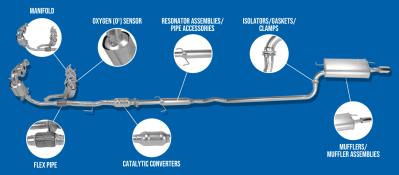 The car's exhaust system is one of the most important parts of a vehicle, its function is to safely direct exhaust gases generated during engine operation to the outside and reduce their environmental impact. This system helps to improve the vehicle's fuel efficiency, keep noise levels low, and meet legislative requirements that regulate the amount of pollutants.
... More...
The car's exhaust system is one of the most important parts of a vehicle, its function is to safely direct exhaust gases generated during engine operation to the outside and reduce their environmental impact. This system helps to improve the vehicle's fuel efficiency, keep noise levels low, and meet legislative requirements that regulate the amount of pollutants.
... More...
What is a car lambda sensor and how do you replace it yourself?
 The Lambda sensor, also known as the oxygen sensor, is an important part of a car's exhaust system. It measures the oxygen content in the exhaust gas and transmits the data to the car's engine management system to optimize the fuel-air mixture and reduce exhaust emissions. A faulty Lambda sensor can cause high fuel consumption, increased emissions, and reduced engine performance. Fortunately, you can replace a Lambda sensor yourself at home if you have the right tools and instructions.
... More...
The Lambda sensor, also known as the oxygen sensor, is an important part of a car's exhaust system. It measures the oxygen content in the exhaust gas and transmits the data to the car's engine management system to optimize the fuel-air mixture and reduce exhaust emissions. A faulty Lambda sensor can cause high fuel consumption, increased emissions, and reduced engine performance. Fortunately, you can replace a Lambda sensor yourself at home if you have the right tools and instructions.
... More...

Why do wiper blades spoil quickly? Causes and effective solutions with deep cleaning
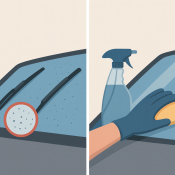 Rapid wear of wiper blades is a problem that can occur even on brand new cars. If new wiper blades start to streak, leave spots on the glass or start to skip after just a few weeks or months, the fault is usually not with the product itself. Most often, the cause is invisible dirt accumulated on the surface of the windshield or the wipers are working at the wrong angle.
Below is an overview of the main causes and solutions.
... More...
Rapid wear of wiper blades is a problem that can occur even on brand new cars. If new wiper blades start to streak, leave spots on the glass or start to skip after just a few weeks or months, the fault is usually not with the product itself. Most often, the cause is invisible dirt accumulated on the surface of the windshield or the wipers are working at the wrong angle.
Below is an overview of the main causes and solutions.
... More...
Car muffler repair and muffler parts: A comprehensive guide to exhaust system maintenance
 The vehicle exhaust system, or muffler in popular parlance, is one of the most stressed and extreme components in the entire car. Imagine an environment where the internal temperature of the components can range from hundreds of degrees to even a thousand degrees (at the catalytic converter and DPF filter), while the external surface of the component is attacked by sub-zero temperatures, rainwater, dirt, abrasive sand and aggressive salt sprinkled on the roads in winter.
... More...
The vehicle exhaust system, or muffler in popular parlance, is one of the most stressed and extreme components in the entire car. Imagine an environment where the internal temperature of the components can range from hundreds of degrees to even a thousand degrees (at the catalytic converter and DPF filter), while the external surface of the component is attacked by sub-zero temperatures, rainwater, dirt, abrasive sand and aggressive salt sprinkled on the roads in winter.
... More...
 The data shown here, especially the complete database of car spare parts, may not be copied. It is strictly prohibited to duplicate the data and database and distribute the same, and/or instruct third parties to engage in such activities, without prior consent from TecAlliance. Any use of content in a manner not expressly authorized constitutes copyright infringement and violators will be prosecuted.