

Exhaust System > Muffler
Pick your vehicle
car muffler: function, operating principle and maintenance
A car muffler is one of the most important components in a vehicle's exhaust system. It plays an important role in reducing engine noise, mitigating environmental impacts, and properly directing vehicle exhaust gases. In this article, we'll explore what a car muffler is, how it works, why it's important, and how to ensure its long-term reliability.

What is a car muffler?
A car muffler is a mechanism that is part of a car's exhaust system and whose function is to reduce the noise generated during engine operation. It consists of various components that help direct and process the vehicle's exhaust gases so that they do not harm the environment or interfere with the vehicle's exhaust system. The main purpose of a car muffler is to:
- Noise reduction : The operation of the engine produces a lot of noise, but the muffler helps to smooth it out and make the vehicle's movement quieter.
- exhaust gas treatment : the muffler helps direct exhaust gases through various filtering and conversion processes to ensure they are safely released.
- reducing environmental impacts : proper treatment allows for the reduction of pollutants such as nitrogen oxides and carbon dioxide in exhaust gases, which is important for protecting the environment.
How does a car muffler work?
A car muffler basically works like this:
-
Exhaust gases enter the muffler : Engine exhaust gases are directed through the exhaust system into the muffler, where they pass through various parts, including mufflers and exhaust treatment parts.
-
exhaust gas treatment : when the exhaust gases reach the muffler, they are directed through various chambers and pipes. special damping chambers help reduce the kinetic energy of the gases and dampen noise. The muffler may also contain catalysts and other filters that help neutralize pollutants.
-
Noise reduction : separate chambers in the muffler and sound-absorbing materials, such as metal mesh, help reduce the noise generated during engine operation. These systems redirect sound waves in such a way that they lose much of their intensity.
-
exhaust : Finally, the cleaned and noiseless exhaust gases exit the muffler through the exhaust pipe, which carries them out of the vehicle.
Why is a muffler important?
A car muffler performs several important tasks, making it an essential part of a vehicle:
-
Noise reduction and driving comfort : the main function of a muffler is to reduce engine noise. Without a muffler, the noise level of vehicles would be much higher, which would not only have a disruptive effect on driving the vehicle, but also on the people and nature around it.
-
Environmental protection : A car muffler helps reduce the amount of pollutants in exhaust gases, including nitrogen oxides, carbon dioxide and carbon monoxide. Catalytic converters and other filters convert toxic substances into less harmful ones, helping to keep the environment clean.
-
engine efficiency : the engine's computer system monitors exhaust gas treatment and noise suppression. The computer system controls engine performance and exhaust gas composition.
-
Legal requirements : Many countries have strict emission and noise regulations. A car muffler helps your vehicle meet these legal requirements to avoid fines or vehicle impoundment.
muffler parts
A car's muffler system consists of several different parts that work together to control exhaust gases and reduce noise levels:
-
Catalytic converter: This device helps make harmful exhaust gases less dangerous by converting them into less toxic compounds, such as carbon dioxide and water vapor.
-
Pre- and post-catalysts : these are located on both sides of the muffler and help further reduce pollutants.
-
muffler chambers : the chambers contain special sound-absorbing materials and parts that reduce the noise generated by the engine.
-
Exhaust pipe : This is the part of the system that directs exhaust gases from the muffler out the rear of the vehicle. The pipe may be threaded or round and may have an end cap at the end to further help dampen noise.
-
Sensors: Some parts of the exhaust system also use exhaust gas sensors, such as oxygen sensors (lambda sensors), which measure the composition of exhaust gases and help the control unit adjust the engine for cleaner operation.
common muffler problems
The muffler system can wear out over time and may experience other problems that can affect the reliability and performance of the vehicle. Common problems include:
-
Catalytic converter clogging : The catalytic converter can become clogged over time if too many toxic substances have accumulated in it. This can reduce engine power and impair the functioning of mufflers.
-
Cracking and Leaks : Exhaust system pipes can rust or crack, causing exhaust gas leaks and increased noise levels. If the exhaust system leaks, it can increase noise and reduce vehicle performance.
-
Noise and vibration : If the parts of the exhaust system are not fastened together tightly enough or the parts are worn, this can cause additional vibration and noise, which makes driving more uncomfortable.
-
Accumulated contaminants and dirt : During engine operation, contaminants and dirt accumulate in the muffler. If the muffler is contaminated, it can increase exhaust levels or prevent the system from functioning properly.
muffler maintenance and details
The car muffler is an important part of the exhaust system that needs to be maintained regularly to ensure its long-term reliability. Here are some maintenance tips:
-
Check the condition of the muffler : Regular visual checks of the condition of the muffler system will help detect leaks or cracks that may need repair.
-
Catalyst maintenance : If the catalyst is clogged or damaged, it must be replaced quickly to avoid engine performance problems.
-
Rust and corrosion : Check the muffler and its pipes for rust or corrosion. If there is rust or corrosion, it must be cleaned or the parts replaced with new ones.
-
Noise : If the vehicle's muffler is not working properly and is making excessive noise, the system components should be inspected and replaced with new ones if necessary.
summary
The car muffler is an important part of the exhaust system, which is responsible for reducing the noise generated by the engine, directing exhaust gases safely away from the vehicle and helping to reduce the environmental impact of emissions. In order for it to work properly, it is necessary to regularly check the condition of the muffler system and deal with any potential problems in a timely manner. Responding quickly to damage helps to keep the car muffler reliable and extend the life of the vehicle.
Specific features of muffler systems on popular car models
The diversity of the car fleet means that exhaust systems are no longer universal pipes. Each manufacturer has its own technical solutions, which are due to the engine architecture, the geometry of the car's bottom and strict emission standards. Below we will take a closer look at the design, typical defects and necessary components of the most common car models' exhaust systems.
volkswagen group (vw golf, passat, skoda octavia)
Volkswagen Group models such as the Golf (V, VI, VII generation) , Passat (B6, B7, B8) and Skoda Octavia often share a similar platform, which also means a similar muffler design. In these vehicles, the muffler system is divided into clear sections, which facilitates partial replacement.
A typical problem with these models, especially the 2.0 TDI and 1.9 TDI engines, is the flexible joint or "stocking" . Since diesel engines are subject to high vibration, this component is the first to fatigue. Quality manufacturers such as Bosal and Walker offer reinforced construction stockings for these models that can withstand long-term loads.
In the case of Skoda Octavia and VW Golf estate cars, the rear muffler is often larger in volume to dampen the low-frequency hum that can occur in a larger cabin. During the repair, it is important to ensure that the correct rubber hangers (bushes) are used, as incorrect parts can cause the muffler to come into contact with the axle parts.
Volkswagen Transporter (T4, T5, T6) – Workhorse Challenges
The Volkswagen Transporter is an icon in the van world, but its exhaust system is exposed to much harsher conditions than a regular passenger car. Long periods of idling, heavy loads and high mileage place high demands on the system.
transporter t4 – rust and long pipes
In older T4 models (1990-2003) , the exhaust system is massive. Since these are long wheelbase vehicles, the middle exhaust pipe is unusually long. Its biggest enemy is corrosion, which occurs from condensation accumulating inside the pipe. Walker and Polmostrow offer special aluminum-coated steel solutions for the T4 that will last for years. It is important to pay attention to the rubber mounts that must keep the heavy system from vibrating.
Transporter T5 – DPF and Catalyst Complexity
The Transporter T5 (2003–2015) introduced more sophisticated diesel engines (1.9 TDI and 2.5 TDI), where diesel particulate filters (DPF) were integrated into the exhaust system. A typical problem with the 2.5 TDI engines is the cracking of the exhaust manifold and the burnout of the "sock", or flexible connection. Since the engine vibrates strongly, the sock must be of exceptional quality. Ernst or Bosal are the preferred choice here, as they offer parts with identical durability to the original. If the T5 starts to smell like exhaust gas in the cabin, the fault is usually in the front part of the system.
Transporter T6 – AdBlue and SCR technology
On newer T6 models (from 2015) , the exhaust system is a high-tech unit that includes AdBlue injectors and SCR catalytic converters. Repairing these systems requires precision and often involves replacing sensors (NOx sensors). Brands such as Hella and Dinex are key players here, providing components that can communicate with the car's complex electronics without displaying error messages.
Attention Transporter owners: Because the Transporter's muffler system is long and heavy, ignoring one broken rubber bushing will quickly cause a chain reaction where the stressed pipe will break or start leaking from the connections near the engine.

picture. vw transporter t5 exhaust parts
Toyota Corolla and Avensis
Japanese car manufacturer Toyota's Corolla and Avensis models (T25, T27) are known for their durability, but their exhaust systems have one specific weak point: flange connections. Unlike many European cars, which use pipe-to-pipe connections and clamps, Toyota often prefers bolted flanges and sealing rings.
Years of humidity and temperature fluctuations make these flanges brittle. Often, simply replacing the gasket is not enough, but repair kits must be used. Brands such as MTS and ASSO produce special Toyota-specific spacers that allow you to restore the tightness of the system without replacing the entire catalytic converter or center pipe. In the case of the Toyota Avensis, it is also important to pay attention to the heat shield, which tends to crumble from the mounting points, causing an annoying rattling sound.
Ford Focus and Mondeo
Ford Focus (MK2, MK3) and Ford Mondeo (MK4, MK5) use muffler systems that emphasize acoustic comfort. A common problem with the Focus is corrosion of the middle resonator at the joints. Ford's original system is often in one piece from the factory, which means that to install the replacement part, the pipe must be cut at a specific point and a special connecting clamp must be used.
Walker offers very precise drawings for Ford models, showing the exact cut points. For larger engines in the Mondeo (e.g. 2.0 EcoBoost or 2.2 TDCi), the exhaust system is often double-sided, ending in two separate mufflers. Maintenance of such a system requires precise alignment to ensure that the muffler tips are aligned with the holes in the struts. It is critical to use high-quality fasteners from manufacturers such as febi bilstein .
Opel Astra and Insignia
The exhaust system of the Opel Astra (H, J, K) and Insignia models is relatively traditional in design, but the system of the Insignia is massive and heavy. A typical defect of the Astra H models is corrosion of the upper surface of the rear muffler pipe, which is not visible at first glance when looking from under the car. Fenno and Polmostrow are brands that offer good value for money for Opel models, being durable even in harsh conditions.
Insignia diesel models have sophisticated diesel particulate filters (DPF) and catalytic converters integrated into the exhaust system, surrounded by numerous sensors. When replacing these sensors (temperature and pressure sensors), it is recommended to use Hella or NGK/NTK products to ensure an accurate signal to the car's brain.
BMW 3 Series (E90, F30) and Audi A4 (B8, B9)
Premium models like the BMW 3 Series and Audi A4 use exhaust systems that also factor in performance and sound vibrations. These cars often feature vacuum-controlled valves in the rear muffler that regulate the flow of exhaust gases based on engine speed and the selected driving mode.
Repairing these systems requires precision. If the Audi A4 muffler starts to "rattle", the fault may be in the after-catalyst pipe, which is often very short and stiff on German cars. Ernst is one of the few aftermarket manufacturers that can offer muffler quality worthy of premium cars, without changing the car's acoustic profile.
best-known brands and their strengths
| brand | main strength | recommended model group |
|---|---|---|
| boss | OEM quality and innovative clamps | vw, audi, opel |
| walker | excellent corrosion protection (aluminum-coated steel) | ford, toyota, volvo |
| mts | precise flange connections and seals | toyota, mazda, honda |
| fenno | resistance to humid climate | Skoda, Volvo, Saab |
| association | wide selection and good availability | fiat, alfa romeo, french cars |
important installation details
No muffler replacement is complete without new fasteners. For the most common models, it is recommended to always replace:
- Muffler rubber bushings: These hold the system in place with elastic play. Old bushings will stretch out, which can cause the muffler to break due to vibration.
- Fastening clamps: Always use new bolts and clamps. Tightening a rusty bolt with an old clamp will never ensure a tight connection.
- Sealing rings and pastes: especially important for Toyota and Ford models, where tightness is achieved using conical connections.
In conclusion, although the exhaust system of a VW Passat or Toyota Corolla may seem simple, its effectiveness lies in the details. By choosing the right parts from well-known manufacturers such as Bosal or Walker , you will ensure that your vehicle will run quietly and have clean exhaust for years to come. Always check the exact year of manufacture and engine code of your car model, as even within a single model (such as a Skoda Octavia ), the system can vary depending on whether it is a four-wheel drive or front-wheel drive version.
Car exhaust system: functions, components and maintenance
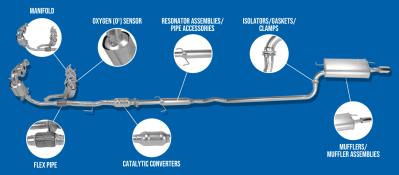 The car's exhaust system is one of the most important parts of a vehicle, its function is to safely direct exhaust gases generated during engine operation to the outside and reduce their environmental impact. This system helps to improve the vehicle's fuel efficiency, keep noise levels low, and meet legislative requirements that regulate the amount of pollutants.
... More...
The car's exhaust system is one of the most important parts of a vehicle, its function is to safely direct exhaust gases generated during engine operation to the outside and reduce their environmental impact. This system helps to improve the vehicle's fuel efficiency, keep noise levels low, and meet legislative requirements that regulate the amount of pollutants.
... More...

Why do wiper blades spoil quickly? Causes and effective solutions with deep cleaning
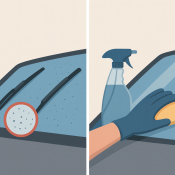 Rapid wear of wiper blades is a problem that can occur even on brand new cars. If new wiper blades start to streak, leave spots on the glass or start to skip after just a few weeks or months, the fault is usually not with the product itself. Most often, the cause is invisible dirt accumulated on the surface of the windshield or the wipers are working at the wrong angle.
Below is an overview of the main causes and solutions.
... More...
Rapid wear of wiper blades is a problem that can occur even on brand new cars. If new wiper blades start to streak, leave spots on the glass or start to skip after just a few weeks or months, the fault is usually not with the product itself. Most often, the cause is invisible dirt accumulated on the surface of the windshield or the wipers are working at the wrong angle.
Below is an overview of the main causes and solutions.
... More...
Car muffler repair and muffler parts: A comprehensive guide to exhaust system maintenance
 The vehicle exhaust system, or muffler in popular parlance, is one of the most stressed and extreme components in the entire car. Imagine an environment where the internal temperature of the components can range from hundreds of degrees to even a thousand degrees (at the catalytic converter and DPF filter), while the external surface of the component is attacked by sub-zero temperatures, rainwater, dirt, abrasive sand and aggressive salt sprinkled on the roads in winter.
... More...
The vehicle exhaust system, or muffler in popular parlance, is one of the most stressed and extreme components in the entire car. Imagine an environment where the internal temperature of the components can range from hundreds of degrees to even a thousand degrees (at the catalytic converter and DPF filter), while the external surface of the component is attacked by sub-zero temperatures, rainwater, dirt, abrasive sand and aggressive salt sprinkled on the roads in winter.
... More...
 The data shown here, especially the complete database of car spare parts, may not be copied. It is strictly prohibited to duplicate the data and database and distribute the same, and/or instruct third parties to engage in such activities, without prior consent from TecAlliance. Any use of content in a manner not expressly authorized constitutes copyright infringement and violators will be prosecuted.