

Exhaust System > Sensor / Probe
Pick your vehicle
Various exhaust system sensors: a comprehensive technical guide to diagnosis and maintenance
The exhaust system of a modern vehicle has undergone a huge evolution. What was just a metal pipe with mufflers decades ago, designed to reduce engine noise and direct smoke to the rear of the car, has now become a miniature, extremely complex chemical plant. Due to increasingly stringent global emission standards (such as Euro 5 and Euro 6), car manufacturers have had to develop systems that can capture, neutralize and convert toxic gases and soot particles from the engine into safe compounds in real time.
The success of this complex cleaning process – whether it’s regenerating a diesel particulate filter (DPF), breaking down nitrogen oxides (NOx) using selective catalytic reduction (SCR) or ensuring the optimal operation of a three-way catalytic converter in a petrol engine – depends 100% on sensors. These sensors are the eyes and ears of the engine control unit (ECU). They measure pressure, temperature and the chemical composition of the gases in real time, sending hundreds of signals per second, based on which the car’s brain adjusts fuel injection, air flow and the operation of the exhaust gas cleaning systems.
If even one of these exhaust system sensors fails or starts transmitting distorted data, a chain reaction is quick to occur: fuel consumption increases drastically, engine power drops, filters become irreversibly clogged, and warning lights come on on the dashboard, which in the worst case can result in the engine not starting. In this comprehensive technical guide, we will take a detailed look at the five most important exhaust system sensors and systems: exhaust gas pressure sensor, exhaust gas temperature sensor, lambda sensor, nox sensor and nox catalyst, and particulate sensor (pm sensor). We will examine their operating principles, symptoms of malfunctions, typical faults in the most common car models, and give advice on the selection of maintenance chemicals and spare parts.
1. lambda sensor (oxygen sensor / o2 sensor)
working principle and function
The lambda sensor is probably the best known and historically the earliest electronic component of the exhaust system to enter mass use. Its main function is to measure the proportion of unburned oxygen in the exhaust gases. Modern cars (both petrol and diesel) always have at least two lambda sensors in the exhaust system. The first, called the control sensor, is located before the catalytic converter. The second, called the diagnostic or monitoring sensor, is located after the catalytic converter.
The classic narrowband lambda sensor uses a ceramic element made of zirconium dioxide, which is coated with a thin layer of platinum. When the sensor reaches its operating temperature (usually over 300 degrees Celsius), the ceramic element begins to conduct oxygen ions. When the oxygen content in the exhaust differs from the oxygen content in the ambient air, the sensor generates a small electrical voltage (usually between 0.1 and 0.9 volts). A low voltage (0.1v) indicates that there is a lot of oxygen in the exhaust, which means a lean fuel mixture. A high voltage (0.9v) indicates a lack of oxygen, or a rich fuel mixture. The engine's brain tries to keep the voltage constant at 0.45v, which corresponds to an ideal stoichiometric mixture (lambda = 1.0). However, newer, wideband lambda sensors are much more sophisticated, using a special pumping chamber to measure the exact air-fuel ratio over a wide range, giving the engine's brain much faster and more linear feedback.
faults and symptoms
Lambda sensors operate under extreme conditions. They are constantly burned at high temperatures and come into contact with combustion residues, soot and oil particles. The most common fault is often not related to the measuring element itself, but to the electric heater built into the sensor. Since the sensor must start working immediately after the engine is started, it is heated electrically. If the heater circuit is interrupted (error code: heater circuit malfunction), the sensor switches off.
The symptoms of a faulty first lambda sensor are immediately noticeable: fuel consumption can increase by as much as 30-40%, as the engine's brain goes into safety mode and deliberately injects too much fuel into the cylinders to prevent the engine from overheating. You may smell raw fuel or rotten eggs (sulfur) from the muffler, the engine idles unevenly, there is jerking when accelerating, and the vehicle will definitely fail the MOT emissions test.
typical car models and typical defects
- VAG Group 1.6 and 2.0 naturally aspirated petrol engines (VW Golf, Passat, Audi A4): The first lambda sensor is located directly in the exhaust manifold, where temperature fluctuations and engine vibration are the greatest. This often causes the sensor's ceramic element to crack and the heater to burn out. These engines also have a problem with the sensor wires rubbing against the engine block.
- Subaru (Outback, Forester, Legacy): These cars are legendary for being sensitive to sensor quality. The Subaru engine control unit is calibrated to read a very specific resistance and response time. If you install a cheap universal B-parts sensor, the fault light will almost always stay on. The only long-term solution for these vehicles is to install a very high-quality OEM sensor.
- Toyota and Lexus (hybrid and V6 models): errors often occur with broadband sensors (air/fuel ratio sensor), where soot and additives from poor quality fuel damage the sensor's measuring head, making the mixture too lean and causing long-term engine detonation (knocking).
2. sensor, exhaust gas temperature (egt)
working principle and function
The exhaust gas temperature sensor, abbreviated as EGT, is a vital component on both powerful turbocharged gasoline engines and all diesel engines equipped with a diesel particulate filter (DPF). It operates on the principle of a thermal resistor, usually of the PTC (positive temperature coefficient) type, where the electrical resistance of the sensor increases as the temperature rises, or a thermocouple. These sensors must withstand incredible temperatures, often reaching over 900 to 1000 degrees Celsius.
In petrol engines, the egt sensor is mainly used to protect components. If the exhaust gas temperature rises dangerously high, for example when towing a heavy trailer at high speed or during intensive acceleration, the turbocharger and catalytic converter could be irreversibly damaged (the metal will literally melt). If the sensor detects a temperature that is too high, the ecu instructs the engine control unit to inject additional fuel into the cylinders. The fuel evaporates and absorbs heat, thereby cooling the combustion chamber and exhaust gases.
In diesel engines, however, the EGT sensors are absolutely critical for controlling the regeneration or burning-out process of the DPF filter. During normal city driving, diesel exhaust gases are relatively cool (200-300 degrees). However, to burn soot to ash, a temperature of 600-650 degrees is required. The brain uses the EGT sensors (of which there are often three or four in the system: before the turbo, before the DPF and after the DPF) to monitor the temperature rise during the combustion process. The brain precisely regulates the injection of additional fuel into the exhaust so that the temperature remains optimal for burning the soot, but does not rise so high that the car could catch fire or the filter could melt inside.
faults and symptoms
If the exhaust gas temperature sensor of a diesel engine fails – for example, it constantly shows -40 degrees or throws the reading to 1000 degrees – the engine’s brain immediately goes into self-protection mode. The biggest problem is that if the sensor is faulty, the DPF regeneration process is completely blocked. The engine protection system does not allow the filter to burn if there is no reliable feedback about the temperature. Symptoms include an engine fault light, a spiral-shaped spark plug light flashing in the instrument cluster, the engine going into emergency mode (drastically limiting power) and if you drive with the problem for a long time, the particulate filter will become permanently clogged, requiring its physical removal and chemical cleaning or a very expensive replacement.
typical car models and typical defects
- VAG Group 2.0 TDI Diesels (CR Engines): These engines have an army of sensors in the exhaust. The most common failure is "sensor 3", which is located just before the DPF filter. The sensor's internal cables break due to constant thermal expansion and contraction, creating an intermittent signal. Another major problem is that these sensors tend to burn into their sockets so much that unscrewing them completely is often a major headache for mechanics.
- Audi 3.0 TDI V6 (e.g. Q7, A6): The temperature sensor behind the turbo is exposed to huge heat cycles. A common fault is the plastic parts of the sensor connector crumbling due to the heat of the engine compartment or the physical burnout of the sensor's internal resistor.
- Volvo D5 diesel engines: the egt sensor, located on the dpf housing, is located in a place where a lot of salt water and snow accumulates around it in winter. Rust destroys the sensor thread and housing, causing false signals.
3rd sensor, exhaust gas pressure (emp and differential pressure sensors)
working principle and function
There are broadly two types of exhaust pressure sensors: the absolute exhaust manifold pressure (EMP) sensor and the differential pressure sensor, better known as the DPF sensor. Although we will discuss the DPF sensor separately, it is worth first explaining the concept of absolute exhaust pressure.
The exhaust gas pressure sensor (EMP) measures the pressure in the exhaust manifold, just before the turbo. Why does the car's brain want to know the pressure in the muffler? The reason lies primarily in variable geometry turbos (VNT) and exhaust gas recirculation (EGR) systems. In the case of turbodiesels, the ECU needs to know exactly what the pressure difference is between the intake manifold and the exhaust manifold. If the pressure in the exhaust becomes too high (for example, the DPF is starting to clog or the turbo geometry is stuck), the turbo can no longer rotate effectively (strong backpressure occurs). This reduces engine performance and increases the internal thermal load on the engine. Based on the information from the sensor, the ECU changes the position of the turbo blades to relieve the pressure, and opens or closes the EGR valve in the right proportion to direct some of the gases back into the engine to lower the combustion temperature.
The differential pressure sensor (DPF sensor) is a device with two inputs. One rubber or metal hose is connected to the exhaust pipe before the particulate filter and the other after the particulate filter. This sensor measures the pressure difference between these two points. When the particulate filter is clean inside, the resistance to gas flow is very low and the pressure before and after the filter is almost the same. However, when the filter starts to become clogged with soot, the gases can no longer pass through freely and the pressure in front of the filter increases significantly. The differential pressure sensor detects this pressure drop. When it reaches a critical limit set by the manufacturer, the engine's brain starts the regeneration process to burn the filter empty.
faults and symptoms
Differential pressure sensor (DPF sensor) failure is one of the most common problems in modern diesel cars. When the sensor fails and sends incorrect information to the brain, one of two bad scenarios happens. First: the brain thinks that the filter is always clean and never starts combustion. The result is a filter clogged to the point of rock-hard soot, which crushes the turbo due to the high back pressure. Second scenario: the brain thinks that the filter is constantly dirty and starts the combustion process incessantly. Continuous injection of additional fuel into the cylinders leads to fuel leaking along the cylinder walls into the crankcase. The fuel mixes with the engine oil, the oil level rises dangerously high, the oil loses its lubricating properties and this can end in a total engine failure (slamming or broken connecting rods).
typical car models and typical defects
- VAG Group G450 sensor (1.9 TDI, 2.0 TDI, 1.6 TDI): This is one of the most frequently replaced sensors. The printed circuit boards of the original factory sensors often could not withstand the humid Estonian climate and temperature fluctuations and oxidized from the inside. The rubber hoses leading to the sensor also become clogged with soot, creating a situation where the sensor itself is intact, but the pressure signal does not reach the brain.
- Mercedes-Benz (OM651 and OM642 engines, e.g. E220, C200, ML350): In the case of Mercedes, the sensor is often located near the hot DPF. The main common fault is that the silicone or rubber pipes from the DPF to the sensor crack or burn out in the heat. Exhaust gas starts leaking directly under the hood, a strong wheezing smell enters the car and the sensor sends information to the brain as if the filter is completely empty.
- BMW 2.0D (N47 engines): The long, thin metal tube leading to the exhaust manifold pressure sensor (EMP) becomes completely clogged with soot over the years. The sensor is "blind" and the car loses its vibrancy at low revs because the brain cannot control the turbo geometry correctly.
4. particulate matter sensor (particulate matter sensor / pm sensor)
working principle and function
The particulate sensor, abbreviated as PM sensor, is one of the newest components in the family of exhaust system sensors. It was introduced en masse with the stricter Euro 6 emission standards. A very important distinction must be made: while the differential pressure sensor discussed in the previous point measures how full the particulate filter is, the PM sensor measures whether the particulate filter is broken . The sole function of this sensor is to be the last guard – it is installed at the very end of the exhaust system, after the DPF and the SCR catalyst, to check whether physical soot is escaping from the system into the environment.
This sensor uses very clever physics. The sensor's measuring head consists of a ceramic plate with two electrodes that are separated from each other, resembling the teeth of a comb. Since soot (carbon) is a good conductor of electricity, if the diesel particulate filter is cracked or melted internally, the soot particles fly through the filter and land on the sensor's electrodes. When enough soot accumulates, it connects the electrodes together and closes the circuit. The engine's brain (ECU) measures the strength and speed of this electrical current. If the current builds up too quickly, the brain realizes that too much soot is flying out of the muffler and lights the engine fault light in the dash, informing the owner that the DPF is faulty and no longer traps pollution. Over time, the sensor becomes filled with soot. To clean it, the sensor periodically turns on its own integrated heater, heats the ceramic plate to about 800 degrees and burns all the accumulated soot to ash to start a new measurement cycle.
malfunctions and symptoms
Soot sensor failures are extremely common in modern workshops and unfortunately also costly. Unlike a faulty pressure sensor, a faulty PM sensor will not usually leave the car on the road or put the engine into emergency mode, but it will permanently illuminate the check engine light, which means that the vehicle no longer meets technical requirements.
The biggest enemy of the PM sensor is thermal shock and water. Since the sensor is located at the coolest rear part of the muffler, condensation forms there when the car cools down and during short trips. If the ceramic element inside the sensor is doing its 800-degree cleaning cycle and a cold drop of water from the muffler hits it, the ceramic will crack immediately and the sensor will be permanently damaged. These sensors are also sensitive to strong mechanical vibration and salt water flying from the road. Since the sensor usually has its own microchip control module (a black box at the other end of the wire), it is a rather expensive spare part.
typical car models and typical defects
- VAG Group Euro 6 diesels (EA288 engines - VW Passat B8, Golf 7, Škoda Octavia 3, Superb 3, Audi A4/A6): These cars have an epidemic of soot sensor failures. Error codes that indicate a sensor circuit failure are common. It is very critical to know that when buying a new sensor, you must pay attention to the last letters of the factory code (for example, does the code end with the letter AD or S), because the brain cannot accept the wrong software version and the error light will remain on even with the new sensor. When installing a new sensor, software adaptation is always required (resetting the learning values with a computer).
- BMW B47 and B57 engines (newer 320d, 520d, X3, X5): In the case of BMW, condensation on the sensor is also a problem during short city trips. If the exhaust system never has time to heat up properly and evaporate the water, it is only a matter of time before the sensor breaks. In the case of BMW, the sensor's electronic unit is often located under the car's bottom behind the covers, where moisture and dirt accumulate, which oxidizes the connectors.
5. nox sensor and nox catalyst (scr system)
working principle and function
The high temperatures and enormous pressure in the combustion chamber of a diesel engine (and modern petrol engines) create the ideal environment for nitrogen and oxygen in the air to react to form extremely toxic nitrogen oxides (NOx). To neutralise these toxic gases, cars are fitted with a selective catalytic reduction (SCR) system, which works hand in hand with NOx sensors and a NOx catalytic converter.
The system works as follows: a urea solution (mostly known under the brand name AdBlue) is sprayed into the hot exhaust gases, which are located in a special muffler section before the NOx catalyst. In the heat, the urea decomposes into ammonia. When the ammonia and nitrogen oxides enter the NOx catalyst (which is coated with special precious metals), a chemical reaction occurs. As a result of this reaction, the toxic gases decompose into completely safe pure nitrogen and water vapor.
To manage all this delicate and critical chemistry, the car's brain needs NOx sensors . There are usually two of them in the system. The first (upstream) is located near the engine and measures how much NOx the engine is producing. The second (downstream) is located after the NOx catalytic converter and measures whether the AdBlue solution did its job and whether the gas coming out of the muffler is clean enough.
NOx sensors are masterpieces of automotive electronics. Inside them are several small chambers where oxygen is first pumped out and then nitrogen oxides are broken down on a special electrode, creating a tiny current that is analyzed by a personal microprocessor attached to the sensor. Because the sensor signal is so complex, it communicates directly with the engine's brain via the CAN-BUS data network. 
faults and symptoms
NOx sensor failures are notorious among car owners because the sensors are very expensive and their error messages are extremely severe. Because the sensors are electronically complex and exposed to extreme heat, their internal ceramics or processor often fail due to vibration, soot, or simply end of life.
The symptoms do not go unnoticed. If the NOX sensor fails or the NOX catalyst becomes clogged due to crystallized AdBlue, the system is unable to clean the exhaust gases. The car's engine brain lights up a special warning light in the dashboard and starts an irreversible counter. An ominous message appears on the dashboard in the style of "no engine restart in 1000 km" (the engine cannot be started after 1000 km). The car's brain does this on purpose and by law, because a car with a faulty NOX system pollutes the environment on a massive scale. When the counter reaches zero, the car's brain completely disables the starter and the car can only be moved by towing. Some car brands also immediately switch on emergency mode, which limits speed and acceleration.
typical car models and typical defects
- Mercedes-Benz (Bluetec models - E350, ML350, GL350): Mercedes V6 diesels have very frequent failures of the NOx sensors and SCR system. Often, it is not only the sensors that are to blame, but also the AdBlue injector, which crystallizes and clogs, causing the liquid to not reach the NOx catalyst and the sensor to read the system as faulty. Replacing the original sensors on these cars is very expensive and requires precise diagnostic software (Xentry).
- VAG Group (Audi Q7, VW Touareg, VW Sharan Euro 6): Very common is the failure of the rear (downstream) NOx sensor, whose microchip is damaged by moisture and salt accumulating under the car. There are also problems with the NOx catalyst efficiency falling (catalyst efficiency below threshold), where the only solution is expensive catalyst washing or replacement.
- PSA Group (Peugeot and Citroën BlueHD models): These cars have a notorious design flaw in the internal pump and sensor assembly of the AdBlue tank. The system often fails to maintain sufficient pressure, resulting in NOx and urea error messages on the instrument panel, and often the entire AdBlue tank, along with the built-in electronics, has to be replaced.
6. indispensable chemical products for sensor maintenance and repair
Replacing exhaust system sensors and maintaining the system is usually not a simple process that can be done with a pair of wrenches. Extreme heat, constant humidity and road salt weld the sensors to the exhaust pipes and manifolds as if they were one piece of metal. In addition, soot and soot often prevent the sensors from working properly. Using the right chemicals during repair and maintenance is critical to avoid damaging threads, breaking expensive parts and sending false signals to the brain.
- Strong rust remover/penetrating oil and cold spray: this is every mechanic's best friend. Lambda, EGT and soot sensors in the exhaust system are often so rusted that when they are removed, the threads in the muffler are broken to pieces. A high-quality capillary-effect rust remover, especially one with a freezing effect (shock rust free), which instantly cools the metal to, for example, -40 degrees, creates micro-cracks in the rust and helps the oil penetrate deep into the threads. The sensor should always be soaked thoroughly before unscrewing.
- high-temperature ceramic grease (ceramic anti-seize paste): when installing a new lambda sensor, egt sensor or soot sensor, a thin layer of ceramic grease must be applied to the sensor thread (and only to the thread, definitely not to the measuring head!). Attention: it is strictly forbidden to use ordinary copper grease (copper paste) for exhaust system sensors! Copper grease can evaporate in extreme heat and its fumes are poisonous and can damage, for example, the sensitive zirconium element of the lambda sensor. However, ceramic paste can withstand temperatures up to 1400 degrees and does not contain metals, ensuring that the sensor can be unscrewed without pain even after years. Many premium sensors have this grease already applied to the thread at the factory.
- electronics contact cleaner: nox sensors, soot sensors and lambda sensors transmit microscopic signals measured in millivolts to the brain. If moisture gets into the sensor connector under the car's bottom and even a thin green oxide layer forms, the electrical resistance of the connector changes. This distorts the signal and the car's brain reads the sensor as faulty. high-quality, plastic-safe, quickly volatile and residue-free contact cleaner removes microcalcifications. Cleaning the connectors is a mandatory step when replacing any sensor or checking the system, which has saved many car owners from thousands of euros in bills when it turns out that the fault was not in the expensive nox sensor, but in a dirty connector.
- DPF and carbon cleaner foam: If the differential pressure sensor indicates that the particulate filter is clogged, you don't always have to rush to change the filter. For professional maintenance, there are special active foams and chemicals that are sprayed directly into the particulate filter through the hole in the removed DPF sensor. These agents dissolve soot and carbon residues into a soft mass, which then burns off easily during forced combustion. Strong degreasers are also used to clean the thin metal pipes leading to the DPF pressure sensor, which otherwise become clogged with soot.
7. best-known and most reliable spare part brands
The golden rule applies to exhaust system sensors: in electronics, you should never compromise for the cheapest price. Engine control units are extremely capricious and are calibrated at the factory to expect a very specific voltage curve and response time from the sensor. Using unknown "B-spare parts" of Asian origin usually ends with the sensor not being software compatible, the fault light coming on again after just a few dozen kilometers, or the sensor element only lasting a few months in extreme heat. When replacing an expensive sensor, always prefer top brands that produce original equipment (OE/OEM):
- Bosch: the world's undisputed leader and largest manufacturer of automotive electronics. Synonymous with reliability. Bosch has invented several exhaust system technologies and their product range covers the vast majority of lambda sensors, DPF pressure sensors, NOx sensors and PM soot sensors in cars on European roads.
- NGK / NTK: A top Japanese manufacturer specializing in ignition components and exhaust gas sensors (mainly under the NTK brand). Their wideband lambda sensors and exhaust gas temperature (EGT) sensors are at the absolute cutting edge of technology, being the first choice for most Japanese (Toyota, Subaru, Honda) and many European (VAG) cars.
- Denso: Another Japanese electronics giant that offers extremely durable and accurate lambda sensors, mass flow meters and DPF sensors. An especially indispensable brand if your vehicle is an Asian brand.
- delphi (delphi technologies): known for its durable diesel system components. offers high-quality egr valves, temperature sensors and exhaust gas pressure sensors for a wide range of cars.
- Pierburg (Rheinmetall Automotive): A German company specializing in air and exhaust management. Their products are arguably the best choice if you are looking for new exhaust gas pressure sensors (EMP), EGR valves or electronic and vacuum valves that control turbo geometry.
- Hella, VDO (Continental) and Walker: Hella and VDO are extremely reliable electronics manufacturers (often OEM manufacturers for European cars). Walker, better known as a manufacturer of mufflers and catalytic converters, has also made a strong entry into the exhaust gas sensor market (especially EGT and DPF sensors), offering a strong aftermarket alternative.
summary
The modern exhaust system is a masterpiece of engineering, where extreme temperatures, harsh chemistry and sophisticated electronics collide. Exhaust pressure sensors, exhaust temperature sensors, lambda sensors, NOx sensors and particulate matter sensors are not just there to meet environmental regulations – they are vital organs that ensure that your car's engine can operate at maximum efficiency, economically and protect expensive components such as turbos and catalytic converters from premature wear.
Since these systems are closely interconnected (for example, a faulty temperature sensor leads to a clogged DPF and thus a broken turbo), you should never ignore an engine fault light or warning messages on the dashboard. Early diagnostics, careful maintenance of the system's connectors and sensors with the right chemical products, and the use of high-quality (Bosch, NGK, Denso, etc.) spare parts when faults occur are the only way to keep your car's exhaust system healthy and avoid repair bills running into thousands of euros in the future.
Car exhaust system: functions, components and maintenance
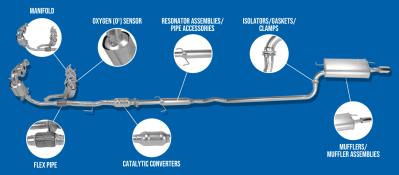 The car's exhaust system is one of the most important parts of a vehicle, its function is to safely direct exhaust gases generated during engine operation to the outside and reduce their environmental impact. This system helps to improve the vehicle's fuel efficiency, keep noise levels low, and meet legislative requirements that regulate the amount of pollutants.
... More...
The car's exhaust system is one of the most important parts of a vehicle, its function is to safely direct exhaust gases generated during engine operation to the outside and reduce their environmental impact. This system helps to improve the vehicle's fuel efficiency, keep noise levels low, and meet legislative requirements that regulate the amount of pollutants.
... More...

Why do wiper blades spoil quickly? Causes and effective solutions with deep cleaning
 Rapid wear of wiper blades is a problem that can occur even on brand new cars. If new wiper blades start to streak, leave spots on the glass or start to skip after just a few weeks or months, the fault is usually not with the product itself. Most often, the cause is invisible dirt accumulated on the surface of the windshield or the wipers are working at the wrong angle.
Below is an overview of the main causes and solutions.
... More...
Rapid wear of wiper blades is a problem that can occur even on brand new cars. If new wiper blades start to streak, leave spots on the glass or start to skip after just a few weeks or months, the fault is usually not with the product itself. Most often, the cause is invisible dirt accumulated on the surface of the windshield or the wipers are working at the wrong angle.
Below is an overview of the main causes and solutions.
... More...
Car muffler repair and muffler parts: A comprehensive guide to exhaust system maintenance
 The vehicle exhaust system, or muffler in popular parlance, is one of the most stressed and extreme components in the entire car. Imagine an environment where the internal temperature of the components can range from hundreds of degrees to even a thousand degrees (at the catalytic converter and DPF filter), while the external surface of the component is attacked by sub-zero temperatures, rainwater, dirt, abrasive sand and aggressive salt sprinkled on the roads in winter.
... More...
The vehicle exhaust system, or muffler in popular parlance, is one of the most stressed and extreme components in the entire car. Imagine an environment where the internal temperature of the components can range from hundreds of degrees to even a thousand degrees (at the catalytic converter and DPF filter), while the external surface of the component is attacked by sub-zero temperatures, rainwater, dirt, abrasive sand and aggressive salt sprinkled on the roads in winter.
... More...
 The data shown here, especially the complete database of car spare parts, may not be copied. It is strictly prohibited to duplicate the data and database and distribute the same, and/or instruct third parties to engage in such activities, without prior consent from TecAlliance. Any use of content in a manner not expressly authorized constitutes copyright infringement and violators will be prosecuted.