

Stabiliser Bar/Fastening Parts > Stabiliser Bar mounting parts / Bushings
Pick your vehicle
Car stabilizer bar components – mounts, bushings and repair kits

1. Stabiliser bar (Anti-roll bar / Stabiliser bar)
- The main metal rod that connects the wheels.
- Made from strong spring steel.
- Rubber or polyurethane bushings that attach the stabiliser bar to the car body or subframe.
- They reduce vibration and allow the stabiliser to flex.
3. Connecting components – stabiliser links (Drop links / Stabiliser links)
- Connect the stabiliser bar to the control arms or struts.
- These are often the parts that wear out and start making knocking noises.
What is a stabilizer bar?
The stabilizer bar (also known as a transverse stabilizer or anti-roll bar ) is an important suspension component that reduces body roll and improves vehicle stability when cornering or driving on uneven roads. It connects the left and right wheels using short arms, providing better handling and safety.
Main parts of the stabilizer bar system
For the stabilizer bar to work effectively, various mounting elements are required, including mounting brackets, bushings and repair kits :
1. bracket stabilizer mounting
✅ Purpose: attaches the stabilizer bar to the vehicle chassis, ensuring stability.
✅ material: usually made of metal (steel or aluminum) to ensure durability.
✅ common problems: rust, deformation or loosening over time.
✅ Signs of replacement: If the stabilizer bar moves excessively or makes a rattling noise, the fasteners may need to be replaced.
2. bushing stabilizer bar
✅ purpose: works as a shock absorber between the stabilizer bar and its mounting points, reducing vibrations and noise.
✅ material: usually made of rubber or polyurethane to ensure flexibility and durability.
✅ common problems: wear, cracking or hardening over time due to exposure to dirt, oil and weather conditions.
✅ Signs of replacement: creaking sound, excessive body lean or impaired handling.
3. mounting kit for stabilizer bar
✅ Purpose: Contains all the parts needed to securely mount the stabilizer bar, including brackets, bolts, and bushings.
✅ advantages: ensures a precise fit and reduces installation time.
✅ Best practice: When replacing individual parts, it is recommended to use a complete set of fasteners to ensure even wear and optimal performance.
4. stabilizer bushing repair kit (repair kit for stabilizer bushings)
✅ Purpose: Provides necessary replacement bushings and other components to restore stabilizer bar functionality.
✅ what's included? new bushings, fasteners and sometimes lubricant for installation.
✅ Ideal for: vehicles with excessive body roll or poor handling due to worn bushings.
Signs that stabilizer bar parts need replacement
- Unusual noises – rattling, knocking, or creaking sounds while driving.
- Excessive body lean – the car leans more than usual when cornering.
- Loose steering feel – reduced responsiveness or instability at higher speeds.
- Uneven tire wear – may indicate a problem with the stabilizer bar system.
How to replace stabilizer bar components?
- Raise the car – use a jack and secure the vehicle on chocks.
- Find the stabilizer bar system – identify the mounting points and bushings.
- Remove old parts – unscrew fasteners and remove worn bushings.
- Install new parts – align the stabilizer bar and attach new brackets and bushings.
- Tighten the bolts and take a test drive – make sure everything is installed properly and test the handling.
How to choose the right stabilizer bar spare part?
When selecting stabilizer bar components, consider the following:
- Vehicle compatibility – check that the parts fit your specific car make and model.
- material quality – prefer durable materials such as polyurethane bushings and rust-resistant metal for fasteners.
- Original vs. Aftermarket Parts – OEM parts offer an exact fit, while aftermarket parts may offer better performance.
Summary
The stabilizer bar system plays a critical role in the handling and safety of your vehicle. Replacing worn bushings, brackets, and mounts will ensure a smooth and stable ride . If you notice any noise or instability in your suspension , consider having these components inspected and replaced with a quality repair kit if necessary.
Looking for reliable stabilizer bar parts? Browse our selection and find the perfect solution for your car!
Car chassis construction and parts
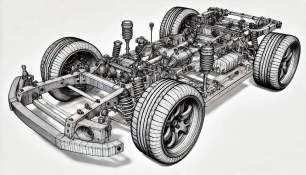 The chassis of a car is an important system of a vehicle that connects the wheels and the body, allowing safe and stable movement. It consists of various mechanisms and components that ensure the vehicle's handling, comfort and roadholding. In this article, we will provide an overview of the chassis structure and introduce in more detail important components such as wishbones, steering arm, pendulum arm, track rod, steering knuckle, hinges, bridge beam and steering rods.
... More...
The chassis of a car is an important system of a vehicle that connects the wheels and the body, allowing safe and stable movement. It consists of various mechanisms and components that ensure the vehicle's handling, comfort and roadholding. In this article, we will provide an overview of the chassis structure and introduce in more detail important components such as wishbones, steering arm, pendulum arm, track rod, steering knuckle, hinges, bridge beam and steering rods.
... More...
Car chassis and undercarriage
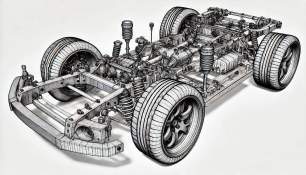 The undercarriage of a car, or car chassis and undercarriage, consists of several key components that play a role in the car's movement, appearance, and safety. It is an additional system that connects the car body to the wheels and allows the vehicle to be used and steered. The following is an overview of the main details of the undercarriage of a car.
1. Suspension system
The suspension system connects the wheels of a car to the body or frame and ensures a comfortable and stable ride. Its function is to absorb shocks and vibrations that occur on rough roads. The main elements of the suspension are:
Shock absorbers: Absorb the movement of the springs and keep the tires against the road.
Springs (coil springs or leaf springs): Hold the weight of the car and provide a smoother ride.
Control arms: Connect the wheels to the chassis and allow vertical movement.
Coupling Rod: Reduce body roll when cornering.
Bushes: Soft connections that hold parts in place and absorb vibrations.
... More...
The undercarriage of a car, or car chassis and undercarriage, consists of several key components that play a role in the car's movement, appearance, and safety. It is an additional system that connects the car body to the wheels and allows the vehicle to be used and steered. The following is an overview of the main details of the undercarriage of a car.
1. Suspension system
The suspension system connects the wheels of a car to the body or frame and ensures a comfortable and stable ride. Its function is to absorb shocks and vibrations that occur on rough roads. The main elements of the suspension are:
Shock absorbers: Absorb the movement of the springs and keep the tires against the road.
Springs (coil springs or leaf springs): Hold the weight of the car and provide a smoother ride.
Control arms: Connect the wheels to the chassis and allow vertical movement.
Coupling Rod: Reduce body roll when cornering.
Bushes: Soft connections that hold parts in place and absorb vibrations.
... More...

 The data shown here, especially the complete database of car spare parts, may not be copied. It is strictly prohibited to duplicate the data and database and distribute the same, and/or instruct third parties to engage in such activities, without prior consent from TecAlliance. Any use of content in a manner not expressly authorized constitutes copyright infringement and violators will be prosecuted.