

Starter System > Starter
Pick your vehicle
Car Starter: Essential for Engine Start-up and Vehicle Operation
The car starter is one of the most crucial components in a vehicle's electrical system. It is responsible for getting the engine running and enabling the car to start. Despite its importance, many car owners overlook the starter until it malfunctions. In this article, we will explore what a car starter is, how it works, its importance in vehicle operation, common issues, and maintenance tips.

What is a Car Starter?
A car starter is an electric motor that initiates the engine's operation. It works by turning the flywheel of the engine, which helps to start the engine’s internal combustion process. Once the engine starts running, the starter’s job is complete, and the engine takes over, operating on its own.
In most vehicles, the starter is connected to the car's battery, and it gets its power from the battery when you turn the ignition key or push the start button. Starter motors are typically small but powerful electric motors, capable of generating enough force to turn the engine over. The starter is often located near the engine, attached to the flywheel housing, and is usually connected to the ignition switch via the car's wiring system.
How Does a Car Starter Work?
The starter motor functions through a straightforward process:
-
Power Supply: When you turn the ignition key (or push the start button in modern cars), the vehicle’s battery sends electrical power to the starter motor. This initiates the starter motor to engage.
-
Engagement with the Flywheel: The starter motor is connected to a small gear known as the "starter drive" or "Bendix drive." When activated, this gear moves forward to engage with the teeth of the flywheel. The flywheel is a large metal disc connected to the engine’s crankshaft.
-
Rotating the Engine: The starter motor then spins the flywheel, which in turn rotates the engine’s crankshaft. This initial rotation is crucial to getting the engine started. As the engine cranks, the pistons begin to move, and fuel is injected into the cylinders. The spark plugs then ignite the fuel, initiating the combustion process.
-
Completion of the Start-up: Once the engine starts and runs independently, the starter motor disengages from the flywheel, and the car is ready to operate. At this point, the engine's own power takes over, and the starter motor stops.
Why is the Car Starter Important?
The car starter is essential for starting the engine and allowing the vehicle to operate. Here’s why it is so important:
-
Ensuring Engine Start-up: Without the starter, the engine wouldn’t be able to start. The starter provides the necessary torque to get the engine rotating, which is the first step in initiating the combustion process.
-
Dependability in All Conditions: A car starter is designed to work under various weather conditions, whether it’s a hot summer day or a cold winter morning. In cold weather, the oil in the engine becomes thicker, and the engine may be harder to turn. The starter ensures that the engine can still get moving even under challenging conditions.
-
Smooth Operation: The starter provides the smooth rotation needed to begin the engine's cycles. Once the engine starts running, it generates enough power to continue on its own, but without the starter, this initial movement wouldn’t be possible.
-
Battery Management: The starter works closely with the car battery, drawing power to operate. A weak or faulty starter can strain the battery, causing the car to have difficulty starting, particularly if the battery itself is not in top condition.
Common Issues with Car Starters
While car starters are generally reliable, they can develop issues over time. Here are some common problems you may encounter with a starter:
-
Failure to Start: One of the most obvious signs of a faulty starter is when the car doesn’t start at all. If you turn the ignition and hear a clicking sound or nothing at all, the starter motor might be faulty or not receiving enough power.
-
Grinding Noises: If the starter motor is producing a grinding noise when you try to start the car, it’s likely that the starter gear is not fully engaging with the flywheel. This can happen if the starter is misaligned, worn out, or damaged.
-
Slow or Delayed Start: A weak or failing starter can cause the engine to crank slowly or struggle to turn over. If you notice that the engine takes longer than usual to start or if it cranks slowly, the starter might need attention.
-
Stalling: In some cases, the starter might not disengage from the flywheel once the engine has started. This can lead to stalling, where the starter motor continues to run even after the engine has ignited.
-
Electrical Issues: If there are electrical issues, such as poor connections or a malfunctioning ignition switch, the starter might not receive the required voltage. This can prevent the car from starting and may require electrical repairs.
Signs Your Starter Needs Repair or Replacement
A faulty starter can cause significant issues with your car's ability to start. If you experience any of the following symptoms, it’s a good idea to have your starter checked:
-
Clicking Sound: A single or repeated clicking sound when turning the key, without the engine turning over, often indicates a problem with the starter.
-
No Response: If nothing happens when you try to start the car, and there’s no sound or action, the starter could be dead or damaged.
-
Dim Lights: If the headlights or dashboard lights dim when trying to start the car, it could mean that the starter is drawing too much current or there’s an issue with the battery.
-
Frequent Stalls: If your car stalls while driving or shortly after starting, the starter motor could be failing to disengage or operate properly.
-
Intermittent Starting: If the car sometimes starts without issue but other times fails to start, it could be a sign of a starter problem that requires attention.
Maintaining and Replacing the Car Starter
Starter motors are generally durable, but regular maintenance and timely repairs are necessary to keep them in good working condition. Here are some tips to maintain your starter:
-
Check the Battery: Since the starter relies on the car battery for power, keeping the battery in good condition is crucial. Ensure your battery is fully charged, and the terminals are clean and free from corrosion.
-
Regular Inspections: During regular vehicle maintenance, have your starter motor inspected for any signs of wear or damage. If the car is making unusual noises or experiencing slow starts, a mechanic can help diagnose the issue.
-
Address Electrical Issues: Faulty wiring, bad ignition switches, or damaged relays can affect the starter’s performance. Addressing electrical issues early can prevent starter-related problems.
-
Replace the Starter: If the starter is damaged beyond repair, it will need to be replaced. A mechanic will typically remove the old starter, inspect the flywheel for damage, and install a new starter motor to restore the car’s starting capability.
Car Won't Start? Common Starter Motor Faults and Solutions by Model
Is there anything more frustrating than getting into your car on a busy morning, turning the key, and being met with complete silence or just a helpless clicking sound? If your battery is fully charged, suspicion immediately falls on the heart of the car's starting system – the starter motor. This is a component that must withstand immense loads, especially during cold weather and frequent short city trips.
In this article, we dive deep into why starter motors get tired, what the common faults are on popular car brands, and which manufacturers you should trust when choosing a replacement part.
How Does a Starter Work and What Breaks?
The starter is a powerful electric motor designed to give the internal combustion engine its initial speed. The process consists of two main stages: first, the solenoid pushes a small gear (the pinion) into mesh with the flywheel ring gear; second, the electric motor is switched on to turn the crankshaft.
The main wear points are:
- Carbon Brushes: These wear out physically over time. Once the contact is lost, the motor no longer has the power to turn or stops working altogether.
- Pinion Gear (Bendix): This mechanism must engage and then release. A worn pinion might make a screeching noise or spin freely without engaging the engine.
- Solenoid: If you hear a "click-click" sound when turning the key but the engine doesn't turn over, the issue is often burnt electrical contacts inside the solenoid switch.
Common Faults by Car Model
Although the operating principle is universal, engineering solutions and placement differ, creating model-specific common faults.
1. Volkswagen Group (VW Passat, Golf, Audi A4/A6, Skoda Octavia)
Especially for diesel engines (1.9 TDI and 2.0 TDI), the health of the starter is critical. A very common issue on VAG group cars is a drop in starter rotation speed.
The Symptom: The car starts very reluctantly when the engine is hot, but starts instantly when cold. This is known as the "hot start issue." Many owners mistakenly replace the battery or glow plugs, but the culprit is often worn starter brushes or bushings. The starter fails to reach the minimum RPM required by the ECU (approx. 250-280 rpm) to inject fuel. The solution is often a new, higher-power starter (e.g., from Bosch or Valeo).
2. BMW (3 Series and 5 Series, E60/E90/F10)
On Bavarian cars, particularly diesels, the starter is often hidden under the intake manifold, making replacement labor-intensive. A common problem here is carbonized solenoid contacts.
The Symptom: When pressing the Start button, there is a delay, or only a clicking sound is heard. Sometimes "tapping" the starter works temporarily, but this is a sign of immediate failure. Since access is difficult, it is highly recommended not to use cheap aftermarket parts here but to invest in quality.
3. Toyota and Honda (Avensis, Civic, CR-V)
Japanese cars often use Denso starters, which are extremely durable. However, they have one specific weakness: the copper contacts inside the solenoid.
The Symptom: The starter makes a single loud "click" and then silence. Unlike German cars, Denso starters are often very repairable—sometimes simply replacing the worn L-shaped copper terminals inside the solenoid cover is enough to restore the unit for many more years.
4. Ford (Focus, Mondeo, Transit)
On Ford diesel engines, a common issue arises from metal dust released by the Dual Mass Flywheel (DMF). Since the starter is located near the bell housing, this dust accumulates inside the starter motor and mixes with the grease, forming a sticky paste.
The Symptom: The pinion gear gets stuck and does not retract quickly enough, causing a loud whistling or screeching noise immediately after the engine starts. This friction destroys the starter very quickly.
Which Manufacturer Should You Choose?
Replacing a starter motor is a job you don't want to do every year. Therefore, the quality of the spare part is crucial. Cheap "no-name" starters may fail in cold weather or have poor fitment.
We recommend choosing from recognized Original Equipment Manufacturers (OEM):
- Bosch: The world's leading starter manufacturer. The original part for most European cars. A solid choice.
- Valeo: Very common on French and Korean cars, as well as newer German models. Known for their compact and quiet starters.
- Denso: Top-tier Japanese quality. If you drive a Toyota or Lexus, this is the best choice.
- Hella and Hitachi: Also very reliable alternatives that offer a good balance of price and performance.
The car starter is a small but critical component that plays a vital role in the vehicle’s ability to start and operate. Its main job is to engage the engine, providing the initial rotation needed for combustion to begin. Without a properly functioning starter, your vehicle wouldn’t be able to start, leaving you stranded. Understanding how the starter works and recognizing the common signs of failure can help you maintain your vehicle and address issues before they cause more significant problems. Regular maintenance and prompt attention to starter issues will keep your car running smoothly for years to come.
Car Electrical System: Overview, Components, and Maintenance
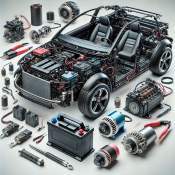 The car's electrical system is one of the most complex and important parts of a modern vehicle, responsible for starting the engine, lighting, and many other functions. The smooth operation of the electrical system ensures the vehicle's performance, safety, and comfort. Knowing this system helps you understand how the different parts of the car work and how to prevent or solve potential problems.
Basic functions of a car's electrical system
Energy generation and storage:
... More...
The car's electrical system is one of the most complex and important parts of a modern vehicle, responsible for starting the engine, lighting, and many other functions. The smooth operation of the electrical system ensures the vehicle's performance, safety, and comfort. Knowing this system helps you understand how the different parts of the car work and how to prevent or solve potential problems.
Basic functions of a car's electrical system
Energy generation and storage:
... More...

Car starter (starter motor) – working principle, construction and most well-known car brands
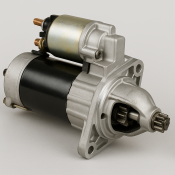 A car starter , or starter motor , is an electric motor that is responsible for starting the car's internal combustion engine so that it can start running on its own. The starter only works for a few seconds at the beginning of each start, but is an extremely important component for the vehicle's reliability.
Starters are used by all car brands such as Audi, BMW, Mercedes-Benz, Volkswagen, Toyota, Nissan, Honda, Ford, Volvo, Škoda and many others.
What is a starter and what does it do?
The starter uses electrical energy from the car battery to turn the engine fast enough to make starting possible.
The following process occurs at startup:
the driver turns the key or presses the start button.
The starter solenoid turns on the electric current.
the starter gear moves on the flywheel toothed belt.
The electric motor turns the crankshaft.
the engine starts and the starter switches off automatically.
without a starter it would not be possible to start the engine (except for old diesels that start by turning the crank).
picture. audi a4 starter
... More...
A car starter , or starter motor , is an electric motor that is responsible for starting the car's internal combustion engine so that it can start running on its own. The starter only works for a few seconds at the beginning of each start, but is an extremely important component for the vehicle's reliability.
Starters are used by all car brands such as Audi, BMW, Mercedes-Benz, Volkswagen, Toyota, Nissan, Honda, Ford, Volvo, Škoda and many others.
What is a starter and what does it do?
The starter uses electrical energy from the car battery to turn the engine fast enough to make starting possible.
The following process occurs at startup:
the driver turns the key or presses the start button.
The starter solenoid turns on the electric current.
the starter gear moves on the flywheel toothed belt.
The electric motor turns the crankshaft.
the engine starts and the starter switches off automatically.
without a starter it would not be possible to start the engine (except for old diesels that start by turning the crank).
picture. audi a4 starter
... More...
 The data shown here, especially the complete database of car spare parts, may not be copied. It is strictly prohibited to duplicate the data and database and distribute the same, and/or instruct third parties to engage in such activities, without prior consent from TecAlliance. Any use of content in a manner not expressly authorized constitutes copyright infringement and violators will be prosecuted.