

Control Arm/Swing Arm Joint > Steering Links (control arm, trailing link, diagonal arm)
Pick your vehicle
Car control arm: how it works and why it's important
A car's control arm is an important component of a vehicle's suspension, responsible for ensuring the vehicle's stability, comfort and safety. Although the control arm is not a component that is often seen or understood by car owners, it plays an important role in ensuring the vehicle's ability to move. In this article, we will explore what a control arm is, how it works, what its different types are, and how to tell when it's time to replace the control arm.
What is a wishbone?
A control arm is a part of a vehicle's suspension system that connects the upper or lower part of the wheels to the vehicle's body or undercarriage. Its purpose is to control the vertical movement of the wheels (up and down) while keeping them in the correct position to ensure the vehicle's stability and ride comfort. The control arm works in conjunction with other suspension components such as wheel bearings, bushings and joints to ensure a smooth ride and prevent excessive vibration or clatter.
The control arm also plays an important role in maintaining wheel geometry to prevent uneven tire wear and ensure proper vehicle maneuverability.
function of the swing arm
The wishbone performs several important functions:
- Wheel movement control : The wishbone allows the wheels to move up and down to adjust to uneven road surfaces. It also helps prevent the wheels from moving horizontally, which prevents instability.
- Ensuring vehicle stability : The control arm is an important component to keep the vehicle moving in a straight line and not veer off the road. If the control arm is faulty, it can cause the vehicle to lose its maneuverability.
- efficient suspension : the wishbone allows the suspension to work properly, reducing shocks and vibrations that road irregularities can transmit to the vehicle body.
- Maintaining the correct position of the wheels : the wishbone maintains the correct angle and position of the wheels, which ensures better vehicle handling and balance.
types of wishbone
Cars usually have two main types of control arms: upper control arms and lower control arms . Both are necessary to ensure optimal vehicle suspension and ride comfort.
-
upper wishbone :
- Located above the wheel and helps control the vertical movement of the wheels. The upper control arm is common on older and rear-drive vehicles, as front-wheel drive often uses a lower control arm.
-
lower wishbone :
- Located below the wheels and most commonly found in many modern vehicles, the lower control arm carries the majority of the load and plays a key role in a vehicle's suspension, especially in front-wheel drive cars.
Some vehicles may use both control arms (upper and lower) to provide maximum stability and ride comfort.
different types of wishbones

Why does the wishbone wear out over time?
The wishbone is in constant motion and works in conjunction with other suspension components. Over time, the wishbones can wear out and their bushings or joints can loosen. This can lead to changes in vehicle handling and even accelerated wear of other suspension components. The following factors typically cause wishbone wear:
- Road conditions : uneven roads, potholes, and constant driving in poor road conditions accelerate the wear of the control arms.
- Age and mileage : Like all mechanical parts, swingarms age over time, and the bushings and hinges on these parts can wear out.
- incorrect driving style : a vigorous driving style or sudden braking can cause excessive strain on the wishbones.
signs that the control arm is faulty
If the control arm is worn or damaged, a number of problems can occur that affect the handling and ride comfort of the vehicle. Here are some common signs that the control arm needs to be replaced:
-
rattling or cracking sounds :
unstable vehicle behavior :
If the vehicle starts to sink when cornering or has difficulty maintaining a straight trajectory, this may be a sign that the control arm is damaged.uneven tire wear :
A worn control arm can cause incorrect vehicle geometry, which in turn causes uneven tire wear.strong vibration or shaking :
Damage to the control arm can impair vehicle handling, causing severe vibration that can be felt in the steering wheel.Deteriorated steering system :
If the control arm is faulty, problems may occur in the steering system, making it more difficult to control the vehicle.swing arm replacement
Replacing a control arm is a complex job that usually requires a professional mechanic. The process involves the following steps:
- Inspection and diagnostics : the mechanic will assess the condition of the swingarm and check whether it is indeed damaged or worn.
- Control arm removal : The old control arms are removed, which may require the removal of other suspension components such as tires, springs, or shock absorbers.
- Installing a new control arm : The new control arm is installed in the correct position, secured properly, and all connections are tightened according to the manufacturer's specifications.
- Wheel alignment : After replacing the control arm, a wheel alignment (wheel stand) must be performed to ensure the correct geometry of the vehicle and the best driving comfort.

summary
The control arm is one of the most important components of a vehicle's suspension, which is responsible for ensuring the vehicle's stability, comfort and safety. If this component wears out or becomes damaged, problems may arise that affect the vehicle's handling and safety. Control arms should be checked regularly and replaced if necessary to ensure optimal vehicle performance and prevent more serious suspension damage. Regular maintenance and timely repairs will help keep your vehicle in top condition for drivability and safety.

Car chassis construction and parts
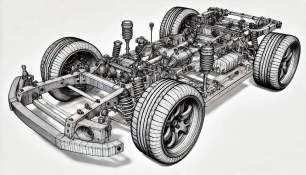 The chassis of a car is an important system of a vehicle that connects the wheels and the body, allowing safe and stable movement. It consists of various mechanisms and components that ensure the vehicle's handling, comfort and roadholding. In this article, we will provide an overview of the chassis structure and introduce in more detail important components such as wishbones, steering arm, pendulum arm, track rod, steering knuckle, hinges, bridge beam and steering rods.
... More...
The chassis of a car is an important system of a vehicle that connects the wheels and the body, allowing safe and stable movement. It consists of various mechanisms and components that ensure the vehicle's handling, comfort and roadholding. In this article, we will provide an overview of the chassis structure and introduce in more detail important components such as wishbones, steering arm, pendulum arm, track rod, steering knuckle, hinges, bridge beam and steering rods.
... More...
Car chassis and undercarriage
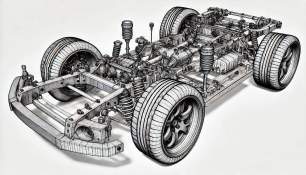 The undercarriage of a car, or car chassis and undercarriage, consists of several key components that play a role in the car's movement, appearance, and safety. It is an additional system that connects the car body to the wheels and allows the vehicle to be used and steered. The following is an overview of the main details of the undercarriage of a car.
1. Suspension system
The suspension system connects the wheels of a car to the body or frame and ensures a comfortable and stable ride. Its function is to absorb shocks and vibrations that occur on rough roads. The main elements of the suspension are:
Shock absorbers: Absorb the movement of the springs and keep the tires against the road.
Springs (coil springs or leaf springs): Hold the weight of the car and provide a smoother ride.
Control arms: Connect the wheels to the chassis and allow vertical movement.
Coupling Rod: Reduce body roll when cornering.
Bushes: Soft connections that hold parts in place and absorb vibrations.
... More...
The undercarriage of a car, or car chassis and undercarriage, consists of several key components that play a role in the car's movement, appearance, and safety. It is an additional system that connects the car body to the wheels and allows the vehicle to be used and steered. The following is an overview of the main details of the undercarriage of a car.
1. Suspension system
The suspension system connects the wheels of a car to the body or frame and ensures a comfortable and stable ride. Its function is to absorb shocks and vibrations that occur on rough roads. The main elements of the suspension are:
Shock absorbers: Absorb the movement of the springs and keep the tires against the road.
Springs (coil springs or leaf springs): Hold the weight of the car and provide a smoother ride.
Control arms: Connect the wheels to the chassis and allow vertical movement.
Coupling Rod: Reduce body roll when cornering.
Bushes: Soft connections that hold parts in place and absorb vibrations.
... More...
How to replace the control arm on your car yourself?
 The control arm is an important part of a car's suspension system, connecting the wheel to the car's frame and helping to maintain stability, handling, and ride comfort. If the control arm starts to wear out or become damaged, it can cause the car to lose control and uneven tire wear. Replacing the control arm is not the easiest job, but it can be done at home if you have the necessary tools and a little technical knowledge.
What do you need?
... More...
The control arm is an important part of a car's suspension system, connecting the wheel to the car's frame and helping to maintain stability, handling, and ride comfort. If the control arm starts to wear out or become damaged, it can cause the car to lose control and uneven tire wear. Replacing the control arm is not the easiest job, but it can be done at home if you have the necessary tools and a little technical knowledge.
What do you need?
... More...

 The data shown here, especially the complete database of car spare parts, may not be copied. It is strictly prohibited to duplicate the data and database and distribute the same, and/or instruct third parties to engage in such activities, without prior consent from TecAlliance. Any use of content in a manner not expressly authorized constitutes copyright infringement and violators will be prosecuted.