

Timing Belt/Set > Tensioner Pulley Timing Belt
Pick your vehicle
Car Timing Belt Tensioner/Idler Pulley. Overview: What is it and how does it work?
The timing belt tensioner of a car is one of the most important components in the engine drive system, its function is to keep the timing belt taut and ensure its accuracy during engine operation. The timing belt is an important part of the engine that connects and synchronizes the crankshaft and camshaft(s), ensuring the correct valve timing. In many engines, the timing belt also drives the water pump. The tensioner ensures that the timing belt operates efficiently and accurately, to prevent the belt from moving too freely or being too tight, which could cause malfunctions or excessive wear. 
the task and function of the timing belt tensioner
The main function of the timing belt tensioner is to ensure that the timing belt is always at the correct tension. This is necessary to prevent a timing belt that is immobile or too loose, which cannot provide the correct transmission capacity. If the timing belt is not at the correct tension, it can cause uneven operation of engine parts such as the camshaft and crankshaft, causing engine malfunctions and even serious damage.
The tensioner system often consists of a tension roller with a spring or mechanical mechanism that adjusts the tension of the timing belt depending on the engine's operating conditions.
How does a timing belt tensioner work?
The operation of the timing belt tensioner is mainly based on the movement of the tension roller and a mechanism that adjusts the tension according to the operating conditions of the engine. It works as follows:
Tensioner pulley and spring mechanism: The tensioner usually includes a tensioner pulley that keeps the timing belt at the correct tension. A spring or mechanical mechanism adjusts the position of the pulley to compensate for slack or wear in the timing belt over time. As the timing belt begins to wear and stretch, the tensioner automatically adjusts to maintain the proper tension.
Automatic tension accuracy: The timing belt tensioner system can automatically adjust the tension depending on the engine speed and operating conditions. When the engine is running at a higher speed, the load increases and the tensioner is tightened more to keep the timing belt in the correct position.
Prevents incorrect movement of individual parts: If the timing belt is not properly tensioned, it can cause incorrect movement of engine parts, such as the water pump or camshaft. This in turn can cause the timing belt to slip or become immobile, which can seriously damage engine parts.
Why is the timing belt tensioner important?
The timing belt tensioner is an important part of ensuring the reliability of the engine. If the tensioner is not working properly or if it is worn, the following problems may occur:
Engine problems: If the timing belt is not properly tightened, it can cause engine parts, such as the camshaft and crankshaft, to operate at the wrong timing. This can lead to serious engine performance problems and even engine damage.
Excessive timing belt wear: If the tensioner does not adjust the timing belt tension correctly, it can cause the timing belt to wear out too quickly. High loads or incorrect tension levels can damage the timing belt structure, causing it to break or stretch.
Affecting engine efficiency: Incorrect timing belt tension can affect fuel consumption and engine efficiency. If the timing belt is not working properly, the engine may consume more fuel or run less efficiently.
Connecting components to each other: The timing belt connects important engine parts such as the water pump, camshaft, crankshaft. If the timing belt is not tensioned correctly, it can cause incorrect timing of the mechanisms, which can harm the performance of the entire engine.
possible faults in the timing belt tensioner
Because the timing belt tensioner is constantly operating under engine movement, its mechanism can accumulate wear and tear. Some of the most common problems that a timing belt tensioner can experience include:
Spring or mechanism wear: Spring or mechanism wear can cause the tensioner to not work properly, making the timing belt tension too low or too high. This can lead to the timing belt slipping or being over-tensioned.
Excessive noise: If the tensioner begins to wear out or is operating unevenly, you may hear an unusual noise or vibration, indicating that there is a problem with the system.
Incorrect timing belt tension: If the timing belt is too tight or too loose, it can cause engine parts, such as the water pump or camshaft, to operate at the wrong timing, which can affect engine performance and efficiency.
Mechanical damage: If the timing belt tensioner is broken, it can damage the timing belt or cause it to become immobile, which can lead to serious engine damage.
summary
The timing belt tensioner is an important part that ensures the timing belt is properly tensioned and helps prevent engine malfunctions. The tensioner works with a tensioning pulley and tensioning mechanism to keep the timing belt at exactly the right tension depending on the engine's operating conditions. Regular inspection helps ensure that the timing belt tensioner is working properly to prevent damage to the timing belt, which can lead to serious engine failure.
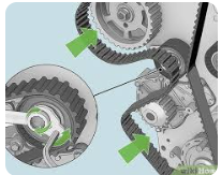
Car Timing Belt Kit with Water Pump – a good choice!
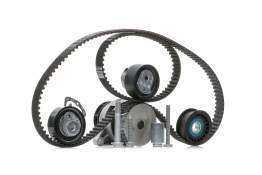 Car Timing Belt Kit with Water Pump – Why Is It the Best Choice?
... More...
Car Timing Belt Kit with Water Pump – Why Is It the Best Choice?
... More...
Car belts: The under-the-hood heroes that keep the engine running
 When you open the hood of your car, you're faced with a complex maze of hoses, wires, and belts. To many car owners, these black rubber bands are just "some belts," but in reality, they play a critical role in the operation of your engine.
Without these belts, your car wouldn't run, your battery wouldn't charge, and your steering wheel would be as heavy as a rock. In this article, we'll explain the difference between the main types of belts – timing belts and V-ribbed belts – and why replacing them on time is cheaper than repairing your engine.
There are several different belts under the hood, each with its own function.
1. Timing belt – the heart of the engine
The timing belt is arguably the most important belt in your car. It's hidden under the engine covers and you don't usually see it when you open the hood.
What is its function?
The timing belt synchronizes the operation of the engine's crankshaft and camshaft. Simply put, it ensures that the engine's valves open and close at exactly the right moment as the pistons move up and down. The inside of the belt has "teeth" that mesh with the gears to prevent slipping.
The "teeth" of the timing belt are critical to maintaining accurate engine timing.
What happens if the timing belt breaks?
... More...
When you open the hood of your car, you're faced with a complex maze of hoses, wires, and belts. To many car owners, these black rubber bands are just "some belts," but in reality, they play a critical role in the operation of your engine.
Without these belts, your car wouldn't run, your battery wouldn't charge, and your steering wheel would be as heavy as a rock. In this article, we'll explain the difference between the main types of belts – timing belts and V-ribbed belts – and why replacing them on time is cheaper than repairing your engine.
There are several different belts under the hood, each with its own function.
1. Timing belt – the heart of the engine
The timing belt is arguably the most important belt in your car. It's hidden under the engine covers and you don't usually see it when you open the hood.
What is its function?
The timing belt synchronizes the operation of the engine's crankshaft and camshaft. Simply put, it ensures that the engine's valves open and close at exactly the right moment as the pistons move up and down. The inside of the belt has "teeth" that mesh with the gears to prevent slipping.
The "teeth" of the timing belt are critical to maintaining accurate engine timing.
What happens if the timing belt breaks?
... More...
 The data shown here, especially the complete database of car spare parts, may not be copied. It is strictly prohibited to duplicate the data and database and distribute the same, and/or instruct third parties to engage in such activities, without prior consent from TecAlliance. Any use of content in a manner not expressly authorized constitutes copyright infringement and violators will be prosecuted.