

Engine Timing > Valve Train
Pick your vehicle
car engine valve train and valves: critical components in engine efficiency
Engine valves are one of the most important components in internal combustion engines, regulating the flow of air and fuel into the engine cylinder and the exhaust gases out. These small but crucial parts help ensure the engine's efficient operation, performance and fuel economy. In this article, we'll look at what engine valves are, how they work, why they're important, and what problems their failure can cause.
drawing: no. 1 engine valves

What are engine valves?
Engine valves are mechanisms that control the opening and closing of the intake and exhaust systems. There are usually two main types of valves in an internal combustion engine:
-
Intake valve : This valve opens at the beginning of the engine's operating cycle, allowing the air and fuel mixture to enter the cylinder, where it mixes and burns.
-
exhaust valve : this valve opens when the power cycle is complete and exhaust gases need to be removed from the cylinder.
Both valves are connected by mechanisms, such as rockers or pushrods , which are connected to the camshaft or camshaft. These valves open and close at precisely timed moments during the engine's operating cycle.

1. camshaft
2. finger follower
3. valve spring plate - spring retainer
4. valve spring
5. valve guide or valve seat guide
6. valve (guard)
7. valve seat
8. hydraulic lash adjuster or lifter or tappet
9. free roller or free roller
How do engine valves work?
During the engine operating cycle, the following process occurs:
-
Intake : As the piston moves down in the cylinder, the intake valve opens, allowing the air and fuel mixture to enter the cylinder.
-
Compression : When the intake valve is closed, the piston moves upward, compressing the air-fuel mixture, which promotes ignition of the mixture.
-
combustion : when the mixture is hot enough during compression, a spark is produced from the spark plug, which ignites the mixture and produces energy to be converted into motion.
-
exhaust : When the power cycle is complete and the piston moves upward, the exhaust valve opens, allowing the exhaust gases to exit the cylinder.
Because the valves are constantly opening and closing, they require precise timing and timely movement to keep the engine running smoothly and efficiently. The operation of the valves is closely linked to the movement of the camshaft and the timing of the engine's operating cycle.
the importance of engine valves in engine efficiency
Engine valves perform several important tasks related to engine efficiency and performance:
-
Proper air-fuel mixing : Proper intake valve timing ensures that the air-fuel mixture enters the cylinder at the right time. If the intake valve does not open properly or is open slowly, it can lead to lower engine efficiency and performance.
-
Exhaust Gas Rejection : The exhaust valve's job is to allow exhaust gases to exit the cylinder to prepare the cylinder space for the next cycle. If the exhaust valve is not working properly, exhaust gases can remain in the cylinder, causing the engine to overheat and lose performance.
-
Engine efficiency and fuel consumption : Proper valve operation helps ensure engine reliability and reduce fuel consumption. If valves are not operating correctly, it can cause incomplete combustion, which leads to higher fuel consumption and higher exhaust emissions.
-
Engine speed and power : The precise timing of the valves affects the engine's speed and power. If the valve timing is incorrect, the engine may lose some of its power and respond slowly to throttle movement.
valve failures and problems
The operation of engine valves is essential for optimal engine performance with low fuel consumption and emissions. Valve problems can cause a number of problems, including:
-
Improper valve timing : If the valve timing is incorrect, such as if they open too early or too late, it can cause decreased engine performance, uneven operation, and even engine damage.
-
Flaking or worn valves : Over time, valves can wear out, especially if the engine's cooling system is not working properly. Worn valves can cause leakage, which means the air-fuel mixture does not reach the cylinder properly, leading to a drop in performance.
-
Intake valve or exhaust valve leaks : If the valves do not close properly, this can cause leaks where air or exhaust gases can escape, affecting the engine's operating efficiency. Leaks can also cause the engine to overheat or run unevenly.
-
Valve sticking or binding : If the valves are not moving smoothly or are dirty, they can “stick” or even break. This can happen when the valve guides or mechanisms are worn or dirty.
-
Incorrect valve tightness : If the valves fail to close properly, this can cause reduced compression, meaning the air-fuel mixture is not compressed enough before it is ignited. This leads to reduced engine performance and higher exhaust emissions.
valve maintenance and replacement
Maintaining and replacing engine valves on time is essential for engine reliability and efficiency. Here are some tips on how to maintain and replace valves when necessary:
-
Regular inspection : Regular inspection of engine valves and timing accuracy can help identify problems before they seriously affect engine reliability. Valve timing can be checked with engine diagnostic equipment.
-
Using the right engine oil : Engine oil plays an important role in lubricating and cooling the valves. Using the right oil helps prevent valve wear and sticking.
-
Valve replacement : If the valves are worn or damaged, they need to be replaced. All valves should be replaced at the same time to ensure consistent performance throughout the engine. Valve replacement can be a complicated and time-consuming process that usually requires a professional mechanic.
-
Valve maintenance : Some valves are adjustable so that their movement can be adjusted. Regular maintenance, such as checking the tightness of the valves and adjusting them if necessary, can help prevent major repairs.

1. valve shims or valve keepers
2. valve spring plate - spring retainer
3. valve spring
4. valve stem seal
car valve mechanism and its details: valve shims, valve stem seal, rocker arm bushing and valve clearance adjusting washer
The valve train of a car is one of the important components of the engine, whose task is to ensure that air and fuel reach the cylinders and exhaust gases exit. The accuracy and reliability of this mechanism largely depend on various details, such as valve shims, valve stem seals, rocker arms and valve clearance adjustment washers. We will introduce these components and their importance in the smooth operation of the engine.
valve shims or valve keepers
Valve shims are small but extremely important parts that hold the valve stem in the correct position in the valve seat. They are usually made of strong metal to withstand the high loads and heat generated during engine operation. Valve shims ensure that the valves do not move in the wrong direction and remain in place, allowing the engine to operate properly and preventing damage.
valve stem seal
The function of the valve stem seal is to prevent oil from entering the gap between the valve stem and the valve seat. This helps prevent oil burning and exhaust pollution, and it also reduces engine oil consumption. Damage to the valve stem seal can cause problems with the engine's oil line, which in turn can lead to engine overheating or reduced reliability.
rocker arm bushing
Rocker arm bushings play an important role in the precision machining of the valve mechanism. They are located between the valve push rod and the engine housing, allowing for smooth movement and direction of movement. The function of rocker arm bushings is to reduce friction and ensure proper operation to prevent wear and damage to engine parts. Well-maintained rocker arm bushings extend the life of the engine.
valve clearance adjusting disc
The valve lash adjuster is a component used to precisely adjust the valve lash for efficient engine operation. Valve lash is the gap between the valve and the valve seat required to control the movement of the air and fuel mixture. If this gap is not correct, it can affect engine performance and fuel economy. The lash adjuster allows for precise valve lash adjustment, ensuring efficient engine operation.
summary
The reliability of the valve train depends largely on the quality and maintenance of various components, such as valve shims, valve stem seals, rocker arms and valve lash adjuster washers. Regular inspection and timely replacement help keep the engine in good working order, prevent wear and ensure optimal operating conditions and extend the engine's life.
The variable valve timing system also has an eccentric shaft drive (actuating element, eccentric shaft). The eccentric shaft drive is an important part of the variable valve lift system (VLS), which is used in many modern engines. This system adjusts the opening height and timing of the intake valves according to engine operating conditions, improving fuel economy, performance and emission control.
The eccentric shaft drive is specially designed to control the movement of the eccentric shaft and ensure optimal engine operation at various speeds.

summary
Engine valves are vital to engine operation by regulating the flow of air-fuel mixture into the engine and the flow of exhaust gases out. Proper valve operation is related to engine performance, fuel economy, exhaust gas levels and reliability. If the valve timing, condition or tightness is incorrect, it can cause serious problems with engine performance and power. Regular maintenance, inspection and timely replacement help prevent valve failure and ensure optimal engine performance.
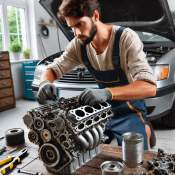
Car Engine Construction and Parts Drawing
 Car Engine Parts: A Detailed Overview
The reliability of a car engine depends largely on the precise functioning of various components. An engine is made up of many complex parts that work in concert to convert fuel energy into motion, which makes the vehicle move. Each component performs its own task to ensure the smooth and efficient operation of the engine. In this article, we will discuss the functions of car engine parts and their importance, including the water pump, oil pump, crankshaft, engine block, and many other components.
... More...
Car Engine Parts: A Detailed Overview
The reliability of a car engine depends largely on the precise functioning of various components. An engine is made up of many complex parts that work in concert to convert fuel energy into motion, which makes the vehicle move. Each component performs its own task to ensure the smooth and efficient operation of the engine. In this article, we will discuss the functions of car engine parts and their importance, including the water pump, oil pump, crankshaft, engine block, and many other components.
... More...

 The data shown here, especially the complete database of car spare parts, may not be copied. It is strictly prohibited to duplicate the data and database and distribute the same, and/or instruct third parties to engage in such activities, without prior consent from TecAlliance. Any use of content in a manner not expressly authorized constitutes copyright infringement and violators will be prosecuted.