

Brake pads and their purpose
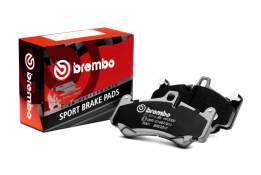
Car Brake Pads: The Most Important Safety Component of Your Vehicle
When we talk about a modern car, we often tend to admire its acceleration, horsepower, multimedia systems, or fuel efficiency. However, there is one system that is more critical than any other – the system whose sole purpose is to stop tons of moving metal, glass, and plastic. This is the braking system. And at the front line of this system, where the greatest amount of work is done and where the most heat is generated, are components that are often only palm-sized – the brake pads.
In this exceptionally comprehensive guide, we will not limit ourselves to a superficial overview. We will dive deep into the technology, material science, and physics of brake pads. We will explore why a cheap spare part can turn out to be a costly mistake, how different car brands – from Volkswagen and Toyota to BMW and Volvo – require different approaches, and we will debunk common myths. This is essential reading for every car owner who wants to understand what happens behind their vehicle’s wheels every time they press the brake pedal.
1. The Physics of Braking: From Kinetic Energy to Heat
To understand the harsh working conditions of brake pads, we must first recall some basic school physics. A moving car possesses a tremendous amount of kinetic energy (energy of motion). According to the law of conservation of energy, energy cannot simply disappear — it can only be converted from one form into another. To stop a car, this kinetic energy must be transformed into something else.
The task of the braking system is to convert motion energy into heat energy. This happens through friction. When the driver presses the brake pedal, the brake pads (friction material) are pressed with enormous force against the rotating brake disc (metal). This instantly generates heat. The heavier the vehicle and the higher the speed, the more energy must be dissipated.
Let’s take an example: When a 2-ton SUV (such as an Audi Q7 or Toyota Land Cruiser) brakes from 100 km/h to zero, the temperature of the brake discs and pads rises to hundreds of degrees within a fraction of a second. In extreme situations, such as descending mountain roads or performing emergency braking on a highway, temperatures can rise to 500–700 degrees Celsius. The job of brake pads is to maintain their structure and friction performance even under such extreme heat, without “melting” or becoming glazed.
2. Brake Pad Construction and Composition: More Than Just a Block
A brake pad is not simply a piece of material. It is a complex composite structure made up of several layers, each with its own function:
- Backing Plate: Usually a strong steel plate that provides rigidity to the pad and supports the brake caliper piston. It must be strong enough not to bend under hydraulic pressure.
- Underlayer: This is an adhesive and thermal insulation layer located between the backing plate and the friction material. Its purpose is to bond the materials together and prevent the extreme heat generated during braking from transferring to the brake caliper and brake fluid (which could otherwise begin to boil).
- Friction Material: This is the “working surface” of the pad that comes into contact with the brake disc. Its composition is one of the biggest trade secrets of manufacturers.
- Shim (Noise-Dampening Plate): A thin metal or rubber plate located on the back of the pad that reduces vibrations and, as a result, minimizes squealing during braking.
3. Material Science: Which Type Should You Choose?
As a car owner, you will often encounter terms like “Semi-Metallic,” “Ceramic,” or “Organic” when choosing replacement parts. This is not just marketing — the choice of material can drastically change how a car behaves. Let’s take a closer look.
Organic Brake Pads (NAO – Non-Asbestos Organic)
These were historically developed as asbestos-free alternatives. They are made from materials such as glass, rubber, carbon, and Kevlar, bonded together with heat-resistant resin.
- Characteristics: These are the softest type of brake pads.
- Advantages: Very quiet, gentle on brake discs, and produce less dust. They provide good braking feel at low speeds and in cold weather (they do not require warming up).
- Best suited for: Small cars and city vehicles (e.g., Honda Civic, Toyota Corolla) that are not driven aggressively.
- Disadvantages: They wear out the fastest. Under heavy load and high heat, their braking performance decreases significantly (a phenomenon known as fading).
Semi-Metallic Brake Pads
This is the gold standard of the European automotive industry. They typically contain 30–65% metal shavings (steel, iron, copper) mixed with graphite and other fillers.
- Characteristics: Rigid, durable, and excellent at conducting heat.
- Advantages: Outstanding braking performance across a wide temperature range. Often, the hotter the brakes get, the better they perform. They are the preferred choice for heavier and more powerful vehicles.
- Best suited for: Most European vehicles, such as Volkswagen Passat, BMW 3 and 5 Series, Mercedes-Benz, and Volvo XC60/XC90.
- Disadvantages: They produce a significant amount of black brake dust that quickly dirties wheels. They may also be noisier and wear brake discs more aggressively than organic pads.
Ceramic Brake Pads
A high-tech solution that is becoming increasingly popular. They are made from dense ceramic material mixed with copper fibers (although newer versions are copper-free).
- Characteristics: Very hard and durable, with a different friction profile.
- Advantages: Almost silent (ceramic resonance frequencies are outside the range of human hearing). They produce very little dust, and the dust is light-colored, helping wheels stay cleaner. They also have a very long lifespan.
- Best suited for: Luxury vehicles and drivers who prioritize comfort (e.g., Lexus, Audi A8). They are often chosen in the aftermarket to reduce black brake dust.
- Disadvantages: The most expensive option. In cold weather (such as Estonian winters), the first brake application may feel slightly less responsive because ceramic materials benefit from some heat. They are also not ideal for track use, as they do not dissipate heat as effectively as semi-metallic pads.
4. Signs of Brake Pad Wear and Diagnostics
Brake pads are consumable components. Their “death” is inevitable. However, when is the right time to replace them? Replacing them too early wastes money, while replacing them too late is dangerous and can damage the brake discs.
Visual Inspection
The most reliable method is to visually check the pads through the wheel (if the rim design allows it) or by removing the wheel. A new brake pad is typically 10–12 mm thick (friction material only). The critical limit is 2–3 mm. If less material remains, there is a risk that the friction material may separate from the backing plate or overheat.

Image: New brake pads compared to old, worn brake pads.
Acoustic Signs (What Your Car Is Telling You)
- High-pitched squealing during braking: This is often caused by an acoustic wear indicator. It is a small metal tab attached to the pad that is designed to scrape against the disc when the pad is worn down. The annoying noise is intentional.
- Deep grinding or metal-on-metal sound: This is a serious warning. It means the friction material is completely worn away and the steel backing plate is grinding into the brake disc. Every brake application causes irreversible damage to the disc. Driving should be stopped immediately.
- Clicking or rattling on uneven roads: If the noise disappears when braking, it may indicate that the brake pads are loose in the caliper (missing or worn springs/clips).
Tactile Signs
- Brake pedal vibration: This is often confused with warped brake discs, but it can also be caused by “cementite buildup” or uneven transfer of pad material onto the disc surface.
- Car pulling to one side: This usually indicates that the brakes on one side are working while the other side is not (for example, a seized caliper or unevenly worn pads).
5. Brand-Specific Characteristics and Common Issues
Experience shows that different manufacturers have their own “quirks” that should be considered when selecting and replacing brake pads.
VAG Group (Volkswagen, Audi, Skoda, Seat)
These vehicles are among the most common on Estonian roads. It is important to know the following:
- Rear brakes: On many models (e.g., VW Passat B6/B7/B8, Skoda Superb), the rear brake pads wear out faster than the front ones. The reason is the electronic stability control (ESP) and electronic differential lock (XDS), which subtly apply braking to the rear wheels in corners to improve handling.
- Electronic Parking Brake (EPB): Replacing the pads requires a diagnostic computer to retract the motors. Forcing them back manually can damage the expensive brake caliper.
Toyota and Lexus
Japanese engineers (manufacturers such as Akebono and Advics) focus heavily on reliability.
- Slider pin issues: In models such as the Toyota Avensis and Corolla, a common problem is brake caliper slider pins becoming stuck, especially in salty winter climates. This causes uneven, wedge-shaped pad wear. Each time pads are replaced, the slider pins must be cleaned and lubricated with special grease.
- Noise sensitivity: Toyota owners are used to very quiet vehicles. Cheap aftermarket pads with high metal content may cause noticeable squealing on these cars. Ceramic or OEM-quality pads are usually recommended.

Image: Lubricating squeaking brake caliper slider pins with silicone grease.
BMW and Mercedes-Benz
German premium-class vehicles are designed for Autobahn speeds.
- Soft discs, hard pads: BMW braking systems are very effective (“bite” strongly), but they produce a large amount of brake dust. This is normal. Trying to reduce dust by using very hard, cheap pads may negatively affect braking feel and performance.
- Wear sensors: These vehicles use separate, replaceable wear sensors (wires) that must be replaced with new ones whenever the brake pad wear warning light has already appeared on the dashboard.

Ford and Volvo
Having shared platforms during certain periods, these brands use similar systems (e.g., Ford Mondeo and Volvo V70).
- Floating vs. fixed calipers: Volvo vehicles often use more complex multi-piston calipers that require extremely precise brake pad fitment. Cheap pads may differ slightly in dimensions — even by a millimeter — which can cause knocking or rattling noises.
6. Brake Pad Replacement: What Should Be Done Along With It?
Replacing brake pads is not simply a “remove the old, install the new” procedure. To ensure quality and safety, the entire system must be considered.
1. Brake Discs (Rotors): A common rule of thumb is that discs are replaced every second pad replacement. However, the disc thickness must always be measured. Every disc has a manufacturer-specified Minimum Thickness. If the disc is thinner than this limit or has deep grooves or ridges, it will damage new pads within a few thousand kilometers. An old, uneven disc also prevents full contact with a new, smooth pad, increasing braking distance.
2. Installation Hardware Kits: Quality brake pads (e.g., Brembo, TRW) often include new stainless steel clips (abutment clips) in the package, where the pad moves within the caliper bracket. These should never be reused! Old clips lose elasticity and accumulate dirt, which can cause the pad to stick.
3. Lubrication:
This is where most mistakes are made. Not a single drop of grease should get onto the brake pad friction surface. However, lubrication should be applied to the pad “ears” that slide in the caliper bracket and to the caliper slider pins. Important: Only use special high-temperature brake lubricant (ceramic paste or silicone grease). Regular graphite grease or general-purpose grease can dry out and turn into a sticky substance, causing the brakes to seize.

7. “Bedding-In” – Why Is It Important?
Many drivers complain that brakes feel “dull” or start squealing immediately after replacement. This is often caused by skipping the bedding-in process. A new brake pad and a new (or old) disc are microscopically uneven. They initially make contact only at high spots.
The purpose of bedding-in is to:
Match the pad and disc surfaces geometrically
Transfer a thin layer of friction material (transfer layer) onto the brake disc surface, ensuring optimal friction performance
Fully cure the resins inside the pad material
How to bed in brake pads (general guideline – always follow manufacturer recommendations):
-
Find a safe and empty stretch of road.
-
Accelerate to about 60 km/h and brake moderately (do not lock the wheels) down to about 10 km/h. Do not come to a complete stop.
-
Immediately accelerate again and repeat the process 6–10 times. You may notice braking performance improving (and possibly a slight smell — this is normal).
-
After the series, drive calmly for a few kilometers while using the brakes as little as possible to allow them to cool down.
-
Avoid emergency braking during the first 200 km.
8. Environment and Future Trends (Euro 7)
Few people realize that brake pads are a significant source of environmental pollution. Each time you brake, fine dust particles are released into the air and onto the road. This dust often contains copper and other heavy metals, which are washed into rivers during rain and can harm aquatic ecosystems.
The European Union and the United States are introducing stricter regulations (for example, the Euro 7 emissions standards will also regulate brake dust). This has forced manufacturers to develop copper-free friction materials. If you see a leaf-shaped marking (N-rating) on the packaging, it indicates that the pads are more environmentally friendly. In the future, specially coated brake discs made from advanced hard-alloy materials (used by manufacturers such as Porsche and newer Audi models) are becoming more common. These discs resist corrosion and produce minimal dust but require specific compatible brake pads.

Image: Sport brakes with a red-painted caliper and a performance brake disc.
9. Frequently Asked Questions (FAQ)
Can I use brake pads from different manufacturers on the front and rear?
Yes, you can. The important rule is that both pads on the same axle (e.g., both front wheels) must be identical. However, it is recommended to use the same series on both front and rear axles to maintain consistent braking balance and feel.
Why do my new brakes squeal?
There may be several reasons: improper bedding-in (glazing), worn or uneven brake discs (pads do not seat properly), installation errors (uncleaned caliper, missing lubrication), or cheap pad material with high metal content.
What is “Brake Fade”?
This is a frightening situation where the brake pedal feels firm, but the car does not slow down effectively. It occurs when brake pads overheat (for example, during mountain driving). The friction material releases gases that create a “gas layer” between the pad and disc.
Solution: Use engine braking in mountainous areas and choose higher-quality pads with better high-temperature resistance.
Are sport brake pads better for everyday driving?
Usually not. Racing pads are designed to operate at very high temperatures (above 300°C). When cold (in city driving), their friction coefficient is low, they wear brake discs faster, and they can squeal loudly. For street cars, “street performance” pads or high-quality OEM replacements are usually the best choice.
10. Conclusion: An Investment in Lives
Brake pads are not a place to save a few euros. They are the only component capable of compensating for driver inattention or unexpected obstacles on the road. Whether you drive a family wagon like a Skoda Octavia or a luxury vehicle like a Mercedes S-Class, the laws of physics apply equally to everyone.
Regular inspection, using high-quality spare parts (from well-known manufacturers such as TRW, Brembo, ATE, Textar, Bosch), and proper installation ensure that your car will always stop when and where you want it to. Take care of your car, and it will take care of you.
You can find suitable brake pads for your car here!
 The data shown here, especially the complete database of car spare parts, may not be copied. It is strictly prohibited to duplicate the data and database and distribute the same, and/or instruct third parties to engage in such activities, without prior consent from TecAlliance. Any use of content in a manner not expressly authorized constitutes copyright infringement and violators will be prosecuted.