

Disc Brake > Brake Pad
Pick your vehicle
Car brake pads: Complete technical guide, common faults and maintenance
The most important safety feature in any vehicle is not the airbags, electronic driver assistance systems, or even the tires – it’s the braking system. The physical process of stopping a vehicle relies on converting kinetic energy into heat, and the enormous work of this is done by the car’s brake pads, which are pressed against a rotating brake disc. Although it may seem like a simple component, a modern brake pad is the result of decades of materials science and engineering.
In this extremely comprehensive and technical guide, we look at the anatomy of brake pads, analyze different friction materials and their suitability for different driving styles. We also highlight the most well-known and reliable spare parts brands, review common brake system faults in the most common car models, and advise on which specific auto chemical products should be used for brake maintenance to ensure maximum component life and flawless reliability.
1. Anatomy and working principle of brake pads
A brake pad is not just a piece of material. It is a multi-layered composite part that must withstand extreme temperatures (up to 300°C in everyday driving, even over 800°C in sporty driving), enormous mechanical pressure and constant exposure to moisture, road salt and dirt.
A typical modern brake pad consists of the following layers:

1. Friction material: This is the most important part of the pad, which directly contacts the brake disc. The life of the pad, braking force, dusting and noise level depend on the composition of the friction material.
2. Shim: a thin metal or rubber-coated plate attached to the back of the base plate. Its purpose is to dampen high-frequency vibrations that are transmitted from the pad to the caliper and that the human ear perceives as an unpleasant brake squeal.
3. Adhesive layer and underlayer: A special heat-resistant adhesive or binder that bonds the friction material to the steel plate. The underlayer often also acts as a thermal barrier, preventing excessive heat from being transferred to the backing plate and from there to the caliper and brake fluid.
4. Backing plate: a strong steel plate that is the backbone of the entire pad. It must be absolutely flat and thick enough so that it does not bend under the pressure of the brake caliper. The lugs on the backing plate hold the pad in place in the caliper.
5. Mounting bracket
6. Wear indicator - not pictured: it can be mechanical (a small metal clip that starts to whistle when it rubs against the disc when the pad is worn) or electronic (a wire molded into the pad that breaks when worn and lights a warning light on the dashboard).
2. Main types and friction materials of brake pads
Decades ago, asbestos was the main material used in brake pads due to its excellent heat resistance. However, it has long been banned due to health risks and today, brake pads are divided into three main categories based on material. Choosing the right material depends entirely on the type of vehicle and its intended use.
Organic brake pads (nao - non-asbestos organic)
Organic blocks are made from a mixture of different fibers (such as glass, rubber, Kevlar, carbon) bonded with a heat-resistant resin. They have a very low metal content (usually less than 20%).
- Pros: These are the softest and quietest pads on the market. They wear out the brake disc almost completely and provide a very smooth and predictable braking feel. Perfect for smaller city cars with a relaxed driving style.
- Cons: wear out much faster than other types. produce a significant amount of brake dust, which quickly turns alloy wheels black. does not tolerate high heat well - aggressive braking quickly causes so-called "fading", i.e. loss of braking power due to the release of gases from the surface of the pad.
Semi-metallic brake pads (semi-metallic)
These are currently the most common pads on the European car market. They contain 30% to 65% metal fibers (steel, iron, copper, brass) mixed with graphite and other binders.
- Pros: Excellent thermal conductivity and heat resistance. Offers very strong "bark" (initial braking force) both cold and hot. Ideal choice for heavier vehicles, SUVs, vans and drivers with a sportier driving style. They have a significantly longer lifespan than organic pads.
- Cons: Higher metal content means they are more aggressive towards brake discs, wearing them out faster. They are also prone to brake squeal, especially if the correct lubricants are not used during installation. Brake dust levels are medium to high.
Ceramic brake pads (ceramic)
They represent the cutting edge of braking technology for conventional vehicles. Ceramic pads are made from a dense ceramic mixture with copper fibers or other soft metals added to improve thermal conductivity.
- Pros: The most important advantage is cleanliness – ceramic pads produce very little brake dust and even that dust is light in colour, leaving alloy wheels clean. They are extremely quiet and have a very long lifespan. They also save on brake discs.
- Cons: Highest purchase price. While they can withstand everyday heat well, their initial braking power (bite) in cold climates or on first morning braking may not be as sharp as semi-metallic pads. They are not recommended for towing heavy trailers or extreme sports driving, as ceramic does not conduct heat as well and can cause the discs to overheat.

figure 1 Disc brake pad

figure 2 Drum brake pads
3. How do you know that the brake pads need to be replaced?
Monitoring the condition of the brake system should be a routine for every car owner. Brake pad wear does not happen overnight, but is a long-term process. The vehicle usually gives several warning signals before the situation becomes dangerous.

figure 3: Very worn disc brake pad. The top contact layer is completely worn away.
Unusual sounds (whistling, creaking, scraping)
The most common indicator is sound. If you hear a high-pitched whistling sound when braking, it is often a mechanical wear sensor (a small metal tongue) touching the disc, signaling that only a few millimeters of friction material are left. However, if the whistling sound is replaced by a harsh, metal-on-metal scraping or rattling sound, the situation is critical – the friction material has completely disappeared and the steel backing plate of the pad is in the process of destroying your brake disc. In such a situation, it is inevitable to replace both the pads and the discs at the same time.

Figure. Brake pad wear sensor. The picture on the left shows a new brake pad and the picture on the right shows an old worn brake pad.
1. Brake disc.
2. The layer of friction material on the brake pad. It comes into contact with and presses against the brake disc when the brake pedal is pressed. This layer wears out over time on the brake pad, and when it is completely worn out, the brake pads must be replaced with new ones.
3. brake pad metal backing plate.
4. Brake pad wear sensor. If the brake pad friction material layer is already too worn, then when braking, the metal wear sensor first comes into contact with the brake disc, which starts to make an unpleasant creaking sound, this will signal you that it is time to replace the brake pads with new ones.
Dashboard warning lights
More modern and luxurious vehicles are equipped with electronic wear sensors. When a pad wears down to a certain point (usually around 3-4 mm thick), the sensor circuit is interrupted and a warning light (often a yellow circle with dashed lines around it) lights up on the dashboard. Some cars also monitor the brake fluid level – as the pads wear, the caliper pistons have to move further out, which leads to a drop in the brake fluid level in the reservoir. When the light comes on, it means it’s time to book an appointment with a workshop.

picture. a warning light on a car's dashboard that indicates brake pad wear.
Vibration and pedal pulsation
If you experience a strong vibration in the steering wheel or brake pedal when braking, especially when slowing down from higher speeds, the problem is often in the cooperation of the pads and discs. This is caused by disc thickness variation (DTV), which is often mistakenly called a "warped disc". This often occurs when a car with hot brakes is stopped for a long time (for example, at a traffic light) and the brake pedal is held down firmly. Some of the friction material from the pad "cooks" onto the surface of the disc, making it uneven. New high-quality pads together with new discs will solve the problem.
Car pulling to one side
If the car tends to pull the steering wheel strongly to the right or left when braking, this indicates uneven distribution of braking force. The cause may be uneven wear on one side of the brake pad, a jammed brake caliper piston or dry slide pins. The system requires urgent disassembly and maintenance.

4. The most well-known and reliable spare part brands
When choosing brake parts, there is no room for compromises or cheap products of unknown origin. Safety starts with quality. Below is a selection of top automotive manufacturers who produce pads both directly for car factory conveyors (OEM) and for the aftermarket.
- Brembo: an Italian company that has become synonymous with high-performance brakes. Although they are best known for making brakes for supercars, they also offer excellent quality aftermarket parts for almost all standard vehicles. Their pads are often more aggressive in nature and offer a very firm braking feel.
- Ate (continental group): german quality, which is the original equipment of many european cars (especially vag, bmw, mercedes) at the factory. ate ceramic pads (ceramic series) are very highly rated precisely for their low dusting and ability to keep rims clean.
- TRW: One of the world's largest manufacturers of automotive safety systems. TRW pads are known for their "COTEC" coating - a special silicate coating on the pad surface that improves braking performance in the first kilometers immediately after installation, reducing the length of the so-called running-in phase.
- Bosch: A global giant whose brake parts cover almost the entire car fleet. Bosch pads are known for their stable quality, good price and availability. They offer an excellent balance between comfort, wear resistance and price.
- Textar: a premium brand belonging to the tmd friction group, focused on brake friction materials. many luxury and commercial vehicles use textar pads as original equipment. their products are designed to meet the most stringent nvh (noise, vibration, harshness) standards.
- Ferodo: one of the oldest brake manufacturers in the world, known for its strong involvement in motorsport. For regular vehicles, they offer an excellent "eco-friction" series that eliminates the use of copper, making the pads more environmentally friendly without sacrificing stopping power.
- Zimmermann: Known primarily for their high-quality (and often drilled) brake discs, their pads are the perfect companion, offering the precision and durability of German engineering in tough conditions.






5. Most common car models and typical faults in their brake systems
Although the basic principles of brake systems are similar in all cars, different car manufacturers and models have certain specific designs that lead to specific typical defects or wear patterns.
Vag group (Volkswagen, Audi, Skoda, SEAT)
Typical faults and peculiarities: many newer VAG Group cars (e.g. VW Passat, Golf, Audi A4, Škoda Octavia) widely use electronic parking brakes (EPB). This means that standard hand tools are no longer sufficient to replace the rear brake pads – a diagnostic device is required to rewind the internal electric motor of the caliper to the service position. If you try to do this by force, you will damage the expensive electronic caliper.
Another feature is related to auto-hold and adaptive cruise control. Because these systems constantly use the rear brakes to regulate speed and hold the car in place, many owners find that the rear brake pads on VAG cars often wear out faster than the front ones . This is contrary to logic, where the front brakes do most of the work due to the weight of the nose of the car. Owners should therefore monitor the condition of the rear pads more closely.
BMW (especially 3 Series, 5 Series and X Series models)
Typical faults and peculiarities: BMW's factory setting always favours sportiness and aggressive braking feel. To achieve this, the original pads have a very high friction coefficient, which makes them wear out quickly and collect extremely dust (many BMW owners have experienced that the front rims are completely black a week after washing).
A typical problem is the wear of the guide rails (sliding pins) of floating-type brake calipers or the accumulation of dirt on them, which causes uneven wear of the brake pads. BMW wear sensors are also set very conservatively - a light in the instrument panel can come on when there is still 4-5 mm of material left on the pad, causing unnecessary panic among the car owner.
Toyota and Lexus (Corolla, Rav4, Avensis, hybrid models)
Typical faults and peculiarities: Toyota brake systems are generally very reliable and long-lasting. The main "typical fault" on these models with internal combustion engines is the jamming of the slide pins due to lack of maintenance, as they are not lubricated with a special silicone lubricant in a timely manner. This leads to uneven wear of the pads and the brakes "sticking".
The situation is drastically different for hybrid models (Prius, Rav4 Hybrid, Lexus RX) . These cars mainly use regenerative braking (electric motor energy storage) and mechanical brake pads only come into play at very low speeds or during sudden braking. As a result, hybrid brake pads can last 100,000 km or more. But here lies the danger: due to little use, hybrid brake pads tend to rust into the calipers and the brake discs corrode. This is why hybrids require regular brake disassembly, cleaning and lubrication, even when the pads still have plenty of material left.
Ford and Psa group (Peugeot, Citroën)
Typical faults and peculiarities: especially on older and mid-generation models (such as Ford Focus, Mondeo, Peugeot 307/308), a common problem is the rear brake calipers, which have an integrated mechanical handbrake lever. Over time, moisture and salt penetrate between the handbrake lever seals and the mechanism jams. The result is that when the handbrake is released, the rear brake pads gently rub against the disc. This overheats the system, damages the disc and wears the pads down to the metal unnoticed and quickly. Maintenance of the rear brakes and regular replacement of the cables are critical for these brands.
6. The importance of car chemicals: Which products to use for maintenance?
Simply throwing out the old pads and installing new ones is not a proper brake repair. The long life and quiet operation of the parts depend on proper cleaning and the use of the right lubricants. Using the wrong chemistry can do more harm than good. (Note: specific brands are not mentioned here, we focus on the types of chemistry).
1. Brake cleaner
It is a strong, rapidly volatile solvent sold in aerosol cans. Its sole purpose is to remove old grease, brake dust and especially factory protective oil from brake parts. Brake cleaner evaporates without leaving any residue and does not leave a greasy film. It should be used liberally to clean all metal surfaces before installing new parts.

2. Silicone grease /synthetic grease for slide pins
This is the most commonly misunderstood product in brake maintenance. Floating-type brake calipers move on metal pins (sliders) that are protected by rubber dust boots. Only 100% silicone-based or special synthetic brake grease (often with Teflon) should be used to lubricate these pins.
Under no circumstances should you put regular copper grease, lithol grease or other petroleum-based greases here! Petroleum-based products will cause the rubber dust seals to swell and break, water will get in and the saddle will jam permanently.

picture. Lubricating brake support sliders that make a squeaking sound with silicone grease
3. Ceramic grease or copper grease (high temperature)
These greases are only used on metal-to-metal contact surfaces where there is no contact with rubber parts. A thin layer of ceramic or copper grease should be applied:
- on the back of the brake pad base plate (between the caliper piston and the pad) to prevent squealing.
- on the brake pad ears, or the points where the pad slides inside the caliper frame.
- on the surface between the brake disc and the wheel hub to prevent the disc from rusting to the hub.
4. Threadlocker
The bolts holding the brake caliper and frame are exposed to strong vibrations. To ensure safety, a drop of medium-strength (usually blue) thread sealant should always be applied to the threads of these bolts. This prevents the bolts from loosening spontaneously, but still allows them to be opened with tools during the next maintenance.
5. Rust remover/rust killer aerosol
In older cars, the brake caliper mounting bolts or bleeder nipples may be extremely corroded. Turning with force will break the bolt. A high-quality rust remover with a freezing effect or strong capillary action will help penetrate the rust and safely open the bolts.
Critical Step 7: Bedding-in the new brake pads
Many car owners make the mistake of thinking that after installing new pads and discs, they can immediately drive as before. In reality, the new friction surfaces need to adapt. This process is called bedding-in and is crucial to ensuring brake life, maximum stopping power and squeak-free operation.
Why is this important? The surface of a new brake disc is rough at a microscopic level, and the new pad has not yet taken on the exact shape of the disc. During the break-in process, a thin, even layer of pad material is applied to the surface of the brake disc. If you apply long, hard braking to your new brakes right from the start (allowing them to overheat), the pad surface will “vitrify” – it will become shiny and hard, losing much of its frictional force and starting to squeal terribly in the future.
Correct running-in procedure:
- After leaving the workshop, apply smooth and moderate braking for the first 200-300 kilometers. Avoid long and jerky braking at high speed.
- Find a safe section of road without other road users.
- Accelerate the car to about 60 km/h and brake smoothly with medium force to a speed of 10 km/h. Do not stop completely!
- Repeat this process 4-5 times in a row. This will raise the temperature of the brakes smoothly.
- Then do a 10-minute cool-down drive at highway speeds, without using the brakes, allowing the air flow to cool the system. The brakes are now broken in.
8. What factors affect brake pad wear?
The question often arises as to why one rider's pads last 60,000 kilometers, while another rider's needs to be replaced after 25,000 kilometers. The answer lies in the operating environment and driving habits.
- Transmission type: In cars with manual transmission, brakes tend to last longer because drivers instinctively use engine braking (by downshifting). In the case of automatic transmissions, especially older torque converter transmissions, the driver must always use the foot brake to stop the car.
- Driving style and engine braking: a driver who can anticipate traffic will release the accelerator pedal early before a red light and let the car roll, saving many times more on the brakes than a driver who drives with the accelerator until the last moment and then brakes hard.
- Driving environment: constant city driving (stop-and-go traffic) is a real test for brakes. With the same mileage, the brakes of a city car wear out several times faster than those of a car driving long distances on the highway. Geography also plays a role – drivers living in mountainous terrain put significantly more strain on the brakes on a daily basis.
- Load and trailer: The weight of the car is directly correlated to kinetic energy. Carrying a heavy load, constantly driving a fully loaded car or towing a caravan requires many times more effort from the brakes, which leads to drastically faster wear of materials and higher operating temperatures.
9. Common myths about brake pads
There are a lot of half-truths and myths floating around in the automotive world, especially when it comes to maintenance parts. Let's debunk some of the most common misconceptions about brake pads.
Myth 1: "Ceramic blocks are always the best choice."
While ceramic pads keep rims clean and quiet, they are not "best" in every situation. For heavy SUVs, sports cars (on the track) or those hauling a large trailer, high-quality semi-metallic pads offer significantly better cooling and more stopping power (bite) in hot conditions.

image. Brake pads and discs often have to withstand very extreme heat.
Myth 2: "A harder and more expensive brake pad will last longer, therefore it is more economical."
Very hard friction material does indeed last longer, but it does so at someone's expense. Very hard pads often wear out a car's brake discs abnormally quickly. However, replacing a brake disc is significantly more expensive than replacing the pads. The goal is to find a balance - the pad must be soft enough to protect the disc, but durable enough to ensure a reasonable maintenance interval.
Myth 3: "Brakes need to be bled every time the pads are changed."
If the hydraulic system is not open (brake hoses are not disconnected and air has not entered the system), bleeding the brakes is not necessary when simply replacing brake pads or discs. However, it is strongly recommended to replace all brake fluid (dot 4 or dot 5.1, depending on the car's manual) every two years, regardless of mileage, because brake fluid absorbs moisture, which lowers its boiling point and promotes internal corrosion of the system.
Summary
Car brake pads are much more than just pieces of metal and friction material that need to be replaced. They are intricately designed safety features that require the attention of the car owner and a responsible approach to maintenance. By choosing products from trusted brands (brembo, trw, bosch, ate, etc.), using the right chemical products during installation, and taking into account the specifics of your vehicle and possible typical defects, you ensure that your car stops safely, without delay and silently in any situation.
Don't wait for a metallic scraping sound or a red light on the dashboard – have your brake system checked at every regular maintenance and your vehicle will thank you with long, trouble-free service.
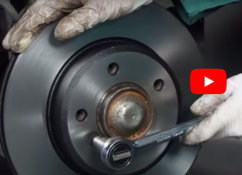
Changing the brake fluid and bleeding the brakes
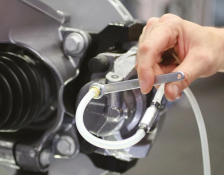 Changing the brake fluid is a very important process in brake maintenance. Brakes are essential to any car, and that makes brake fluid one of the most important components in your car. Brake fluids must resist moisture that can cause vapor lock and brake failure, protect against corrosion, and withstand high brake temperatures. From time to time, you need to change the brake fluid according to the car manufacturer's instructions.
... More...
Changing the brake fluid is a very important process in brake maintenance. Brakes are essential to any car, and that makes brake fluid one of the most important components in your car. Brake fluids must resist moisture that can cause vapor lock and brake failure, protect against corrosion, and withstand high brake temperatures. From time to time, you need to change the brake fluid according to the car manufacturer's instructions.
... More...
Brake pads and their purpose
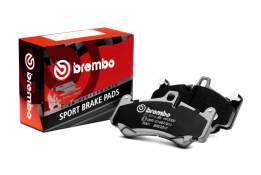 Car Brake Pads: The Most Important Safety Component of Your Vehicle
When we talk about a modern car, we often tend to admire its acceleration, horsepower, multimedia systems, or fuel efficiency. However, there is one system that is more critical than any other – the system whose sole purpose is to stop tons of moving metal, glass, and plastic. This is the braking system. And at the front line of this system, where the greatest amount of work is done and where the most heat is generated, are components that are often only palm-sized – the brake pads.
... More...
Car Brake Pads: The Most Important Safety Component of Your Vehicle
When we talk about a modern car, we often tend to admire its acceleration, horsepower, multimedia systems, or fuel efficiency. However, there is one system that is more critical than any other – the system whose sole purpose is to stop tons of moving metal, glass, and plastic. This is the braking system. And at the front line of this system, where the greatest amount of work is done and where the most heat is generated, are components that are often only palm-sized – the brake pads.
... More...
Why do car brake pads make a whistling noise?
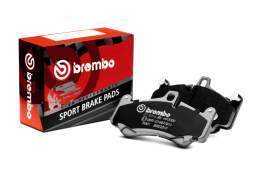 Car brakes can squeal when you brake for a variety of reasons. The most common causes are:
1. Brake pad wear
When the brake pads are worn, their surface can become uneven or too thin. This can cause a whistling sound because the metal part of the brake pads can rub against the brake disc or drum. When the brake pads are worn to a certain extent, the braking efficiency decreases and a whistling sound can occur.
... More...
Car brakes can squeal when you brake for a variety of reasons. The most common causes are:
1. Brake pad wear
When the brake pads are worn, their surface can become uneven or too thin. This can cause a whistling sound because the metal part of the brake pads can rub against the brake disc or drum. When the brake pads are worn to a certain extent, the braking efficiency decreases and a whistling sound can occur.
... More...
Car brake system and brake system maintenance: Ensuring safety on every ride
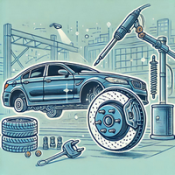 The brake system is one of the most important components in any vehicle. It is responsible for stopping the car from moving and plays a crucial role in the safety of the vehicle. Ensuring the proper functioning of the brake system and regular maintenance are necessary at all times to prevent accidents and ensure the optimal functioning of the vehicle. In this article, we will look at the main components of the car's brake system, how it works and the importance of maintenance.
Car brake system: How does it work?
... More...
The brake system is one of the most important components in any vehicle. It is responsible for stopping the car from moving and plays a crucial role in the safety of the vehicle. Ensuring the proper functioning of the brake system and regular maintenance are necessary at all times to prevent accidents and ensure the optimal functioning of the vehicle. In this article, we will look at the main components of the car's brake system, how it works and the importance of maintenance.
Car brake system: How does it work?
... More...

Car drum brake construction and parts
 Auto Drum Brake Structure, Working Principle, and Components Overview
Drum brakes are one of the oldest braking systems used in many vehicles, especially older models or vehicles where compact packaging with high braking force is required. The drum brake system operates mechanically by applying brake shoes against the brake drum to slow down or stop the vehicle. The construction and working principle of drum brakes are relatively complex as they contain multiple components that work together to ensure effective and reliable braking.
General Working Principle of a Drum Brake:
The drum brake consists of brake pads, a wheel cylinder, and a brake drum, to which braking force is applied. When the brake pedal is pressed, the wheel cylinder uses hydraulic pressure to push the brake shoes against the drum, creating friction that slows down the vehicle.
The working principle of a drum brake is that the brake shoes move outward from the inside of the drum to stop the wheel’s rotation, while other parts of the braking system ensure smooth and efficient operation.
... More...
Auto Drum Brake Structure, Working Principle, and Components Overview
Drum brakes are one of the oldest braking systems used in many vehicles, especially older models or vehicles where compact packaging with high braking force is required. The drum brake system operates mechanically by applying brake shoes against the brake drum to slow down or stop the vehicle. The construction and working principle of drum brakes are relatively complex as they contain multiple components that work together to ensure effective and reliable braking.
General Working Principle of a Drum Brake:
The drum brake consists of brake pads, a wheel cylinder, and a brake drum, to which braking force is applied. When the brake pedal is pressed, the wheel cylinder uses hydraulic pressure to push the brake shoes against the drum, creating friction that slows down the vehicle.
The working principle of a drum brake is that the brake shoes move outward from the inside of the drum to stop the wheel’s rotation, while other parts of the braking system ensure smooth and efficient operation.
... More...
How do you know if your car's brake pads are worn?
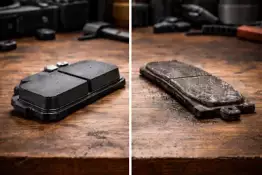 How to know if your car's brake pads are worn? A comprehensive guide for car owners
The technical condition of your car is directly related to your own safety, the safety of your passengers and all other road users. One of the most critical components in any vehicle is its braking system. Imagine a situation where you have to brake suddenly at highway speed because of a wild animal that suddenly ran into the road or a vehicle that suddenly stopped in front of you. In that split second, the entire responsibility for stopping the car falls on your braking system, the front line of which is the brake pads and brake discs.
Brake pads are consumable parts. This means that their wear is not a fault with the car, but a normal physical process that occurs with everyday driving. Every time you press the brake pedal, the brake pads are pressed with enormous force against the rotating brake discs. In this process, the car's kinetic energy, or motion energy, is converted into heat energy through friction, which ultimately brings the vehicle to a stop. This constant friction inevitably wears down the surface of the pads.
... More...
How to know if your car's brake pads are worn? A comprehensive guide for car owners
The technical condition of your car is directly related to your own safety, the safety of your passengers and all other road users. One of the most critical components in any vehicle is its braking system. Imagine a situation where you have to brake suddenly at highway speed because of a wild animal that suddenly ran into the road or a vehicle that suddenly stopped in front of you. In that split second, the entire responsibility for stopping the car falls on your braking system, the front line of which is the brake pads and brake discs.
Brake pads are consumable parts. This means that their wear is not a fault with the car, but a normal physical process that occurs with everyday driving. Every time you press the brake pedal, the brake pads are pressed with enormous force against the rotating brake discs. In this process, the car's kinetic energy, or motion energy, is converted into heat energy through friction, which ultimately brings the vehicle to a stop. This constant friction inevitably wears down the surface of the pads.
... More...
Honda Civic Brake Pad Replacement: A Complete Guide
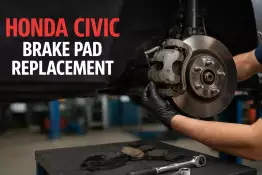 Honda Civic Brake Pad Replacement: A Comprehensive Guide for the DIY Mechanic
The Honda Civic is renowned for its reliability, fuel efficiency, and dynamic driving experience. It’s a car that serves its owner faithfully for years when properly maintained. One of the most critical maintenance tasks directly impacting your safety and the safety of others on the road is the upkeep of your braking system. Brake pads are a wearable component of this system that require regular inspection and timely replacement.
While many car owners prefer leaving brake-related work to professionals, changing brake pads on a Honda Civic is actually a manageable task for even a beginner home mechanic. It simply requires the right tools, some patience, and thorough preparation. This article is designed to guide you step-by-step through the entire process, from diagnosis to breaking in the new pads.
Replacing the brake pads yourself saves a significant amount of money that would otherwise go towards workshop services. Additionally, it gives you a better understanding of your car's technical condition and the peace of mind that the job has been done correctly. In this guide, we'll focus on the most common Honda Civic generations, but the fundamental principles are similar for most cars with disc brakes.
... More...
Honda Civic Brake Pad Replacement: A Comprehensive Guide for the DIY Mechanic
The Honda Civic is renowned for its reliability, fuel efficiency, and dynamic driving experience. It’s a car that serves its owner faithfully for years when properly maintained. One of the most critical maintenance tasks directly impacting your safety and the safety of others on the road is the upkeep of your braking system. Brake pads are a wearable component of this system that require regular inspection and timely replacement.
While many car owners prefer leaving brake-related work to professionals, changing brake pads on a Honda Civic is actually a manageable task for even a beginner home mechanic. It simply requires the right tools, some patience, and thorough preparation. This article is designed to guide you step-by-step through the entire process, from diagnosis to breaking in the new pads.
Replacing the brake pads yourself saves a significant amount of money that would otherwise go towards workshop services. Additionally, it gives you a better understanding of your car's technical condition and the peace of mind that the job has been done correctly. In this guide, we'll focus on the most common Honda Civic generations, but the fundamental principles are similar for most cars with disc brakes.
... More...
 The data shown here, especially the complete database of car spare parts, may not be copied. It is strictly prohibited to duplicate the data and database and distribute the same, and/or instruct third parties to engage in such activities, without prior consent from TecAlliance. Any use of content in a manner not expressly authorized constitutes copyright infringement and violators will be prosecuted.