

Car brake system and brake system maintenance: Ensuring safety on every ride
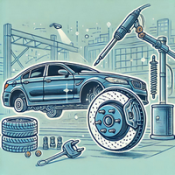
The brake system is one of the most important components in any vehicle. It is responsible for stopping the car from moving and plays a crucial role in the safety of the vehicle. Ensuring the proper functioning of the brake system and regular maintenance are necessary at all times to prevent accidents and ensure the optimal functioning of the vehicle. In this article, we will look at the main components of the car's brake system, how it works and the importance of maintenance.
Car brake system: How does it work?
A car's brake system consists of several components that work together to ensure the vehicle's safety and effective braking performance.
.jpeg)
Modern cars mostly use hydraulic brake systems, which rely on a fluid to transfer the necessary braking force to the various parts of the system. All components of the brake system must be in good working order for braking to be performed accurately and reliably.
Throughout history, three main types of braking systems have been used:
-
1. Drum brakes at the front and rear (on very old cars).
-
2. Disc brakes at the front and drum brakes at the rear.
-
3. Disc brakes at the front and rear.
How did this develop historically?
-
1900s–1950s
- Practically all passenger cars used drum brakes on all wheels.
- Disc brakes were either still in the experimental stage or considered too expensive and unreliable for widespread use.
Why were drum brakes the only option at first?
-
They were simpler to build and maintain
-
Cheaper to manufacture
-
Vehicles had lower speeds and lighter weights at the time
-
Tyres and suspension systems did not allow for very hard braking anyway
When did disc brakes come into play?
- During the 1950s–1960s, disc brakes began to appear: initially on sports cars and luxury cars, mainly on the front wheels
- By the 1970s–1980s, front disc brakes had become common.
- Rear drum brakes remained in use for a long time. Even today, some electric cars use disc brakes at the front and drum brakes at the rear.
Basic brake system components
Brake pads are the most important part of the braking system, as they are what create the braking effect by pressing against the brake discs and creating friction that stops the wheels from moving. Brake pads should be checked regularly as they wear over time, especially in heavy traffic and intensive vehicle use.Brake discs are made of stainless steel or other reinforced materials that the brake pads press against. Brake discs are in constant contact with the brake pads, so over time they can wear out or become damaged (such as scratches or warping) which affects braking performance
Brake calipers hold the brake pads and press them against the brake discs to provide braking power. They can be single- or multi-chamber and often include hydraulic systems that increase the strength of the braking force required.
Brake fluid carries hydraulic force to various parts of the brake system, helping to push the calipers against the pads when you press the brake pedal. Brake fluid is very important because it ensures the system is at the correct operating temperature and prevents air or moisture from entering the system, which can significantly reduce braking performance.
A brake booster makes it easier to apply the brakes by providing additional force to press the brake pedal.
Modern ABS (anti-lock braking system) systems use torque sensors to measure changes in wheel speed during braking and prevent the wheels from locking, which could lead to skidding and accidents. This ensures that the car remains under control even during very sudden braking.
Function:
 The master cylinder is a central component of the brake system that converts the mechanical force applied to the pedal when the vehicle is driven into hydraulic pressure. This hydraulic pressure is used throughout the brake system to activate the brake mechanisms at each wheel.
Working principle:
When the driver presses the brake pedal, the force is transmitted through the master cylinder, which moves a piston and forces brake fluid into the system. This fluid travels through the brake hoses to the wheel brake cylinders, where it produces braking force.
.png) Components:
Components:
- Piston and spring: The piston moves the brake fluid through the system.
- Fluid reservoir: Provides a constant supply of brake fluid.
- Hydraulic hoses: Transport fluid from the master cylinder to the wheel brake cylinders.
Summary:
The master cylinder's job is to initiate hydraulic pressure throughout the brake system, which is later applied to each wheel to apply braking force.
Function:
The slave cylinder (also known as the wheel cylinder in some systems) is the part of the brake system responsible for applying mechanical force to the brake pads or steps against the brake disc or drum. The slave cylinder operates under the influence of hydraulic pressure coming from the master cylinder.
Working principle:
When the master cylinder releases hydraulic pressure, the piston or pistons in the slave cylinder move, pressing the brake pads or steps against the brake disc or drum. This creates a braking force that reduces the speed of the vehicle.
Components:
- Components: Piston The moving part that presses the brake pads or steps against the brake disc or drum.
- Gaskets: Ensure that brake fluid does not leak into the system.
The slave cylinder applies hydraulic force that causes braking. Its function is to move the brake pads or steps against the brake disc or drum as needed.
Function:
A brake cylinder (drum brake) (usually in drum brake systems) is a complementary component that is responsible for moving the brake shoes or brake pads against the brake disc or drum. The function of the wheel cylinder is to convert hydraulic pressure into mechanical movement that activates the brake mechanism..png)
Working principle:
The wheel cylinder is located in the brake drum. When hydraulic pressure comes from the master cylinder, the piston in the wheel cylinder moves the brake pads outward, pressing them against the brake drum. Friction is created, which helps to slow the vehicle.

Components:
- Piston and Springs: The wheel cylinder has two pistons that move in opposite directions to activate the brake steps.
- Simmerlings and seals: Ensure that the piston moves smoothly and that the system does not leak.
Summary:
The wheel cylinder is important in drum brake systems to press the brake pads against the brake drum and create braking force.
DIFFERENT CYLINDERS - Summary: Difference and Cooperation
| Component | Location | Function |
|---|---|---|
Brake Master Cylinder |
Near the brake pedal, in front of the engine compartment | Converts mechanical force into hydraulic pressure and directs fluid into the system |
Slave Cylinder |
In Trump brake systems at each wheel | Can be either a drum brake or a disc brake system. Applies hydraulic pressure to move the brake pads or steps, which activates the brake |
Wheel Brake Cylinder |
Trump In the brake system, there is one inside each drum for each wheel. | Only in older vehicles with drum brake systems or on special vehicles. Converts hydraulic pressure into movement that presses the brake pads against the drum |
The master cylinder is the starting point of the braking system, producing hydraulic pressure. The slave cylinder (or wheel cylinder in drum brakes) converts this hydraulic pressure into mechanical force to operate the braking mechanism.
A brake force regulator is mainly used in systems with drum brakes, but historically it was also used in vehicles with disc brakes.
Today, its role has mostly been taken over by ABS / EBD systems.

What is a brake force regulator?
A brake force regulator (in English: Brake Force Regulator) is an important component of the braking system that ensures proper balance during braking. Its main function is to distribute braking force between the front and rear wheels according to vehicle load and road conditions.
How does a brake force regulator work?
When a vehicle brakes, part of its weight shifts forward, meaning the front wheels experience much higher load than the rear wheels. The brake force regulator reduces the braking force applied to the rear wheels in order to prevent them from locking up and to maintain stable braking. In older vehicles, mechanical brake force regulators were used; these reacted to changes in suspension movement. In newer vehicles, braking force is controlled by an electronic control unit, working together with ABS and ESP systems.
The importance of the brake force regulator for safety
If the brake force regulator does not work properly, it can cause uneven braking, a longer stopping distance, or even vehicle skidding. Therefore, it is important to regularly inspect and maintain the braking system, including the brake force regulator.
What are the symptoms of a faulty brake force regulator?
Some common faults and their symptoms include:
-
Uneven braking – the rear of the vehicle skids easily or “jumps” during braking
-
Longer stopping distance – the brakes feel ineffective
-
Pulling to one side during braking – the vehicle veers left or right
-
ABS warning light on the dashboard – in newer vehicles, a fault in the electronic regulator may be indicated by a warning light
Maintenance and replacement of the brake force regulator
The lifespan of a brake force regulator depends on driving style and road conditions, but it is recommended to check it during every brake service. If the regulator is worn or malfunctioning, it should be replaced. In older vehicles, mechanical regulators can sometimes be cleaned and adjusted, whereas electronic systems usually require specialist intervention.
Conclusion
The brake force regulator is a critical safety component that helps ensure vehicle stability and safe braking. Regular inspection and timely maintenance help prevent dangerous situations and contribute to the vehicle’s long service life.
Car hydraulic brake system:

1. Brake fluid tank
2. Master cylinder
3. Pipeline for brake fluid
4. Brake caliper
5. Brake pads
6. Brake disc
7. Brake pad
8. Brake disc
9. Brake pistons
10.Brake pedal
Maintaining the brake system
Pidurisüsteemi õige töö tagamiseks tuleb seda regulaarselt hooldada. Mõned olulised hoolduspunktid, mida tuleb pidurisüsteemi hooldamisel arvestada, on järgmised:
1. Checking and replacing brake pads
Brake pads wear over time because they are constantly in contact with the brake discs. If the brake pads are worn too thin, they cannot generate enough braking force, which can increase the braking distance and increase the risk of accidents. As a rule, brake pads should be checked every 20,000 to 30,000 km or if a braking problem occurs (e.g. whistling, reduced braking power).
2. Checking brake discs
Brake discs must be flat and undamaged to ensure the proper functioning of the braking system. If the brake discs are worn or distorted, they must be replaced. Regularly checking the brake discs is important, as warped discs can cause uncomfortable vibrations and poor braking performance.
3. Brake fluid inspection and replacement
Brake fluid is essential for the proper operation of the brake system. To ensure the quality of the oil, it must be changed regularly, as moisture and air entering the system can cause the brakes to function poorly. The frequency of oil changes depends on the car model, but as a rule, it should be done every 1-2 years or according to the manufacturer's recommendations.
4. Brake system inspection (including ABS and brake booster)
The vehicle's brake system (especially ABS) must be checked regularly to ensure its correct operation. If the ABS or brake booster is not working properly, braking performance is significantly reduced and the car may lose control in extreme situations.
5. Winter Brake Pad and Disc Maintenance
In winter conditions, where there is more salt, water and dirt on the roads, the brake system needs to be maintained with extra care. It is recommended to check that all parts are properly lubricated and that the brake system is protected from rust and other winter damage.
Summary
The brake system is one of the most important safety features of a car, ensuring the safety and drivability of the vehicle. Regular maintenance, such as changing the brake pads, checking the brake discs, changing the brake fluid and inspecting the system, is essential to prevent serious problems and ensure the reliability of the vehicle. Careful maintenance of the brake system and timely repairs will help keep you and your passengers safe on every journey.
You can find the right brake parts for your car here:
 The data shown here, especially the complete database of car spare parts, may not be copied. It is strictly prohibited to duplicate the data and database and distribute the same, and/or instruct third parties to engage in such activities, without prior consent from TecAlliance. Any use of content in a manner not expressly authorized constitutes copyright infringement and violators will be prosecuted.