

Car Cooling System: Overview, Working Principle and Important Parts
What is a Car Cooling System?
The car cooling system is one of the most critical systems in an engine, responsible for maintaining the engine temperature within an optimal range, preventing overheating, and ensuring efficient operation. The cooling system removes excess engine heat and contributes to fuel efficiency and engine longevity.
How Does a Car Cooling System Work?
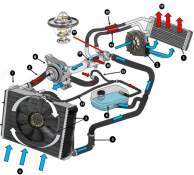
The cooling system operates by circulating coolant, which absorbs engine heat and dissipates it through the radiator. The system includes several key components that ensure proper fluid circulation and heat dissipation.
Key Components of the Car Cooling System

1. Interior Heat Exchanger (Cabin Heater Core)
2. Cabin Blower Fan
3. Lower Radiator Hose
4. Coolant Expansion Tank
5. Radiator Cooling Fan
6. Airflow
7. Radiator
8. Upper Radiator Hose
9. Water Pump
10. Thermostat Housing
11. Thermostat
12. Hose to Heater Core
13. Warm Air Flow
14. Heater Core Return Hose
15. Steam Hose or Vent Pipe
16. Coolant from Engine
17. Radiator Bleed Hose
1. Radiator
The radiator is the central component of the cooling system, which dissipates excess engine heat using airflow. Hot coolant flows through the radiator, where it cools before returning to the engine.
2. Water Pump
The water pump ensures coolant circulation throughout the system, moving it through the radiator, engine, and other cooling components.
3. Thermostat
The thermostat regulates coolant flow between the engine and radiator, opening and closing based on engine temperature.
4. Thermostat Housing
This component holds the thermostat in place and directs coolant through the proper channels for efficient operation.
5. Coolant Expansion Tank
The expansion tank allows coolant to expand and contract with temperature changes, preventing excessive pressure buildup in the system.
6. Upper Radiator Hose
The upper radiator hose directs hot coolant from the engine to the radiator for cooling.
7. Lower Radiator Hose
The lower radiator hose returns cooled coolant from the radiator to the engine, allowing it to absorb heat again.
8. Radiator Cooling Fan
The fan provides airflow through the radiator fins, helping coolant cool down even when the vehicle is stationary or running at high temperatures.
9. Airflow
Airflow plays a crucial role in the cooling process, helping to remove heat from the radiator and other system components.
10. Steam Hose or Vent Pipe
The steam hose removes excess steam and air bubbles from the cooling system, preventing engine overheating.
11. Radiator Bleed Hose
The bleed hose helps eliminate trapped air from the system, ensuring efficient coolant circulation.
12. Coolant from Engine
Hot coolant flows from the engine through the radiator and other components, dissipating heat before re-entering the system.
Components of the Cabin Heating System
13. Interior Heat Exchanger (Cabin Heater Core)
The heater core uses engine coolant heat to warm the vehicle's interior during winter.
14. Cabin Blower Fan
The cabin blower fan pushes warm air through the heater core and directs it into the passenger compartment.
15. Hose to Heater Core
This hose directs hot coolant into the heater core, where it heats the air blown into the cabin.
16. Heater Core Return Hose
After heat exchange, the coolant returns through this hose back toward the engine.
17. Warm Air Flow
Once heated, air moves through the ventilation system into the passenger compartment, providing comfortable temperatures.
Car Cooling System Maintenance and Issues
Regular maintenance of the car's cooling system is essential to prevent engine overheating and ensure efficient operation. Key maintenance tasks include:
- Checking and refilling coolant levels as needed.
- Inspecting the radiator and hoses for leaks.
- Testing the thermostat for proper function.
- Checking the radiator fan and water pump operation.
Common problems that can affect the car's cooling system:
- Leaking hoses or radiator.
- Clogged or dirty radiator.
- Faulty thermostat that fails to open or close properly.
- Water pump failures preventing coolant circulation.
- Air pockets in the system requiring bleeding.
You can buy chemicals for stopping cooling system and radiator leaks here.
You can find cooling system repair tools here.
Conclusion
The car cooling system plays a critical role in engine health and vehicle efficiency. Proper maintenance and timely problem detection help prevent costly engine failures and ensure a smooth and safe driving experience. If signs of overheating or reduced cooling efficiency appear, the system should be checked and repaired immediately.
 The data shown here, especially the complete database of car spare parts, may not be copied. It is strictly prohibited to duplicate the data and database and distribute the same, and/or instruct third parties to engage in such activities, without prior consent from TecAlliance. Any use of content in a manner not expressly authorized constitutes copyright infringement and violators will be prosecuted.