

Car Generator and Its Repair
What is a car alternator?
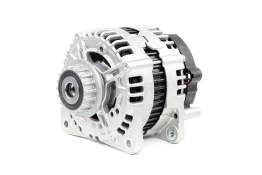
The car alternator is one of the most important components of the vehicle's electrical system. Its function is to generate electrical energy that charges the battery and supplies all electrical systems, such as lighting, air conditioning, entertainment systems, and other electronic devices.
 Image. Passenger car alternator.
Anatomy of an Alternator: How Does It Work?
To understand failures, you first need to understand what’s happening inside that aluminum housing. A car alternator is an electromechanical device that converts the engine’s mechanical rotational energy into electrical energy. However, this process is not as simple as it may seem.
Main Components:
- Stator (Winding): This is the stationary part of the alternator — copper wire windings wrapped around an iron core. This is where alternating current (AC) is generated. A short circuit in the stator or insulation failure is one of the most common reasons why charging is lost.
- Rotor (Armature): A rotating electromagnet inside the stator. The rotor receives current through brushes and slip rings, creating a magnetic field. When the engine spins the rotor, current is induced in the stator.
- Diode Bridge (Rectifier): The alternator initially produces alternating current (AC), but the vehicle’s electronics and battery require direct current (DC). The diode bridge acts like a system of one-way valves that “straightens” the current. Failure of even a single diode can drastically reduce the alternator’s output.
- Voltage Regulator: Engine speed constantly changes (from idle to redline). Without a regulator, voltage would rise dangerously high at high RPMs (over 18V), damaging bulbs and electronic control units. The regulator keeps voltage stable between 13.5V and 14.8V by controlling the strength of the rotor’s magnetic field.
- Overrunning Alternator Pulley (Freewheel Clutch): In modern vehicles, the pulley is no longer rigid. It is a complex mechanism that allows the alternator to spin freely when engine speed suddenly drops (e.g., during gear changes), protecting the belt and reducing vibration.
Anatomy of an Alternator: How Does It Work?
To understand faults, it is first necessary to understand what happens inside the aluminum housing. A car alternator is an electromechanical device that converts the engine’s mechanical rotational energy into electrical energy. However, this process is not as simple as it may seem.
Main Components:
- Stator (Winding): This is the stationary part of the alternator — copper wire windings wrapped around an iron core. This is where alternating current (AC) is generated. A short circuit in the stator or insulation failure is one of the most common reasons for charging loss.
- Rotor (Armature): A rotating electromagnet inside the stator. The rotor receives current through brushes and slip rings, creating a magnetic field. When the engine drives the rotor, current is induced in the stator.
- Diode Bridge (Rectifier): The alternator initially produces alternating current (AC), but the vehicle’s electronics and battery require direct current (DC). The diode bridge acts like a system of one-way valves that “smooths” the current into DC. Failure of even a single diode can drastically reduce the alternator’s output.
- Voltage Regulator: Engine speed constantly changes (from idle to redline). Without a regulator, voltage would rise to dangerously high levels at high RPM (over 18V), potentially destroying bulbs and electronic control units. The regulator keeps voltage stable within 13.5V–14.8V by controlling the strength of the rotor’s magnetic field.
- Alternator Pulley (Overrunning Clutch / Freewheel Pulley): In modern vehicles, the pulley is no longer rigid. It is a complex mechanism that allows the alternator to rotate freely when engine speed suddenly drops (e.g., during gear changes), protecting the belt and reducing vibration.
Common Alternator Problems and Their Symptoms
When an alternator starts to fail, the following signs may appear:
-
Battery warning light illuminates on the dashboard – This indicates that the alternator is not charging the battery properly.
-
Whining or squealing noises – May point to a worn or loose drive belt.
-
Reduced electrical power – Headlights become dim, and windshield wipers and power windows operate more slowly.
-
Car battery discharges quickly – If the alternator does not produce enough power, the entire system relies solely on the battery, which eventually drains.
- Blown fuses or a burning smell – May indicate an electrical short circuit or overheating inside the alternator.
 Image. Old, worn Audi A4 alternator belt.
Alternator Repair and Maintenance
1. Check the alternator voltage
Engine off: Measure the voltage at the battery terminals using a multimeter. A healthy, fully charged battery should read 12.4V–12.7V.
Engine running (idle): Start the car. The voltage should rise to 13.8V–14.5V. If the voltage is below 13.5V, charging is insufficient. If the voltage is above 14.8V (with a conventional battery), the voltage regulator is faulty and may be “boiling” the battery.
Load test: Switch on as many electrical consumers as possible: high beams, seat heaters, cabin blower at maximum. The voltage may drop briefly but should stabilize and remain at least around 13.5V. If the voltage falls below 13.0V, the alternator is likely worn or weak.
Note: In vehicles with “smart” charging systems (e.g. newer Fords, BMWs with Start-Stop systems), voltage may fluctuate between 12V and 15V depending on battery state of charge and engine load. In such cases, home diagnostics are more complicated.
Read more here on how to measure alternator charging with a multimeter.
2. Check the alternator belt
- If the belt is worn or too loose, it can slip while the alternator is rotating and fail to produce sufficient current.
- If necessary, tighten the belt or replace it with a new one. You can read here how to replace an alternator belt at home.
3. Replacing brushes and bearings
- If the brushes inside the alternator are worn, it may not operate properly.
- Damaged bearings can cause noise and negatively affect alternator performance.
4. Check the voltage regulator
- If the alternator produces excessively high voltage (over 15 V), the problem may lie with the voltage regulator.
- Low voltage can also indicate a faulty regulator that needs replacement.
5. Alternator replacement or repair
- If the alternator is severely damaged, replacing it may be the most practical solution.
- Repair can be a reasonable option if only a few components are faulty.
How to prevent alternator failures
-
Regularly maintain drive belts and check their tension.
-
Monitor the condition of the battery, as a weak battery places extra load on the alternator.
-
Avoid excessive use of electrical devices when the engine is not running.
- Have the alternator inspected periodically by a specialist to detect potential issues before they develop into major failures.
Conclusion
The car alternator is a critical component that ensures the proper operation of the vehicle’s electrical system. When the alternator begins to fail, problems with battery charging and electrical equipment may occur. Regular maintenance and quick response to faults can help avoid major repair costs and extend the alternator’s service life. If symptoms such as dim lights, battery drain, or unusual noises appear, it is advisable to have the alternator professionally diagnosed and, if necessary, repaired or replaced.
Car Alternator and Its Repair: A Comprehensive Guide to Common Models and Typical Faults
A modern passenger car is essentially a computer on wheels. Every comfort feature—from seat heating to advanced driver assistance systems—depends on a stable supply of electrical power. Many car owners mistakenly consider the battery to be the heart of the vehicle’s electrical system, but in reality, the battery is merely a passive energy storage unit used for starting. The true power plant that keeps the car alive is the alternator. Alternator failure is one of the most common reasons a vehicle unexpectedly breaks down, leaving the driver stranded at the roadside.
In this comprehensive guide, we break down the anatomy of the car alternator, explain how to perform basic diagnostics at home, and take an in-depth look at typical faults found in popular car brands. Is there a strange “whining” sound coming from under the hood of your Volkswagen? Why does a Ford’s charging voltage fluctuate? When is it worth repairing an alternator, and when is replacement the better option? We also bring clarity to the aftermarket by comparing leading brands such as Bosch, Valeo, and Denso.
Brand-Specific Alternator Faults and Solutions
Every car manufacturer has its preferred engineering solutions and suppliers, which leads to specific, recurring faults. Let’s take a closer look at what commonly happens with popular models on our roads.
VAG Group (Volkswagen, Audi, Škoda, SEAT)
On VAG Group vehicles—especially those equipped with 1.9 TDI and 2.0 TDI engines—the weakest link in the alternator system is often the overrunning alternator pulley (OAP/OAD).
- Symptom: Strong vibration at idle, the belt tensioner visibly “jumping,” and a rattling or clattering noise from under the hood. The noise usually disappears when the engine is revved.
- Cause: The overrunning pulley seizes and effectively turns into a solid pulley. The uneven rotational forces of the diesel engine then quickly damage the belt tensioner and the drive belt.
- Solution: In many cases, replacing the entire alternator is unnecessary. Replacing just the pulley is sufficient (common manufacturers include INA and Valeo). Note that a special removal tool is required for this job.
BMW (E60, E90, F-series)
BMW uses a highly sophisticated energy management system (IBS sensors, intelligent charging, etc.). On older models (E39, E46), brush wear in air-cooled alternators was common. On newer models, issues are more nuanced.
-
Valeo vs Bosch: BMW used both suppliers in parallel. When ordering parts, it is critical to know which unit is fitted, as connectors and mounting points can differ.
-
Oil leaks: On N-series petrol engines, the oil filter housing gasket often leaks. Oil drips directly onto the alternator, mixes with carbon dust inside, and forms a conductive paste that shorts the brushes and slip rings. Before installing a new alternator, the oil leak must be fixed.
Ford (Focus, Mondeo, Transit)
Ford uses the so-called Smart Charge system. Unlike conventional setups, the alternator output is controlled directly by the engine control unit (ECU/PCM).
-
Common mistake: Owners replace the alternator because voltage reads ~13.2V, assuming it’s faulty. In reality, Ford systems may intentionally run lower voltage to save fuel or raise it up to 15V in cold conditions when using calcium-silver batteries.
-
Wiring loom issue: A frequent fault is breakage or corrosion of the three thin wires leading to the alternator connector, typically 10–15 cm from the plug. This triggers the charging warning light even though the alternator itself is fine.
Toyota and Japanese Brands (Honda, Mazda)
Japanese vehicles commonly use alternators from Denso or Mitsubishi, both known for excellent reliability. Still, they have a few weak points.
-
Diode bridge: On older Toyotas (e.g., Avensis, Corolla), the diode bridge may overheat and fail—especially after incorrect jump-starting or when a weak battery constantly demands maximum charging current.
-
Slip ring wear: On Denso alternators, copper slip rings often wear out before the brushes. Simply replacing brushes is not enough; the rotor contact rings must also be renewed.
Opel / General Motors
On Opel Astra and Vectra models—especially 1.9 CDTI engines (originally from Fiat)—the alternator is mounted in a poorly ventilated location.
- Heat damage: Diode bridges and voltage regulators tend to “cook” over time. As a result, Opel alternators often have a shorter service life than competitors’. Recommendation: Use high-quality aftermarket units with improved cooling fins to extend longevity.
Repair vs New vs Remanufactured: What Should You Choose?
Once the diagnosis is clear, the car owner faces an important decision. Below is an honest overview of the available options.
DIY Repair (Replacing Brushes and Voltage Regulator)
This is the most affordable option. On many older vehicles, the voltage regulator together with the brushes can be replaced without removing the alternator from the car (if access allows).
- Pros: Low cost (parts typically €15–40)
- Cons: If the slip rings or bearings are also worn, this is only a temporary fix. New brushes will wear out quickly on an old, uneven slip ring surface—sometimes within just a few months.
Factory-Remanufactured Alternator
This is the industry standard and often offers the best balance between price and reliability. The old housing is cleaned, windings are re-varnished or replaced, and all wear parts (bearings, pulley/clutch, brushes, electronics) are renewed.
- Brands: Bosch eXchange, Valeo Service. Specialized rebuilders such as Lucas, Cargo, and AS-PL
- Important: When buying a remanufactured unit, the old alternator core must be returned (core charge/deposit system).
Brand-New Aftermarket Units (Low-Cost Copies)
- The market is full of cheap “no-name” alternators. They look shiny and new, but their internal quality is often questionable.
- Risk: Cheap bearings and low-quality copper are commonly used. Lifespan is unpredictable—some may last years, others fail within weeks. Not recommended if you plan to keep the car for a long time.
New Premium Part (OEM)
OEM manufacturers such as Denso, Bosch, Valeo, Hitachi, and Delco Remy offer the most reliable—but also the most expensive—option. This is often the only sensible choice for newer vehicles, as cheap aftermarket copies may fail to communicate properly with the vehicle’s control systems (e.g. LIN-bus protocols), leading to charging faults, warning lights, or limited functionality.
Repair Process: What Is Replaced During a Full Overhaul?
Whether you choose professional rebuilding or decide to do it yourself, a complete alternator overhaul typically includes the following steps:
Bearings: An alternator usually contains two bearings (front and rear). The front bearing carries heavy load due to belt tension.
Only C3-class (increased internal clearance) high-speed bearings should be used (e.g. SKF, NTN, Koyo, NSK).
Standard bearings tend to overheat and fail prematurely.
Slip Rings (Collector Rings): These are copper rings mounted on the rotor shaft. Over time, the brushes wear deep grooves into them.
During rebuilding, the slip rings are replaced entirely: the old plastic carrier is broken off, the electrical connections are desoldered, and new rings are pressed and soldered into place.
Diode Bridge and Voltage Regulator: Both components are tested under load. If faulty, they are replaced with quality parts from manufacturers such as Mobiletron, Huco (a subsidiary of Hitachi), or Transpo.
Overrunning Alternator Pulley (Freewheel Clutch): This is a wear item and should ideally be replaced every 100,000–150,000 km, even if the alternator is still charging correctly. Preventive replacement helps protect the belt drive system and extends overall alternator life.
Spare Parts Brand Guide
Choosing the right spare part is critical. Here’s a quick reference on which brands you can trust:- Top Tier (OEM / Premium): Bosch, Valeo, Denso, Hitachi, Mitsubishi Electric. These are the components originally installed at the factory. A safe, long-term choice with the highest reliability.
- Mid-Range & Quality Remanufacturers: AS-PL (Polish company with a very wide range and good quality), Hella, Lucas, Magneti Marelli. These brands offer a strong price-to-quality ratio, especially suitable for older vehicles.
- Component Manufacturers (Bearings & Electronics): If you’re rebuilding an alternator yourself: Bearings: Choose trusted manufacturers like NTN, SKF, NSK. Electronics (voltage regulators): Mobiletron and Huco (part of Hitachi) are highly reliable. Small parts: Cargo (Bosch Group) offers excellent quality bushings, screws, diodes, and other small components.
Preventive Maintenance: How to Extend Alternator Life
An alternator doesn’t require “oil changes,” but certain practices can significantly reduce the risk of premature failure:
-
Belt tension: A belt that is too tight will destroy the alternator’s front bearing in record time. A belt that is too loose will slip, overheat the pulley, and cause voltage fluctuations.
-
Oil leaks: As mentioned earlier (especially with BMW engines), engine oil is one of the alternator’s worst enemies. Repair valve cover gasket or power steering pump leaks immediately to prevent oil from contaminating the alternator.
-
Engine undertray: Driving without the engine undertray allows water, road salt, and sand to be thrown directly onto the alternator. This accelerates corrosion of the housing and damages the windings. Keep undertrays intact and properly installed.
-
Battery condition: An old battery with internal shorts is an alternator killer. The alternator is forced to operate at near 100% load continuously to keep a “dead” battery alive, which overheats and destroys the diode bridge. If the battery is old, replace it—you’ll save the alternator.
- Engine washing: Be cautious when using a pressure washer under the hood. Direct high-pressure water jets can damage alternator electronics. Always cover the alternator with plastic before washing the engine bay.
 Image. Checking alternator belt tension on an Audi A4.
Summary
The alternator is one of the hardest-working components in a car, spinning thousands of times per minute and coping with wide temperature swings. While a failure is annoying, it’s usually predictable and repairable, especially if you don’t ignore warning lights or unusual noises from under the hood.
By choosing quality replacement parts—from brands like Bosch, Valeo, Denso and AS-PL—and paying attention to model-specific quirks, you help ensure your four-wheeled friend starts and runs reliably in every season. Don’t forget — a healthy battery and a well-functioning alternator must work in harmony for the electrical system to stay strong. A good replacement alternator that fits your specific year, make and model will help keep your vehicle charging properly.
Here you can find a suitable new alternator for your car
 The data shown here, especially the complete database of car spare parts, may not be copied. It is strictly prohibited to duplicate the data and database and distribute the same, and/or instruct third parties to engage in such activities, without prior consent from TecAlliance. Any use of content in a manner not expressly authorized constitutes copyright infringement and violators will be prosecuted.