

Power steering pump (hydraulic pump) – what is it and why does a car need it?
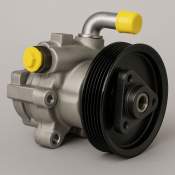 The power steering pump, also called a hydraulic pump , is part of a car's steering system.
This pump creates pressure that makes turning the steering wheel easier and smoother .
simply put:
The hydraulic pump is the “heart pump” of the steering system, which pushes oil through the system and helps the driver turn the steering wheel easily.
All car brands – Audi, VW, Volvo, BMW, Mercedes, Toyota, Škoda, Ford, etc. – have had hydraulic power steering as standard for a long time.
How does a power steering pump work?
-
The pump sucks the steering fluid from the power steering expansion tank.
-
The pump pushes it at high pressure into the steering rod or steering cylinder .
-
The pressure helps move the rack in the direction the driver is steering.
-
the oil moves back into the tank and the cycle repeats.
if the pump were not working, turning the steering wheel would be very difficult - especially at low speeds and when parking.

main types of power steering pumps
-
vane-type pump – very common on Audi, VW, Volvo models
-
gerotor pump – used on many newer engines
-
electrically driven hydraulic pump (ehps) – for example on some vw/skoda/ford models
The principle is the same for all: to create uniform oil pressure in the steering system.
common problems with the power steering pump
Over time, the pump may wear out or leak. Typical faults:
-
whining or groaning sound when turning → often low oil level or worn pump
-
heavy steering , especially at idle
-
oil leaks from the pump seal
-
oil foams → air in the system
-
does not maintain pressure → pump is worn or internal blades are damaged
examples:
-
VW Passat : Common pump humming with a cold engine.
-
Audi A4 and A6 : power steering pump leakage and pressure problems.
-
Volvo S60/V70 : typical pump "singing" due to wear.
signs that the power steering pump needs checking or replacement
-
the steering wheel becomes heavier than usual ,
-
whining or humming is heard when turning,
-
oil level drop (leak),
-
the power steering oil is dark or foaming,
-
the steering wheel does not respond smoothly to small movements.
If the pump fails completely, the steering becomes almost the same as on an old car without power steering – very heavy!
How to maintain a power steering pump?
-
Check the steering oil level regularly.
-
Use only the right type of oil (VW, Audi and Volvo use oils with specific standards).
-
Change the oil if it is dark or has a burnt smell.
-
React immediately if you hear an unusual sound – this will extend the life of the pump.
When should the power steering pump be replaced?
Replacement is necessary if:
-
the pump no longer creates sufficient pressure,
-
the pump hums even after adding the correct oil,
-
there is a visible oil leak ,
-
turning the steering wheel becomes dangerously difficult.
A new pump will restore the car's smooth and quiet steering feel.
short summary
-
The power steering pump creates hydraulic pressure to assist steering.
-
without it, turning the steering wheel would be difficult, especially when driving slowly.
-
Common problems: humming, leaks, air entering the system.
-
Regular oil checks and changes will extend the life of the pump.
- All car brands use some version of a hydraulic pump (Audi, VW, Volvo, BMW, etc.).
 The data shown here, especially the complete database of car spare parts, may not be copied. It is strictly prohibited to duplicate the data and database and distribute the same, and/or instruct third parties to engage in such activities, without prior consent from TecAlliance. Any use of content in a manner not expressly authorized constitutes copyright infringement and violators will be prosecuted.