

Transmission > Automatic gearbox
Pick your vehicle
automatic transmission: working principle, advantages and maintenance
Automatic transmission is one of the most widely used and common types of vehicle transmissions, which allows for comfort and ease in driving the vehicle. Unlike a manual transmission, where the driver has to manually change gears, an automatic transmission makes all necessary gear changes automatically according to the vehicle's speed and engine speed. This makes driving the vehicle easier, especially in heavy city traffic.
In this article, we will introduce how an automatic transmission works, what its advantages are, what the different types of automatic transmissions are, and how to properly maintain them.

What is an automatic transmission?
An automatic transmission is a mechanism that converts engine power into forward motion without the driver having to manually change gears. The purpose of this system is to automatically select the appropriate gear according to the vehicle's speed and engine speed to ensure a smooth ride.
Unlike a manual transmission, which requires pressing a pedal and selecting a gear, with an automatic transmission the driver does not have to worry about changing gears. This type of transmission is usually equipped with various sensors and electronics that measure the vehicle speed and engine speed and select the appropriate gear.
How does an automatic transmission work?
The working principle of an automatic transmission is somewhat more complicated than that of a manual transmission, but to understand it, it is worth familiarizing yourself with the main components that participate in this system:
-
Torque converter : A torque converter replaces the manual clutch and connects the engine and transmission. It allows the vehicle to move without the engine completely stopping. The torque converter regulates the transfer of engine power to the transmission, allowing for smoother movement.
-
Planetary gear set : Most automatic transmissions use planetary gear sets, which consist of multiple gears. They allow for a variety of gear changes depending on engine speed and vehicle movement. Planetary gear sets make gear changes smooth and fast.
-
Hydraulics and electronics : Automatic transmissions are equipped with hydraulic systems that control gear shifting. Electronic control systems monitor the vehicle's speed sensors and driving conditions and determine when and how to shift gears.
-
Gear shifting : In an automatic transmission, gear shifting occurs automatically without the driver having to press the pedal or select a gear. Several gears are used (for example, P – park mode, R – reverse, D – drive mode, etc.), the shifting of which is regulated by an internal system in the transmission.
types of automatic transmissions
There are different types of automatic transmissions, depending on their operating principle and the type of vehicle. The most common types of automatic transmissions are:
-
Traditional automatic transmission : This is the most common type of automatic transmission, using a torque converter and planetary gears. All gear changes are done by a hydraulic system that determines when to change gears.
-
A transmission with six or more gears : Automatic transmissions with six or even more gears are available today. They offer an even smoother ride and better fuel economy, as each gear has its own optimal operating speed.
-
CVT (Continuously Variable Transmission) : CVT is an innovative automatic transmission that does not use conventional gears, but offers endless gear changes from low to high revs. CVT ensures smooth acceleration and lower fuel consumption because it always selects the most suitable rev range for the engine.
-
dual-clutch transmission (dct) : dct is a technology where two clutches change gears one after the other to achieve faster and smoother gear changes. this system is often found in sports cars and high-tech vehicles because it offers fast gear changes similar to the precision of a manual transmission, but without the need to press the clutch pedal.
advantages of a vehicle with automatic transmission
An automatic transmission has several advantages that make it an attractive choice for many car owners and drivers:
-
Comfort and simplicity : an automatic transmission does not require the driver to constantly change gears. This makes driving easier, especially in heavy traffic or in the city, where constant gear changes can be tiring.
-
Smooth driving experience : The automatic transmission makes driving smoother as gear changes are quick and smooth without jerking.
-
Lower fuel consumption : Especially with CVT and some modern automatic transmissions, fuel consumption can be lower, as these systems select the most optimal revs for the engine and vehicle's mobility.
-
Easier driving : Driving a car is easier with an automatic transmission because there is no need to constantly press the clutch or change gears manually, which is especially convenient for novice drivers.
automatic transmission maintenance and problems
Although automatic transmissions are very reliable and long-lasting, they still require regular maintenance and attention. Proper maintenance can help extend the life of your transmission and prevent costly repairs. Here are some maintenance tips:
-
Oil change : Automatic transmissions require regular oil changes as this oil helps lubricate the transmission components and keeps the system running smoothly. The automatic transmission oil change interval depends on the manufacturer's recommendation, but should typically be every 60,000 to 100,000 km.
-
Correct automatic transmission oil level : Check the oil level in the automatic transmission regularly. If the oil level is too low, it can cause transmission failure.
-
Monitoring driving conditions : If you frequently drive in heavy traffic or the vehicle is constantly hauling heavy loads (e.g., towing trailers), the automatic transmission may require more frequent maintenance.
-
Service : If you experience problems with your automatic transmission, such as discomfort when shifting gears, slipping, or noise, take your car to a service center immediately. Early detection of problems can prevent the need for costly repairs.
summary
Automatic transmission is one of the most important technologies in today's cars, providing drivers with comfort, smoothness and a better driving experience. Automatic transmission makes driving a vehicle easy and stress-free, especially when driving in the city or in heavy traffic.
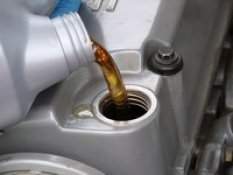

Powertrain and what is a differential and where is it located on the car?
 Car Differential, Driveshaft, and Gearbox: Overview and Working Principles
... More...
Car Differential, Driveshaft, and Gearbox: Overview and Working Principles
... More...
Specifications of the most common car automatic transmission oils (ATF)
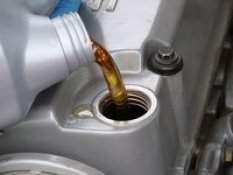 What is ATF oil? ATF (Automatic Transmission Fluid) is a special oil used in automatic transmissions to ensure smooth and precise gear changes, lubricate moving components and protect the transmission from wear and overheating. Unlike engine oil, ATF oil must withstand a wide range of complex operating conditions – it must have a certain coefficient of friction, thermally stable viscosity and high heat resistance so that the transmission can operate accurately, quickly and without failures.
... More...
What is ATF oil? ATF (Automatic Transmission Fluid) is a special oil used in automatic transmissions to ensure smooth and precise gear changes, lubricate moving components and protect the transmission from wear and overheating. Unlike engine oil, ATF oil must withstand a wide range of complex operating conditions – it must have a certain coefficient of friction, thermally stable viscosity and high heat resistance so that the transmission can operate accurately, quickly and without failures.
... More...
Why do wiper blades spoil quickly? Causes and effective solutions with deep cleaning
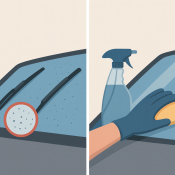 Rapid wear of wiper blades is a problem that can occur even on brand new cars. If new wiper blades start to streak, leave spots on the glass or start to skip after just a few weeks or months, the fault is usually not with the product itself. Most often, the cause is invisible dirt accumulated on the surface of the windshield or the wipers are working at the wrong angle.
Below is an overview of the main causes and solutions.
... More...
Rapid wear of wiper blades is a problem that can occur even on brand new cars. If new wiper blades start to streak, leave spots on the glass or start to skip after just a few weeks or months, the fault is usually not with the product itself. Most often, the cause is invisible dirt accumulated on the surface of the windshield or the wipers are working at the wrong angle.
Below is an overview of the main causes and solutions.
... More...
Changing your car's gearbox oil yourself at home in the garage - step-by-step guide
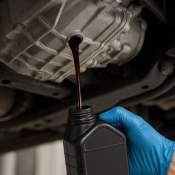 Changing your car's transmission oil is one of those maintenance tasks that many people consider to be difficult or "only a workshop job." In fact , changing your transmission oil is completely doable in your home garage if you approach it calmly, with the right knowledge and tools. This comprehensive article explains step-by-step why you should change your transmission oil , when to do it , the difference between manual and automatic transmissions , and how to do the change yourself safely .
The article is written in simple language and is also suitable for someone who is doing this for the first or second time.
What is transmission oil and why is it so important?
Gearbox oil is a lubricant whose function is to:
reduce friction between gears
cool the internal parts of the gearbox
protect metal surfaces from wear and corrosion
ensure smooth and quiet gear shifting
While the engine operates in an environment of continuous combustion and high temperature, the load on the gearbox is mechanical . Gears, bearings and synchronizers require constant protection. Without proper oil, the gearbox wears out quickly , and repairs are expensive and complicated.
... More...
Changing your car's transmission oil is one of those maintenance tasks that many people consider to be difficult or "only a workshop job." In fact , changing your transmission oil is completely doable in your home garage if you approach it calmly, with the right knowledge and tools. This comprehensive article explains step-by-step why you should change your transmission oil , when to do it , the difference between manual and automatic transmissions , and how to do the change yourself safely .
The article is written in simple language and is also suitable for someone who is doing this for the first or second time.
What is transmission oil and why is it so important?
Gearbox oil is a lubricant whose function is to:
reduce friction between gears
cool the internal parts of the gearbox
protect metal surfaces from wear and corrosion
ensure smooth and quiet gear shifting
While the engine operates in an environment of continuous combustion and high temperature, the load on the gearbox is mechanical . Gears, bearings and synchronizers require constant protection. Without proper oil, the gearbox wears out quickly , and repairs are expensive and complicated.
... More...
 The data shown here, especially the complete database of car spare parts, may not be copied. It is strictly prohibited to duplicate the data and database and distribute the same, and/or instruct third parties to engage in such activities, without prior consent from TecAlliance. Any use of content in a manner not expressly authorized constitutes copyright infringement and violators will be prosecuted.