

Clutch/Attachment Parts > Clutch Kit
Pick your vehicle
Understanding the Car Clutch Kit: Key Components and Functions
The car clutch kit is a vital component in manual transmission vehicles, serving as the bridge between the engine and the transmission system. It ensures smooth engagement and disengagement of the power generated by the engine, allowing drivers to shift gears efficiently and control the vehicle seamlessly. This article explores the essential parts of a clutch set, its functionality, and tips for maintenance.
Clutch function
The main function of the clutch is to regulate the connection between the engine’s rotation and the wheels. By engaging the clutch, the driver can interrupt the engine’s rotation, allowing gear changes or stopping the vehicle without significantly affecting the engine’s performance.
A typical clutch assembly includes several main components that work together to transmit power and manage torque efficiently. These components include the following:
-
1. Clutch Disc: This is a friction plate located between the flywheel and the pressure plate. The clutch disc is responsible for transmitting power from the engine to the transmission. It is usually made of high-friction material to ensure effective power transfer.
-
2. Pressure Plate: The pressure plate is a spring-loaded device that presses the clutch disc against the flywheel. It ensures firm contact, enabling the transfer of engine power to the transmission.
-
3. Flywheel: Connected directly to the engine crankshaft, the flywheel serves as a surface for the clutch disc to engage. It also helps in maintaining rotational energy for smoother engine operation.
-
4. Release Bearing (or Throw-out Bearing): This component is activated when the clutch pedal is pressed. It disengages the pressure plate from the clutch disc, allowing the driver to shift gears or stop the vehicle without stalling the engine.
5. Clutch Pedal: The clutch pedal allows the driver to manually control the engagement and disengagement of the clutch mechanism. Pressing the pedal activates the release bearing, while releasing it re-engages the clutch.
Types of Clutches
Dry clutch: A common type found in many manual transmission vehicles. It operates in a dry environment and provides good power transmission and precise control.
Wet clutch: This clutch operates in a fluid environment and provides greater cooling and efficiency. It is often used in more efficient and high-power vehicles.
Clutch Problems
The clutch may experience malfunctions for various reasons. Typical problems that drivers may face include:
- Wear: Over time, clutch components may wear out, which can lead to clutch slipping or reduced performance, indicating that the clutch needs replacement.
- Noise: Abnormal noise in the clutch area may indicate damage or wear that requires attention.
- Difficulty shifting gears: If the clutch does not disengage or function properly, it can cause problems when changing gears, making it important to keep the clutch in good condition.
Maintenance and Replacement
Regular maintenance and following proper service procedures are essential to ensure the reliability of the clutch. If a driver notices problems such as a slipping clutch or difficulty shifting gears, it is important to consult a professional to resolve the issues in a timely manner.
Clutch replacement is a complex process that requires specialized knowledge and skills, therefore it is recommended that it be carried out by an experienced auto mechanic.

Image. Clutch kits are sold that include the clutch pressure plate, clutch disc, and release bearing together at a discounted price.
Why is it worth replacing clutch components at the same time and choosing a clutch kit (disc, pressure plate, and bearing)?
The clutch is one of the most important components of a car’s drivetrain. Its function is to smoothly connect and disconnect the engine from the gearbox while withstanding significant mechanical load and heat. When the clutch begins to slip, vibrate, or gears no longer engage properly, many car owners are tempted to replace only a single component — for example, the clutch disc or release bearing — in the hope of saving money.
In practice, however, this approach often proves more expensive and problematic than replacing the clutch as a complete set. This article explains in detail, step by step, why it is sensible to order a clutch kit and replace the disc, pressure plate, and bearing at the same time, what risks are associated with partial replacement, and how this decision affects the vehicle’s reliability, driving comfort, and long-term costs.
What is included in the clutch system and how does it work?
The clutch system consists of several closely connected components. Each performs a specific role, and all operate simultaneously as one system.
The main clutch components are:
-
Clutch disc – transmits torque from the engine to the gearbox.
-
Clutch pressure plate (clutch cover) – presses the disc against the flywheel and releases it.
-
Clutch bearing (release bearing) – transfers the movement of the pedal to the pressure plate.
Additionally, the system includes:
-
Flywheel (in many vehicles, a dual-mass flywheel)
-
Clutch actuation system (cable or hydraulic mechanism)
If one component does not function properly, it inevitably affects the other parts as well.
Why does the desire arise to replace only one clutch component?
The idea of partial replacement usually arises for three main reasons:
-
the desire to save money
-
the belief that “the other parts are still in good condition”
-
a visible or audible fault appears to be related to only one component
For example:
-
the clutch slips → only the clutch disc is replaced
-
the clutch makes noise → only the bearing is replaced
-
the clutch “engages poorly” → only the pressure plate is replaced
Although this may seem logical, such an approach does not take into account the actual operating principle of the clutch system.
Why do clutch components wear out together?
Clutch components always operate together and under the same load. If a car has driven, for example, 150,000 km:
-
the clutch disc has experienced the same amount of friction
-
the pressure plate has completed the same number of operating cycles
-
the release bearing has worked for the same duration
Even if one component appears “visually better,” it is still:
-
thermally fatigued
-
mechanically worn
-
near the end of its service life
Combining new and old components creates an unbalanced system that cannot function optimally.
Risks of replacing only the clutch disc
The clutch disc is often the first part suspected because slipping is the most visible symptom.
Possible problems include:
-
the new disc does not engage evenly with a worn pressure plate
-
the clutch begins to vibrate when starting
-
the disc wears unevenly
-
the clutch does not disengage or engage smoothly
The worn pressure force of the pressure plate may no longer be sufficient, causing the new disc to start slipping again soon.
Risks of replacing only the pressure plate
The pressure plate is sometimes replaced when the pedal feels heavy or the clutch does not disengage properly.
Possible consequences:
-
the old disc does not match the working surface of the new pressure plate
-
friction surfaces do not “seat” together properly
-
clutch operation becomes abrupt or uneven
A worn disc may also damage the new pressure plate in a short time.
Risks of replacing only the release bearing
The release bearing is a relatively inexpensive component, but its failure can cause:
-
humming or rumbling noises
-
whistling sounds
-
pedal vibration
If only the bearing is replaced:
-
the old pressure plate’s contact surface may be uneven
-
the bearing receives uneven load
-
the new bearing may wear out quickly
In practice, this often means the gearbox will soon have to be removed again.
Removing the gearbox — the biggest cost factor
The most expensive part of clutch replacement is usually not the parts, but the labor.
To replace the clutch, it is necessary to:
-
remove the gearbox
-
often disconnect the drive shafts
-
support the engine
-
dismantle several additional components
This process is:
-
time-consuming
-
technically complex
-
labor-intensive
If a new problem appears after partial replacement, the entire process must be repeated, making the initial “savings” pointless.
Why is a clutch kit technically the better solution?
A clutch kit is designed to operate as a unified system.
Advantages of a clutch kit:
-
all components have the same wear level (new)
-
contact surfaces match each other
-
engagement is even and smooth
-
clutch operation is predictable
Manufacturers design the disc, pressure plate, and bearing to function together as a complete unit, not as separate components.
Driving comfort and clutch feel
After replacing a clutch kit, drivers often notice:
-
a lighter pedal
-
smoother starting from a standstill
-
quieter operation
-
better control during maneuvering
Partial replacement may leave:
-
vibration
-
an unclear engagement point
-
noise
Since the clutch is used during every drive, it directly affects everyday driving experience.
Dual-mass flywheel and the clutch kit
Many modern vehicles use a dual-mass flywheel, which:
-
reduces vibration
-
protects the gearbox
-
works closely with the clutch
When replacing the clutch, it is important to:
-
assess the condition of the flywheel
-
consider that a worn flywheel shortens the lifespan of a new clutch
Replacing a clutch kit provides an opportunity to inspect the entire system at once, avoiding situations where a new clutch is installed against a worn flywheel.
Economic perspective: why a kit is more cost-effective
Although a clutch kit:
-
costs more than a single component
the total cost is often:
-
lower than multiple separate repairs
-
more reliable than partial replacement
One proper repair:
-
saves labor costs
-
reduces downtime
-
prevents repeated expenses
In the long term, replacing a clutch kit is financially more sensible.
Common mistakes when replacing a clutch
Problems often occur when:
-
only part of the system is replaced
-
components with different wear levels are used
-
the old bearing is left in place
-
the flywheel is not inspected
These mistakes can cause:
-
repeated repairs
-
dissatisfaction
-
unreliable vehicle behavior
When is replacing a clutch kit especially important?
A clutch kit is strongly recommended when:
-
the vehicle has high mileage
-
the gearbox has already been removed
-
the clutch has slipped or overheated
-
vibration or noise is present
-
the engine produces high torque
In such cases, partial replacement is particularly risky.
Are there situations where replacing a single component is justified?
In rare cases:
-
a vehicle with very low mileage
-
a clearly identified defect (e.g., a manufacturing fault in the bearing)
-
clutch components are nearly new
Even then, the decision should be made consciously, considering the risks.
Summary
The clutch system is a complete unit in which all components operate and wear together. Although replacing a single clutch component may seem like a cheaper and faster solution, in practice it often leads to new problems, additional costs, and repeated repairs.
Replacing the clutch kit — disc, pressure plate, and bearing — at the same time ensures:
-
a reliable and balanced system
-
improved driving comfort
-
lower risk of failure
-
lower total cost in the long run
The clutch is not a place where a partial solution pays off. One thorough and well-planned repair is always better than several compromises.
Here you can find the clutch tools offered in our online store.
The structure of a car clutch and how it works
 Car clutch system and its parts – a comprehensive overview
The car's clutch system is an important mechanism that ensures the disconnection and reconnection of the engine and transmission, allowing for smooth gear changes and effective control of the power transmission between the engine and the wheels. The clutch system consists of several components, the proper functioning of which ensures comfortable and safe use of the vehicle. In this article, we will provide a comprehensive overview of the parts of the clutch system, their functions and importance.
... More...
Car clutch system and its parts – a comprehensive overview
The car's clutch system is an important mechanism that ensures the disconnection and reconnection of the engine and transmission, allowing for smooth gear changes and effective control of the power transmission between the engine and the wheels. The clutch system consists of several components, the proper functioning of which ensures comfortable and safe use of the vehicle. In this article, we will provide a comprehensive overview of the parts of the clutch system, their functions and importance.
... More...
Why do wiper blades spoil quickly? Causes and effective solutions with deep cleaning
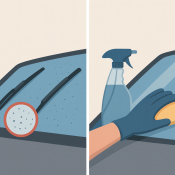 Rapid wear of wiper blades is a problem that can occur even on brand new cars. If new wiper blades start to streak, leave spots on the glass or start to skip after just a few weeks or months, the fault is usually not with the product itself. Most often, the cause is invisible dirt accumulated on the surface of the windshield or the wipers are working at the wrong angle.
Below is an overview of the main causes and solutions.
... More...
Rapid wear of wiper blades is a problem that can occur even on brand new cars. If new wiper blades start to streak, leave spots on the glass or start to skip after just a few weeks or months, the fault is usually not with the product itself. Most often, the cause is invisible dirt accumulated on the surface of the windshield or the wipers are working at the wrong angle.
Below is an overview of the main causes and solutions.
... More...
clutch kit or individual parts: why does it make sense to replace everything at once?
 car clutch kit and different car manufacturers
There are few things that are as frustrating to a car owner as a slipping clutch, a stiff gear lever or a strange noise when shifting gears. These are clear signs that the car's drivetrain needs attention. When diagnosed with a worn clutch, every car owner is faced with an important question: should they replace just the part that is broken (such as the clutch disc), or should they invest in a new clutch kit ?
... More...
car clutch kit and different car manufacturers
There are few things that are as frustrating to a car owner as a slipping clutch, a stiff gear lever or a strange noise when shifting gears. These are clear signs that the car's drivetrain needs attention. When diagnosed with a worn clutch, every car owner is faced with an important question: should they replace just the part that is broken (such as the clutch disc), or should they invest in a new clutch kit ?
... More...
Clutch replacement and price: a comprehensive technical guide
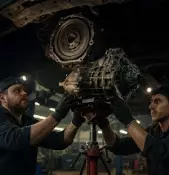 Clutch replacement and price: a comprehensive technical guide for the car owner Owning a vehicle with a manual transmission offers a direct driving experience and complete control over the engine’s torque. But with this freedom comes the need to maintain and replace one of the most critical and wear-prone components of a car – the clutch system. Clutch replacement and its cost are topics that sooner or later come to the agenda of every owner of a car with a manual transmission. It is not an easy or cheap maintenance, but rather one of the largest repair investments in the life cycle of a car, requiring both a significant spare parts budget and hours of work from a qualified mechanic. In this extremely detailed and comprehensive guide, we will dissect the anatomy of the clutch system, explain the logic behind the price of a clutch replacement, and look at the factors that make this job expensive. We will analyze the most common car models and their specific clutch faults, explore the nature of the dual-mass flywheel, and provide an overview of the world's absolute top manufacturers on the aftermarket. Finally, we will share tips on how to maximize the life of your new clutch with the right driving techniques.
... More...
Clutch replacement and price: a comprehensive technical guide for the car owner Owning a vehicle with a manual transmission offers a direct driving experience and complete control over the engine’s torque. But with this freedom comes the need to maintain and replace one of the most critical and wear-prone components of a car – the clutch system. Clutch replacement and its cost are topics that sooner or later come to the agenda of every owner of a car with a manual transmission. It is not an easy or cheap maintenance, but rather one of the largest repair investments in the life cycle of a car, requiring both a significant spare parts budget and hours of work from a qualified mechanic. In this extremely detailed and comprehensive guide, we will dissect the anatomy of the clutch system, explain the logic behind the price of a clutch replacement, and look at the factors that make this job expensive. We will analyze the most common car models and their specific clutch faults, explore the nature of the dual-mass flywheel, and provide an overview of the world's absolute top manufacturers on the aftermarket. Finally, we will share tips on how to maximize the life of your new clutch with the right driving techniques.
... More...
 The data shown here, especially the complete database of car spare parts, may not be copied. It is strictly prohibited to duplicate the data and database and distribute the same, and/or instruct third parties to engage in such activities, without prior consent from TecAlliance. Any use of content in a manner not expressly authorized constitutes copyright infringement and violators will be prosecuted.