

Braking System > Control Levers / Cables handbrake
Pick your vehicle
car handbrake cable: importance, function and maintenance
The car's handbrake cable is an important component that ensures the safety and stability of the vehicle in the parking position. The function of the cable is to transmit the force of the handbrake to the brake pads or brake mechanism to secure the car in place. Its precise operation can be affected by several factors, such as wear, corrosion and lack of lubrication. In this article, we will look at the working principle of the handbrake cable, its functions and maintenance.
What is a car handbrake cable?
A car's handbrake cable is a mechanical component that connects the handbrake lever (or button system) to the rear brakes. When the driver pulls the handbrake lever up, the cable is pulled taut, which in turn activates the brake mechanism. The cable may be coated with steel, plastic, or some other material to ensure long-term durability and reliability. The cable transmits force to lock the brake mechanism and prevent the vehicle from moving, even when the car is stationary.
Functions of the handbrake cable
The handbrake cable performs several important functions, including:
Ensuring parking safety : The function of the handbrake is to ensure that the vehicle remains stationary in the parking position. Especially when parking on a cliff or hill, the handbrake cable is vital to prevent the car from moving.
Rear brake system : The handbrake cable can also affect the rear brakes, especially on vehicles with drum brakes on the rear wheels. Pulling the cable will activate the brake caliper and prevent the wheels from moving.
Durability and reliability : Since the cable is used frequently, it is important that it is well maintained and not worn or damaged. Wear or breakage can cause the handbrake to malfunction or fail.
Symptoms of rope wear and problems
Since the handbrake cable is a mechanical system, it can wear out or become damaged over time. Some common problems and symptoms that indicate the condition of the cable include:
- Handbrake lever position too high or too low : if the lever is pulled up but does not take the required position, this may indicate wear or looseness in the cable.
- Incomplete operation of the handbrake : if the brake does not lock completely or the car starts to move, the cable may be stretched or damaged.
- Stiff or slightly immobile lever : If the handbrake lever is difficult to pull or its movement is obstructed, the cable may be too tight or unlubricated.
- Normal wear and tear and rust : the cable can rust over time, especially if the vehicle is frequently in a humid environment, such as in winter when the roads are salted.
handbrake cable maintenance and replacement
Regular maintenance is important to ensure the longevity of the cable. Here are some steps to maintain and, if necessary, replace your handbrake cable:
Rope lubrication : The rope should be lubricated from time to time to reduce friction and ensure smooth movement. Special greases designed for wires and ropes are best.
Visual inspection of the rope : Regular visual inspection will help detect wear, cracks or corrosion. If the rope is visibly damaged or too loose, it should be replaced.
Cable tension : If the handbrake lever is not working properly, it may be necessary to tension the cable. This can be done by turning the tensioning mechanism, which is usually located in the rear of the vehicle or in the handbrake mechanism.
Cable replacement : If the cable is severely damaged or broken, it will need to be replaced. This may require a visit to a professional mechanic.
summary
The handbrake cable is an important car component that is responsible for ensuring the vehicle is securely parked and preventing movement in the parking position. Maintenance of this component is necessary to prevent wear and ensure reliable operation of the system. Regular inspection, lubrication and replacement if necessary will help prevent failures and extend the life of the cable. If you notice any problems with the handbrake system, it is recommended to visit a professional mechanic to ensure the safety and reliability of the car.
Changing the brake fluid and bleeding the brakes
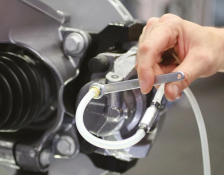 Changing the brake fluid is a very important process in brake maintenance. Brakes are essential to any car, and that makes brake fluid one of the most important components in your car. Brake fluids must resist moisture that can cause vapor lock and brake failure, protect against corrosion, and withstand high brake temperatures. From time to time, you need to change the brake fluid according to the car manufacturer's instructions.
... More...
Changing the brake fluid is a very important process in brake maintenance. Brakes are essential to any car, and that makes brake fluid one of the most important components in your car. Brake fluids must resist moisture that can cause vapor lock and brake failure, protect against corrosion, and withstand high brake temperatures. From time to time, you need to change the brake fluid according to the car manufacturer's instructions.
... More...
Car brake system and brake system maintenance: Ensuring safety on every ride
 The brake system is one of the most important components in any vehicle. It is responsible for stopping the car from moving and plays a crucial role in the safety of the vehicle. Ensuring the proper functioning of the brake system and regular maintenance are necessary at all times to prevent accidents and ensure the optimal functioning of the vehicle. In this article, we will look at the main components of the car's brake system, how it works and the importance of maintenance.
Car brake system: How does it work?
... More...
The brake system is one of the most important components in any vehicle. It is responsible for stopping the car from moving and plays a crucial role in the safety of the vehicle. Ensuring the proper functioning of the brake system and regular maintenance are necessary at all times to prevent accidents and ensure the optimal functioning of the vehicle. In this article, we will look at the main components of the car's brake system, how it works and the importance of maintenance.
Car brake system: How does it work?
... More...
Car drum brake construction and parts
 Auto Drum Brake Structure, Working Principle, and Components Overview
Drum brakes are one of the oldest braking systems used in many vehicles, especially older models or vehicles where compact packaging with high braking force is required. The drum brake system operates mechanically by applying brake shoes against the brake drum to slow down or stop the vehicle. The construction and working principle of drum brakes are relatively complex as they contain multiple components that work together to ensure effective and reliable braking.
General Working Principle of a Drum Brake:
The drum brake consists of brake pads, a wheel cylinder, and a brake drum, to which braking force is applied. When the brake pedal is pressed, the wheel cylinder uses hydraulic pressure to push the brake shoes against the drum, creating friction that slows down the vehicle.
The working principle of a drum brake is that the brake shoes move outward from the inside of the drum to stop the wheel’s rotation, while other parts of the braking system ensure smooth and efficient operation.
... More...
Auto Drum Brake Structure, Working Principle, and Components Overview
Drum brakes are one of the oldest braking systems used in many vehicles, especially older models or vehicles where compact packaging with high braking force is required. The drum brake system operates mechanically by applying brake shoes against the brake drum to slow down or stop the vehicle. The construction and working principle of drum brakes are relatively complex as they contain multiple components that work together to ensure effective and reliable braking.
General Working Principle of a Drum Brake:
The drum brake consists of brake pads, a wheel cylinder, and a brake drum, to which braking force is applied. When the brake pedal is pressed, the wheel cylinder uses hydraulic pressure to push the brake shoes against the drum, creating friction that slows down the vehicle.
The working principle of a drum brake is that the brake shoes move outward from the inside of the drum to stop the wheel’s rotation, while other parts of the braking system ensure smooth and efficient operation.
... More...
Why do wiper blades spoil quickly? Causes and effective solutions with deep cleaning
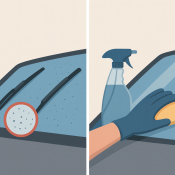 Rapid wear of wiper blades is a problem that can occur even on brand new cars. If new wiper blades start to streak, leave spots on the glass or start to skip after just a few weeks or months, the fault is usually not with the product itself. Most often, the cause is invisible dirt accumulated on the surface of the windshield or the wipers are working at the wrong angle.
Below is an overview of the main causes and solutions.
... More...
Rapid wear of wiper blades is a problem that can occur even on brand new cars. If new wiper blades start to streak, leave spots on the glass or start to skip after just a few weeks or months, the fault is usually not with the product itself. Most often, the cause is invisible dirt accumulated on the surface of the windshield or the wipers are working at the wrong angle.
Below is an overview of the main causes and solutions.
... More...
 The data shown here, especially the complete database of car spare parts, may not be copied. It is strictly prohibited to duplicate the data and database and distribute the same, and/or instruct third parties to engage in such activities, without prior consent from TecAlliance. Any use of content in a manner not expressly authorized constitutes copyright infringement and violators will be prosecuted.