

Clutch Release Bearing/Central Slave Cylinder > Release Fork
Pick your vehicle
car clutch release fork: small detail, big problems
When talking about a car's clutch system, most people focus on the large and expensive parts: the clutch basket, clutch disc, or dual-mass flywheel. But the operation of this entire complex system often depends on one simple but critically important metal lever – the clutch release fork . This is a detail that many car owners only discover when shifting gears becomes impossible or when they hear a suspicious screeching sound from the gearbox.
In this comprehensive guide, we'll dive deep into the anatomy of the clutch fork. We'll look at why this simple part breaks, what the typical symptoms are, and we'll highlight specific car models that have factory-issue weaknesses. We'll also share recommendations for replacement parts brands to ensure your repair lasts for years.

1. What is a clutch fork and how does it work?
The clutch fork is essentially a simple lever (lever) that operates on the principle of a physical lever. It is located inside the gearbox housing (clutch housing) and its function is to convert the linear movement of a hydraulic working cylinder or cable into the movement of a thrust bearing.
working principle step by step:
- Input force: the driver presses the clutch pedal. This pressure is transmitted through the master cylinder and piping to the clutch slave cylinder (or in older cars through a cable).
- Pushing: The slave cylinder rod pushes the outer end of the clutch fork (the part that extends out of the gearbox or is accessible).
- Pivot: The fork is attached to a special ball or axle inside the transmission called the pivot ball . This is the point around which the fork rotates.
- Output force: The other end of the fork (which is usually two-pronged, resembling a fork) pushes the clutch release bearing.
- Disengagement: the release bearing in turn presses the clutch basket onto the plates, releasing the clutch disc and breaking the connection between the engine and the gearbox.
Although the process seems simple, the forces that the fork has to withstand are enormous. Every time you press the pedal, the fork has to overcome the strong counter-pressure of the clutch basket spring. In sportier cars, these forces can be in the hundreds of kilograms.
2. Why do clutch forks break or wear out?
The clutch fork is usually made of stamped steel or cast iron. In theory, it should last the life of the car, but in practice, it is one of the most common reasons why the clutch "disappears".
main causes of failure:
- Metal fatigue and bending: Years of cyclic loading (thousands of presses) will fatigue the metal. Stamped steel forks can begin to bend over time. Even a millimeter of bending in the middle of the fork means that the release bearing will no longer move far enough to fully disengage the clutch.
- Cracks and breakage: Microcracks can develop at particularly high-stress points (e.g. around the pivot point), eventually leading to the fork breaking completely in half. This often happens suddenly – the pedal bottoms out and won’t come back up.
- Pivot wear: The fork rests on a metal or plastic block. When the lubricant dries out, metal-to-metal contact occurs. A hole can be worn into the fork, which changes the fork geometry and shortens the lever travel.
- Wear of the arms: The arms of the fork that push the thrust bearing also wear. If they wear unevenly, the thrust bearing will start to move crookedly, causing the bearing to seize and make the pedal feel heavy.
- Lack of lubrication: The grease added at the factory dries out over the years and mixes with clutch dust, turning into an abrasive paste. This drastically accelerates wear.
3. Symptoms: How to recognize a faulty clutch fork?
A faulty fork will show itself in a number of ways, often confused with a worn clutch disc or faulty hydraulics. Here are the main warning signs:
1. heavy or stiff clutch pedal
If the fork pivot is dry or worn, friction increases. You need to apply significantly more foot pressure to move the fork. This often results in a "steppy" or jerky pedal feel.
2. clutch does not disengage properly (gears rattle)
If the fork is bent or cracked, it will not be able to push the release bearing far enough. The result is that even when the pedal is at the bottom, the clutch disc is still partially engaged with the flywheel. First gear and reverse will engage with difficulty or with a rattle.
3. creaking or creaking sound
A very common symptom. When you press the clutch, you hear a squeaking sound under the hood (or under the car). This usually indicates a lack of grease between the fork and the pivot. This sound can often be heard outside the car as well.
4. "low" clutch pedal
The clutch starts to "engage" right from the bottom or does not disengage until the pedal is fully pressed to the floor. This indicates a change in geometry in the system - the fork is probably bent.
5. pedal vibration
If the fork arms are unevenly worn, they will not press the bearing directly. The bearing will start to "dance" on the shaft, which will transmit vibrations to the hydraulics and from there to your foot.
4. Typical faults in car models: where is the weak point of the fork?
Although the clutch fork can break on any car, there are certain models where it is a notorious common fault. Spare parts sales statistics and workshop experience highlight the following "sinners":
subaru (impreza, wrx, forester, legacy)
Problem: Subaru 5-speed manual transmissions (especially turbo models from 2000-2015) are notorious for having weak forks. A crack develops around the pivot point of the stamped steel fork.
Result: fork bends or pivot pin is pushed through fork metal. Clutch pedal becomes soft and gears will not shift.
Solution: It is recommended to install a reinforced (forged or thicker material) fork, which is offered by aftermarket manufacturers.
BMW (E36, E46, E39, E60 and others)
Problem: BMW does not usually use a steel pivot pin, but a plastic/nylon "mushroom" ( pivot pin ). Over time, this plastic becomes brittle and wears out or breaks completely.
Result: the fork will remain loose and loose. The clutch feel will become vague and the pedal may be left askew. Less commonly, the fork itself will also wear at the contact points.
Solution: Every time you replace the clutch, you should also replace its plastic support bolt. Even better, replace it with a metal (brass or steel) tuning bolt that will last forever.
honda (civic, accord, cr-v - k-series engines)
Problem: Honda forks are generally strong, but the problem is squeaking. The slave cylinder rod rubs against the fork bore and makes an extremely annoying noise.
Result: hearing loss and discomfort, although functionality is maintained for a long time.
Solution: A temporary solution is to spray lubricant, but a permanent solution requires removing the fork, cleaning it, and lubricating it with a proper heat-resistant paste.
mitsubishi (lancer evolution, eclipse)
Problem: Similar to Subaru, Mitsubishi's sportier models also suffer from fork breakage when using a stiffer (e.g. ceramic) clutch.
Result: the pedal drops to the bottom.
solution: reinforced aftermarket fork.
vag group (vw golf, passat, audi a4/a6)
Problem: Older 5-speed gearboxes were prone to breaking the fork arms. In newer models, the problem is more likely to be the breakage of the fork mounting bracket (spring) that holds the fork in place.
Result: the fork shifts and the thrust bearing is not centered.
Solution: new fork with new mounting bracket.
ford / mazda (duratec engines and mtx-75 gearbox)
Problem: fork flexing at high mileage. Since the material is relatively thin, it will fatigue over time.
Result: difficulty shifting from first to reverse, often misdiagnosed as a synchronizer fault.
5. Diagnostics: How to be sure that the fault is in the fork?
Since the clutch fork is located inside the gearbox, it is difficult to visually inspect it without removing the box. However, there are a few tricks:
- Looking through the inspection hole: Many transmissions have a rubber-covered inspection hole, or you can remove the rubber nipple on the slave cylinder. Using a flashlight and a small mirror (or an endoscope camera, which is a cheap tool these days), you can peek inside the box. Have a helper squeeze the clutch and watch the fork move.
- Removing the slave cylinder: Remove the clutch slave cylinder (usually 2 bolts). You can now feel the outer end of the fork with your fingers. It should move somewhat freely (with some wiggling), but it should not feel "loose" or wobble unnaturally.
- sound test: if the squeaking is clearly coming from the box when the engine is stopped, this is a sign of a dry pivot.
6. The exchange process and why is it expensive?
Herein lies the biggest paradox of the clutch fork: the spare part itself is cheap, but the replacement is expensive.
The average clutch fork costs between 15 and 50 euros, depending on the car brand. However, the work to replace it often costs hundreds of euros. Why? Because in 99% of cases, to get to the fork , the gearbox must be disconnected from the engine and removed from under the car . This means disconnecting the half shafts, starter, gear lever and many wires.
Important advice: precisely because of the large amount of work, it is extremely unreasonable to replace only the clutch fork (unless it unexpectedly broke on the new clutch). And vice versa – if you replace the clutch kit (disc, basket, bearing), it is mandatory to inspect and, if necessary, replace the clutch fork and its support bolt. Saving 20 euros on the fork can later mean 300 euros of rework.
what else to replace with the fork?
- Pivot ball/pin: as mentioned in the BMW example, it wears out just as much as the fork itself.
- retaining spring: a small spring that holds the fork in place at the end of the fork. It is often worn or rusted.
- working cylinder dust cover: a rubber nipple that prevents dirt from entering the box.
- Thrust bearing: this is in direct contact with the fork and should always be replaced with a new one.
7. Spare parts brands: who to trust?
Since labor is expensive, it's not worth skimping on the quality of the fork. Cheap Chinese metal can be soft or porous, which leads to quick bending. Here are some reputable manufacturers whose products you can trust:
premium quality (OEM manufacturers):
- Sachs (ZF): The pinnacle of German engineering. Original equipment manufacturer for many European cars (BMW, VW, Audi, Mercedes). Their forks are precisely dimensioned and made of hardened steel.
- Luk (Schaeffler): Another big player on the market. Especially strong in dual mass flywheels and clutch systems. Luk forks are durable and reliable.
- Valeo: a French giant that produces original parts for many French, Italian and Korean cars.
good price-quality ratio:
- Blue Print: specializes in Asian and American cars. Their packaging often includes products from original Japanese manufacturers (such as 555 or GMB).
- japanparts / ashika: a good choice for older Japanese and Korean cars.
- febi bilstein: offers a wide range of forks and especially fasteners (strut bolts, clamps).
performance / reinforced parts:
If you drive a tuned car (e.g. Subaru WRX STI or BMW Drift Project), it is worth looking for special "billet" (milled) or forged forks, produced by specialized tuning companies (e.g. Verus Engineering, RTS, etc.). They are more expensive, but unbreakable.
8. Maintenance and prevention: Can the life of the fork be extended?
The clutch system is a closed system and cannot be "maintained" in the conventional sense. However, proper installation and lubrication are critical.
golden rules for installation:
- The right grease: this is the most important point! Special grease must be applied to the fork's pivot points and contact surfaces with the bearing and working cylinder.
Recommendation: Use a grease with high temperature resistance and high load capacity, such as a paste containing molybdenum disulfide (MoS2) or a special clutch grease (e.g. Sachs High Performance Grease). - Don't overdo it: too much grease is dangerous. The rotating clutch basket can throw excess grease onto the clutch disc. This will cause the clutch to slip. Only apply a thin layer of grease to the contact points.
- Copper grease? No! Many mechanics use copper grease. It is not the best choice as copper grease tends to dry out over time and turn into a thick lumpy mass that impedes movement.
driving style:
Keep your foot on the clutch pedal only when shifting. Riding with your foot on the pedal (even gentle pressure) puts constant tension on the release bearing and fork, wearing out both the bearing and the fork arms and pivot.
summary
The clutch fork is like a car's "Achilles heel" - small and cheap, but if it breaks it will stop the car completely. Whether you have a Subaru, BMW or a regular family car, it's always worth considering the fork if you have clutch problems.
If you are planning to replace your clutch, make a smart decision: order a new fork and clutch slave cylinder in advance. This small investment will ensure that your car's gear changes are smooth, easy and quiet for the next 100,000 kilometers. Choose high-quality parts from trusted manufacturers such as Sachs or Luk, and avoid cheap copies that can leave you stranded.
Take care of your car and enjoy a smooth ride!
Car Clutch Release Bearing and Hydraulic Release Bearing: Working Principle and Maintenance
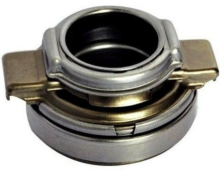 What is a Car Clutch Release Bearing?
The clutch release bearing (also known as Throwout Bearing or Clutch Release Bearing in English) is a crucial component in the clutch system that enables smooth and efficient clutch operation. It works together with the clutch master cylinder and fork, helping to disengage the clutch disc and separate the engine from the gearbox.
... More...
What is a Car Clutch Release Bearing?
The clutch release bearing (also known as Throwout Bearing or Clutch Release Bearing in English) is a crucial component in the clutch system that enables smooth and efficient clutch operation. It works together with the clutch master cylinder and fork, helping to disengage the clutch disc and separate the engine from the gearbox.
... More...
The structure of a car clutch and how it works
 Car clutch system and its parts – a comprehensive overview
The car's clutch system is an important mechanism that ensures the disconnection and reconnection of the engine and transmission, allowing for smooth gear changes and effective control of the power transmission between the engine and the wheels. The clutch system consists of several components, the proper functioning of which ensures comfortable and safe use of the vehicle. In this article, we will provide a comprehensive overview of the parts of the clutch system, their functions and importance.
... More...
Car clutch system and its parts – a comprehensive overview
The car's clutch system is an important mechanism that ensures the disconnection and reconnection of the engine and transmission, allowing for smooth gear changes and effective control of the power transmission between the engine and the wheels. The clutch system consists of several components, the proper functioning of which ensures comfortable and safe use of the vehicle. In this article, we will provide a comprehensive overview of the parts of the clutch system, their functions and importance.
... More...
clutch kit or individual parts: why does it make sense to replace everything at once?
 car clutch kit and different car manufacturers
There are few things that are as frustrating to a car owner as a slipping clutch, a stiff gear lever or a strange noise when shifting gears. These are clear signs that the car's drivetrain needs attention. When diagnosed with a worn clutch, every car owner is faced with an important question: should they replace just the part that is broken (such as the clutch disc), or should they invest in a new clutch kit ?
... More...
car clutch kit and different car manufacturers
There are few things that are as frustrating to a car owner as a slipping clutch, a stiff gear lever or a strange noise when shifting gears. These are clear signs that the car's drivetrain needs attention. When diagnosed with a worn clutch, every car owner is faced with an important question: should they replace just the part that is broken (such as the clutch disc), or should they invest in a new clutch kit ?
... More...
Clutch replacement and price: a comprehensive technical guide
 Clutch replacement and price: a comprehensive technical guide for the car owner Owning a vehicle with a manual transmission offers a direct driving experience and complete control over the engine’s torque. But with this freedom comes the need to maintain and replace one of the most critical and wear-prone components of a car – the clutch system. Clutch replacement and its cost are topics that sooner or later come to the agenda of every owner of a car with a manual transmission. It is not an easy or cheap maintenance, but rather one of the largest repair investments in the life cycle of a car, requiring both a significant spare parts budget and hours of work from a qualified mechanic. In this extremely detailed and comprehensive guide, we will dissect the anatomy of the clutch system, explain the logic behind the price of a clutch replacement, and look at the factors that make this job expensive. We will analyze the most common car models and their specific clutch faults, explore the nature of the dual-mass flywheel, and provide an overview of the world's absolute top manufacturers on the aftermarket. Finally, we will share tips on how to maximize the life of your new clutch with the right driving techniques.
... More...
Clutch replacement and price: a comprehensive technical guide for the car owner Owning a vehicle with a manual transmission offers a direct driving experience and complete control over the engine’s torque. But with this freedom comes the need to maintain and replace one of the most critical and wear-prone components of a car – the clutch system. Clutch replacement and its cost are topics that sooner or later come to the agenda of every owner of a car with a manual transmission. It is not an easy or cheap maintenance, but rather one of the largest repair investments in the life cycle of a car, requiring both a significant spare parts budget and hours of work from a qualified mechanic. In this extremely detailed and comprehensive guide, we will dissect the anatomy of the clutch system, explain the logic behind the price of a clutch replacement, and look at the factors that make this job expensive. We will analyze the most common car models and their specific clutch faults, explore the nature of the dual-mass flywheel, and provide an overview of the world's absolute top manufacturers on the aftermarket. Finally, we will share tips on how to maximize the life of your new clutch with the right driving techniques.
... More...
 The data shown here, especially the complete database of car spare parts, may not be copied. It is strictly prohibited to duplicate the data and database and distribute the same, and/or instruct third parties to engage in such activities, without prior consent from TecAlliance. Any use of content in a manner not expressly authorized constitutes copyright infringement and violators will be prosecuted.