

Suspension/Damping > Shock Absorber / dust boot / bushing
Pick your vehicle
Car shock absorber: important components for a comfortable and safe ride
Car shock absorbers are one of the most important components in a vehicle's suspension system, ensuring a comfortable and stable driving experience. These common but often underestimated parts play a key role in a car's handling and ride comfort. The function of shock absorbers is to absorb shocks caused by road irregularities, reduce bump vibrations and keep the car's body balanced to prevent discomfort and ensure vehicle stability. In this article, we will introduce what shock absorbers are, how they work, the different types and how to maintain them to ensure the optimal operation of the vehicle's suspension system.
picture. Bilstein shock absorbers from the well-known shock absorber manufacturer.
What is shock absorber?
Shock absorbers are parts of a vehicle's suspension system designed to absorb the impact of road irregularities, such as potholes or bumps. The function of a shock absorber is to regulate the movement of the suspension and prevent the car's body from bouncing or creating excessive vibration. They work in conjunction with the springs and other suspension components to provide a smooth and stable driving experience.Inside the shock absorbers is a cylinder with a piston that moves in a fluid. When the car drives over an uneven surface, the shock absorber is compressed and some of the kinetic energy is stored as heat, which helps reduce the amplitude of the car's vibrations.
How does shock absorber work?
The working principle of shock absorbers is based on a combination of two main movements – compression and recovery. When the car’s wheels come into contact with the ground and the kinetic energy increases (for example, when driving over a hill or a pothole), the shock absorber compresses and absorbs some of this energy. The shock absorber then begins to recover, returning the energy and bringing the car back into balance.Inside the shock absorbers is a liquid or gas (such as nitrogen) that helps control the movement and converts the kinetic energy into heat. This heat is dissipated into channels inside the shock absorber, which help prevent overheating and ensure smoother operation.
Shock absorbers are in this category, while spring shock absorbers - struts are in another category here .
The parts of a car's suspension system , shock absorbers and struts , differ in their construction and function. Here are their main differences:

Image: A Bilstein mechanic demonstrates to a customer how to replace a shock absorber and shock absorber pad in a car workshop.
1. spring shock absorber (strut in English)
Description: A coilover shock absorber combines a shock absorber and a spring into one unit. It is often also called a strut (e.g. MacPherson strut).
features:
acts as a shock absorber, dampening movement and vibrations.carries the weight of the vehicle and helps maintain suspension geometry and wheel alignment.
placement: often used in front axle suspension, but can also be found on the rear axle.
Construction: the spring is mounted around the shock absorber, forming one compact unit, which simplifies the suspension construction.
Example: common on modern vehicles, especially with MacPherson strut suspension.
2. shock absorber
Description: A shock absorber is a component whose main function is to dampen suspension movement and prevent excessive swaying of the vehicle.
function: controls the movement of the suspension and spring, reducing vibrations and keeping the tires in close contact with the road surface.
arrangement: work with separately mounted springs (springs carry the weight of the car).
construction: only a damping element that does not bear the weight of the vehicle or have any load-bearing capacity.
example: common on vehicles with independent suspension systems where the spring and shock absorber are separate components (e.g. multi-link rear suspension).

1 and 2 spring shock absorbers (strut)
3 and 4 shock absorbers (shock absorber)
summary:
- A shock absorber is a simple damping device that works in conjunction with a separate spring. It is not a load-bearing part.
- A coil spring is an integrated system that performs the functions of both a shock absorber and a spring and supports the weight of the vehicle.
The correct choice depends on the vehicle's suspension type and manufacturer's design.
The importance of shock absorbers in vehicle performance
- Ride comfort: shock absorbers reduce the impact of road irregularities, ensuring a smooth and comfortable ride. Without functioning shock absorbers, the ride would become uncomfortable as the car would constantly jump and shake.
- Vehicle stability: The function of shock absorbers is to keep the car's body balanced and prevent excessive body movement, especially when cornering, braking, or driving on uneven terrain. Without proper shock absorbers, the car can become unstable and lose control, which can be dangerous.
- Tire wear and suspension health: Shock absorbers help keep the tires in constant contact with the ground, which reduces uneven tire wear. They also protect other suspension components from excessive wear, extending the life of the entire suspension system.
- Safety: Shock absorbers help maintain the vehicle's balance and reduce the tendency to lose traction, especially in emergency situations or bad weather. They are essential for ensuring the vehicle's stability and safety.
different types of shock absorbers
Modern vehicles use different types of shock absorbers, depending on the needs of the vehicle and driving conditions. The most common types of shock absorbers are:
- monotube shock absorbers:
Benefits: for better cooling and smoother operation, especially in extreme driving conditions.
Application: sports cars, off-road vehicles and heavy trucks.
- twin-tube shock absorbers:
Advantages: They are more affordable and provide a comfortable driving experience, being suitable for normal everyday driving.
Application: most everyday cars and minivans.
- gas-filled shock absorbers:
Benefits: reduces fluid foaming, improves performance and stabilizes the vehicle.
Application: often used in sports cars, off-road vehicles and cars that require better dynamics.
- adjustable shock absorbers:
Advantages: flexibility and adaptability to different driving conditions, providing a sporty driving experience or a more comfortable ride.
Application: used in sports cars and luxury cars where there is a desire to customize the vehicle's behavior.
- air shock absorbers (air shock):
Advantages: Adjustable vehicle height, which is well suited for trucks and vehicles that carry heavy loads or create higher suspension loads.
Application: SUVs, trucks and vehicles that must withstand heavy loads.
signs that shock absorbers need replacing
Over time, shock absorbers, like all other parts of a car, wear out. The following signs indicate that shock absorbers need to be replaced:- Excessive bouncing or swaying: If the car bounces or sways excessively after driving over potholes, this may indicate worn shock absorbers.
- Fluid leaks : If you see fluid leaking from the shock absorbers, this is a clear sign that the seals are damaged and the shock absorber is no longer working efficiently.
- Uneven tire wear: If your tires are wearing unevenly, it could be a sign of a problem with your shock absorbers, as they are unable to keep the tires in constant contact with the ground.
- Impaired handling and driving stability: If you feel that the car is difficult to steer or the car is less stable when cornering, the cause may be worn shock absorbers.
- Increased braking distance: If the car needs more space to brake or the brakes feel less responsive, the shock absorbers may be faulty, as they affect the entire suspension system.

picture. Due to a faulty shock absorber, the car's tire has worn unevenly.
Here you will find special tools for replacing shock absorbers.

read the article here: how to change shock absorbers on your car yourself
shock absorber maintenance
To keep shock absorbers in good working condition, it is important to maintain them regularly:Check regularly: Have your car's shock absorbers checked regularly, especially if you feel that the vehicle's behavior has changed.
Avoid driving over bumps and potholes: excessive travel over potholes or heavy loads can accelerate shock absorber wear.
Check for leaks: If you see leaks or other damage, replace the shock absorbers in a timely manner to avoid major problems in the suspension system.
Why do shock absorbers actually wear out?
Before we get into specific models, it's important to understand what causes shock absorber fatigue. A shock absorber is not just a "spring holder" but a complex hydraulic or gas-hydraulic pump that must control the oscillation of the spring.
During a typical 20,000 kilometer journey, a shock absorber will go through millions of cycles (compression and expansion). The main enemies are:
-
Road surface irregularities: each time you drive over a pothole, the system creates high internal pressure. Continuous operation on uneven surfaces heats up the oil in the shock absorber, which loses its viscosity over time.
-
Environmental influences: salt, sand, water and dirt attack the chrome-plated piston rod (stem) of the shock absorber. If the dust caps are broken, dirt can get between the seals, causing oil leaks and gassing.
-
Temperature fluctuations: in the cold, the oil becomes thick and the seals brittle, in the heat, it becomes liquid. This constant "heat treatment" tires the materials.
general signs that shock absorbers need replacement
Regardless of the make of car, certain symptoms are universal. If you notice the following symptoms in your vehicle, it's time for a chassis check:
-
Increased braking distance: with worn shock absorbers, braking distance can increase significantly (even by 20%) because the wheel does not remain stable against the ground.
-
"nodding" when braking: the front of the car sinks too deep during sudden braking and the nose rises too high during acceleration.
-
Uneven tire wear: If you see uneven spots or "stairs" in the tire pattern, it means that the wheel has worn out while driving.
-
Sensitivity to crosswinds: the car requires constant steering wheel adjustments when driving on the road.
-
Oil leak: Visual inspection shows the shock absorber housing is wet or oily.
most common car brands and their typical faults
Different car manufacturers use different suspension solutions – from simple MacPherson struts to complex multilink suspensions. Here’s an overview of what owners of popular brands often face.

picture. mechanic changing car shock absorbers in a workshop
1. Volkswagen Group (VW Passat, Golf; Audi A4, A6; Škoda Octavia)
VAG Group cars are known for their good handling and stability, but this is often achieved at the cost of a more complex chassis.
-
Typical fault – front axle: on many models (especially Audi A4 and VW Passat B5/B5.5 and newer), the problem is not always the shock absorber itself, but its upper mounting pad and support bearing. If you hear a spring "banging" or creaking when turning the steering wheel, the fault is in the support bearing. When replacing the shock absorber, replacing this part is mandatory.
-
Typical fault – rear axle: on station wagon (Avant/Variant) models, the rear shock absorbers wear out faster than on sedans, especially when the car is used to haul loads. A typical fault is a "floating" rear end at highway speeds.
-
Leaks: Premature leakage of the rear shock absorbers has been observed on the Passat B6 and B7 models. The seals give way and the shock absorber suddenly loses its effectiveness, becoming an "empty pump".
2. BMW (3 Series E90/F30, 5 Series E60/F10)
BMW is oriented towards driving pleasure, which usually means stiffer suspension and more precise tuning.
-
The impact of run-flat tires: BMW often uses rigid run-flat tires. Since the tire itself does not absorb shocks as well as a regular tire, more stress is placed on the shock absorbers and suspension joints. This shortens the life of the shock absorbers compared to softer cars.
-
Typical fault – e60/e61: A common problem with the 5 series is looseness in the piston rod of the front shock absorbers. This causes a loud clatter when driving, which is difficult to detect because visually the shock absorber looks dry and in good condition.
-
Typical fault – rear support bearings: On 3 series models (especially e46 and e90), the upper pads of the rear shock absorbers often break. The shock absorber can punch through the body or cause a loud clatter in the trunk.
3. Toyota (Avensis, Corolla, RAV4) and other Japanese cars
Japanese cars are known for their durability, and their suspension design is often simpler and more reliable than that of their German competitors.
-
Typical fault – "sweating": Toyota original shock absorbers have a tendency to slightly leak oil, or "sweat", even at relatively low mileage. Interestingly, this does not always mean that the shock absorber is in perfect working order – this is often a point of contention at inspection points. However, if the leak is wet, the part must be replaced.
-
RAV4 and CR-V: The problem with SUVs is rear suspension fatigue. Because these cars are taller, it is harder for the shock absorber to control side roll. With worn shock absorbers, these cars become dangerously unstable in corners and start to "roll".
-
Dust covers: on Japanese cars, the shock absorber dust covers (bellows) and bushings tend to break faster than the shock absorber itself. However, a broken dust cover is a death sentence for the shock absorber, as dirt roughens the chrome legs.
4. mercedes-benz (c-class, e-class)
Mercedes offers the ultimate in comfort, often using sophisticated solutions.
-
Typical fault – front axle: the front shock absorbers on the W204 and W212 models have long travel and are durable, but the weak point is the lower mounting bush. Often the entire shock absorber is replaced, even though the fault is only in the rubber bushing (which is not always sold separately).
-
Level control: The E-Class with an estate body often has airbags or hydraulic level control at the rear. A failure of a conventional shock absorber is less common here, but leaks in the hydraulic system are costly and the symptoms are similar to the wear of a conventional shock absorber (stiff or bumpy ride).
5. Volvo (V70, XC90, XC60)
A Volvo is a heavy car and this places its own demands on the suspension.
-
Nivomat shock absorbers: Many Volvos have Nivomat self-adjusting rear shock absorbers that maintain the height of the car regardless of the load. Their common fault is that the rear of the car sinks as it ages.
-
Attention when replacing: Nivomat shock absorbers are very expensive. Many owners replace them with regular shock absorbers, but forget that in this case the springs must also be replaced. In the Nivomat system, the shock absorber carries part of the weight of the car; in the case of a regular shock absorber, a stronger spring must do this. If the springs are not replaced, the rear of the car will drag more.
gas vs. oil shock absorbers: which one to prefer?
When choosing spare parts, the question often arises: gas or oil?
-
Oil shock absorbers: they are softer and provide a more comfortable, "floating" ride. Their disadvantage is that during intensive driving (for example, on a "staircase" gravel road), the oil can foam (cavitation), as a result of which the shock absorber temporarily loses its working capacity. They are increasingly rare in modern cars.
-
gas shock absorbers (gas-oil): these contain nitrogen under high pressure in addition to oil. The gas prevents the oil from foaming. they are slightly stiffer, but offer better road feel and stability at higher speeds. most modern passenger cars come from the factory with gas shock absorbers.
The recommendation is simple: install the type that came with the car from the factory (most often gas).
trusted brands in the aftermarket
Replacing shock absorbers is labor-intensive, so it's worth choosing a quality spare part to avoid having to repeat the same job a year later. Here are some market leaders:
-
sachs (zf): german quality. sachs is the original manufacturer (oem) of many european cars (bmw, vw, mercedes, volvo). their "super touring" series meets the exact factory requirements. the choice for those who want to maintain the original driving comfort of their car.
-
KYB (Kayaba): One of the world's largest shock absorber manufacturers. Very common as an original spare part for Japanese and Korean cars (Toyota, Honda, Hyundai). The KYB "Excel-G" series is known for its durability and is often slightly stiffer than the worn original, restoring the car's precise handling.
-
bilstein: known for its sporting heritage. bilstein b4 is a great replacement for the original (often even better). b6 and b8 series are designed for the more demanding driver or for lowered suspension. bilstein is known for its "inverted" technology (monotube) which provides better cooling and stability.

-
monroe: a global brand of american origin. their "oespectrum" series offers good value for money and is widely available for almost every car model. monroe is a good choice for normal everyday driving.
-
TRW: also part of the ZF group like Sachs. Offers solid quality and is the original equipment on many cars (especially French and German brands).

What should definitely be replaced along with the shock absorbers?
One of the biggest mistakes car owners make is replacing the shock absorber "barely", leaving the old attachments in place. To ensure the warranty is valid and the result is long-lasting, you should always replace:
-
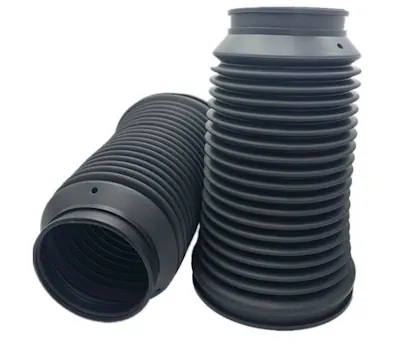
Dust covers and bushings (protection kit): these protect the chrome leg and limit the shock absorber's travel in extreme situations. An old, cracked dust cover will ruin a new shock absorber in a few months.
-
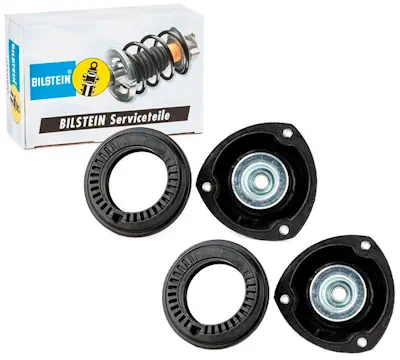
Upper support bearings and pads (mounting kit): especially on the front axle, where the shock absorber rotates with the wheels. A worn bearing will make a noise when turning the steering wheel and can cause the spring to break.
summary
The condition of your shock absorbers is directly related to your safety and that of your passengers. Although many car models have their own typical faults – whether it's leaks in a Passat or wear in a BMW's suspension bearings – the solution is always the same: timely maintenance and high-quality spare parts.
Don't wait until your car starts to "swim" or rattle on the road. Regular inspections (preferably during every oil change) and choosing products from reputable manufacturers (Sachs, Kyb, Bilstein, etc.) will ensure that your car stays firmly on the road, regardless of the weather or road surface conditions. The right shock absorber will make your old car's driving characteristics look like new again.
Car suspension system: importance, working principle and types
 The car's suspension system is one of the most important mechanisms that ensures driving comfort, stability and safety. The suspension is designed to absorb shocks and vibrations caused by road irregularities, while ensuring constant contact of the wheels with the road surface. This helps to improve the vehicle's handling and protects the car's structure from excessive load and wear.
... More...
The car's suspension system is one of the most important mechanisms that ensures driving comfort, stability and safety. The suspension is designed to absorb shocks and vibrations caused by road irregularities, while ensuring constant contact of the wheels with the road surface. This helps to improve the vehicle's handling and protects the car's structure from excessive load and wear.
... More...
How to change shock absorbers on a car yourself?
 Shock absorbers play an important role in a car's suspension system, providing a smoother ride and better handling. Over time, shock absorbers wear out and need to be replaced. Although this job may seem difficult at first, it can be done at home if you have the knowledge and the right tools. Here's a guide on how to replace shock absorbers yourself.
Shock absorbers are actually divided into two types:
... More...
Shock absorbers play an important role in a car's suspension system, providing a smoother ride and better handling. Over time, shock absorbers wear out and need to be replaced. Although this job may seem difficult at first, it can be done at home if you have the knowledge and the right tools. Here's a guide on how to replace shock absorbers yourself.
Shock absorbers are actually divided into two types:
... More...

Why do wiper blades spoil quickly? Causes and effective solutions with deep cleaning
 Rapid wear of wiper blades is a problem that can occur even on brand new cars. If new wiper blades start to streak, leave spots on the glass or start to skip after just a few weeks or months, the fault is usually not with the product itself. Most often, the cause is invisible dirt accumulated on the surface of the windshield or the wipers are working at the wrong angle.
Below is an overview of the main causes and solutions.
... More...
Rapid wear of wiper blades is a problem that can occur even on brand new cars. If new wiper blades start to streak, leave spots on the glass or start to skip after just a few weeks or months, the fault is usually not with the product itself. Most often, the cause is invisible dirt accumulated on the surface of the windshield or the wipers are working at the wrong angle.
Below is an overview of the main causes and solutions.
... More...
car springs – coil springs and their role in vehicle suspension
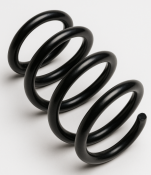 Car coil springs are one of the most important components in a vehicle's suspension system. Their main function is to absorb shocks from road irregularities , maintain the car's ride height, and ensure a comfortable and stable ride. The most common type of spring on modern cars is the coil spring , which ensures durability, smooth suspension, and good handling.
This article provides a comprehensive overview of car springs, their working principle, types, maintenance, and common problems.
What are car coil springs?
Car coil springs are elastic metal parts that:
bear the weight of the vehicle,
dampen shocks and vibrations,
keep the tires in contact with the road surface,
ensure stable operation of the suspension system.
Every time the car goes over a pothole or hill, the springs contract and release to reduce the impact that would otherwise be transmitted directly to the body and passengers.
coil springs – the most common type of spring
What is a coil spring?
A coil spring is a spiral-shaped steel spring that works on the principle of torque and flexibility. It is the most common type of spring in both front and rear suspension.
coil spring functions:
load-bearing support: support the weight and ride height of the car.
ensuring a soft and comfortable ride: absorbing unevenness in the road surface.
increasing stability: in cooperation with shock absorbers, they keep the car controllable even when cornering.
vibration reduction: dampens shocks between the body and the wheels.
Where can I find coil springs?
in most modern passenger cars, both front and rear.
as part of the McPherson suspension with shock absorber strut.
in double-link and multi-link suspension systems.
types of car springs
Although coil springs are the most common, other spring types are also used on different vehicles.
1. coil springs
universal and durable solution.
suitable for cars, SUVs and many smaller trucks.
2. leaf springs
mainly used on vans, vans and heavy trucks.
can carry a very heavy load.
3. air suspension (air springs, air suspension)
ensures a very comfortable ride.
adjustable height.
used on luxury cars and newer SUVs.
4. torsion bar suspension
in some older cars and SUVs.
compact and with adjustable stiffness.
but for a typical passenger car, coil springs remain the most important and widely used solution.
How do springs work with shock absorbers?
The spring's job is to absorb the shock , but that alone would cause constant "bouncing".
... More...
Car coil springs are one of the most important components in a vehicle's suspension system. Their main function is to absorb shocks from road irregularities , maintain the car's ride height, and ensure a comfortable and stable ride. The most common type of spring on modern cars is the coil spring , which ensures durability, smooth suspension, and good handling.
This article provides a comprehensive overview of car springs, their working principle, types, maintenance, and common problems.
What are car coil springs?
Car coil springs are elastic metal parts that:
bear the weight of the vehicle,
dampen shocks and vibrations,
keep the tires in contact with the road surface,
ensure stable operation of the suspension system.
Every time the car goes over a pothole or hill, the springs contract and release to reduce the impact that would otherwise be transmitted directly to the body and passengers.
coil springs – the most common type of spring
What is a coil spring?
A coil spring is a spiral-shaped steel spring that works on the principle of torque and flexibility. It is the most common type of spring in both front and rear suspension.
coil spring functions:
load-bearing support: support the weight and ride height of the car.
ensuring a soft and comfortable ride: absorbing unevenness in the road surface.
increasing stability: in cooperation with shock absorbers, they keep the car controllable even when cornering.
vibration reduction: dampens shocks between the body and the wheels.
Where can I find coil springs?
in most modern passenger cars, both front and rear.
as part of the McPherson suspension with shock absorber strut.
in double-link and multi-link suspension systems.
types of car springs
Although coil springs are the most common, other spring types are also used on different vehicles.
1. coil springs
universal and durable solution.
suitable for cars, SUVs and many smaller trucks.
2. leaf springs
mainly used on vans, vans and heavy trucks.
can carry a very heavy load.
3. air suspension (air springs, air suspension)
ensures a very comfortable ride.
adjustable height.
used on luxury cars and newer SUVs.
4. torsion bar suspension
in some older cars and SUVs.
compact and with adjustable stiffness.
but for a typical passenger car, coil springs remain the most important and widely used solution.
How do springs work with shock absorbers?
The spring's job is to absorb the shock , but that alone would cause constant "bouncing".
... More...
 The data shown here, especially the complete database of car spare parts, may not be copied. It is strictly prohibited to duplicate the data and database and distribute the same, and/or instruct third parties to engage in such activities, without prior consent from TecAlliance. Any use of content in a manner not expressly authorized constitutes copyright infringement and violators will be prosecuted.