

Car suspension system: importance, working principle and types
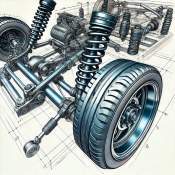
The car's suspension system is one of the most important mechanisms that ensures driving comfort, stability and safety. The suspension is designed to absorb shocks and vibrations caused by road irregularities, while ensuring constant contact of the wheels with the road surface. This helps to improve the vehicle's handling and protects the car's structure from excessive load and wear.
Below we will look at what the suspension system consists of, how it works and what types are used in modern cars.
Suspension System Functions
A car's suspension has three main functions:
Ride Comfort: The suspension absorbs shocks and vibrations from the road surface, providing a smoother ride.
Stability and Handling: The suspension keeps the wheels in contact with the road surface even on rough terrain or during sharp turns, improving traction and handling.
Load Distribution: The system distributes weight evenly across all wheels to reduce mechanical wear and increase safety.
Main components of the suspension system
Vedrustussüsteem koosneb mitmest omavahel seotud osast, millest igaühel on oma roll. Need komponendid on:
1. Springs
- Coil springs: The most common type of spring used in today's passenger cars. They provide good flexibility and durability.
- Leaf springs: More commonly used in older vehicles and heavy equipment. Suitable for carrying heavier loads.
- Air springs: Provide greater adjustability and comfort. Common in luxury cars and heavy equipment.
2. Shock absorbers
Shock absorbers dampen the movement of the springs, preventing them from bouncing up and down after an impact. They operate on hydraulic or gas power and help keep the wheels in stable contact with the road surface.
Inside the shock absorbers is a liquid or gas (such as nitrogen) that helps control the movement and convert the kinetic energy into heat. This heat is dissipated into channels inside the shock absorber, which help prevent overheating and ensure smoother operation.
Shock absorber parts:
 1. Strut mount (bearing plate)
Function:
The strut mount is a part that connects the shock absorber to the vehicle body. It allows the shock absorber to rotate in accordance with the movement of the steering wheel (on the front wheels) and ensures a stable connection between the suspension and the body.
 1.
1.- Front strut bearings often contain ball bearings that allow the shock absorber to rotate.
- Rear strut bearings are simpler because they do not have to rotate.
Problems:
Worn out support bearings can cause unpleasant noises, loose suspension, and affect vehicle handling.
2. Spring
Function:
The spring is the component responsible for the elasticity of the suspension. It keeps the vehicle at the correct height, absorbs the impact energy from the road surface and distributes the load evenly. The spring works together with the shock absorber to ensure a stable and smooth ride.
- The springs are made of high-strength steel and are designed in a spiral shape.
- Springs also determine the stiffness and load-bearing capacity of a car's suspension.
Problems:
Over time, springs can wear, rust, or break, causing the vehicle to lean or reducing suspension stiffness.
3. Shock absorber (strut)
Function:
A shock absorber is a device that controls the movement of a spring, dampening its vibrations and impacts. It provides stability to the vehicle and helps keep the wheels in contact with the road surface.
- Shock absorbers usually operate on a hydraulic or gas-liquid basis to dissipate impact energy.
- In the case of a McPherson-type suspension, the shock absorber also includes the spring and support bearing mount.
Worn shock absorbers cause poor handling, increased braking distances, and an uncomfortable ride. Typical symptoms are excessive vibrations after potholes or noises from the suspension.
4. Dust shield
Function:
The dust shield is a part of the shock absorber that protects its moving parts from dirt, dust, water and other harmful elements.
- The dust shield extends the life of the shock absorber and its seals by preventing dirt from entering the interior of the shock absorber.
- It works in close cooperation with the impact limiter, which prevents the shock absorber from being compressed too deeply.
A torn or worn dust shield leaves the shock absorber unprotected, which can cause it to wear out quickly or even fail.

Shock absorber parts:
1. Nut
2. Strut mount (bearing plate)
3. Upper spring seat
4. Dust shield
5. Strut shaft
6. Lower spring seat
7. Strut body
3. Stabilizer bar
The stabilizer bar connects the left and right sides of the suspension, reducing body roll when cornering and improving vehicle stability.
4. Control arms and joints
Control arms connect the wheels to the car's chassis, allowing the suspension to move up and down. Joints and bushings ensure that all movements are smooth and noise-free.
5. Bushings
Bushings are flexible parts that reduce vibration and noise and protect the moving parts of the suspension from wear.

How does suspension work?
The suspension system works by combining springs, shock absorbers, and a stabilizer bar. When a vehicle travels over uneven road surfaces, the spring absorbs the impact energy, while the shock absorber slows down the spring movement to prevent excessive sway. The stabilizer bar keeps the body stable, reducing the amount of lean that occurs when cornering.
The suspension ensures that each wheel remains in contact with the road surface for as long as possible. This is important not only for driving comfort, but also for the vehicle’s handling and braking.
Types of suspension systems
There are several different types of suspension used in vehicles today, depending on the type of vehicle, its purpose, and its budget.
1. Dependent suspension
Dependent suspension means that the movement of one wheel affects the movement of the other wheel on the same axle. It is common in older vehicles and heavy trucks.
- Advantages: Simple and durable.
- Disadvantages: Poorer handling and less comfort.
2. Independent suspension
Independent suspension allows each wheel to move independently of the other wheels. It is used in most modern passenger cars.
- Advantages: Greater comfort and better handling.
- Disadvantages: More complex and expensive to maintain.
3. Semi-independent suspension
Semi-independent suspension is a compromise between dependent and independent systems. Common in compact and lower-priced cars.
Suspension system maintenance and problems
The suspension system is durable, but over time it can wear out and require maintenance or repair. Common problems and their symptoms:
- Worn shock absorbers: Can cause the car to “jump” and impair handling.
- Fatigued springs: The car may sink to one side.
- Expensive or faulty bushings: The result is an uncomfortable ride and unusual noises.
- Damaged stabilizer bar: The body may lean more when cornering.
Maintenance tips:
- Check the condition of the shock absorbers and springs every 20,000–30,000 km.
- Listen for unusual noises coming from the chassis, such as clicking or rattling.
- Make sure the height of the car is the same on both sides.
- Use high-quality spare parts and have a specialist do the maintenance if you are unsure.
Summary
A car's suspension system is crucial for comfort, stability, and safety. A properly maintained suspension system ensures a smooth and safe ride, even on rough roads. In case of more serious problems, it is recommended to consult a professional mechanic, but regular inspections and proper driving techniques will significantly extend the life of the suspension system.
 The data shown here, especially the complete database of car spare parts, may not be copied. It is strictly prohibited to duplicate the data and database and distribute the same, and/or instruct third parties to engage in such activities, without prior consent from TecAlliance. Any use of content in a manner not expressly authorized constitutes copyright infringement and violators will be prosecuted.