

Brake Caliper > Brake Caliper/ Holder [Support]
Pick your vehicle
Car brake caliper or support: an important component for braking and vehicle safety
The car's braking system is one of the most important elements in the safety of the vehicle, as it ensures that the car can stop at the right moment. One of the most important components that helps control the braking process is the brake caliper . This part performs an important role in ensuring the reliability of the brakes and maintaining the braking ability of the vehicle. In this article, we will look at what a brake caliper is, how it works, the different types and how to maintain it.
What is a brake caliper?
The brake caliper is part of a car's disc brake system, whose job is to press the brake pads against the brake disc to create braking power. When the driver of the vehicle presses the brake pedal, brake fluid is sent to the brake caliper, where it presses the brake pads against the brake disc, creating friction that slows or stops the car.
The brake caliper is usually made of a strong metal, such as cast iron or aluminum, to withstand the high temperatures and heavy loads that come with the braking process.
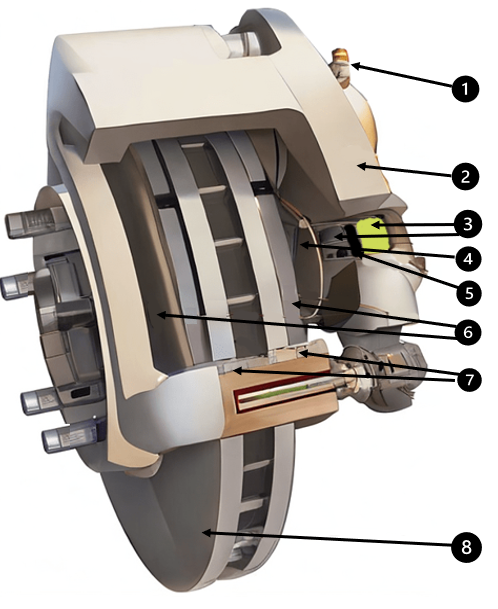
brake caliper or support parts:
1. air vent screw
2. support body
3. piston
4. dust cover
5. piston seal
6. brake pads
7. soundproofing clamps
8. brake disc.
car brake caliper parts – brake caliper mount and repair kit
brake caliper bracket – meaning and importance
The brake system is one of the most critical safety features in any vehicle, and the brake caliper bracket is an important component in this system. This metal bracket holds the brake caliper securely in place and ensures that the brake pads move smoothly and evenly against the brake disc.

Main functions of the brake caliper mount:
✔ ensures brake caliper stability – holds the caliper in place so it can brake evenly.
✔ ensures correct alignment of brake pads – allows pads to move and wear properly.
✔ reduces vibration and noise – prevents uneven braking and the resulting noise.
✔ protects the brake caliper from overload – helps prevent uneven wear of the brake caliper.
common problems with brake caliper mounting
- Corrosion and rust – with prolonged use, the mount may rust, which can affect the operation and safety of the brakes.
- Worn or defective bolts – if the threads on the mounting bolts are damaged, this can cause the brake caliper to become unstable.
- Looseness or incorrect installation – if the brake caliper mount is not installed correctly, it can cause vibration and uneven braking.
brake caliper repair kit – how does it help?
The brake caliper repair kit contains the necessary parts for brake caliper maintenance and restoration. Using it will help extend the life of the brake caliper and keep the brake system in good working order .

What does a brake caliper repair kit include?
- seals and cuffs – prevent dirt and moisture from entering the brake caliper.
- Sliding bolts and lubricant – ensure smooth movement of the blocks.
- piston seals and dust caps – prevent fluid leakage and ensure smooth braking.
When should a brake caliper repair kit be used?
✔ if the brake pedal feels soft or sinks too deeply.
✔ if the brake caliper leaks or the pads wear unevenly.
✔ if there is a sticking of the brake caliper or incomplete return of the brake pads.
✔ if you hear a squeaking or other unusual sound when braking.
brake caliper maintenance and preventive inspection
To ensure trouble-free operation of the brake system, we recommend:
- Check the brake caliper mountings and bolts during each maintenance.
- Clean and lubricate the slide bolts to ensure smooth movement of the brake pads.
- Replace seals and dust covers to prevent dirt and moisture from entering the brake caliper.
- use high-quality repair kits and spare parts.
How does a brake caliper work?
When the driver presses the brake pedal, it creates pressure in the brake fluid, which travels through the brake system and reaches the brake caliper. The brake fluid pushes up a piston inside the brake caliper, which in turn presses the brake pads against the brake disc. Friction between the brake disc and the brake pads converts the car's kinetic energy into heat, causing the car to slow down or stop.
A brake caliper can come in many different forms, but in any case, its purpose is to ensure that the brake pads are installed correctly and are able to brake effectively.
brake caliper types
Brake calipers come in a variety of variants, depending on the type of vehicle, operating conditions and the design of the brake system. The most common types of brake calipers are:
-
Single-pillar (floating) brake calipers : These are the most common and are used in many cars in regular use. A single-pillar brake caliper slides onto the brake nozzle and presses the brake pad against the disc using only one piston. These calipers are simpler and cheaper, while still providing sufficient stopping power for everyday driving.
-
Twin-mount (fixed) calipers : Twin-mount calipers contain more than one caliper, which is evenly spaced on either side of the brake disc. These calipers offer more precise braking and are common in sports cars and higher performance vehicles. The advantages of a twin-mount system are greater stopping power and better pressure distribution.
-
Multi-mount calipers : Some vehicles have even more advanced, multi-mount calipers that contain multiple calipers on each side of the disc. These calipers provide extremely precise and consistent braking performance. They are common in sports cars and serious racing vehicles.

brake caliper problems
Over time, brake calipers can wear out or lose their performance, which can affect your car's stopping power. Here are some common problems and signs that your brake calipers need service:
-
Uneven braking : If the brake caliper does not press the brake pad against the brake nozzle properly, it can cause uneven braking. This can manifest as the car jerking when braking or a decrease in braking efficiency on one wheel.
-
Vibration when braking : If the brake caliper is damaged or worn, it can cause brake vibrations that can be felt in the steering wheel or pedal. This is often a sign that the brake caliper is not working properly or is out of balance.
-
Loss of performance : If the brake caliper is stuck or not moving properly, it can cause the brake pads to make constant contact with the brake rotor, which in turn causes the brake system to overheat and reduce brake efficiency.
How to maintain a brake caliper?
Proper maintenance of your brake calipers is essential to ensure the efficient operation of your car's braking system and the safety of your vehicle. Here are some tips on how to maintain your brake calipers:
-
Regular inspection : Check the condition of the brake caliper every time you perform brake system maintenance. If you notice uneven wear, cracked parts, or other damage, the brake caliper should be replaced immediately.
-
Checking the brake fluid : The brake fluid must be in sufficient quantity and in the right condition to ensure the correct operation of the brake caliper. A low brake fluid level can cause the brake caliper to not work or cause malfunctions in the system.
-
Cleanliness : brake calipers can accumulate dust or rust over time. Regular cleaning helps keep the brake calipers in good working order.
-
Checking piston movement : If you have floating calipers, make sure the caliper strut moves freely to ensure consistent braking. If the strut sticks, it can cause uneven wear on the brake pads and problems with the braking system.
summary
The brake caliper is an essential part of a car's braking system, its job is to press the brake pads against the brake caliper to ensure effective braking. Its reliability and proper maintenance are key to ensuring the safety and braking performance of your vehicle. Regular brake caliper inspection and maintenance will help prevent serious problems and ensure that your car's braking system is always working at its best.
Changing the brake fluid and bleeding the brakes
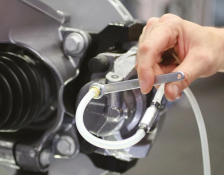 Changing the brake fluid is a very important process in brake maintenance. Brakes are essential to any car, and that makes brake fluid one of the most important components in your car. Brake fluids must resist moisture that can cause vapor lock and brake failure, protect against corrosion, and withstand high brake temperatures. From time to time, you need to change the brake fluid according to the car manufacturer's instructions.
... More...
Changing the brake fluid is a very important process in brake maintenance. Brakes are essential to any car, and that makes brake fluid one of the most important components in your car. Brake fluids must resist moisture that can cause vapor lock and brake failure, protect against corrosion, and withstand high brake temperatures. From time to time, you need to change the brake fluid according to the car manufacturer's instructions.
... More...
Brake caliper structure and parts
 The brake caliper is one of the important components in the vehicle's braking system, whose function is to apply the brake pads to the brake disc or drum to achieve vehicle braking. The brake caliper consists of various elements that work together to ensure effective and safe braking. In this article, we will discuss the components of the brake caliper, their functions and importance.
... More...
The brake caliper is one of the important components in the vehicle's braking system, whose function is to apply the brake pads to the brake disc or drum to achieve vehicle braking. The brake caliper consists of various elements that work together to ensure effective and safe braking. In this article, we will discuss the components of the brake caliper, their functions and importance.
... More...
Car brake system and brake system maintenance: Ensuring safety on every ride
 The brake system is one of the most important components in any vehicle. It is responsible for stopping the car from moving and plays a crucial role in the safety of the vehicle. Ensuring the proper functioning of the brake system and regular maintenance are necessary at all times to prevent accidents and ensure the optimal functioning of the vehicle. In this article, we will look at the main components of the car's brake system, how it works and the importance of maintenance.
Car brake system: How does it work?
... More...
The brake system is one of the most important components in any vehicle. It is responsible for stopping the car from moving and plays a crucial role in the safety of the vehicle. Ensuring the proper functioning of the brake system and regular maintenance are necessary at all times to prevent accidents and ensure the optimal functioning of the vehicle. In this article, we will look at the main components of the car's brake system, how it works and the importance of maintenance.
Car brake system: How does it work?
... More...
Car drum brake construction and parts
 Auto Drum Brake Structure, Working Principle, and Components Overview
Drum brakes are one of the oldest braking systems used in many vehicles, especially older models or vehicles where compact packaging with high braking force is required. The drum brake system operates mechanically by applying brake shoes against the brake drum to slow down or stop the vehicle. The construction and working principle of drum brakes are relatively complex as they contain multiple components that work together to ensure effective and reliable braking.
General Working Principle of a Drum Brake:
The drum brake consists of brake pads, a wheel cylinder, and a brake drum, to which braking force is applied. When the brake pedal is pressed, the wheel cylinder uses hydraulic pressure to push the brake shoes against the drum, creating friction that slows down the vehicle.
The working principle of a drum brake is that the brake shoes move outward from the inside of the drum to stop the wheel’s rotation, while other parts of the braking system ensure smooth and efficient operation.
... More...
Auto Drum Brake Structure, Working Principle, and Components Overview
Drum brakes are one of the oldest braking systems used in many vehicles, especially older models or vehicles where compact packaging with high braking force is required. The drum brake system operates mechanically by applying brake shoes against the brake drum to slow down or stop the vehicle. The construction and working principle of drum brakes are relatively complex as they contain multiple components that work together to ensure effective and reliable braking.
General Working Principle of a Drum Brake:
The drum brake consists of brake pads, a wheel cylinder, and a brake drum, to which braking force is applied. When the brake pedal is pressed, the wheel cylinder uses hydraulic pressure to push the brake shoes against the drum, creating friction that slows down the vehicle.
The working principle of a drum brake is that the brake shoes move outward from the inside of the drum to stop the wheel’s rotation, while other parts of the braking system ensure smooth and efficient operation.
... More...
 The data shown here, especially the complete database of car spare parts, may not be copied. It is strictly prohibited to duplicate the data and database and distribute the same, and/or instruct third parties to engage in such activities, without prior consent from TecAlliance. Any use of content in a manner not expressly authorized constitutes copyright infringement and violators will be prosecuted.