

Braking System > Drive Dynamics Control
Pick your vehicle
Comprehensive guide: car driving dynamics control, sensors and common faults
One of the most important safety components of any modern vehicle is the control of the car's driving dynamics. This electronic safety network analyzes the driver's actions, the car's trajectory and the road surface's grip hundreds of times per second. When the vehicle starts to lose control, the safety systems (ESP, ESC, ABS, ASR) intervene within a fraction of a second to keep the car on the road. In this guide, we'll look at how these systems work, which sensors power them, and what are the most common car model faults and solutions.
What is driving dynamics control?
Driving dynamics is the management of a car's movement under the influence of various forces:
- Longitudinal forces: occur during acceleration and braking. This is where traction control and ABS work, preventing the wheels from slipping or locking.
- Lateral forces: act when cornering. If the car starts to slide to the side, the electronic stability control (ESP) intervenes.
- vertical forces: related to suspension travel and car body tilt.
The system's brain (ECU) controls the brake hydraulic unit and engine torque based on real-time sensor information.
Critical sensors for driving dynamics control
abs wheel speed sensor and abs sensor ring (timing belt)
The foundation of the entire system is the ABS wheel speed sensor . The sensor located at each wheel constantly reads the wheel speed. To do this, it needs a target, which is the ABS sensor ring (timing belt) . On older cars, this is a metal gear pressed onto the end of the drive shaft. On newer vehicles, active sensors are used that read a magnetic ring integrated into the wheel bearing dust cover.
Since the ABS wheel speed sensor is located in harsh conditions (water, salt, mud), it is often a source of failure. If this sensor fails, the ABS and ESP automatically switch off.

picture. abs sensor ring (timing belt)
steering angle sensor (SAS)
Located on the steering column, it measures the degree and speed of the steering wheel. It tells the car's brain which direction the driver actually wants to go.
inertial measurement unit
These sensors are located in the car's center of gravity (on the cabin floor) and measure the actual movement of the car:
- Lateral acceleration sensor: measures lateral g-forces generated during cornering.
- Longitudinal acceleration sensor: measures the acceleration and deceleration of the car, which is critical for all-wheel drive and autonomous braking systems.
- yaw rate sensor: measures the rotation of the car around its vertical axis. This sensor detects the risk of sideslip, or spinning.
Wiring and cable ties: an unexpected weak link
The biggest source of failure in driving dynamics is often mechanical damage: broken wires and connectors. The constant movement of the suspension and turning of the steering wheel bends the sensor wires hundreds of thousands of times, which eventually leads to copper breakage. Winter salt also causes the connectors to oxidize.
sensor repair kits
No more replacing the entire expensive main wiring harness of your car due to a faulty wire. The smartest and most affordable solution is to use repair kits for cables and wires for various sensors (longitudinal acceleration, lateral acceleration, lateral acceleration and ABS sensor) . They include a new weatherproof connector and a flexible silicone cable that is soldered in place of the old wire, making the connection completely waterproof again.
the importance of cable holders
To prevent the wire at the wheel from rubbing against the suspension and rotating tire, an ABS connection cable holder is vital. These are plastic clips on the shock absorber or body that keep the wire on the correct trajectory. Over time, these clips break. When replacing a sensor or bearing, it is always recommended to also install a new ABS sensor connection cable holder to prevent the cable from rubbing in the future.
most common car models and their typical driving dynamics errors
Different manufacturers use different technical solutions, which have created typical defects specific to each car brand.
volkswagen, audi, škoda and seat (vag group)
- breakage of timing belts and magnetic rings: on older models (passat b5, audi a4), rust penetrates the metal abs sensor ring (timing belt) and pushes it in half, causing the brake pedal to rattle at low speeds. on newer models (golf 5, passat b6), moisture destroys the magnetic layer integrated into the rear wheel bearing.
- Cable breakage: It is common for the ABS wheel speed sensor cable to break at the shock absorber mounting. The ideal solution here is a repair kit for cables and wires for various sensors (longitudinal acceleration, lateral acceleration, lateral acceleration and ABS sensor) together with a new ABS connection cable holder .
- Acceleration sensor errors: On older models, the solder joints on the G200 and G202 acceleration sensors (under the steering wheel) crack due to temperature fluctuations.
BMW (E46, E90, E60, X5)
- Driveshaft corrosion: on e90 and e87 models, the rear driveshaft swells due to rust, pushing the sensor ring against the abs wheel speed sensor . The sensor wears flat and the car can accidentally brake on its own on the highway.
- Hydraulic pump faults: A typical fault in the E60 and E90 series is wear of the brushes of the DSC pump electric motor or failure of the internal pressure sensor.
- Cross Acceleration Sensor Drowning: BMW has often placed the acceleration sensor on the floor under the seat. Clogged sunroof drains can drown the floor, destroying the expensive sensor.
mercedes-benz (c-class, e-class)
- Steering angle sensor wear: Mechanical wear of the steering angle sensor built into the steering wheel will result in the instrument cluster message "esp inoperative".
- Corrosion of magnetic rings (w204, w212): The magnetic rings located at the rear axle shafts begin to swell due to rust, rubbing the sensors to pieces.
Volvo (S60, V70, XC90)
- Timing belt breakage: The steel ABS sensor ring (timing belt) on the front axle breaking in half is a common problem, which fortunately is inexpensive to fix by installing a new ring.
- Cold solder joints in the ABS control module (BCM): Heat and vibration break the solder joints on the pump power terminals inside the ABS brain under the hood, causing the system to malfunction.
Ford and Mazda
- Wiring rot: The cables and connectors in the wheel arches often rot completely due to salt, even though the sensors themselves are intact. These are brands where repair kits and a new ABS sensor connection cable holder are everyday helpers for the mechanic.
Toyota and Lexus
- Sensor sticking: Toyota sensors and electronics are extremely reliable. Their main enemy is corrosion. When replacing a wheel bearing , the ABS wheel speed sensor is often so badly oxidized inside the knuckle that it has to be drilled out and replaced with a new one.
diagnostics: how to find the fault?
Troubleshooting driving dynamics is based on good diagnostics:
- Reading fault codes (OBD-II): A specific device reads the fault codes of the ABS/ESP block.
- Live data: During a test drive, sensor signals are monitored. If one wheel shows unrealistic speed jumps, the fault is isolated.
- Multimeter and oscilloscope: measuring resistance and voltage helps identify whether the fault is in the cable or the sensor.
- Visual inspection: The lift is checked to see if the cables are intact, whether the ABS connection cable holder keeps the cable away from the drive shaft, and whether the ABS sensor ring (timing belt) is intact and rust-free.
best-known spare parts brands
For safety-critical sensors and electronics, brands that produce original factory parts (OEM) should be preferred:
- Bosch: System Inventor. Manufactures top-quality sensors, acceleration sensors and hydraulic blocks.
- ate (continental): a german giant that offers reliable components, especially for vag, bmw and volvo cars.
- TRW: Known for its durable automotive electronics and suspension parts.
- SKF, SNR, FAG: leaders in the bearing industry. The best choice is when the magnetic sensor ring is integrated into the wheel bearing.
- Hella and Delphi: specialize in more complex electronics, such as steering angle and acceleration sensors.
- vemo, metzger, febi bilstein: the best brands for finding specific small parts. Their range includes precisely fitting repair kits for cables and wires for various sensors (longitudinal acceleration, lateral acceleration, lateral acceleration and ABS sensor) and special mounts such as the ABS sensor connection cable holder .
summary
The car's driving dynamics systems – ABS, ESP and ASR – are some of the most important safety achievements of the modern automotive industry. These helpers can prevent tragic accidents by relying on sensors that read the movement of the wheels and body.
The yellow warning lights should never be ignored. The fault could simply be due to oxidised wiring or a broken plastic fitting. Regular maintenance, including repair kits for the cables and wires of the various sensors (longitudinal acceleration, lateral acceleration, lateral acceleration and ABS sensor, if necessary) and securing the sensor cables with a new ABS connection cable holder , will ensure the flawless operation of your vehicle's safety systems and peace of mind on the road.
Changing the brake fluid and bleeding the brakes
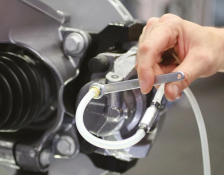 Changing the brake fluid is a very important process in brake maintenance. Brakes are essential to any car, and that makes brake fluid one of the most important components in your car. Brake fluids must resist moisture that can cause vapor lock and brake failure, protect against corrosion, and withstand high brake temperatures. From time to time, you need to change the brake fluid according to the car manufacturer's instructions.
... More...
Changing the brake fluid is a very important process in brake maintenance. Brakes are essential to any car, and that makes brake fluid one of the most important components in your car. Brake fluids must resist moisture that can cause vapor lock and brake failure, protect against corrosion, and withstand high brake temperatures. From time to time, you need to change the brake fluid according to the car manufacturer's instructions.
... More...
Car brake system and brake system maintenance: Ensuring safety on every ride
 The brake system is one of the most important components in any vehicle. It is responsible for stopping the car from moving and plays a crucial role in the safety of the vehicle. Ensuring the proper functioning of the brake system and regular maintenance are necessary at all times to prevent accidents and ensure the optimal functioning of the vehicle. In this article, we will look at the main components of the car's brake system, how it works and the importance of maintenance.
Car brake system: How does it work?
... More...
The brake system is one of the most important components in any vehicle. It is responsible for stopping the car from moving and plays a crucial role in the safety of the vehicle. Ensuring the proper functioning of the brake system and regular maintenance are necessary at all times to prevent accidents and ensure the optimal functioning of the vehicle. In this article, we will look at the main components of the car's brake system, how it works and the importance of maintenance.
Car brake system: How does it work?
... More...

Car drum brake construction and parts
 Auto Drum Brake Structure, Working Principle, and Components Overview
Drum brakes are one of the oldest braking systems used in many vehicles, especially older models or vehicles where compact packaging with high braking force is required. The drum brake system operates mechanically by applying brake shoes against the brake drum to slow down or stop the vehicle. The construction and working principle of drum brakes are relatively complex as they contain multiple components that work together to ensure effective and reliable braking.
General Working Principle of a Drum Brake:
The drum brake consists of brake pads, a wheel cylinder, and a brake drum, to which braking force is applied. When the brake pedal is pressed, the wheel cylinder uses hydraulic pressure to push the brake shoes against the drum, creating friction that slows down the vehicle.
The working principle of a drum brake is that the brake shoes move outward from the inside of the drum to stop the wheel’s rotation, while other parts of the braking system ensure smooth and efficient operation.
... More...
Auto Drum Brake Structure, Working Principle, and Components Overview
Drum brakes are one of the oldest braking systems used in many vehicles, especially older models or vehicles where compact packaging with high braking force is required. The drum brake system operates mechanically by applying brake shoes against the brake drum to slow down or stop the vehicle. The construction and working principle of drum brakes are relatively complex as they contain multiple components that work together to ensure effective and reliable braking.
General Working Principle of a Drum Brake:
The drum brake consists of brake pads, a wheel cylinder, and a brake drum, to which braking force is applied. When the brake pedal is pressed, the wheel cylinder uses hydraulic pressure to push the brake shoes against the drum, creating friction that slows down the vehicle.
The working principle of a drum brake is that the brake shoes move outward from the inside of the drum to stop the wheel’s rotation, while other parts of the braking system ensure smooth and efficient operation.
... More...
Why do wiper blades spoil quickly? Causes and effective solutions with deep cleaning
 Rapid wear of wiper blades is a problem that can occur even on brand new cars. If new wiper blades start to streak, leave spots on the glass or start to skip after just a few weeks or months, the fault is usually not with the product itself. Most often, the cause is invisible dirt accumulated on the surface of the windshield or the wipers are working at the wrong angle.
Below is an overview of the main causes and solutions.
... More...
Rapid wear of wiper blades is a problem that can occur even on brand new cars. If new wiper blades start to streak, leave spots on the glass or start to skip after just a few weeks or months, the fault is usually not with the product itself. Most often, the cause is invisible dirt accumulated on the surface of the windshield or the wipers are working at the wrong angle.
Below is an overview of the main causes and solutions.
... More...
Most common problems with ABS brakes
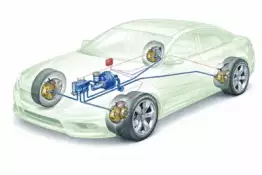 Comprehensive guide: most common ABS problems, symptoms and solutions
The safety equipment in modern vehicles has undergone enormous development over the decades. Where seat belts were once considered a luxury, today cars are equipped with dozens of electronic assistants that monitor the car’s movement, wheel grip and driver actions hundreds of times per second. The grandfather and foundation of all these complex active safety systems – such as electronic stability control (ESP) and traction control (TCS) – is the ABS, or anti-lock braking system. Without a flawlessly functioning ABS, your car will be unable to provide stability or control in a dangerous situation.
In this highly detailed and technical article, we will delve deep into the inner workings of the ABS system. We will examine exactly what components this life-saving system consists of, what physical and chemical factors cause its malfunctions, how to recognize the first signs of danger, and what are the specific typical faults of the most popular car brands. We will also provide an overview of the most reliable spare parts manufacturers whose products you can confidently trust for your safety.
1. How does the ABS system work and why is it vital?
The main purpose of ABS is not necessarily to shorten braking distances (although this is often the case on slippery roads), but to maintain vehicle control during sudden braking . We know from physics that stationary friction is always greater than sliding friction. If you press the brake pedal to the floor in a panic and the wheels lock up (start to slide along the asphalt or ice), the tire loses grip and the ability to change direction. The car becomes a sled, moving straight ahead due to inertia, no matter which way you turn the steering wheel.
ABS prevents this by automatically and extremely quickly "pumping" the brakes - up to 15-20 times per second. The system allows the wheel to roll for a fraction of a second to maintain traction and steering control, and then immediately brakes it again. This allows the driver to safely swerve around an obstacle during sudden braking.
Main components of the ABS system
... More...
Comprehensive guide: most common ABS problems, symptoms and solutions
The safety equipment in modern vehicles has undergone enormous development over the decades. Where seat belts were once considered a luxury, today cars are equipped with dozens of electronic assistants that monitor the car’s movement, wheel grip and driver actions hundreds of times per second. The grandfather and foundation of all these complex active safety systems – such as electronic stability control (ESP) and traction control (TCS) – is the ABS, or anti-lock braking system. Without a flawlessly functioning ABS, your car will be unable to provide stability or control in a dangerous situation.
In this highly detailed and technical article, we will delve deep into the inner workings of the ABS system. We will examine exactly what components this life-saving system consists of, what physical and chemical factors cause its malfunctions, how to recognize the first signs of danger, and what are the specific typical faults of the most popular car brands. We will also provide an overview of the most reliable spare parts manufacturers whose products you can confidently trust for your safety.
1. How does the ABS system work and why is it vital?
The main purpose of ABS is not necessarily to shorten braking distances (although this is often the case on slippery roads), but to maintain vehicle control during sudden braking . We know from physics that stationary friction is always greater than sliding friction. If you press the brake pedal to the floor in a panic and the wheels lock up (start to slide along the asphalt or ice), the tire loses grip and the ability to change direction. The car becomes a sled, moving straight ahead due to inertia, no matter which way you turn the steering wheel.
ABS prevents this by automatically and extremely quickly "pumping" the brakes - up to 15-20 times per second. The system allows the wheel to roll for a fraction of a second to maintain traction and steering control, and then immediately brakes it again. This allows the driver to safely swerve around an obstacle during sudden braking.
Main components of the ABS system
... More...
 The data shown here, especially the complete database of car spare parts, may not be copied. It is strictly prohibited to duplicate the data and database and distribute the same, and/or instruct third parties to engage in such activities, without prior consent from TecAlliance. Any use of content in a manner not expressly authorized constitutes copyright infringement and violators will be prosecuted.