

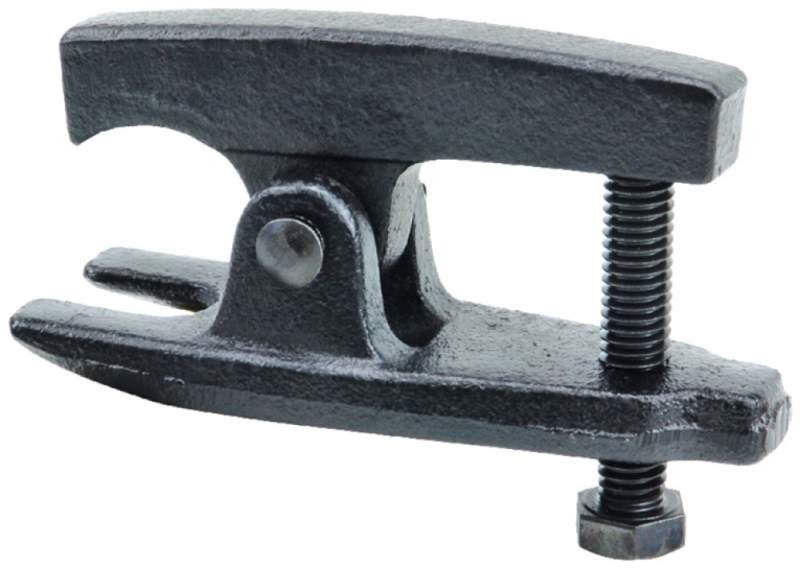
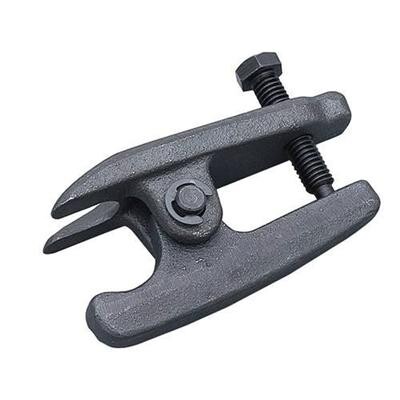
ball joint Separator- puller

| sign | Toya Sa |
| series | bar |
| harude number | 1 |
| Symbol | 80640 |
Hoiatused using spaces:
attention! working ajal use isikukaitsevahendeid.Toya
Toya SA is a leading manufacturer and distributor of tools, founded in Poland in 1990, offering a wide range of hand tools, power tools and professional equipment for both home users and professionals. The company's product portfolio includes several well-known brands, including Yato, Sthor, Vorel, Lund, Fala and Flo, which together constitute over 13,000 products for various industries, such as construction, automotive, hydraulics, electrical work, gardening and the HoReCa sector. Toya SA operates in more than 100 countries, with a strong presence in both European and Asian markets.
EAN: 5906083806407
Delivery method

Fedex Priority
Very fast To home & office
Very fast To home & office
$19.30
Delivery date 2026-10-12

Postal office
To the nearest Postal office (Shipping discount for order starting from 600€ or 700$)
To the nearest Postal office (Shipping discount for order starting from 600€ or 700$)
$24.00
Delivery date 2026-10-26
Courier International (Premium)
To Home or Office (Shipping discount for order starting from 600€ or 700$)
To Home or Office (Shipping discount for order starting from 600€ or 700$)
$46.00
Delivery date 2026-10-19
Fedex Economy
Fast delivery to home or office!
Fast delivery to home or office!
$14.80
Delivery date 2026-10-14

DHL Express
Fast Delivery To Home or Office (Shipping discount for order starting from 600€ or 700$)
Fast Delivery To Home or Office (Shipping discount for order starting from 600€ or 700$)
$28.10
Delivery date 2026-10-07


$130.60
$136.50
-5%
Arrives in 3-4work days

$202.10
Arrives in 3-4work days
$38.00
Arrives in 3-4work days


$28.40
$33.50
-16%
Arrives in 3-4work days



$25.40
Arrives in 3-4work days

$41.50
Arrives in 3-4work days


Changing tie rod end - how to perform this work
 How do you know when to change the tie rod end?
... More...
How do you know when to change the tie rod end?
... More...

Which hand tool steel is the most durable?
 As we all know, different steels are used to make different hand tools. The properties and strength of the steels are given below.
... More...
As we all know, different steels are used to make different hand tools. The properties and strength of the steels are given below.
... More...
Car chassis construction and parts
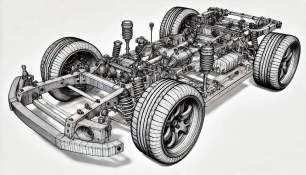 The chassis of a car is an important system of a vehicle that connects the wheels and the body, allowing safe and stable movement. It consists of various mechanisms and components that ensure the vehicle's handling, comfort and roadholding. In this article, we will provide an overview of the chassis structure and introduce in more detail important components such as wishbones, steering arm, pendulum arm, track rod, steering knuckle, hinges, bridge beam and steering rods.
... More...
The chassis of a car is an important system of a vehicle that connects the wheels and the body, allowing safe and stable movement. It consists of various mechanisms and components that ensure the vehicle's handling, comfort and roadholding. In this article, we will provide an overview of the chassis structure and introduce in more detail important components such as wishbones, steering arm, pendulum arm, track rod, steering knuckle, hinges, bridge beam and steering rods.
... More...
Car suspension system: importance, working principle and types
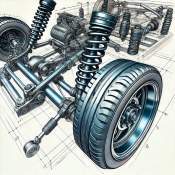 The car's suspension system is one of the most important mechanisms that ensures driving comfort, stability and safety. The suspension is designed to absorb shocks and vibrations caused by road irregularities, while ensuring constant contact of the wheels with the road surface. This helps to improve the vehicle's handling and protects the car's structure from excessive load and wear.
... More...
The car's suspension system is one of the most important mechanisms that ensures driving comfort, stability and safety. The suspension is designed to absorb shocks and vibrations caused by road irregularities, while ensuring constant contact of the wheels with the road surface. This helps to improve the vehicle's handling and protects the car's structure from excessive load and wear.
... More...
Car chassis and undercarriage
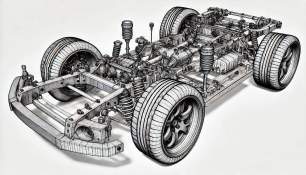 The undercarriage of a car, or car chassis and undercarriage, consists of several key components that play a role in the car's movement, appearance, and safety. It is an additional system that connects the car body to the wheels and allows the vehicle to be used and steered. The following is an overview of the main details of the undercarriage of a car.
1. Suspension system
The suspension system connects the wheels of a car to the body or frame and ensures a comfortable and stable ride. Its function is to absorb shocks and vibrations that occur on rough roads. The main elements of the suspension are:
Shock absorbers: Absorb the movement of the springs and keep the tires against the road.
Springs (coil springs or leaf springs): Hold the weight of the car and provide a smoother ride.
Control arms: Connect the wheels to the chassis and allow vertical movement.
Coupling Rod: Reduce body roll when cornering.
Bushes: Soft connections that hold parts in place and absorb vibrations.
... More...
The undercarriage of a car, or car chassis and undercarriage, consists of several key components that play a role in the car's movement, appearance, and safety. It is an additional system that connects the car body to the wheels and allows the vehicle to be used and steered. The following is an overview of the main details of the undercarriage of a car.
1. Suspension system
The suspension system connects the wheels of a car to the body or frame and ensures a comfortable and stable ride. Its function is to absorb shocks and vibrations that occur on rough roads. The main elements of the suspension are:
Shock absorbers: Absorb the movement of the springs and keep the tires against the road.
Springs (coil springs or leaf springs): Hold the weight of the car and provide a smoother ride.
Control arms: Connect the wheels to the chassis and allow vertical movement.
Coupling Rod: Reduce body roll when cornering.
Bushes: Soft connections that hold parts in place and absorb vibrations.
... More...
How to replace the control arm on your car yourself?
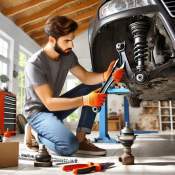 The control arm is an important part of a car's suspension system, connecting the wheel to the car's frame and helping to maintain stability, handling, and ride comfort. If the control arm starts to wear out or become damaged, it can cause the car to lose control and uneven tire wear. Replacing the control arm is not the easiest job, but it can be done at home if you have the necessary tools and a little technical knowledge.
What do you need?
... More...
The control arm is an important part of a car's suspension system, connecting the wheel to the car's frame and helping to maintain stability, handling, and ride comfort. If the control arm starts to wear out or become damaged, it can cause the car to lose control and uneven tire wear. Replacing the control arm is not the easiest job, but it can be done at home if you have the necessary tools and a little technical knowledge.
What do you need?
... More...

car springs – coil springs and their role in vehicle suspension
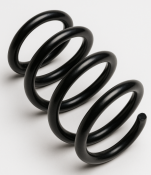 Car coil springs are one of the most important components in a vehicle's suspension system. Their main function is to absorb shocks from road irregularities , maintain the car's ride height, and ensure a comfortable and stable ride. The most common type of spring on modern cars is the coil spring , which ensures durability, smooth suspension, and good handling.
This article provides a comprehensive overview of car springs, their working principle, types, maintenance, and common problems.
What are car coil springs?
Car coil springs are elastic metal parts that:
bear the weight of the vehicle,
dampen shocks and vibrations,
keep the tires in contact with the road surface,
ensure stable operation of the suspension system.
Every time the car goes over a pothole or hill, the springs contract and release to reduce the impact that would otherwise be transmitted directly to the body and passengers.
coil springs – the most common type of spring
What is a coil spring?
A coil spring is a spiral-shaped steel spring that works on the principle of torque and flexibility. It is the most common type of spring in both front and rear suspension.
coil spring functions:
load-bearing support: support the weight and ride height of the car.
ensuring a soft and comfortable ride: absorbing unevenness in the road surface.
increasing stability: in cooperation with shock absorbers, they keep the car controllable even when cornering.
vibration reduction: dampens shocks between the body and the wheels.
Where can I find coil springs?
in most modern passenger cars, both front and rear.
as part of the McPherson suspension with shock absorber strut.
in double-link and multi-link suspension systems.
types of car springs
Although coil springs are the most common, other spring types are also used on different vehicles.
1. coil springs
universal and durable solution.
suitable for cars, SUVs and many smaller trucks.
2. leaf springs
mainly used on vans, vans and heavy trucks.
can carry a very heavy load.
3. air suspension (air springs, air suspension)
ensures a very comfortable ride.
adjustable height.
used on luxury cars and newer SUVs.
4. torsion bar suspension
in some older cars and SUVs.
compact and with adjustable stiffness.
but for a typical passenger car, coil springs remain the most important and widely used solution.
How do springs work with shock absorbers?
The spring's job is to absorb the shock , but that alone would cause constant "bouncing".
... More...
Car coil springs are one of the most important components in a vehicle's suspension system. Their main function is to absorb shocks from road irregularities , maintain the car's ride height, and ensure a comfortable and stable ride. The most common type of spring on modern cars is the coil spring , which ensures durability, smooth suspension, and good handling.
This article provides a comprehensive overview of car springs, their working principle, types, maintenance, and common problems.
What are car coil springs?
Car coil springs are elastic metal parts that:
bear the weight of the vehicle,
dampen shocks and vibrations,
keep the tires in contact with the road surface,
ensure stable operation of the suspension system.
Every time the car goes over a pothole or hill, the springs contract and release to reduce the impact that would otherwise be transmitted directly to the body and passengers.
coil springs – the most common type of spring
What is a coil spring?
A coil spring is a spiral-shaped steel spring that works on the principle of torque and flexibility. It is the most common type of spring in both front and rear suspension.
coil spring functions:
load-bearing support: support the weight and ride height of the car.
ensuring a soft and comfortable ride: absorbing unevenness in the road surface.
increasing stability: in cooperation with shock absorbers, they keep the car controllable even when cornering.
vibration reduction: dampens shocks between the body and the wheels.
Where can I find coil springs?
in most modern passenger cars, both front and rear.
as part of the McPherson suspension with shock absorber strut.
in double-link and multi-link suspension systems.
types of car springs
Although coil springs are the most common, other spring types are also used on different vehicles.
1. coil springs
universal and durable solution.
suitable for cars, SUVs and many smaller trucks.
2. leaf springs
mainly used on vans, vans and heavy trucks.
can carry a very heavy load.
3. air suspension (air springs, air suspension)
ensures a very comfortable ride.
adjustable height.
used on luxury cars and newer SUVs.
4. torsion bar suspension
in some older cars and SUVs.
compact and with adjustable stiffness.
but for a typical passenger car, coil springs remain the most important and widely used solution.
How do springs work with shock absorbers?
The spring's job is to absorb the shock , but that alone would cause constant "bouncing".
... More...
Car maintenance and service intervals – a comprehensive overview
 Regular car maintenance is one of the most important factors affecting the reliability, safety and service life of a vehicle. Many problems that later end in expensive repairs start precisely with untimely maintenance . This article provides a comprehensive overview of what car maintenance needs to be done , at what intervals , and why maintenance intervals are not random numbers , but carefully set by the manufacturer.
The article is written in simple and logical language and is suitable for both the new car owner and the experienced driver who wants to maintain their vehicle more consciously.
What is car maintenance and why is it necessary?
Car maintenance means regular inspection and replacement work aimed at:
keep the car in good technical condition
prevent unexpected breakdowns
ensure safe traffic
maintain the value of the car
A car consists of hundreds of moving and wearing parts. During maintenance:
fluids are exchanged
expenses are checked
the condition of the nodes is assessed
problems are detected before they become serious
An unmaintained car doesn't suddenly break down – problems accumulate silently.
What is the maintenance interval?
A maintenance interval is a period of time or mileage specified by the manufacturer after which certain maintenance operations must be performed.
The maintenance interval can be set:
in kilometers (e.g. every 15,000 km)
time-wise (e.g. once a year)
or whichever comes first
for example: oil change every 15,000 km or 12 months .
Why can't maintenance intervals be ignored?
Maintenance intervals are not recommended “about” numbers. They are based on:
on the engine design
on the materials used
at operating temperatures
based on tests and long-term experience
Failure to observe maintenance intervals may result in:
premature engine wear
gearbox failures
uneven brake performance
larger and more expensive repairs
Regular maintenance is always cheaper than repairs.
engine oil and oil filter – the most important maintenance
the role of engine oil
engine oil:
lubricates moving parts
cools the engine
cleans from dirt
protects against corrosion
Over time, the oil loses its properties.
oil change maintenance interval
usually every 10,000–15,000 km
or once a year
more often in difficult conditions
The oil filter should always be changed together with the oil .
air, cabin and fuel filter
air filter
ensures clean air to the engine
black filter increases fuel consumption
maintenance interval:
every 15,000–30,000 km
more often in dusty environments
cabin filter
purifies the air in the car interior
affects ventilation and climate
maintenance interval:
1 time per year
even more often in allergy sufferers
fuel filter
protects injectors and fuel system
maintenance interval:
less often on gasoline engines
significantly more often in diesel engines
brakes and brake maintenance
Brakes are directly related to safety.
Brake maintenance checks include:
brake pad thickness. You can find tools for measuring pad thickness here.
brake disc condition. You can find tools for measuring brake disc thickness here.
brake hoses
brake fluid level.
brake fluid
Brake fluid absorbs moisture, which impairs braking performance.
... More...
Regular car maintenance is one of the most important factors affecting the reliability, safety and service life of a vehicle. Many problems that later end in expensive repairs start precisely with untimely maintenance . This article provides a comprehensive overview of what car maintenance needs to be done , at what intervals , and why maintenance intervals are not random numbers , but carefully set by the manufacturer.
The article is written in simple and logical language and is suitable for both the new car owner and the experienced driver who wants to maintain their vehicle more consciously.
What is car maintenance and why is it necessary?
Car maintenance means regular inspection and replacement work aimed at:
keep the car in good technical condition
prevent unexpected breakdowns
ensure safe traffic
maintain the value of the car
A car consists of hundreds of moving and wearing parts. During maintenance:
fluids are exchanged
expenses are checked
the condition of the nodes is assessed
problems are detected before they become serious
An unmaintained car doesn't suddenly break down – problems accumulate silently.
What is the maintenance interval?
A maintenance interval is a period of time or mileage specified by the manufacturer after which certain maintenance operations must be performed.
The maintenance interval can be set:
in kilometers (e.g. every 15,000 km)
time-wise (e.g. once a year)
or whichever comes first
for example: oil change every 15,000 km or 12 months .
Why can't maintenance intervals be ignored?
Maintenance intervals are not recommended “about” numbers. They are based on:
on the engine design
on the materials used
at operating temperatures
based on tests and long-term experience
Failure to observe maintenance intervals may result in:
premature engine wear
gearbox failures
uneven brake performance
larger and more expensive repairs
Regular maintenance is always cheaper than repairs.
engine oil and oil filter – the most important maintenance
the role of engine oil
engine oil:
lubricates moving parts
cools the engine
cleans from dirt
protects against corrosion
Over time, the oil loses its properties.
oil change maintenance interval
usually every 10,000–15,000 km
or once a year
more often in difficult conditions
The oil filter should always be changed together with the oil .
air, cabin and fuel filter
air filter
ensures clean air to the engine
black filter increases fuel consumption
maintenance interval:
every 15,000–30,000 km
more often in dusty environments
cabin filter
purifies the air in the car interior
affects ventilation and climate
maintenance interval:
1 time per year
even more often in allergy sufferers
fuel filter
protects injectors and fuel system
maintenance interval:
less often on gasoline engines
significantly more often in diesel engines
brakes and brake maintenance
Brakes are directly related to safety.
Brake maintenance checks include:
brake pad thickness. You can find tools for measuring pad thickness here.
brake disc condition. You can find tools for measuring brake disc thickness here.
brake hoses
brake fluid level.
brake fluid
Brake fluid absorbs moisture, which impairs braking performance.
... More...
 The data shown here, especially the complete database of car spare parts, may not be copied. It is strictly prohibited to duplicate the data and database and distribute the same, and/or instruct third parties to engage in such activities, without prior consent from TecAlliance. Any use of content in a manner not expressly authorized constitutes copyright infringement and violators will be prosecuted.


