

Car diesel particulate filter (DPF) – what is it and why is it needed?
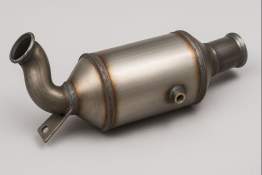 A car's diesel particulate filter, also called a DPF or diesel particulate filter, is a "breathing mask" for diesel cars.
Its job is to trap soot and dirt in the exhaust gas so that they don't fly into the air.
Simply put:
DPF keeps city air cleaner and car engine healthier.

figure 1
How does a particulate filter work?
Soot is produced in a diesel engine while driving. The particulate filter collects it.
When the filter gets black, the car has to burn it off . This is called regeneration .
Regeneration can occur in two ways:
-
Automatic cleaning – the car raises the temperature of the exhaust gas and burns off the soot.
-
Cleaning with FAP fluid – some cars use a special fluid that helps soot burn at a lower temperature.
Find information about a professional DPF/FAP filter cleaning machine here.
In both cases, the soot turns to ash and the filter becomes clean again.

Drawing diesel dpf diesel particulate filter
1. Exhaust gases entering the filter
2. The DPF differential pressure sensor measures the pressure difference before and after the particulate filter and helps detect whether the filter is starting to clog.
3. Exhaust gas temperature sensors (egt – exhaust gas temperature sensors) monitor the heat of the exhaust gases so that DPF regeneration occurs at the correct temperature and the filter can be cleaned of soot.
4. Clean exhaust gases exit the filter.
5. The content of the DPF filter is usually made of a ceramic honeycomb structure, such as cordierite or silicon carbide, which traps fine soot particles while allowing purified gases to pass through.
In addition, the exhaust gas cleaning system may also include the following parts:
The lambda sensor (oxygen sensor) measures the oxygen content in the exhaust gases and helps the engine maintain the correct fuel-air mixture.
NOX sensor (nitrogen oxide sensor) monitors the level of nitrogen oxides
The particulate matter sensor monitors how many particles are actually moving in the exhaust. All of these components work together to reduce pollution, improve engine performance, and keep the exhaust system in working order.
Signs that the particulate filter is getting clogged
Cars usually signal:
-
the engine warning light is on,
-
the car is powerless,
-
fuel consumption increases,
-
the fan runs for a long time and loudly (regeneration),
-
the car doesn't want to accelerate.
if ignored, the filter may eventually become completely clogged.
Why does the DPF get clogged?
Most often:
-
only short city trips,
-
broken egr valve,
-
bad fuel,
-
broken pressure sensor or temperature sensor,
-
empty fap fluid (on cars with fap system).
How to keep the particulate filter clean?
Simple tips:
-
Take a longer ride (10–20 minutes at a steady pace) from time to time.
-
Keep your engine in good condition and don't use a car with a broken egr.
-
tank of high-quality diesel fuel.
-
On a car with a FAP system, also check the additive level .
These little things will significantly extend the life of the filter.
Can the DPF be cleaned or do I have to buy a new one?
Today there are three options:
-
The car will regenerate itself – the best option if the blockage is not large.
-
Professional DPF cleaning – the filter is removed from the car and washed with a special machine.
-
new particulate filter – only needed if the old one is broken or completely full.
When is a new DPF needed?
-
if the filter is melted or mechanically damaged,
-
if the sensors constantly show too high a pressure,
-
if professional cleaning does not help because the filter has outlived its useful life.

Figure 3. Exhaust gas aftertreatment system of a modern diesel vehicle.
1. Diesel oxidation catalyst : burns off carbon monoxide (CO) and unburned fuel residues.
2. DPF diesel particulate filter: traps the black soot particles characteristic of diesel. The pressure sensor (DPF pressure sensor) seen in the picture measures how full the filter is so that the car knows when to start the filter's combustion or regeneration process.
3. SCR catalyst (selective catalytic reduction): toxic nitrogen oxide (NOx) is converted into harmless nitrogen and water vapor in the SCR catalyst. This entire process is monitored by the NOx sensors in the picture.
4. The NOX sensor 1 (NOX sensor) or nitrogen oxide sensor is one of the most important – and unfortunately one of the most feared and expensive – electronic components of the exhaust system of modern cars (especially diesel engines, but increasingly also direct injection gasoline engines). The sensor constantly "sniffs" exhaust gases. If the sensor detects that there are too many nitrogen oxides in the gases, it sends this information to the car's main computer (ECU). The computer then instructs the AdBlue injector to inject more urea solution into the muffler to convert the toxic gases into safe nitrogen and water vapor. Simply put, its job is to measure how much toxic nitrogen oxides (NOX) are coming out of the car's muffler.
5. Def adblue injector: sprays urea solution into the hot exhaust gases.
6. DPF pressure sensor ( DPF differential pressure sensor): is a sensor that measures the difference in pressure before and after the DPF filter .
7. Nox sensor 2 (nox sensor)
8. Adblue fluid tank. (def diesel emission fluid adblue tank)
Many modern vehicles use an exhaust system like the one shown in picture number 3 above. Such as:
-
Newer diesel passenger cars: for example, the Volkswagen Group's newer 1.6 TDI and 2.0 TDI engines (VW Passat, Škoda Octavia), BMW diesels (e.g. 320d, 530d), Mercedes-Benz Bluetec models, Volvo D4/D5 engines, etc.
-
SUVs (SUV) and SUVs: Audi Q7, BMW X5, Toyota Land Cruiser, Porsche Touareg, etc.
-
Vans and pickup trucks: Volkswagen Transporter, Mercedes-Benz Sprinter, Toyota Hilux, Ford Ranger (all newer generation models use the AdBlue system).
- note: the exact same technology, just in physically larger "barrels", is also used by all modern heavy trucks, tractors and buses.
Dpf pressure sensor or differential pressure sensor
This is a sensor that measures the pressure difference before and after the DPF filter .
its work is very simple:
When the filter is clean, exhaust gases pass through more easily and the pressure difference is smaller. When the filter fills with soot, it is harder for gases to pass through and the pressure difference increases.
What is this for?
-
helps the control unit understand how full the DPF filter is
-
triggers filter burning or regeneration if necessary
-
helps to detect blockage or malfunction
If the pressure sensor is faulty, the following symptoms may occur:
-
dpf error message
-
engine light in the dashboard
-
regeneration does not start correctly
-
the car may go into emergency mode
-
fuel consumption may increase
In short: the DPF pressure sensor monitors how freely exhaust gases move through the particulate filter.
Short summary
-
The DPF, or diesel particulate filter, traps particles in the exhaust gas.
-
The filter cleans itself, but sometimes needs help in the form of a longer drive or cleaning.
-
A clogged DPF makes the car run rough and can cause high repair costs.
- Proper maintenance, good fuel, and sensible driving style will significantly extend the life of the filter.
 The data shown here, especially the complete database of car spare parts, may not be copied. It is strictly prohibited to duplicate the data and database and distribute the same, and/or instruct third parties to engage in such activities, without prior consent from TecAlliance. Any use of content in a manner not expressly authorized constitutes copyright infringement and violators will be prosecuted.