

Articles
Previous 1 2 3 4 ... 8 9 10 11 Next
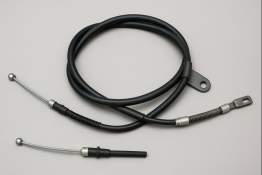 A handbrake cable or parking brake cable is a mechanical cable that connects the handbrake lever or button to the rear brakes .
... More...
A handbrake cable or parking brake cable is a mechanical cable that connects the handbrake lever or button to the rear brakes .
... More...
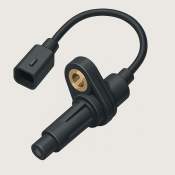 An ABS sensor (or wheel speed sensor ) is a part of the safety system that measures the rotational speed of each wheel .
... More...
An ABS sensor (or wheel speed sensor ) is a part of the safety system that measures the rotational speed of each wheel .
... More...
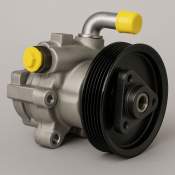 The power steering pump, also called a hydraulic pump , is part of a car's steering system.
... More...
The power steering pump, also called a hydraulic pump , is part of a car's steering system.
... More...
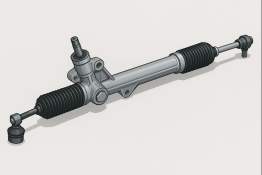 The steering rack, often called the steering rack , is the central part of a car's steering system.
... More...
The steering rack, often called the steering rack , is the central part of a car's steering system.
... More...
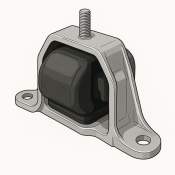 An engine mount is a part that holds the engine and gearbox in place and dampens vibrations so that the car runs smoothly and quietly.
simply put:
... More...
An engine mount is a part that holds the engine and gearbox in place and dampens vibrations so that the car runs smoothly and quietly.
simply put:
... More...
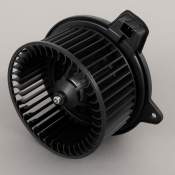 The interior blower (or blower motor ) is part of a car's heating and air conditioning system.
... More...
The interior blower (or blower motor ) is part of a car's heating and air conditioning system.
... More...
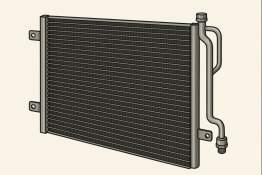 The air conditioning condenser ( AC condenser ) is one of the most important parts of a car's air conditioning system.
... More...
The air conditioning condenser ( AC condenser ) is one of the most important parts of a car's air conditioning system.
... More...
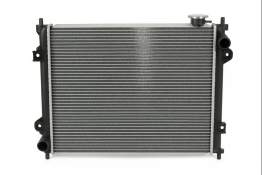 A car radiator is the heart of the engine's cooling system .
... More...
A car radiator is the heart of the engine's cooling system .
... More...
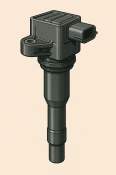 The ignition coil is one of the small but very important parts of a car engine.
... More...
The ignition coil is one of the small but very important parts of a car engine.
... More...
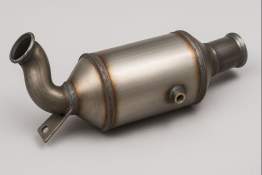 A car's diesel particulate filter, also called a DPF or diesel particulate filter, is a "breathing mask" for diesel cars.
... More...
A car's diesel particulate filter, also called a DPF or diesel particulate filter, is a "breathing mask" for diesel cars.
... More...
 FAP fluid is a special additive that some diesel cars need to keep their diesel particulate filter (FAP/DPF) from clogging. Simply put, this fluid helps the car burn off the dirt in its exhaust so the engine can breathe freely. How does fap liquid work? A diesel car produces soot when driving. It accumulates in the FAP filter.
... More...
FAP fluid is a special additive that some diesel cars need to keep their diesel particulate filter (FAP/DPF) from clogging. Simply put, this fluid helps the car burn off the dirt in its exhaust so the engine can breathe freely. How does fap liquid work? A diesel car produces soot when driving. It accumulates in the FAP filter.
... More...
 Primer is the most important layer of any paint job. A properly selected primer ensures: with strong adhesion to the substrate uniform final coating rust protection and moisture resistance better coverage and lower paint consumption longer durability Different primers are suitable for different substrates and should only be coated with compatible paint systems . The guide below lists all important primer types along with their areas of use, compatibility and substrate requirements. Types of primers – detailed explanation Below are detailed descriptions for each plot type on your list. 1. acrylic primer Universal primer based on acrylic resin. suitable for substrates:
... More...
Primer is the most important layer of any paint job. A properly selected primer ensures: with strong adhesion to the substrate uniform final coating rust protection and moisture resistance better coverage and lower paint consumption longer durability Different primers are suitable for different substrates and should only be coated with compatible paint systems . The guide below lists all important primer types along with their areas of use, compatibility and substrate requirements. Types of primers – detailed explanation Below are detailed descriptions for each plot type on your list. 1. acrylic primer Universal primer based on acrylic resin. suitable for substrates:
... More...
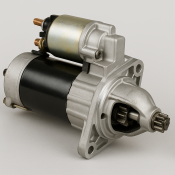 A car starter , or starter motor , is an electric motor that is responsible for starting the car's internal combustion engine so that it can start running on its own. The starter only works for a few seconds at the beginning of each start, but is an extremely important component for the vehicle's reliability.
Starters are used by all car brands such as Audi, BMW, Mercedes-Benz, Volkswagen, Toyota, Nissan, Honda, Ford, Volvo, Škoda and many others.
What is a starter and what does it do?
The starter uses electrical energy from the car battery to turn the engine fast enough to make starting possible.
The following process occurs at startup:
the driver turns the key or presses the start button.
The starter solenoid turns on the electric current.
the starter gear moves on the flywheel toothed belt.
The electric motor turns the crankshaft.
the engine starts and the starter switches off automatically.
without a starter it would not
... More...
A car starter , or starter motor , is an electric motor that is responsible for starting the car's internal combustion engine so that it can start running on its own. The starter only works for a few seconds at the beginning of each start, but is an extremely important component for the vehicle's reliability.
Starters are used by all car brands such as Audi, BMW, Mercedes-Benz, Volkswagen, Toyota, Nissan, Honda, Ford, Volvo, Škoda and many others.
What is a starter and what does it do?
The starter uses electrical energy from the car battery to turn the engine fast enough to make starting possible.
The following process occurs at startup:
the driver turns the key or presses the start button.
The starter solenoid turns on the electric current.
the starter gear moves on the flywheel toothed belt.
The electric motor turns the crankshaft.
the engine starts and the starter switches off automatically.
without a starter it would not
... More...
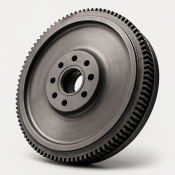 The flywheel is an important engine component that balances the engine's operation and helps smoothly transfer power to the transmission. The flywheel is especially important in cars with manual transmissions , but it is also found in vehicles with automatic transmissions as part of a torque converter or hybrid system.
The flywheel is used by all well-known car brands such as Audi, BMW, Mercedes-Benz, Volkswagen, Toyota, Ford, Volvo, Škoda, Honda, Nissan and many others.
... More...
The flywheel is an important engine component that balances the engine's operation and helps smoothly transfer power to the transmission. The flywheel is especially important in cars with manual transmissions , but it is also found in vehicles with automatic transmissions as part of a torque converter or hybrid system.
The flywheel is used by all well-known car brands such as Audi, BMW, Mercedes-Benz, Volkswagen, Toyota, Ford, Volvo, Škoda, Honda, Nissan and many others.
... More...
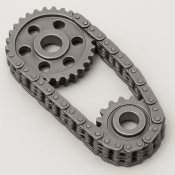 The engine chain , also known as the camshaft chain , drive chain or timing chain , is an important component of the engine's timing system. Its function is to connect the crankshaft and camshaft so that the valves open and close at exactly the right moment. A properly functioning timing chain is critical to the smoothness, power and reliability of an engine.
Engine chains are used on many well-known car brands such as BMW, Mercedes-Benz, Audi, Volkswagen, Toyota, Honda, Nissan, Ford, Volvo, Škoda and many others.
... More...
The engine chain , also known as the camshaft chain , drive chain or timing chain , is an important component of the engine's timing system. Its function is to connect the crankshaft and camshaft so that the valves open and close at exactly the right moment. A properly functioning timing chain is critical to the smoothness, power and reliability of an engine.
Engine chains are used on many well-known car brands such as BMW, Mercedes-Benz, Audi, Volkswagen, Toyota, Honda, Nissan, Ford, Volvo, Škoda and many others.
... More...
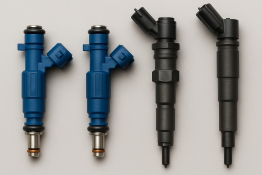 Fuel injectors are one of the most precise and important components of a car's fuel system. Their job is to deliver the right amount of fuel to the engine at exactly the right time and under ideal conditions to ensure clean combustion, low fuel consumption and maximum performance.
Injectors are used in both gasoline engines (MPI, GDI) and diesel engines (common rail, pump-düse) .
The most well-known car brands that use modern precision injectors: Audi, BMW, Mercedes-Benz, Volkswagen, Toyota, Volvo, Ford, Škoda, Honda, Nissan and many others.
... More...
Fuel injectors are one of the most precise and important components of a car's fuel system. Their job is to deliver the right amount of fuel to the engine at exactly the right time and under ideal conditions to ensure clean combustion, low fuel consumption and maximum performance.
Injectors are used in both gasoline engines (MPI, GDI) and diesel engines (common rail, pump-düse) .
The most well-known car brands that use modern precision injectors: Audi, BMW, Mercedes-Benz, Volkswagen, Toyota, Volvo, Ford, Škoda, Honda, Nissan and many others.
... More...
 A car stabilizer bar , also known as a sway bar , anti-roll bar or anti- roll bar , is an important part of a vehicle's chassis. Its function is to reduce the car's lean when cornering , improve stability and ensure better handling. The stabilizer bar works in conjunction with the springs and shock absorbers, giving the vehicle a firmer and safer roadholding.
Stabilizers are used on almost all modern cars, including popular models such as the Audi A4, BMW 5 Series, Mercedes-Benz C-Class, Volkswagen Passat, Toyota RAV4, Volvo XC60, Škoda Octavia, Ford Focus and many others.
... More...
A car stabilizer bar , also known as a sway bar , anti-roll bar or anti- roll bar , is an important part of a vehicle's chassis. Its function is to reduce the car's lean when cornering , improve stability and ensure better handling. The stabilizer bar works in conjunction with the springs and shock absorbers, giving the vehicle a firmer and safer roadholding.
Stabilizers are used on almost all modern cars, including popular models such as the Audi A4, BMW 5 Series, Mercedes-Benz C-Class, Volkswagen Passat, Toyota RAV4, Volvo XC60, Škoda Octavia, Ford Focus and many others.
... More...
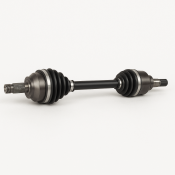 The drive shaft , also known as the drive shaft , is one of the most important components in a car's powertrain. Its job is to transfer torque from the engine and transmission to the wheels to propel the car. Drive shafts are used in front-wheel drive, rear-wheel drive, and all-wheel drive vehicles – although their construction and length depend on the type of car. In this article, we will look at how a driveshaft works, what it consists of, what faults can occur, and give examples from well-known car brands such as Audi, BMW, Mercedes-Benz, Volkswagen, Toyota, Volvo, Ford, Škoda, and Honda .
... More...
The drive shaft , also known as the drive shaft , is one of the most important components in a car's powertrain. Its job is to transfer torque from the engine and transmission to the wheels to propel the car. Drive shafts are used in front-wheel drive, rear-wheel drive, and all-wheel drive vehicles – although their construction and length depend on the type of car. In this article, we will look at how a driveshaft works, what it consists of, what faults can occur, and give examples from well-known car brands such as Audi, BMW, Mercedes-Benz, Volkswagen, Toyota, Volvo, Ford, Škoda, and Honda .
... More...
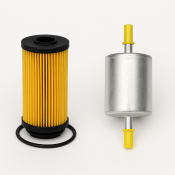 The fuel filter is an important part of any car's fuel system, whether it's a petrol or diesel engine . Its job is to remove dirt, rust particles, water particles and other contaminants from the fuel before it reaches the engine. Cleaner fuel ensures smoother operation, better performance, less wear and longer engine life . In this article, we will look at how fuel filters work, what are the differences between gasoline and diesel engine filters, and we will also give examples from well-known car brands such as Audi, BMW, Mercedes-Benz, Volkswagen, Toyota, Volvo, Ford, Škoda, and Honda . why is a fuel filter needed? Fuel often contains: dust and dirt, rust particles from the tank, micro debris from the pipeline, water from condensation. If these particles reach the fuel pump or injectors, they can become clogged, worn out or damaged . This is why the filter plays a critical role in modern engines – especially diesel engines , where the pressure is very high. fuel filter construction an
... More...
The fuel filter is an important part of any car's fuel system, whether it's a petrol or diesel engine . Its job is to remove dirt, rust particles, water particles and other contaminants from the fuel before it reaches the engine. Cleaner fuel ensures smoother operation, better performance, less wear and longer engine life . In this article, we will look at how fuel filters work, what are the differences between gasoline and diesel engine filters, and we will also give examples from well-known car brands such as Audi, BMW, Mercedes-Benz, Volkswagen, Toyota, Volvo, Ford, Škoda, and Honda . why is a fuel filter needed? Fuel often contains: dust and dirt, rust particles from the tank, micro debris from the pipeline, water from condensation. If these particles reach the fuel pump or injectors, they can become clogged, worn out or damaged . This is why the filter plays a critical role in modern engines – especially diesel engines , where the pressure is very high. fuel filter construction an
... More...
Previous 1 2 3 4 ... 8 9 10 11 Next
Handbrake cable – what is it and why does a car need it?
A handbrake cable or parking brake cable is a mechanical cable that connects the handbrake lever or button to the rear brakes .
... More...
ABS sensor (ABS wheel speed sensor) – what is it and why does a car need it?
An ABS sensor (or wheel speed sensor ) is a part of the safety system that measures the rotational speed of each wheel .
... More...
Power steering pump (hydraulic pump) – what is it and why does a car need it?
The power steering pump, also called a hydraulic pump , is part of a car's steering system.
... More...
Steering rack – what is it and why does a car need it?
The steering rack, often called the steering rack , is the central part of a car's steering system.
... More...
Engine mount – what is it and why does a car need it?
An engine mount is a part that holds the engine and gearbox in place and dampens vibrations so that the car runs smoothly and quietly.
simply put:
... More...
Interior blower – what is it and why does a car need it?
The interior blower (or blower motor ) is part of a car's heating and air conditioning system.
... More...
Air conditioner condenser – what is it and how does it work?
The air conditioning condenser ( AC condenser ) is one of the most important parts of a car's air conditioning system.
... More...
Car radiator – what is it and why does the engine need it?
A car radiator is the heart of the engine's cooling system .
... More...
Ignition coil – what is it and why does a car need it?
The ignition coil is one of the small but very important parts of a car engine.
... More...
Car diesel particulate filter (DPF) – what is it and why is it needed?
A car's diesel particulate filter, also called a DPF or diesel particulate filter, is a "breathing mask" for diesel cars.
... More...
What is fap fluid and why is it needed in a car?
FAP fluid is a special additive that some diesel cars need to keep their diesel particulate filter (FAP/DPF) from clogging. Simply put, this fluid helps the car burn off the dirt in its exhaust so the engine can breathe freely. How does fap liquid work? A diesel car produces soot when driving. It accumulates in the FAP filter.
... More...
Primers – a comprehensive overview in car repair, construction and finishing
Primer is the most important layer of any paint job. A properly selected primer ensures: with strong adhesion to the substrate uniform final coating rust protection and moisture resistance better coverage and lower paint consumption longer durability Different primers are suitable for different substrates and should only be coated with compatible paint systems . The guide below lists all important primer types along with their areas of use, compatibility and substrate requirements. Types of primers – detailed explanation Below are detailed descriptions for each plot type on your list. 1. acrylic primer Universal primer based on acrylic resin. suitable for substrates:
... More...
Car starter (starter motor) – working principle, construction and most well-known car brands
A car starter , or starter motor , is an electric motor that is responsible for starting the car's internal combustion engine so that it can start running on its own. The starter only works for a few seconds at the beginning of each start, but is an extremely important component for the vehicle's reliability.
Starters are used by all car brands such as Audi, BMW, Mercedes-Benz, Volkswagen, Toyota, Nissan, Honda, Ford, Volvo, Škoda and many others.
What is a starter and what does it do?
The starter uses electrical energy from the car battery to turn the engine fast enough to make starting possible.
The following process occurs at startup:
the driver turns the key or presses the start button.
The starter solenoid turns on the electric current.
the starter gear moves on the flywheel toothed belt.
The electric motor turns the crankshaft.
the engine starts and the starter switches off automatically.
without a starter it would not
... More...
Flywheel – working principle, construction and most well-known car brands
The flywheel is an important engine component that balances the engine's operation and helps smoothly transfer power to the transmission. The flywheel is especially important in cars with manual transmissions , but it is also found in vehicles with automatic transmissions as part of a torque converter or hybrid system.
The flywheel is used by all well-known car brands such as Audi, BMW, Mercedes-Benz, Volkswagen, Toyota, Ford, Volvo, Škoda, Honda, Nissan and many others.
... More...
Timing chain – working principle, construction and most well-known car brands
The engine chain , also known as the camshaft chain , drive chain or timing chain , is an important component of the engine's timing system. Its function is to connect the crankshaft and camshaft so that the valves open and close at exactly the right moment. A properly functioning timing chain is critical to the smoothness, power and reliability of an engine.
Engine chains are used on many well-known car brands such as BMW, Mercedes-Benz, Audi, Volkswagen, Toyota, Honda, Nissan, Ford, Volvo, Škoda and many others.
... More...
injection nozzles (injector / nozzle) – working principle, types and most well-known car brands
Fuel injectors are one of the most precise and important components of a car's fuel system. Their job is to deliver the right amount of fuel to the engine at exactly the right time and under ideal conditions to ensure clean combustion, low fuel consumption and maximum performance.
Injectors are used in both gasoline engines (MPI, GDI) and diesel engines (common rail, pump-düse) .
The most well-known car brands that use modern precision injectors: Audi, BMW, Mercedes-Benz, Volkswagen, Toyota, Volvo, Ford, Škoda, Honda, Nissan and many others.
... More...
car stabilizer bar – working principle, construction and best-known car brands
A car stabilizer bar , also known as a sway bar , anti-roll bar or anti- roll bar , is an important part of a vehicle's chassis. Its function is to reduce the car's lean when cornering , improve stability and ensure better handling. The stabilizer bar works in conjunction with the springs and shock absorbers, giving the vehicle a firmer and safer roadholding.
Stabilizers are used on almost all modern cars, including popular models such as the Audi A4, BMW 5 Series, Mercedes-Benz C-Class, Volkswagen Passat, Toyota RAV4, Volvo XC60, Škoda Octavia, Ford Focus and many others.
... More...
car drive shaft – working principle, construction and most well-known car brands
The drive shaft , also known as the drive shaft , is one of the most important components in a car's powertrain. Its job is to transfer torque from the engine and transmission to the wheels to propel the car. Drive shafts are used in front-wheel drive, rear-wheel drive, and all-wheel drive vehicles – although their construction and length depend on the type of car. In this article, we will look at how a driveshaft works, what it consists of, what faults can occur, and give examples from well-known car brands such as Audi, BMW, Mercedes-Benz, Volkswagen, Toyota, Volvo, Ford, Škoda, and Honda .
... More...
fuel filters in gasoline and diesel engines – working principle, differences
The fuel filter is an important part of any car's fuel system, whether it's a petrol or diesel engine . Its job is to remove dirt, rust particles, water particles and other contaminants from the fuel before it reaches the engine. Cleaner fuel ensures smoother operation, better performance, less wear and longer engine life . In this article, we will look at how fuel filters work, what are the differences between gasoline and diesel engine filters, and we will also give examples from well-known car brands such as Audi, BMW, Mercedes-Benz, Volkswagen, Toyota, Volvo, Ford, Škoda, and Honda . why is a fuel filter needed? Fuel often contains: dust and dirt, rust particles from the tank, micro debris from the pipeline, water from condensation. If these particles reach the fuel pump or injectors, they can become clogged, worn out or damaged . This is why the filter plays a critical role in modern engines – especially diesel engines , where the pressure is very high. fuel filter construction an
... More...

 The data shown here, especially the complete database of car spare parts, may not be copied. It is strictly prohibited to duplicate the data and database and distribute the same, and/or instruct third parties to engage in such activities, without prior consent from TecAlliance. Any use of content in a manner not expressly authorized constitutes copyright infringement and violators will be prosecuted.